
حوّل رؤى الذكاء الاصطناعي إلى أفعال منسّقة

الرائج الآن
Categories
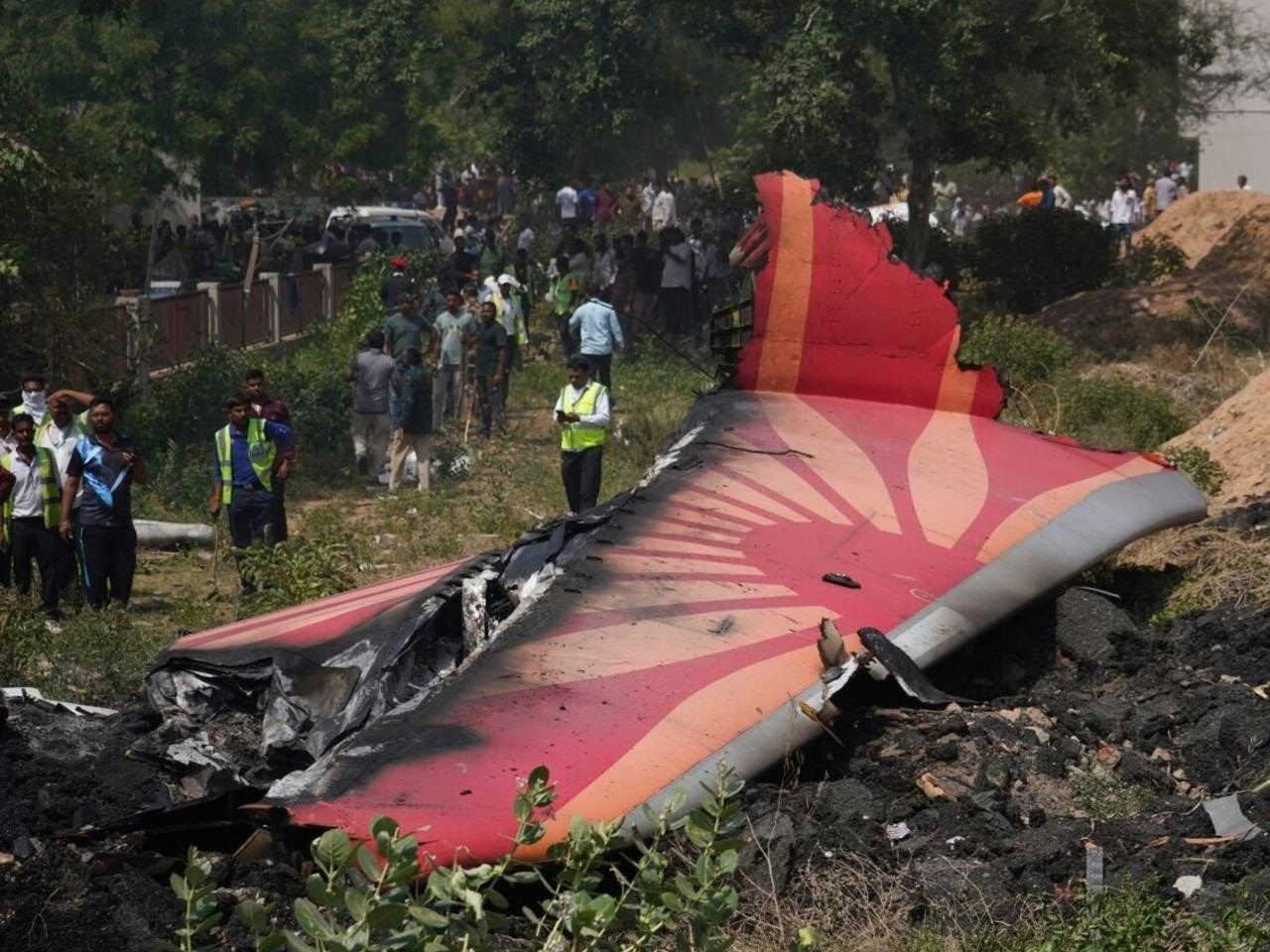
One Year After AI 171 Crash, Air India Faces Renewed Scrutiny
One Year After AI 171 Crash, Air India Faces Renewed Scrutiny
Lingering Impact of the AI 171 Tragedy
Nearly a year after the catastrophic crash of Air India Flight 171, the airline remains under intense scrutiny as it grapples with the profound consequences of the disaster. The crash, which resulted in the deaths of 241 passengers and crew along with 19 individuals on the ground, continues to overshadow the carrier’s operations. While the final investigative report is anticipated shortly, preliminary findings have already exposed significant operational lapses and safety violations. The investigation itself has been mired in controversy, with concerns raised about its impartiality and the presence of conflicting interests. Disagreements over the root cause of the crash persist, complicating Air India’s efforts to restore confidence and move forward.
Leadership Challenges Amid Financial Strain
The airline’s difficulties have been compounded by leadership instability. Campbell Wilson, Air India’s CEO, resigned after a turbulent year characterized by heightened regulatory scrutiny, geopolitical tensions, and a staggering loss exceeding $2 billion in 2025. This leadership vacuum arrives at a critical juncture, as the airline confronts both the operational repercussions of the crash and broader financial instability. Despite transitioning from a Public Sector Undertaking to Tata Group ownership four years ago, Air India has yet to realize the anticipated turnaround. Although the airline now benefits from abundant capital, this influx has, paradoxically, magnified existing challenges. Capacity has been reduced by approximately 22 percent, and customer satisfaction metrics reveal a persistently inconsistent product. The airline’s inability to achieve profitability—even within a duopoly market where it holds significant advantages—points to deeper systemic issues involving corporate culture, cash flow management, and credibility.
Strategic Implications for India’s Aviation Ambitions
Air India’s ongoing struggles carry wider implications for India’s strategic and economic objectives. The airline’s success is critical not only for the Tata Group but also for the nation’s broader goal of maintaining strategic autonomy through robust air connectivity. India’s firm stance against revisiting air service bilateral agreements depends heavily on the presence of a strong global carrier. Furthermore, Air India’s performance serves as a litmus test for the privatization of Public Sector Undertakings, reflecting their potential to generate value for the government and citizens alike. A revitalized Air India could stimulate job creation and bolster India’s aspirations to emerge as a global aviation hub, challenging established centers in the Middle East and Southeast Asia.
As part of its transformation agenda, Air India has outlined ambitious targets for fleet expansion, market share growth, brand development, and innovation by March 2027. However, the immediate imperative remains the restoration of customer trust and operational integrity. The Indian aviation sector is highly competitive and demanding, and the airline must confront these realities directly rather than obscuring them. With the unresolved legacy of the AI 171 crash and leadership transitions underway, Air India faces a pivotal moment. Addressing safety, transparency, and customer experience with renewed rigor will be essential for the airline to overcome its current turbulence and reclaim its position in the global skies.

Etihad Airways Suspends Airbus A380 Flights on Key Route

Aditya Birla Group Seeks Approval for Aircraft Leasing in GIFT City

Qatar Airways Highlights Innovation and Connectivity at Arabian Travel Market 2026

Hong Kong's Five-Year Plan Includes Andrew Fan's Aircraft Parts Processing Hub Proposal

ACIA Aero Leasing Delivers ATR72-600 to Air Nostrum

RTX Appoints Jill Albertelli as Head of Pratt & Whitney

TAT Technologies Joins Beyond Aero Hydrogen Aircraft Program

AURAK Study Highlights Barriers to Air Taxi Adoption in Emerging Economies

Xiamen Air Selects Altitude for 787 Maintenance at Heathrow

Etihad and Swissport Extend Global Partnership
