
حوّل رؤى الذكاء الاصطناعي إلى أفعال منسّقة

الرائج الآن
Categories
Pablo Air Receives Investment from Korean Air to Develop Swarm AI Drone Technology
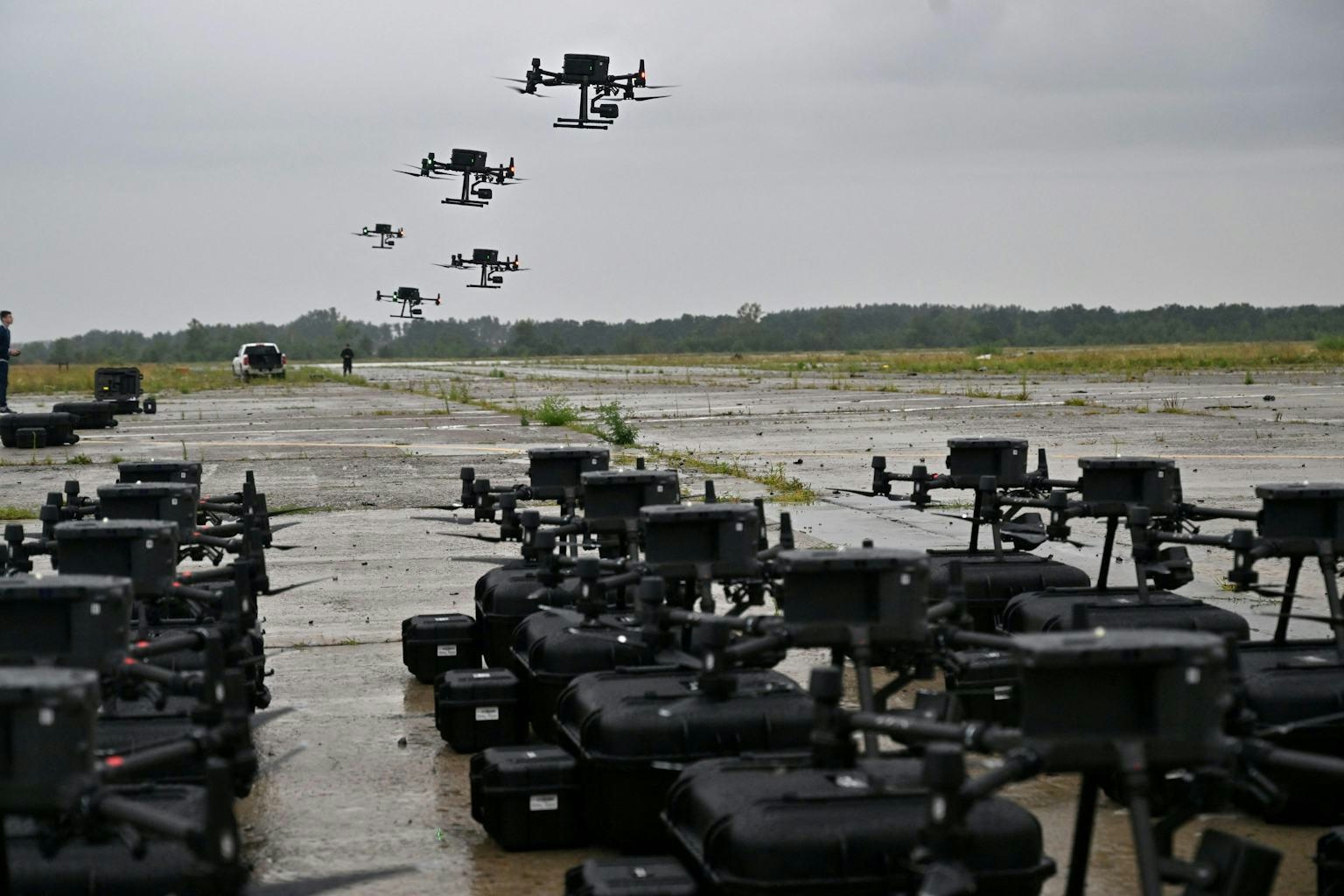
Pablo Air Secures Strategic Investment from Korean Air to Advance Swarm AI Drone Technology
Pablo Air, a South Korean startup specializing in swarm AI aviation and defense platforms, has received a strategic investment from Korean Air, marking a pivotal development in the advancement of next-generation unmanned aerial vehicle (UAV) technology and aviation maintenance, repair, and overhaul (MRO) capabilities. The partnership was formalized on January 23 at Korean Air’s Seosomun headquarters in Seoul, where both companies signed a strategic investment agreement aimed at the joint development and commercialization of swarm AI autonomous flight systems and MRO inspection drones.
Korean Air’s investment underscores its confidence in Pablo Air’s expertise in swarm AI flight algorithms, integrated control platforms, and UAV design. These technologies are regarded as highly competitive for future drone operations and broader aviation applications. This agreement builds upon a memorandum of understanding signed in October 2024, which laid the groundwork for collaborative development of swarm AI technology across both defense and civilian sectors, including aircraft MRO. The new investment transitions the partnership from planning to tangible technology and business initiatives, positioning both companies to lead in the rapidly evolving UAV market.
Innovation and Challenges in Swarm AI Drone Development
The collaboration between Pablo Air and Korean Air has already yielded promising results. Their jointly developed AI swarm drone-based aircraft exterior inspection system, InspecX, recently received the CES 2026 Innovation Award in the Drones category, highlighting the global scalability and technological strength of their solution. Despite these achievements, Pablo Air faces significant challenges in commercializing swarm AI drone technology. Regulatory hurdles remain a major obstacle, as evolving aviation laws and drone operation standards could delay deployment. The integration of advanced AI systems into existing aviation infrastructure also presents complex technical challenges.
Moreover, the market for AI-driven drone technology is becoming increasingly competitive. Established players such as XTI Aerospace and companies in the agricultural drone sector are likely to accelerate their own development efforts or pursue new strategic partnerships in response to Pablo Air’s progress. Investor skepticism persists due to the speculative nature of AI technology and volatility in the broader tech IPO market, where companies like SpaceX, Anthropic, and OpenAI are attracting attention with potential public offerings.
Despite these headwinds, Pablo Air has achieved notable milestones. It is the first Korean company to reach Level 4 (High Swarming) in the five-stage swarm coordination technology spectrum and has conducted multiple military demonstrations in realistic combat environments, validating the technology’s operational readiness. Beyond defense applications, Pablo Air is expanding into aviation inspection, industrial safety, and civilian drone solutions.
Youngjoon Kim, Chairman and Founder of Pablo Air, emphasized the significance of the investment, stating, “This strategic investment from Korean Air—the company’s first in a technology startup—signifies that Pablo Air’s swarm AI technology has progressed beyond the R&D phase to become operationally viable in actual aviation and defense industry settings. Through close collaboration with Korean Air, a global aviation industry leader, we will create new industrial value in next-generation UAVs and aviation drone sectors.”
As the global competition for advanced drone technology intensifies, the partnership between Pablo Air and Korean Air positions both companies at the forefront of innovation, while also highlighting the challenges and competitive pressures shaping the future of the UAV industry.

Etihad Airways Suspends Airbus A380 Flights on Key Route

Aditya Birla Group Seeks Approval for Aircraft Leasing in GIFT City

Qatar Airways Highlights Innovation and Connectivity at Arabian Travel Market 2026

Hong Kong's Five-Year Plan Includes Andrew Fan's Aircraft Parts Processing Hub Proposal

ACIA Aero Leasing Delivers ATR72-600 to Air Nostrum

RTX Appoints Jill Albertelli as Head of Pratt & Whitney

TAT Technologies Joins Beyond Aero Hydrogen Aircraft Program

AURAK Study Highlights Barriers to Air Taxi Adoption in Emerging Economies

Xiamen Air Selects Altitude for 787 Maintenance at Heathrow

Etihad and Swissport Extend Global Partnership
