
حوّل رؤى الذكاء الاصطناعي إلى أفعال منسّقة

الرائج الآن
Categories
Pegasus Airlines Finalizes Deal for Up to 300 CFM LEAP-1B Engines
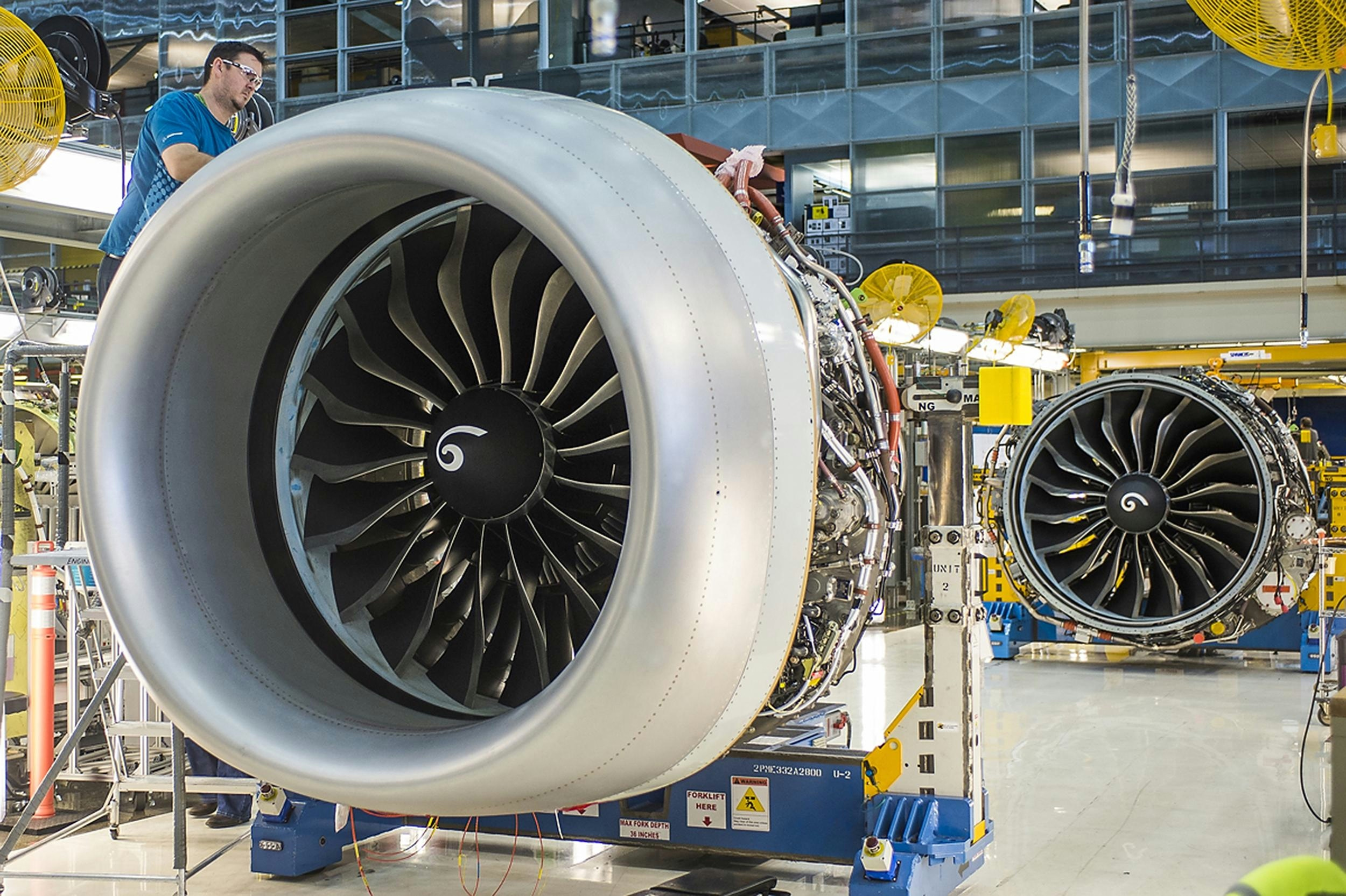
Pegasus Airlines Secures Agreement for Up to 300 CFM LEAP-1B Engines
Pegasus Airlines, based in Türkiye, has finalized a significant contract with CFM International for up to 300 LEAP-1B engines. These engines are intended to power the airline’s forthcoming Boeing 737-10 fleet, marking a critical component of Pegasus’s largest aircraft order to date, initially announced in December 2024. The agreement encompasses not only the engines themselves but also spare units and comprehensive long-term maintenance services, underscoring the airline’s commitment to operational reliability and efficiency.
Strategic Partnership and Sustainability Goals
Since commencing operations in 1990, Pegasus Airlines has relied heavily on CFM engines to build a dependable and efficient fleet. Güliz Öztürk, CEO of Pegasus Airlines, emphasized the airline’s satisfaction with the LEAP engine family’s performance, expressing confidence that the LEAP-1B will deliver similar benefits to the Boeing 737-10 fleet. Öztürk highlighted the engines’ lower emissions and improved fuel efficiency as key factors that will support Pegasus’s environmental objectives, including its 2030 CO₂ reduction target and alignment with the aviation industry’s broader goal of achieving net-zero CO₂ emissions by 2050.
Industry Context and Maintenance Infrastructure
The deal arrives amid heightened scrutiny of engine reliability within the aviation sector. The U.S. Federal Aviation Administration (FAA) recently expanded dust-related inspections for the LEAP-1A variant, prompting concerns about potential implications for the LEAP-1B’s operational dependability and maintenance requirements. Although the LEAP-1B differs from the LEAP-1A, industry analysts anticipate increased attention from investors and customers regarding engine performance. This environment may also provide competitors with opportunities to promote alternative engine options and operational efficiencies to airlines evaluating new aircraft acquisitions.
Despite these challenges, Pegasus’s collaboration with CFM is reinforced by ongoing investments in maintenance, repair, and overhaul (MRO) capabilities. Safran, CFM’s co-parent company, has recently enhanced its MRO facilities for LEAP engines in India, a development expected to strengthen maintenance support and operational readiness for carriers such as Pegasus.
Gaël Méheust, president and CEO of CFM International, described the agreement as a milestone in the longstanding partnership with Pegasus. He underscored the advantages of the LEAP-powered 737 MAX 10, citing its extended range, reduced emissions, superior fuel efficiency, and exceptional reliability as critical assets for Pegasus’s continued growth.
Pegasus’s Legacy with CFM Engines
Pegasus Airlines was the first operator worldwide to deploy LEAP engines commercially, initiating service in July 2016 on the Istanbul-Antalya route. The airline’s fleet history includes various CFM engine models, such as the CFM56-3, CFM56-5B, and CFM56-7B, and it now advances with the latest generation of aircraft powered by both LEAP-1A and LEAP-1B engines. As Pegasus pursues its ambitious fleet expansion, the airline remains focused on sustainability and operational efficiency, navigating the evolving technical and regulatory landscape of the aviation industry.

Etihad Airways Suspends Airbus A380 Flights on Key Route

Aditya Birla Group Seeks Approval for Aircraft Leasing in GIFT City

Qatar Airways Highlights Innovation and Connectivity at Arabian Travel Market 2026

Hong Kong's Five-Year Plan Includes Andrew Fan's Aircraft Parts Processing Hub Proposal

ACIA Aero Leasing Delivers ATR72-600 to Air Nostrum

RTX Appoints Jill Albertelli as Head of Pratt & Whitney

TAT Technologies Joins Beyond Aero Hydrogen Aircraft Program

AURAK Study Highlights Barriers to Air Taxi Adoption in Emerging Economies

Xiamen Air Selects Altitude for 787 Maintenance at Heathrow

Etihad and Swissport Extend Global Partnership
