
حوّل رؤى الذكاء الاصطناعي إلى أفعال منسّقة

الرائج الآن
Categories
Petrobras Delivers First Sustainable Aviation Fuel Produced in Brazil
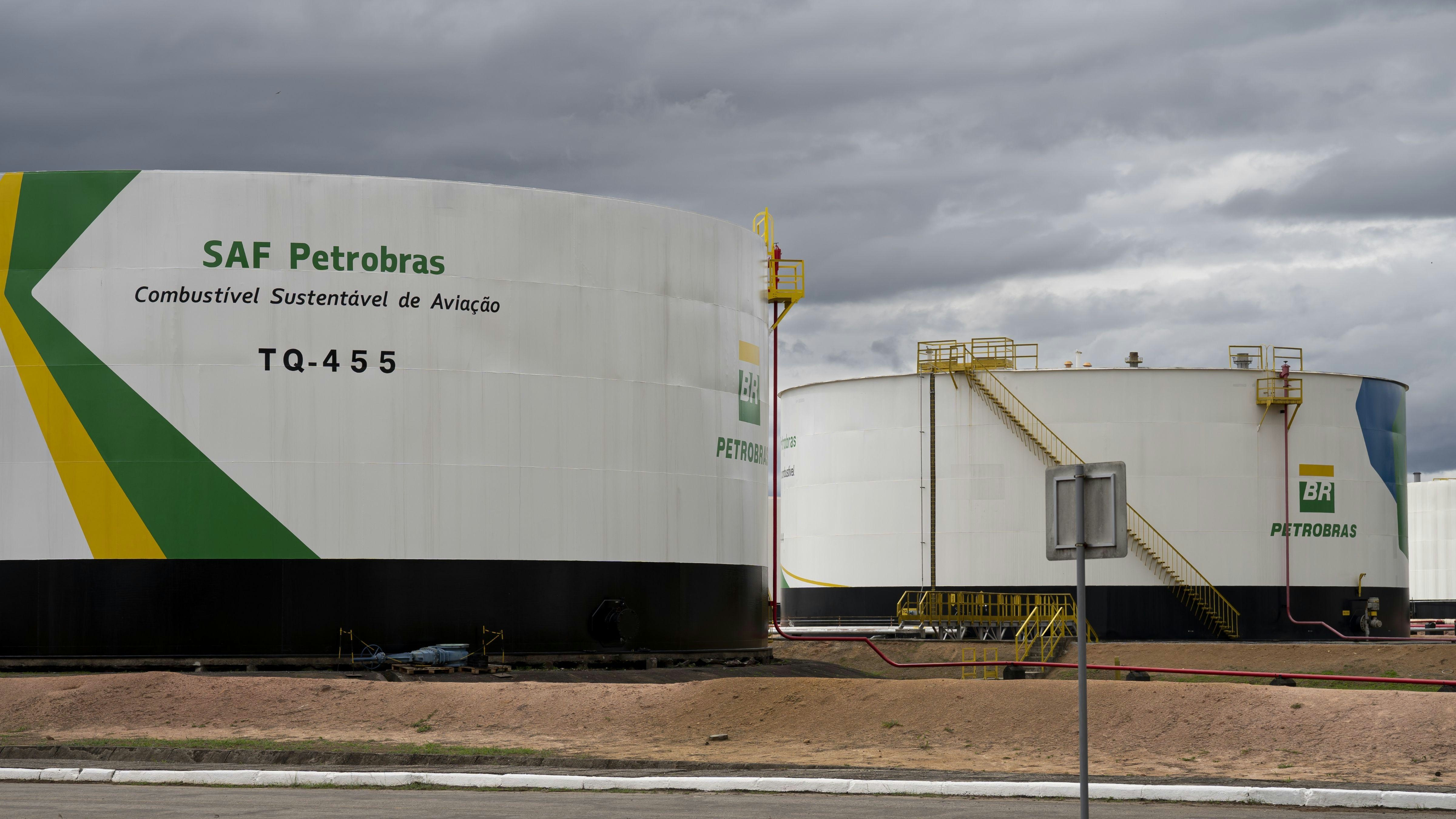
Petrobras Delivers Brazil’s First Sustainable Aviation Fuel
Petrobras has announced the delivery of Brazil’s inaugural batch of sustainable aviation fuel (SAF), a landmark development in the country’s pursuit of decarbonizing its aviation sector. Produced at the Duque de Caxias Refinery (Reduc) in Rio de Janeiro, the fuel is immediately available for use and can replace traditional kerosene without necessitating any modifications to aircraft or airport infrastructure.
Production and Certification
The state-owned energy company highlighted that this pioneering SAF complies with stringent international aviation standards and holds certification under ISCC-CORSIA, ensuring both sustainability and traceability. Petrobras President Magda Chambriard described the launch as a decisive step toward reducing aviation emissions and aligning Brazil with global environmental objectives. She emphasized the product’s competitiveness and its capacity to meet international market demands.
The SAF is manufactured through co-processing at Petrobras’ refineries, blending renewable feedstocks such as technical corn oil and soybean oil with conventional kerosene. This hybrid composition produces a fuel chemically identical to traditional jet fuel in terms of operational safety, while enabling a reduction in net CO₂ emissions by up to 87%, according to company estimates.
Market Context and Expansion Plans
This achievement places Brazil among a select group of nations advancing commercial-scale production of sustainable fuels. Nevertheless, Petrobras faces growing competition from global entities like LanzaJet and Shell, which are investing in alternative carbon reduction technologies, including direct air capture. European airlines, responding to regulatory and public pressures, are increasingly shifting away from superficial environmental claims and committing to tangible emissions reductions through SAF adoption.
Petrobras is actively expanding its SAF production capabilities, conducting tests at other refineries such as Revap, with plans to initiate commercial operations at Replan, Regap, and additional facilities by 2026. This expansion is designed to meet rising demand driven by new environmental regulations. The International Civil Aviation Organization (ICAO), through its CORSIA program, will mandate the use of SAF by Brazilian airlines on international flights starting in 2027, with domestic requirements expected to increase under the Future Fuel Act.
Challenges Ahead
Despite these advances, Petrobras’ capacity to scale renewable fuel production may be constrained by recent reductions in capital expenditure, a response to lower oil prices. This financial tightening could affect future investments in SAF and other renewable initiatives, particularly as competitors such as Shell and Boeing accelerate their carbon removal and sustainable fuel projects.
The introduction of SAF by Petrobras underscores Brazil’s commitment to the global energy transition and reinforces its alignment with international sustainability standards. As the aviation industry faces intensifying pressure to reduce emissions, Petrobras’ entry into the SAF market represents both a strategic opportunity and a significant test of its ability to compete in a rapidly evolving sector.

Etihad Airways Suspends Airbus A380 Flights on Key Route

Aditya Birla Group Seeks Approval for Aircraft Leasing in GIFT City

Qatar Airways Highlights Innovation and Connectivity at Arabian Travel Market 2026

Hong Kong's Five-Year Plan Includes Andrew Fan's Aircraft Parts Processing Hub Proposal

ACIA Aero Leasing Delivers ATR72-600 to Air Nostrum

RTX Appoints Jill Albertelli as Head of Pratt & Whitney

TAT Technologies Joins Beyond Aero Hydrogen Aircraft Program

AURAK Study Highlights Barriers to Air Taxi Adoption in Emerging Economies

Xiamen Air Selects Altitude for 787 Maintenance at Heathrow

Etihad and Swissport Extend Global Partnership
