صورة

حوّل رؤى الذكاء الاصطناعي إلى أفعال منسّقة

انضم إلى قائمة الانتظار لـ AeroGenie اليوم!

الرائج الآن

Categories

PlaneSense Marks 30 Years in Private Aviation
September 10, 2025By ePlane AI
PlaneSense Marks 30 Years in Private Aviation
0
0
PlaneSense
Fractional Ownership
Pilatus PC-12

PlaneSense Marks 30 Years in Private Aviation

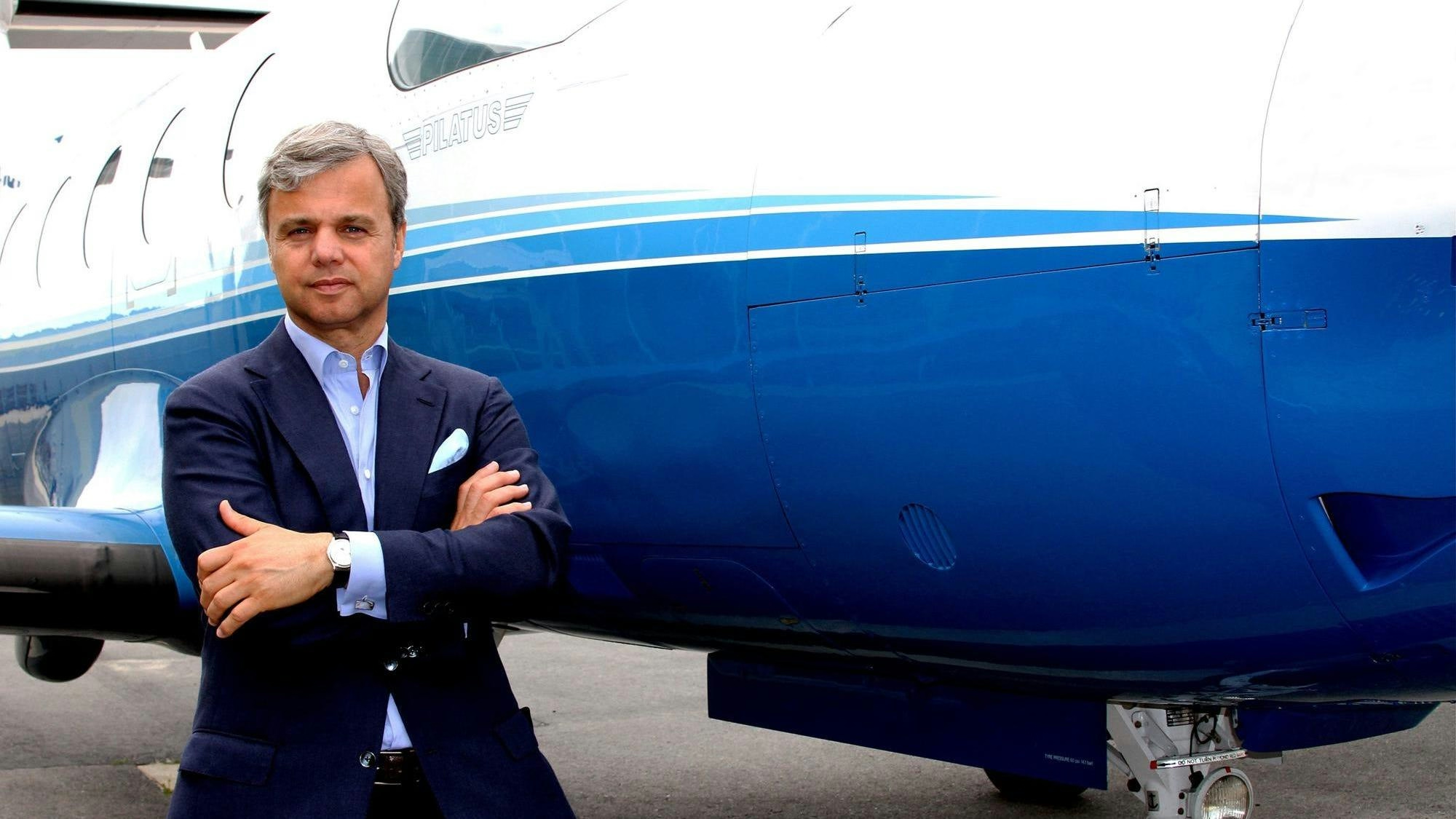
PORTSMOUTH, N.H., Sept. 10, 2025 – PlaneSense, a prominent provider of fractional aircraft ownership, is celebrating its 30th anniversary this week, marking three decades of sustained growth, innovation, and unwavering dedication to client service within the private aviation sector.

A Legacy of Innovation and Service

Established in 1995, PlaneSense stands as the second oldest fractional aircraft program in the United States. Throughout its history, the company has consistently emphasized safety, reliability, and personalized service, setting new benchmarks in the industry. Today, PlaneSense operates the largest fleet of Pilatus PC-12 turboprops and PC-24 jets in the country, offering a comprehensive suite of services that includes fractional ownership, jet card programs, and other premium private aviation solutions.

George Antoniadis, Founder, President, and CEO of PlaneSense, reflected on the company’s origins, stating, “When we launched PlaneSense three decades ago, our vision was to offer a more intelligent and highly personal approach to private flying. We believed clients deserved not only sophisticated aircraft but also a trusted partner dedicated to fulfilling their flight needs with a cost-effective, safe, and service-focused solution. Thirty years later, that philosophy still drives every decision we make.”

The company’s journey began with the delivery of its first Pilatus PC-12 in September 1995. The aircraft’s short field capabilities, ability to operate from unpaved runways, and spacious cabin quickly made it a preferred choice for both business and leisure travelers. In 2015, PlaneSense expanded its offerings by launching a jet program, which culminated in the acquisition of the world’s first Pilatus PC-24 jet in 2018. The PC-24, noted for its larger cabin and extended range, has further enhanced the private flight experience for PlaneSense’s clientele.

Navigating a Changing Industry Landscape

While PlaneSense remains the largest Pilatus operator in the United States, it faces a private aviation industry undergoing rapid transformation. The broader charter market contends with increasing competition, evolving regulatory requirements, and challenges in talent acquisition. These factors present potential obstacles to PlaneSense’s market position and will likely shape its strategic direction as it adapts to shifting dynamics in both the U.S. and European markets.

In response to these challenges, PlaneSense has continued to innovate and expand its service offerings. Over the past year, the company introduced the PlaneSense Sourcing Solution, which grants clients access to private flights beyond the company’s own fleet, both domestically and internationally. An exclusive partnership with Jetfly extends seamless service to Europe and Northern Africa, allowing clients to utilize their flight hours on Jetfly’s Pilatus aircraft. Additionally, the launch of the CobaltPass jet card provides enhanced flexibility for clients seeking customized travel options.

Antoniadis emphasized the company’s commitment to innovation, stating, “As we celebrate this milestone, I am reminded that innovation is in our DNA. From pioneering new approaches for fractional ownership to embracing the latest advancements in aviation technology, we are constantly evolving to better serve our clients. Their trust empowers us to expand our offerings and set new standards.”

As PlaneSense commemorates 30 years of service, its dedication to excellence, safety, and customer satisfaction remains resolute, even as it navigates the complexities and evolving demands of the private aviation industry.

More news
Samoa Airways Recovers Damaged DHC-6-300 Aircraft

Samoa Airways Recovers Damaged DHC-6-300 Aircraft

Samoa Airways Undertakes Recovery of Damaged DHC-6-300 Aircraft Samoa Airways (OL, Apia Faleolo) is actively engaged in the recovery of its damaged DHC-6-300 aircraft, registration 5W-FAY (msn 690), following a runway excursion at Fitiuta on July 28, 2026. Rather than opting for temporary repairs and a ferry flight to its maintenance base in Apia Faleolo, the airline has chosen to dismantle the aircraft on site. Engineers from Unity Aviation will conduct a thorough technical assessment to determine whether repairs can be completed in Samoa or if the aircraft will require more extensive work in Canada. The recovery operation, which began with the aircraft’s removal from the airport on August 14, is expected to take up to three months. Operational Challenges Amid Industry Changes The grounding of 5W-FAY has rendered approximately one-third of Samoa Airways’ fleet inoperable, underscoring the operational vulnerabilities faced by smaller regional carriers. This incident occurs amid significant shifts in the regional aviation market, including the relaunch of the DHC Sherpa airlifter, which is altering competitive dynamics and potentially impacting the market position of aircraft such as the DHC-6-300. Regional competitors like CemAir have demonstrated resilience and strategic agility, successfully navigating growth despite prevailing industry challenges. Broader trends within the aviation sector are also shaping Samoa Airways’ recovery strategy. Major carriers, including Copa Airlines, are projecting increased capacity, while others like SunExpress are embracing flexible and sustainable growth models. The ongoing recovery from the COVID-19 pandemic has highlighted the critical importance of adaptability, as evidenced by operational disruptions experienced by airlines such as Aerodiana. These evolving conditions are likely to influence both the technical repair decisions and the commercial considerations surrounding the restoration of Samoa Airways’ fleet. As the airline awaits the outcome of the technical evaluation, it faces the complex task of balancing immediate operational demands with the broader, evolving dynamics of the regional and global aviation markets. The decision on whether 5W-FAY can be repaired locally or must undergo more extensive work abroad will carry significant implications for Samoa Airways’ competitiveness and resilience in an increasingly fluid industry environment.
Man Ingested by Frontier Airlines Engine Marks Denver’s Sixth Airfield Security Breach in Three Years

Man Ingested by Frontier Airlines Engine Marks Denver’s Sixth Airfield Security Breach in Three Years

Man Ingested by Frontier Airlines Engine Highlights Denver’s Persistent Airfield Security Challenges On May 8, a fatal incident at Denver International Airport (DEN) brought renewed attention to the airport’s ongoing airfield security vulnerabilities. Matthew Mott, who gained unauthorized access to the secure airfield, was tragically ingested by the engine of a Frontier Airlines Airbus A321neo during its takeoff roll. The collision caused a loud impact, resulting in an engine malfunction and fire. Despite the severity of the event, all passengers and crew were safely evacuated and rebooked on a replacement flight. Authorities later confirmed Mott’s death at the scene, ruling the incident a suicide. A Pattern of Security Breaches at Denver International This incident marks the sixth known airfield security breach at Denver International Airport over the past three years, underscoring persistent challenges in maintaining perimeter security. Previous breaches have varied in nature, including individuals breaching perimeter fences, sitting on taxiways, or attempting to cross the airfield on foot. One notable case involved a trespasser claiming to be “walking to Texas,” a journey of over 900 miles. While none of these prior incidents resulted in fatalities, the recurrence of such breaches raises serious concerns about the effectiveness of current security measures. Annmarie Heth, assistant professor of aviation and aerospace sciences at Metropolitan State University of Denver, emphasized that although fatal outcomes remain rare, determined individuals can sometimes circumvent even advanced security protocols. The frequency of these intrusions at one of the nation’s busiest airports has intensified scrutiny of Denver’s detection systems and response strategies. Implications for Aviation Security and Industry Response The May 8 tragedy has placed the aviation industry under heightened pressure to reassess airfield security protocols. Regulatory agencies are expected to increase oversight, potentially leading to operational disruptions as airports and airlines implement enhanced security measures. Frontier Airlines, which has recently focused on fleet rightsizing and operational efficiency, now faces intensified public and regulatory scrutiny regarding the safety and reliability of its fleet and procedures. Compounding the challenge is the absence of a comprehensive national database for airport security incidents. While the Federal Aviation Administration (FAA) monitors runway incursions—defined as unauthorized presence of aircraft, vehicles, or individuals on runways—only two of Denver’s six recent breaches are recorded in FAA data. In total, DEN has documented 37 incidents involving unauthorized vehicles and pedestrians over the past two years, highlighting gaps in reporting and tracking. As investigations into Mott’s death continue, calls are growing for more robust and standardized reporting mechanisms for airfield security breaches nationwide. With public confidence at stake, the Denver incident may serve as a catalyst for industry-wide reforms in security standards and operational practices.
The Advantages and Disadvantages of Owning Versus Leasing a Private Jet

The Advantages and Disadvantages of Owning Versus Leasing a Private Jet

The Advantages and Disadvantages of Owning Versus Leasing a Private Jet Private jets have long been emblematic of luxury and exclusivity, yet access to them has expanded significantly in recent years. Between 2000 and 2022, the global private jet fleet more than doubled, increasing from 10,000 to over 23,000 aircraft. Demand continues to rise sharply, with over 8,000 new jets anticipated in the coming decade and 3.6 million business jet flights recorded worldwide in 2024—a 30% increase compared to 2019. Leading companies such as NetJets, VistaJet, and Flexjet are responding to this surge by prioritizing sustainability, personalization, and cutting-edge technology. Privacy, Comfort, and Flexibility For high-net-worth individuals and corporations, commercial air travel often fails to meet the demands of time efficiency, flexibility, and privacy. Private jet ownership offers a level of control unattainable through commercial airlines. Owners have the authority to determine exactly who is on board, a critical advantage for executives, celebrities, and others requiring confidentiality. Additionally, cabin customization is a significant benefit, allowing owners to tailor everything from seating arrangements and lighting to Wi-Fi connectivity and in-flight dining according to personal preferences. Flexibility remains a defining feature of private aviation. Owners can fly directly to smaller regional airports, depart according to their own schedules, and alter routes mid-flight if necessary. Unlike commercial airlines, private jets are not subject to blackout dates or competition for seats. Speed is another advantage; most private jets cruise between Mach 0.78 and 0.81 (approximately 515–621 mph), with high-performance models such as the Gulfstream G650 and Bombardier Global 8000 pushing these limits even further. The High Cost and Commitment of Private Jet Ownership This level of control and convenience, however, comes at a considerable cost. The largest private jets can exceed $400 million in price, while smaller models like the HondaJet Elite start at around $5.5 million. Mid-size jets such as the Bombardier Global 5000 typically range from $35 million to $60 million. Although purchasing a used jet may reduce upfront expenses, it often necessitates additional investment in upgrades or refurbishments. Beyond the initial purchase, ownership entails substantial ongoing costs. Annual operating expenses—including maintenance, repairs, hangar fees, insurance, and crew salaries—generally fall between $500,000 and $1 million. Recent developments have introduced new financial pressures; for instance, Starlink’s private jet internet service recently doubled its monthly fee for the Aviation Global Unlimited plan and launched a new Regional plan with limited coverage. Industry responses have varied, with Flexjet absorbing these increased costs for its fractional owners, while Nicholas Air has publicly criticized the price hikes. Emerging Trends: Return on Investment and Shared Luxury As operational costs escalate, business leaders are increasingly evaluating the return on investment (ROI) of private aviation with a focus on productivity and operational efficiency rather than solely on acquisition costs. Concurrently, the trend of private jet sharing is gaining momentum. Affluent travelers are increasingly opting for shared luxury flights, seeking to enjoy the benefits of private aviation without bearing the full financial burden of ownership. Private jets continue to offer unmatched privacy, comfort, and flexibility, but these advantages come with significant financial and operational commitments. As the industry evolves in response to new technologies, rising costs, and changing traveler preferences, prospective owners and lessees must carefully assess the true value of private aviation, balancing luxury and convenience against the challenges and expenses involved.
Former Spirit Employees Express Concerns Over AI Partnership With Google

Former Spirit Employees Express Concerns Over AI Partnership With Google

Former Spirit Employees Challenge Google’s AI Data Acquisition Over Privacy Concerns Former employees of Spirit Airlines have voiced significant concerns regarding a recent agreement that would transfer a substantial volume of the defunct airline’s business records to Google for use in training artificial intelligence models. The Association of Flight Attendants-CWA (AFA), representing thousands of former Spirit staff, filed a formal objection on Tuesday in the U.S. Bankruptcy Court for the Southern District of New York. The union argues that the $10 million deal jeopardizes employee privacy and should be halted. Spirit Airlines, which ceased operations earlier this year following its second bankruptcy, agreed to sell its data to Google after the tech giant outbid AI startup Mercor. The arrangement requires Google to collaborate with a third-party “deidentification agent” to ensure that no consumer information is included in the dataset, in compliance with the California Consumer Privacy Act (CCPA). However, the AFA contends that these safeguards do not adequately protect employee records, which encompass sensitive materials such as business travel logs, crew training files, tax documents, and over 100 million emails. AFA attorney Charles Rubio emphasized in the court filing that while customer data is shielded, “no comparable screen has been applied to the employment record that this transaction actually conveys.” Rubio warned that even in the absence of names, the data could expose details about employee grievances, training performance, internal investigations, compensation adjustments, and communications related to management or union affairs. The union is urging the court to reject the sale unless all flight attendant information is explicitly excluded from the transfer. Following the objection, the bankruptcy court postponed approval of the $10 million transaction, according to The Wall Street Journal. A Google spokesperson responded to the concerns by stating, “We will not receive any personal information from this dataset. Any data we receive will be rigorously scrubbed of any personally identifiable information by a third party before receipt.” Nevertheless, the dispute underscores growing tensions over how technology companies acquire the vast datasets necessary to develop advanced AI systems. Broader Implications for AI Development and Privacy Google’s pursuit of Spirit Airlines’ data reflects a wider industry trend. As AI models become increasingly sophisticated, technology giants are seeking new and often controversial sources of training data, sometimes at the expense of employee privacy and ethical standards. With much of the publicly available internet content already harvested for AI training, companies are turning to alternative datasets, raising complex questions about consent and data protection. While synthetic data has been proposed as a potential solution, it presents its own technical and ethical challenges. Google’s AI ambitions have recently encountered setbacks. The company’s Gemini 3.5 Pro model has missed several scheduled release dates, prompting internal restructuring within its AI division. Meanwhile, competitors such as Anthropic and OpenAI continue to advance rapidly, intensifying the competition for high-quality training data. Additionally, Google’s increased capital expenditure on its cloud computing division has sparked investor concerns regarding the long-term sustainability of its AI investments. As the bankruptcy court deliberates on the fate of Spirit’s data, this case has emerged as a focal point in the ongoing debate surrounding privacy, ethics, and the future trajectory of artificial intelligence development.
China Certifies Pilotless Air Taxi for Export; Sri Lanka First Buyer

China Certifies Pilotless Air Taxi for Export; Sri Lanka First Buyer

China Certifies Pilotless Air Taxi for Export; Sri Lanka Becomes First Buyer EHang Holdings Limited (Nasdaq: EH) has announced a major advancement in the global deployment of autonomous air taxis with the launch of its Global Fast Track Program. Unveiled on August 19, this structured, four-phase initiative is designed to assist foreign civil aviation authorities in evaluating and authorizing pilotless electric vertical take-off and landing (eVTOL) operations. Sri Lanka’s Civil Aviation Authority and Ministry of Ports and Civil Aviation have become the program’s first adopters, targeting provisional commercialization within four months, subject to the completion of all necessary safety, technical, and regulatory approvals. EHang’s approach extends beyond the mere sale of aircraft; it capitalizes on the company’s extensive regulatory experience across 23 countries, offering this expertise as an exportable service. For regulators hesitant to develop new frameworks for autonomous aviation from the ground up, EHang provides a streamlined alternative: validate its aircraft, which already holds certification from China’s Civil Aviation Administration (CAAC), thereby significantly reducing the regulatory burden. The Only Certified Pilotless eVTOL Stack At the core of EHang’s offering is the EH216-S, the world’s first pilotless, human-carrying eVTOL to receive a comprehensive certification package from the CAAC. This includes the type certificate, production certificate, and standard airworthiness certificate. In March 2025, two EHang operators were granted China’s first Air Operator Certificates for pilotless passenger eVTOL commercial service, initiating ticketed flights in Guangzhou and Hefei. This full certification suite—covering type, production, airworthiness, and commercial operating authority—constitutes the regulatory foundation that EHang now proposes to export to other countries. EHang contends that by validating an already-certified aircraft for local airspace, rather than conducting a full regulatory assessment from scratch, foreign authorities can reduce the timeline from initial inquiry to operational trials from several years to mere months. Hu Huazhi, EHang’s Founder, Chairman, and CEO, described the program as a “systemic advance” that transforms regulatory exploration into tangible progress. Four-Phase Global Fast Track Program The Global Fast Track Program condenses years of regulatory engagement into a four-stage process. The first phase involves establishing a regulatory workflow and validation pathway tailored to the host country’s aviation framework. The second phase focuses on site selection, infrastructure development, and deployment of operational systems. The third phase consists of validation flights conducted within a designated sandbox zone under agreed safety standards. The final phase is the commercial launch, contingent upon receiving operational approval. This framework draws on practical experience from early sandbox projects in Thailand, Qatar, and Switzerland. Notably, Thailand’s Advanced Air Mobility Sandbox, launched in October 2025 in Bangkok, serves as the closest operational precedent, although it has yet to secure full commercial authorization. Opportunities and Challenges Ahead China’s certification of a pilotless air taxi for export, with Sri Lanka as the inaugural buyer, represents a significant milestone for the autonomous aviation industry. However, it also presents considerable challenges. Regulatory hurdles remain substantial in international markets, as each country’s aviation authority must rigorously assess and validate the technology within its own operational context. Additionally, EHang faces competition from established aviation companies that may accelerate their autonomous flight initiatives or pursue strategic partnerships in response. The market is expected to witness increased interest from other potential buyers alongside intensified scrutiny from global aviation regulators. As EHang’s regulatory model gains momentum, competitors are likely to expedite the development of comparable technologies, heightening the race to commercialize pilotless air taxis on a global scale. Sri Lanka’s adoption positions the country as a regional pioneer in autonomous air mobility, with plans to deploy the technology along tourism routes. The forthcoming months will be critical in determining whether EHang’s regulatory framework can fulfill its promise of rapid, safe, and scalable deployment beyond China’s borders.
US Pilot Hourly Pay Ranges from $90 for Regional to $465 for Widebody Flights

US Pilot Hourly Pay Ranges from $90 for Regional to $465 for Widebody Flights

US Pilot Hourly Pay Ranges from $90 for Regional to $465 for Widebody Flights The hourly pay for pilots in the United States varies widely, reflecting a complex career trajectory shaped by experience, seniority, and aircraft type. A first-year regional airline first officer can expect to earn between $90 and $110 per flight hour under current contracts. In stark contrast, a senior widebody captain at a major airline may earn upwards of $465 per hour. This substantial disparity underscores the multifaceted nature of pilot compensation, which evolves not only through annual raises but also through critical career milestones such as upgrading to captain, transitioning from regional to major carriers, and moving between aircraft categories. Pilot earnings are also highly sensitive to timing and career progression. Many pilots spend years accumulating flight hours before securing a position with an airline. Once hired, a regional first officer might advance to captain within approximately two years, though this promotion can be accompanied by a temporary pay reduction if the pilot moves to a major airline as a new first officer. From that point, seniority and aircraft assignments play a decisive role in shaping income potential. By the time a pilot attains the rank of senior widebody captain, their hourly compensation can be nearly five times that of a starting regional first officer. Regional Starting Pay Has Risen Sharply Entry-level pay for regional pilots has seen a marked increase in recent years, reflecting the industry's urgent need to attract and retain qualified personnel amid intense competition from major carriers. For instance, in 2026, SkyWest Airlines offers a first-year first officer rate of $92.73 per flight hour, while Endeavor Air provides $105.08. Most regional airlines now cluster their starting pay between $95 and $105 per hour. With a contractual guarantee of 75 flight hours per month following initial training, base annual earnings for regional first officers range from approximately $83,000 to $95,000, excluding additional flying hours, per diem allowances, bonuses, or other forms of compensation. This represents a significant shift from previous decades when regional first officers often earned less than $40,000 annually. The sharp rise in starting pay is driven by the operational necessity of retaining pilots rather than voluntary wage increases. For example, SkyWest’s pay scale increases from $92.73 in the first year to $98.08 by the third year, making regional flying a more financially viable entry point than in the past. Among regional carriers in 2026, first-year first officer hourly pay rates include $92.73 at SkyWest and Republic Airways, $105.08 at Endeavor Air, $99.00 at Envoy Air, and $102.00 at PSA Airlines. Major Pay Jumps and Industry Challenges The most significant increase in pilot compensation typically occurs upon upgrading to captain. Regional first officers often experience a shorter path to captaincy compared to their counterparts at major airlines, with promotions possible within 18 to 24 months depending on staffing levels and seniority. Despite the rise in regional pay, disparities across the aviation industry continue to affect pilot recruitment and retention. Military flight pay caps have remained stagnant for decades, making commercial airline careers increasingly attractive and intensifying competition for experienced pilots. In response, airlines frequently adjust pay scales and operational strategies to attract and retain talent while managing costs and maintaining service quality. Ongoing contract negotiations, such as those at Delta Air Lines, highlight the challenges of balancing pilot compensation demands with operational requirements. Scheduling disruptions and the need for competitive pay packages illustrate the evolving landscape of pilot remuneration in the United States, as both airlines and pilots navigate a market defined by opportunity and complexity.
NASA Chooses University Teams to Support Aviation Research

NASA Chooses University Teams to Support Aviation Research

NASA Selects University Teams to Advance Aviation Research NASA has announced the selection of four university teams to lead pioneering projects designed to shape the future of aviation. These initiatives, supported through the agency’s University Leadership Initiative (ULI), encompass a broad spectrum of research areas, including high-supersonic propulsion systems and low-noise flight trajectories for urban air mobility. The program offers students invaluable hands-on experience, enabling them to contribute directly to flight research aligned with NASA’s strategic aeronautics goals. Focus Areas and Strategic Objectives The chosen projects address key priorities within NASA’s aeronautics mission, such as the advancement of commercial high-speed aircraft, the development of innovative aviation tools, improvements in air traffic management safety and efficiency, and the integration of emerging air transportation modes into the national airspace system. Andrew Provenza, project manager at NASA’s Glenn Research Center, emphasized that these awards reinforce NASA’s commitment to aeronautics innovation. He highlighted that the teams will explore novel propulsion concepts for supersonic flight, revolutionary engineering approaches for aerospace system design and certification, and learning-enabled avionics tailored for advanced and urban air mobility platforms, all of which have the potential to enhance air traffic control modernization. The ninth round of ULI funding allocates approximately $30 million over multiple years, empowering universities to assemble research teams and pursue ambitious projects. This initiative not only cultivates the next generation of the U.S. aeronautics research workforce but also produces findings that could significantly influence the aviation industry. Faculty-led teams, comprising graduate and undergraduate students, frequently collaborate with other academic institutions, community colleges, and industry partners, while receiving guidance from NASA, the Federal Aviation Administration, and other relevant organizations. Challenges and Broader Impact Despite the promise of these projects, NASA and its university collaborators face several challenges. Securing adequate funding to sustain these complex research efforts remains a critical concern. Additionally, maintaining alignment between university research activities and NASA’s evolving strategic objectives requires ongoing coordination. The integration of new technologies into existing aviation systems introduces further complexity, necessitating meticulous management and collaboration across multiple stakeholders. The initiative’s influence extends beyond academia, as private aviation companies increasingly express interest in partnering with universities to leverage emerging innovations. This growing collaboration is expected to accelerate technological advancements in the sector. Furthermore, other government agencies and international organizations may establish similar programs to promote aviation research, intensifying competition for top aerospace talent among universities and private enterprises. Selected University Teams and Their Projects The University of Minnesota, led by Terrence Meyer, will undertake a four-year project focused on developing an adaptive supersonic combined cycle engine. This fuel-flexible propulsion system is designed to transition from a traditional jet turbofan to a ramjet engine, enabling supersonic cruise speeds of up to Mach 4 (over 3,000 mph). Stanford University has two selected projects. The first, led by Somil Bansal, aims to create avionics systems that incorporate machine learning with an emphasis on continuous safety reinforcement. This work seeks to facilitate the safe integration of AI-enabled avionics into the national airspace. The second project, under the direction of Juan Alonso, will develop a high-fidelity simulation framework to design noise-optimal flight trajectories for urban air mobility operations. This research addresses ambient noise concerns and supports the advancement of small aircraft operations within urban environments. Through these initiatives, NASA intends to drive innovation, bolster the nation’s aeronautics workforce, and sustain U.S. leadership in aviation research amid a rapidly evolving global landscape.
Airbus Conducts Freighter First Flight as Delivery Figures Influence Stock

Airbus Conducts Freighter First Flight as Delivery Figures Influence Stock

Airbus Advances A350F Freighter First Flight Amid Delivery Targets and Market Expectations Airbus has accelerated the maiden flight of its A350F freighter to the third week of September, advancing from an earlier target set for the end of the year. This adjustment is a strategic move designed to preserve the certification schedule for deliveries planned in 2027. The European aerospace leader is emphasizing operational execution and delivery performance as the primary factors influencing its share price, rather than focusing solely on securing new orders. With a strong order backlog already in place, the critical question now centers on Airbus’s ability to sustain production momentum and meet its ambitious delivery goals. Commercial Momentum and Order Book Strength Recent developments have reinforced Airbus’s market position. IndiGo, India’s largest airline, converted a letter of intent from June into a firm order for 30 additional A350-900 aircraft, doubling its total commitment to 60 planes. CEO Pieter Elbers characterized this move as a robust endorsement of both the Indian aviation sector and the partnership with Airbus. The A350 program has now accumulated over 1,400 orders from 63 customers worldwide. Among these is Philippine Airlines, which placed a follow-on order for nine A350-1000s at the Farnborough Air Show, becoming the first Southeast Asian operator of the type. The momentum extends beyond widebody aircraft. In July alone, Airbus secured 138 net orders and delivered 67 aircraft to 39 customers, bringing the year-to-date delivery total to 418 against a full-year target of 870. Significant contracts include SMBC Aviation Capital’s order for 100 A320neo jets and a U.S. Army contract for ten UH-72B Lakota helicopters, underscoring demand across both commercial and defense sectors. The Strategic Importance of the A350F Freighter The A350F freighter is a cornerstone of Airbus’s strategy to challenge Boeing’s dominance in the air freight market. The aircraft offers a payload capacity of 111 tonnes over a range of 8,700 kilometers. As of July, firm orders for the freighter stood at 107, with first deliveries anticipated in the second half of 2027, contingent on certification from both the European Union Aviation Safety Agency (EASA) and the Federal Aviation Administration (FAA). The test aircraft, registered as F-WXLD, has been revealed in a distinctive livery, and the upcoming first flight is a critical milestone. Any delay in this phase could raise concerns about supply chain stability and Airbus’s ability to meet its broader production targets. Potential challenges remain. A postponement of the A350F’s first flight could negatively affect delivery figures and investor confidence, particularly in a market sensitive to operational disruptions. Recent regulatory delays, such as those impacting KLM’s new A350 deliveries, have already underscored these risks. Meanwhile, competitors remain vigilant: Boeing seeks to maintain its lead in the freighter segment, while China’s COMAC continues to develop its own aircraft offerings. Delivery Targets and Market Implications The pivotal issue for investors is whether Airbus can achieve its target of 870 aircraft deliveries this year. Having delivered 418 aircraft through July, the company faces the challenge of significantly increasing production output in the remaining months. Although the A350F’s first flight is not itself a delivery milestone, it serves as a vital indicator of the overall health and efficiency of Airbus’s production system. Looking forward, Airbus aims to double its commercial aircraft earnings by 2029, but near-term challenges persist, particularly related to the initial learning curve associated with the A350F program. As the September test flight approaches, market participants will closely monitor any signs of delay or disruption that could influence both delivery performance and stock market sentiment.
Hypersonic blast converts diamond to graphite, could aid defense armor

Hypersonic blast converts diamond to graphite, could aid defense armor

Hypersonic Blast Converts Diamond to Graphite, Paving Way for Advanced Defense Armor A pioneering manufacturing technique developed at Rice University promises to transform the future of defense armor by stabilizing diamond during thermal processing at relatively low pressures. This advancement results in a dense and resilient composite material, overcoming longstanding barriers in the production of diamond-based components. The findings, published in *Materials Today*, demonstrate how combining specific powder materials can unlock new possibilities for high-performance materials in extreme environments. Innovative Material Synthesis The research addresses a critical challenge in material science: while small diamond particles are inexpensive and readily produced, forming them into large, solid shapes has proven difficult. Conventional sintering methods, which rely on heat and pressure to fuse particles, often cause diamond to degrade into soft graphite unless subjected to extremely high pressures. This limitation restricts the scalability and practical application of diamond composites. To overcome this, the Rice University team engineered a multi-material blend by mixing fine diamond particles with cubic boron nitride, selected for its comparable physical properties, and incorporating cobalt as a binder to stabilize the mixture. Employing spark plasma sintering—a rapid process that simultaneously applies heat and pressure—they fused the powders into a dense, tough composite. The resulting material features diamond grains embedded within a continuous cubic boron nitride matrix, with cobalt distributed throughout. This structure renders the composite nearly impossible to machine, making it highly suitable for demanding aerospace and defense applications. Testing Under Extreme Conditions The mechanical resilience of the composite was evaluated through high-velocity collision experiments. Researchers subjected the material to impacts from tiny metal projectiles traveling at speeds exceeding seven times the speed of sound. The composite maintained its structural integrity under these hypersonic impacts. However, when exposed to larger projectiles at even higher velocities, the material fractured. Detailed analysis of the fracture surfaces, supported by molecular dynamics simulations, revealed that the extreme impact induced a rapid phase transformation of diamond into graphite—a process occurring within microseconds, in stark contrast to the slower, heat-driven conversion typically observed. Abhijit Biswas, the study’s first author, explained, “Extreme impact can drive diamond to graphite within microseconds, rather than through the slower heat-driven process we normally associate with this transformation.” This discovery provides new insight into diamond’s behavior under the most severe mechanical stresses. Implications for Defense and Industry The ability to manufacture tough, diamond-based composites without resorting to extreme pressures could enable large-scale production of advanced armor and aerospace components. Nonetheless, the hypersonic blast-induced conversion of diamond to graphite also introduces challenges that must be addressed to ensure the process is both efficient and cost-effective. The defense sector is already responding to these developments, with growing market interest in low-cost hypersonic weapons. Castelion’s recent $1 billion funding round to scale production exemplifies this trend, while competitors, such as South Korea, are investing in AI-driven defense technologies. Beyond defense, the broader market may also pivot toward alternative materials for battery manufacturing, capitalizing on the potential to convert waste carbon into graphite. As research progresses, the intersection of material science and defense innovation is poised to accelerate, with the diamond-to-graphite phase change at hypersonic speeds presenting both promising opportunities and significant challenges for the industry.
Achieving the AMES Rating in a Lockwood AirCam

Achieving the AMES Rating in a Lockwood AirCam

Achieving the AMES Rating in a Lockwood AirCam A Unique Path to a Rare Rating The Airplane Multi-Engine Sea (AMES) rating stands among the rarest and most memorable qualifications a pilot can earn. Unlike conventional multi-engine training, which typically occurs on paved runways in aircraft such as the Piper Seminole or Beechcraft Duchess, the AMES course offered by Sebring Aviation in central Florida takes place over open water. Here, pilots trade traditional trainers for the distinctive twin-engine AirCam, manufactured by Lockwood Aero, an aircraft originally designed for low-and-slow aerial photography over the Congo. The AirCam’s exceptional visibility, impressive short-water performance, and the challenge of operating a twin-engine aircraft on floats make it a unique platform for advanced seaplane training. Located at Sebring Regional Airport (KSEF), the program is open to pilots who hold at least a private pilot certificate, an unrestricted Airplane Multi-Engine Land (AMEL) rating, and a valid FAA medical certificate or BasicMed. This course is not intended for novices but rather for experienced aviators seeking to broaden their skills and gain exposure to a rarely encountered facet of aviation. Training Structure and Flight Experience The intensive three-day program combines ground instruction with practical flight training. The first day begins in the classroom under the guidance of instructor Yadiel Rios, who emphasizes understanding the rationale behind seaplane procedures rather than rote memorization. For example, when discussing anchoring techniques, Rios explains the critical importance of attaching the anchor line to the front of the float. Anchoring from the rear risks pulling the float under, increasing drag and creating hazardous conditions. This approach highlights that seaplane flying demands not only precise aircraft control but also the ability to read environmental cues, interpret water conditions, and make sound decisions in a dynamic setting. The subsequent two days focus on mastering seaplane fundamentals, including step taxiing, glassy-water landings, and asymmetric thrust maneuvers. Training culminates in a check ride conducted at the renowned Jack Brown’s Seaplane Base in Winter Haven, a fitting venue for this specialized certification. Pilots experience firsthand the AirCam’s remarkable performance, with a rotation speed of just 43 mph, allowing the aircraft to leap from water or land with agility and precision. This blend of technical challenge and exhilaration sets the AirCam apart from other training platforms. Industry Challenges and Technological Trends Achieving the AMES rating in a Lockwood AirCam occurs against a backdrop of broader challenges facing the aviation industry. The rising costs of advanced avionics and increasing cybersecurity threats pose significant concerns for operators and training providers. Additionally, the sector contends with growing interference to Global Navigation Satellite Systems (GNSS) and the obsolescence of legacy systems, which elevate lifecycle risks for both training and operational fleets. Simultaneously, the proliferation of advanced shoulder-fired missiles and integrated surface-to-air defense systems is driving rapid innovation in self-protection technologies. The industry is moving toward next-generation laser-based infrared countermeasures and advanced materials designed to reduce radar and thermal signatures. To address these evolving threats while managing costs, competitors are adopting modular, open-systems architectures that enhance defense capabilities and operational flexibility. Despite these complexities, the AMES course in the AirCam remains a distinctive opportunity. It combines rigorous training, technical mastery, and the unique thrill of flight over Florida’s lakes, offering pilots an unforgettable experience that reflects both the enduring appeal and the evolving landscape of modern aviation.
line









