
حوّل رؤى الذكاء الاصطناعي إلى أفعال منسّقة

الرائج الآن
Categories
Pratt & Whitney PW500 Engine to Power Northrop Grumman YFQ-48 Autonomous Fighter
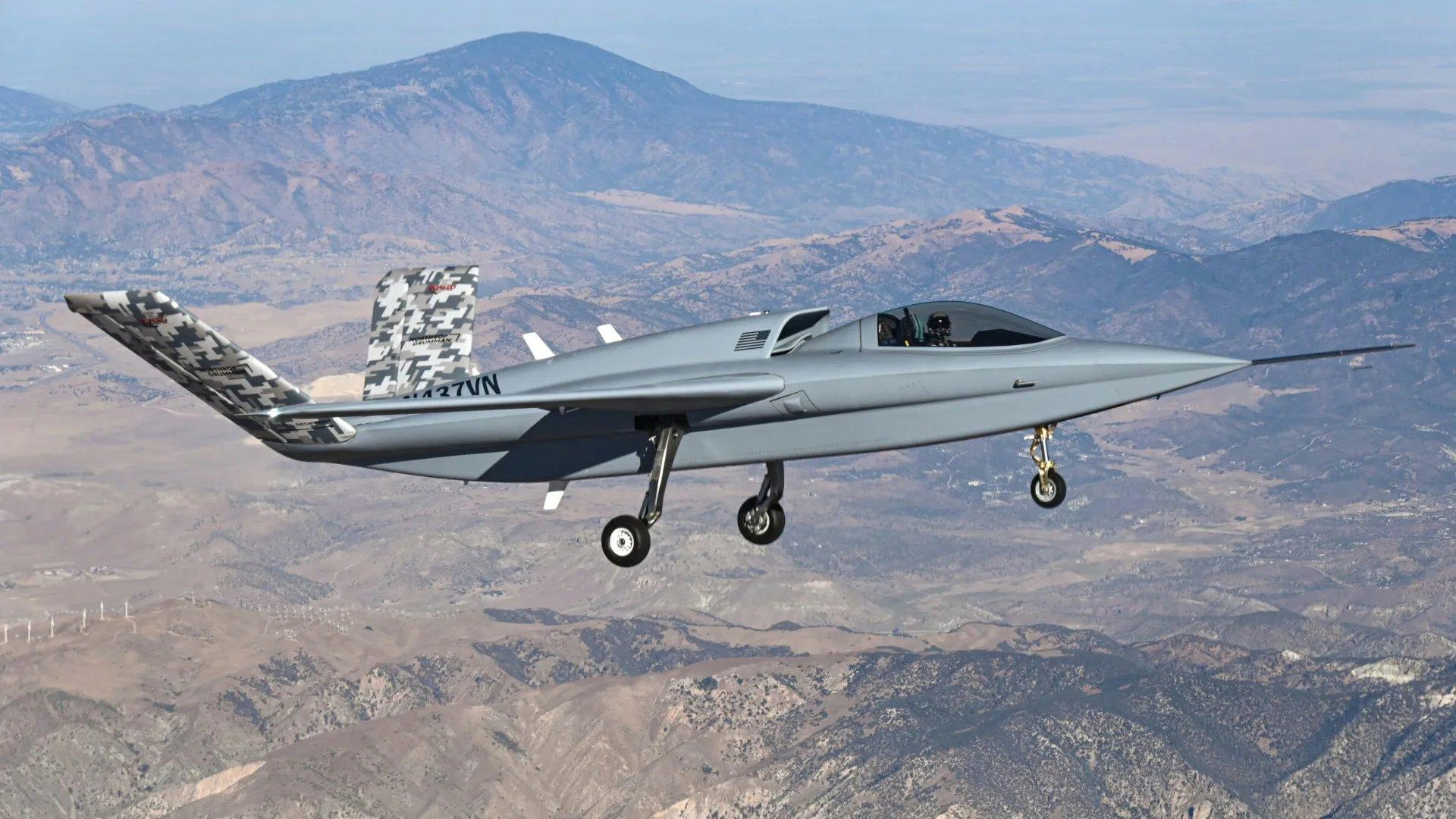
Pratt & Whitney PW500 Engine Selected for Northrop Grumman YFQ-48 Autonomous Fighter
Northrop Grumman has announced the selection of Pratt & Whitney’s PW500 turbofan engine to power its new YFQ-48A Talon Blue autonomous fighter. This marks the first instance of a Pratt & Whitney engine being integrated into an uncrewed fighter prototype. The announcement, made on April 17, underscores a growing trend among developers of Collaborative Combat Aircraft (CCA) to adopt business jet engines. This approach aims to meet the stringent cost and production targets set by the U.S. Air Force and other potential operators.
Adapting a Proven Engine for Military Use
The PW500 engine, widely recognized for its reliability in commercial aviation, has accumulated over 24 million flight hours powering small and mid-sized business jets. Pratt & Whitney undertook an extensive testing program to adapt the engine for military applications. Jill Albertelli, president of military engines at Pratt & Whitney, emphasized that the company leveraged a proven production engine, investing in key validation and capability enhancements to integrate it into the autonomous platform.
The first YFQ-48A prototype, registered as N444LX, is currently undergoing ground trials in preparation for its initial flight test campaign. Northrop Grumman, which self-funded the Talon Blue’s development after being excluded from a previous Air Force competition, received the YFQ-48A designation from the U.S. Air Force in recognition of the design’s potential. The company confirmed that the Talon Blue continues its progression toward first flight in collaboration with the Air Force.
The Growing Role of Business Jet Engines in Autonomous Combat Aircraft
The adoption of commercial business jet engines has become increasingly prevalent among CCA developers. These engines offer a cost-effective alternative to the expensive propulsion systems found in modern fourth- and fifth-generation fighters. This cost advantage is critical for the “optionally attritable” role envisioned for CCAs, which are designed to operate alongside manned fighters such as the Lockheed Martin F-22. These autonomous jets can be deployed on high-risk missions where their recovery is not assured.
Despite Pratt & Whitney’s early lead, the company faces significant competition in this emerging market. Other engine manufacturers, including Honeywell Aerospace and GE Aerospace, are developing new small turbofans in the 800 to 1,600-pound thrust range. The U.S. Air Force has recently awarded contracts for the SkyShot1600 and GEK1500 engines, intensifying the competitive landscape. Additionally, companies like Anduril Industries and General Atomics are advancing their own CCA prototypes, the YFQ-44A and YFQ-42A respectively, utilizing the Williams International FJ44 engine through existing partnerships.
Industry Challenges and Market Implications
The dynamics of the CCA propulsion market are further complicated by broader supply chain and production challenges. Recent disputes between engine manufacturers and airframers, such as ongoing issues between Airbus and Pratt & Whitney over engine delays and supply priorities, highlight the fragility of the supply chain. Moreover, CFM International’s LEAP engine represents another competitive factor as manufacturers vie for market share in this rapidly evolving sector.
As Northrop Grumman and Pratt & Whitney advance the YFQ-48A program, the market’s response will hinge on the ability of engine suppliers to deliver reliable and cost-effective propulsion solutions at scale. This capability is essential to fulfilling the U.S. Air Force’s vision for affordable, mass-produced autonomous combat aircraft.

Etihad Airways Suspends Airbus A380 Flights on Key Route

Aditya Birla Group Seeks Approval for Aircraft Leasing in GIFT City

Qatar Airways Highlights Innovation and Connectivity at Arabian Travel Market 2026

Hong Kong's Five-Year Plan Includes Andrew Fan's Aircraft Parts Processing Hub Proposal

ACIA Aero Leasing Delivers ATR72-600 to Air Nostrum

RTX Appoints Jill Albertelli as Head of Pratt & Whitney

TAT Technologies Joins Beyond Aero Hydrogen Aircraft Program

AURAK Study Highlights Barriers to Air Taxi Adoption in Emerging Economies

Xiamen Air Selects Altitude for 787 Maintenance at Heathrow

Etihad and Swissport Extend Global Partnership
