
حوّل رؤى الذكاء الاصطناعي إلى أفعال منسّقة

الرائج الآن
Categories
Qantas Advances A380 Retirement, Plans to Expand A350 and 787 Fleet
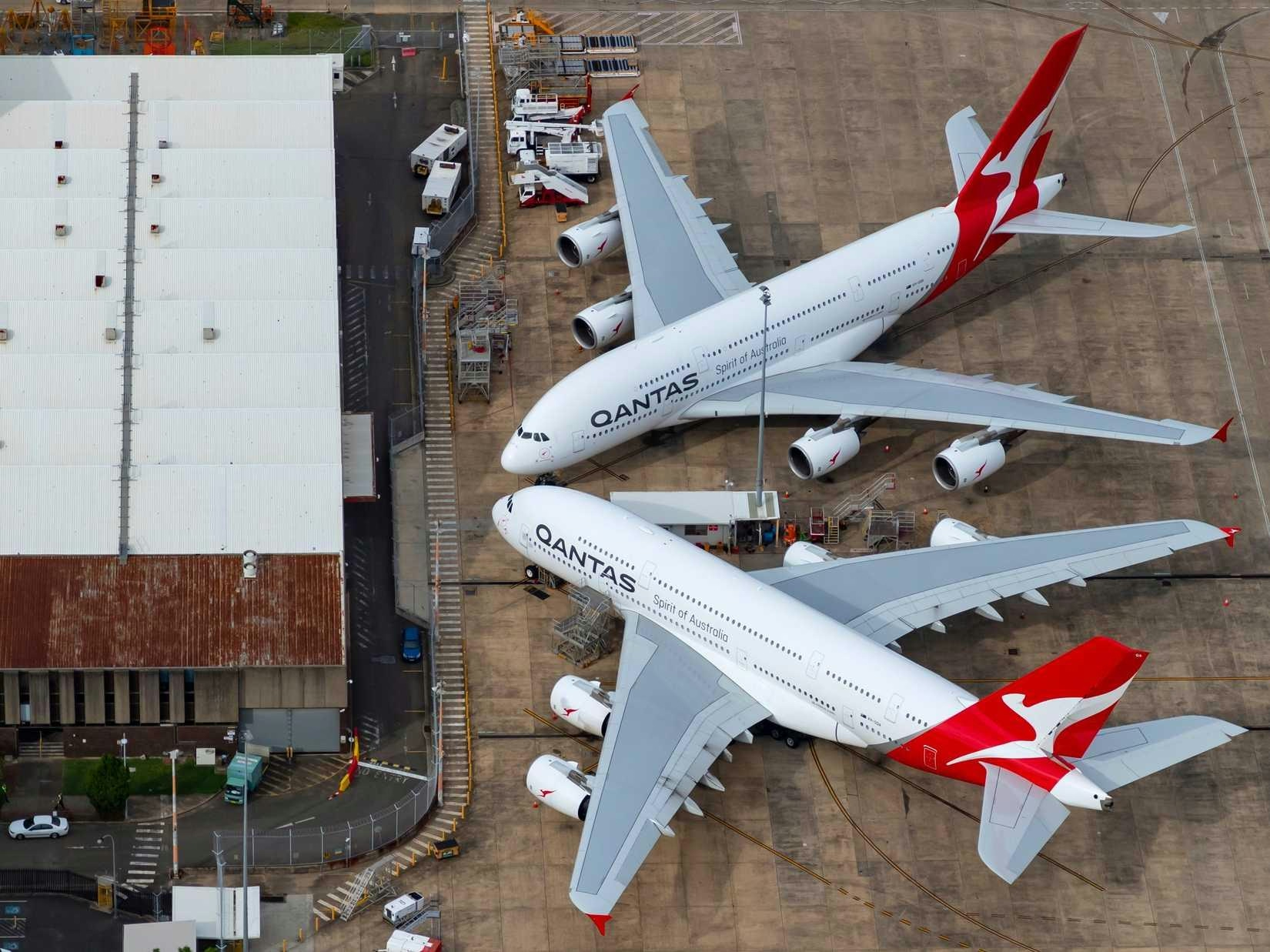
Qantas Accelerates A380 Retirement and Expands A350 and 787 Fleet
Strategic Shift in Long-Haul Operations
Qantas Airways has announced plans to retire its fleet of 10 Airbus A380 superjumbos beginning in 2028, advancing the phaseout by approximately four years. This decision reflects a significant adjustment in the airline’s long-haul strategy as it prepares to introduce a larger number of Airbus A350s and Boeing 787s. Initially, Qantas had intended to replace the A380s around fiscal year 2032, but the updated timeline aligns with the scheduled arrival of the first Project Sunrise A350-1000ULR in April 2027. While the airline has not disclosed which specific routes or aircraft will be retired first, the move raises questions about the future of flagship services such as Sydney–Los Angeles and Sydney–Singapore–London.
Qantas emphasizes that its next-generation widebody aircraft, the A350 and 787, will be capable of servicing all current international routes and potentially opening new destinations. However, this statement outlines capability rather than a detailed retirement or deployment plan.
Fleet Expansion and Market Response
Currently, Qantas holds firm orders for 12 Airbus A350s and 12 Boeing 787s, alongside 12 A350-1000ULRs dedicated to Project Sunrise. The first of the new 787s is expected to enter service in fiscal year 2028. The airline is also engaged in discussions with Airbus and Boeing regarding the conversion of approximately 20 existing purchase-right options into firm orders from 2030 onward, though the exact split between A350s and 787s remains unspecified. These options provide Qantas with flexibility to adapt its fleet composition in response to evolving market conditions.
The announcement of the accelerated A380 retirement and fleet renewal was positively received by investors, with Qantas shares rising by 3% in early trading. The move underscores the competitive pressures in the long-haul market, where carriers such as Qatar Airways have gained attention for innovative strategies, including the deployment of Starlink-equipped Boeing 787s.
Drivers Behind the Fleet Renewal
Several factors underpin Qantas’s decision to expedite the retirement of its A380 fleet. The cessation of A380 production has limited the availability of replacement parts and support, while operational and maintenance costs for the aging superjumbos continue to rise. Additionally, the ongoing conflict in the Middle East has disproportionately increased fuel expenses for the A380 fleet. Elevated operating costs for legacy aircraft, including the A330 and A380, have contributed to a higher international cost base for the airline.
In contrast, modern twin-engine widebodies such as the A350 and 787 offer improved fuel efficiency, lower operating costs, and greater flexibility in matching aircraft size to route demand. Although Qantas has not released detailed comparisons of route economics or maintenance expenses, the shift aligns with a broader industry trend favoring more efficient and versatile aircraft.
This decision follows Qantas’s return of its final A380 to service in fiscal year 2026, during which the aircraft type was used to optimize network capacity amid shifting demand patterns. Rather than retiring an idle fleet, the airline is accelerating the phaseout of aircraft that have remained active to maintain network flexibility.
Financial Implications
The fleet announcement coincided with the release of Qantas’s fiscal year 2026 financial results, which revealed a decline in profit partly attributable to disruptions in the Middle East and associated increases in operating costs. The accelerated retirement of the A380 and expansion of the A350 and 787 fleets form part of Qantas’s broader strategy to control costs and sustain competitiveness in a challenging international aviation market.

Etihad Airways Suspends Airbus A380 Flights on Key Route

Aditya Birla Group Seeks Approval for Aircraft Leasing in GIFT City

Qatar Airways Highlights Innovation and Connectivity at Arabian Travel Market 2026

Hong Kong's Five-Year Plan Includes Andrew Fan's Aircraft Parts Processing Hub Proposal

ACIA Aero Leasing Delivers ATR72-600 to Air Nostrum

RTX Appoints Jill Albertelli as Head of Pratt & Whitney

TAT Technologies Joins Beyond Aero Hydrogen Aircraft Program

AURAK Study Highlights Barriers to Air Taxi Adoption in Emerging Economies

Xiamen Air Selects Altitude for 787 Maintenance at Heathrow

Etihad and Swissport Extend Global Partnership
