
حوّل رؤى الذكاء الاصطناعي إلى أفعال منسّقة

الرائج الآن
Categories
Qantas Chief Defends Airline’s Use of AI Beyond Staffing
Qantas Chief Defends Airline’s Use of AI Beyond Staffing
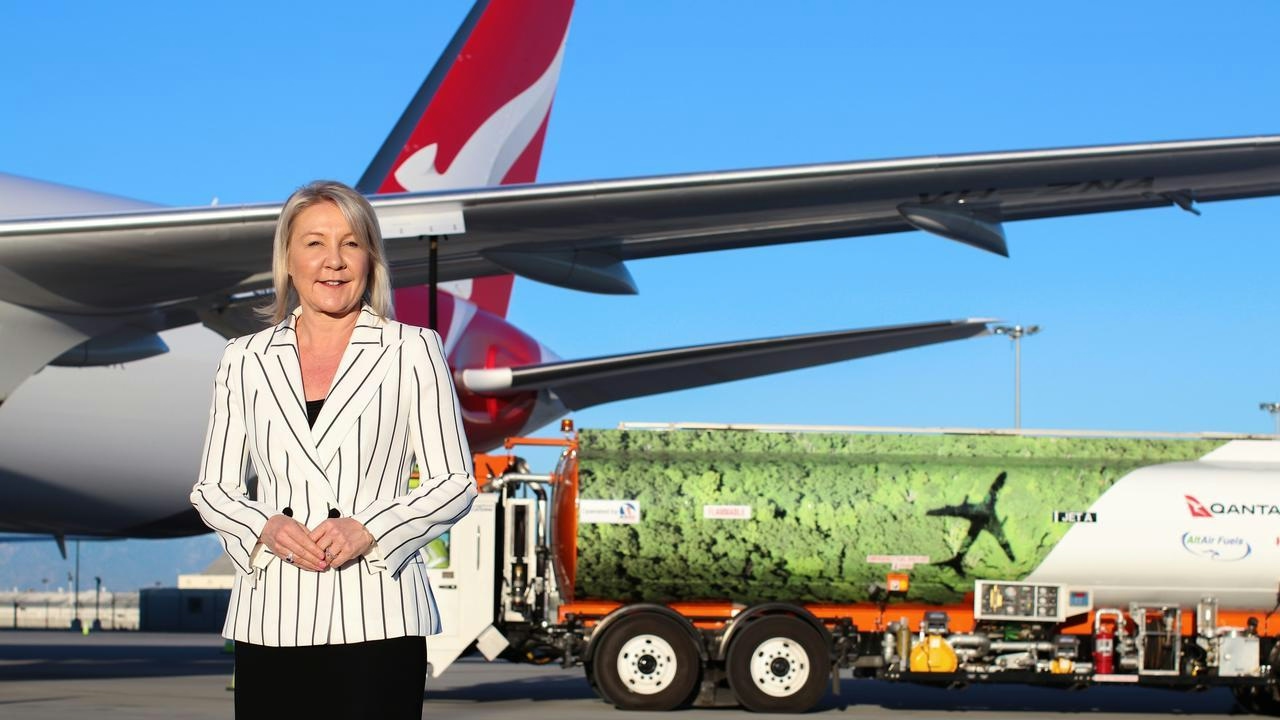
Qantas CEO Vanessa Hudson has robustly defended the airline’s expanding adoption of artificial intelligence, stressing that its benefits extend well beyond mere workforce reduction. Speaking to The Australian, Hudson rejected the notion that AI’s primary value lies in cutting headcount. Instead, she emphasized the technology’s broader potential to enhance operational efficiency and transform various facets of the business.
Expanding Applications of AI at Qantas
Hudson outlined several current and prospective uses of AI within Qantas, including refined sales strategies, predictive maintenance for aircraft, optimized scheduling, and improved alignment of staff rosters with flight timetables. Additionally, AI is being deployed to better manage customer disruptions, a critical area for maintaining service quality. She noted that the airline has identified more AI use cases than it can immediately implement, reflecting a strong enthusiasm for the technology’s capabilities.
Industry Context and Challenges
Qantas’s intensified focus on AI integration comes amid significant challenges in sustaining its competitive position. The airline’s recent decision to reduce domestic capacity has elicited mixed responses from the market, highlighting the pressures it faces. Meanwhile, competitors have exhibited a cautious stance toward AI’s role in aviation. For instance, ServiceNow CEO Bill McDermott recently dismissed AI-related concerns as mere “parlor tricks,” despite his company’s own robust growth in AI-driven offerings.
Compounding these challenges are rising fuel costs, fueled by ongoing geopolitical tensions, which add further strain to operational expenses. These factors underscore the critical need for innovation and efficiency as Qantas navigates a rapidly changing industry landscape.
A Vision Beyond Cost-Cutting
Despite these headwinds, Hudson remains optimistic about AI’s transformative potential for Qantas. The airline’s leadership views technology not simply as a means to reduce costs but as a catalyst for smarter operations and enhanced customer experiences. Qantas’s continued investment in AI reflects a broader shift within the aviation sector, one that embraces digital innovation as a multifaceted tool rather than focusing narrowly on staffing reductions.

Etihad Airways Suspends Airbus A380 Flights on Key Route

Aditya Birla Group Seeks Approval for Aircraft Leasing in GIFT City

Qatar Airways Highlights Innovation and Connectivity at Arabian Travel Market 2026

Hong Kong's Five-Year Plan Includes Andrew Fan's Aircraft Parts Processing Hub Proposal

ACIA Aero Leasing Delivers ATR72-600 to Air Nostrum

RTX Appoints Jill Albertelli as Head of Pratt & Whitney

TAT Technologies Joins Beyond Aero Hydrogen Aircraft Program

AURAK Study Highlights Barriers to Air Taxi Adoption in Emerging Economies

Xiamen Air Selects Altitude for 787 Maintenance at Heathrow

Etihad and Swissport Extend Global Partnership
