
حوّل رؤى الذكاء الاصطناعي إلى أفعال منسّقة

الرائج الآن
Categories
Qantas Withdraws from Jetstar Japan
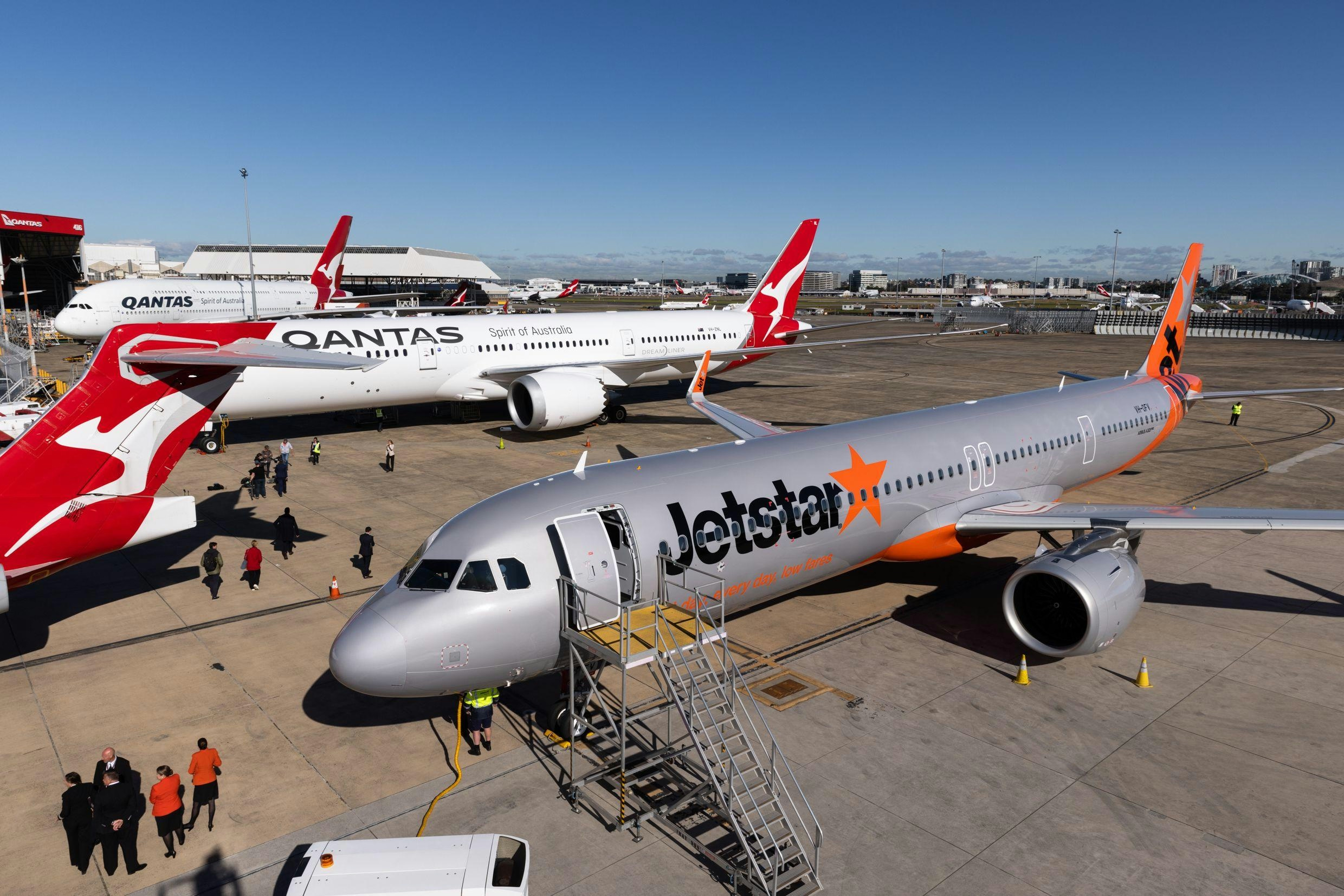
Qantas to Exit Jetstar Japan, Signaling Strategic Shift in Japanese Low-Cost Carrier Market
The Qantas Group and Japan Airlines (JAL) have formalized a binding agreement that will see Qantas withdraw from its stake in Jetstar Japan, marking a pivotal change in the airline’s ownership and strategic direction. Under the terms of the deal, Qantas will divest its entire 33.32% shareholding through a share buyback, enabling Jetstar Japan to transition to a predominantly Japanese capital ownership structure. The transaction, valued at approximately JPY 8.2 billion, is anticipated to conclude by June 2027, subject to regulatory approval.
Ownership Restructuring and Rebranding Plans
As part of the restructuring, the Development Bank of Japan (DBJ) will join as a new shareholder, while JAL and Tokyo Century Corporation will retain their existing stakes. Following Qantas’ exit, Jetstar Japan will retire the Jetstar brand and adopt a new identity, aiming to reinforce its position as a domestic low-cost carrier within Japan’s highly competitive aviation market. This rebranding initiative is expected to present significant challenges as the airline seeks to establish a distinct presence and compete effectively against established rivals.
Qantas has indicated that the divestment will enable it to concentrate capital and resources on its core operations in Australia, both domestically and internationally, under the Qantas and Jetstar brands. The airline confirmed that there will be no changes to its services between Australia and Japan, nor to the existing codeshare agreements with JAL.
Financial Implications and Market Impact
The share buyback is projected to generate an estimated gain of around A$115 million for Qantas, primarily reflected in the 2027 financial year. This figure includes one-off benefits arising from the release of historical foreign currency translation gains from equity reserves, in addition to the proceeds from the sale. Until the transaction is finalized, Qantas will continue to account for its share of Jetstar Japan’s profits or losses.
Industry analysts suggest that Qantas’ withdrawal and the subsequent rebranding of Jetstar Japan may prompt a reassessment of the airline’s market value and influence investor sentiment. The transition could also create opportunities for competitors within Japan’s low-cost carrier sector to expand their market share.
This agreement follows a memorandum of understanding announced in February 2026 and marks the beginning of a new chapter for Jetstar Japan as it seeks to solidify its presence under a new ownership structure and brand identity.

Etihad Airways Suspends Airbus A380 Flights on Key Route

Aditya Birla Group Seeks Approval for Aircraft Leasing in GIFT City

Qatar Airways Highlights Innovation and Connectivity at Arabian Travel Market 2026

Hong Kong's Five-Year Plan Includes Andrew Fan's Aircraft Parts Processing Hub Proposal

ACIA Aero Leasing Delivers ATR72-600 to Air Nostrum

RTX Appoints Jill Albertelli as Head of Pratt & Whitney

TAT Technologies Joins Beyond Aero Hydrogen Aircraft Program

AURAK Study Highlights Barriers to Air Taxi Adoption in Emerging Economies

Xiamen Air Selects Altitude for 787 Maintenance at Heathrow

Etihad and Swissport Extend Global Partnership
