صورة

حوّل رؤى الذكاء الاصطناعي إلى أفعال منسّقة

انضم إلى قائمة الانتظار لـ AeroGenie اليوم!

الرائج الآن

Categories

Restoring an Etihad Airways Airbus A380 After Six Years in Storage
May 17, 2026By ePlane AI
Restoring an Etihad Airways Airbus A380 After Six Years in Storage
0
0
Etihad Airways
Airbus A380
Aircraft Storage Restoration

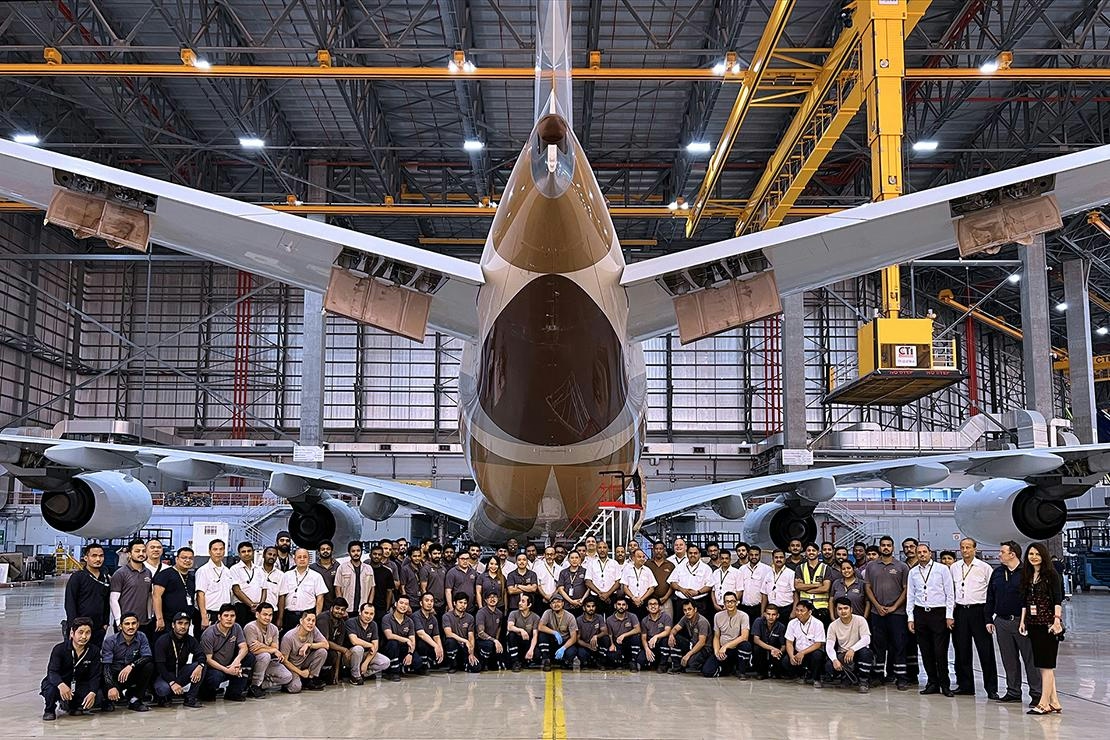
Restoring Etihad Airways’ Airbus A380s After Six Years in Storage

Etihad Airways is preparing to return two Airbus A380 aircraft, registered as A6-APC and A6-APB, to commercial service after nearly six years in long-term storage. This move highlights the ongoing challenges posed by the global shortage of available aircraft. Reactivating these superjumbos involves a complex and time-consuming process that extends far beyond simply restarting parked jets. It requires months of rigorous inspections, structural assessments, software updates, engine preservation procedures, and extensive flight testing before the aircraft can safely carry passengers once again.

This decision comes amid widespread delivery delays and a backlog exceeding 17,000 commercial aircraft orders worldwide. Faced with long wait times for new jets from manufacturers such as Airbus and Boeing, airlines are increasingly opting to extend the operational life of their existing fleets to sustain long-haul capacity. For Etihad, restoring its A380s is now economically viable despite the aircraft’s traditionally high operating costs, particularly as demand on premium international routes continues to recover.

However, this strategy carries inherent risks. The aviation sector is under significant financial strain, exemplified by recent developments such as JetBlue securing $500 million in financing by using Airbus jets as collateral. The looming 2026 global fuel crisis has seen jet fuel prices double within eight weeks, sharply increasing operational expenses and compelling airlines to reevaluate their financial strategies. Etihad’s commitment to maintaining the A380 fleet until at least 2032 represents a long-term investment in the superjumbo’s continued relevance in modern air travel. Yet, with competitors like Emirates planning rapid expansion in the post-conflict environment following the Iran war, market conditions remain volatile. This may invite scrutiny from investors and analysts concerned about the financial sustainability and operational efficiency of Etihad’s approach.

The Complex Process of Reactivating a Stored Superjumbo

Reactivating an Airbus A380 after extended storage is a formidable engineering challenge. Many of the world’s superjumbos were parked in desert storage during the pandemic, with some airlines initially assuming these aircraft would never return to service. However, as global travel demand rebounded more quickly than expected, carriers began the painstaking process of bringing these planes back online to meet growing capacity needs on busy long-haul routes.

The restoration process involves far more than routine maintenance. Aircraft stored for prolonged periods require thousands of hours of inspections, testing, and component replacements to ensure airworthiness. Engineers typically replace critical parts such as wheels, brakes, and oxygen systems, while conducting thorough checks of landing gear, avionics, hydraulics, and engines. Prior to leaving storage, the aircraft undergoes engine runs and comprehensive operational testing. Industry experts estimate that reactivating a single A380 demands approximately 4,500 hours of labor before the aircraft can even be flown to a dedicated maintenance facility. Even after departing storage, substantial work remains before the aircraft is fully prepared to carry passengers.

Financial Implications of Restoration

Although airlines seldom disclose precise restoration costs, industry estimates indicate that the total expense can reach tens of millions of dollars per aircraft. These costs encompass labor, replacement parts, engine servicing, testing, and cabin refurbishment. For instance, Qantas reported that returning one of its final stored A380s to service required over 100,000 hours of engineering work, marking the largest maintenance project in the airline’s history. While this figure is modest compared to the A380’s original purchase price of approximately $445 million, it nonetheless represents a significant financial commitment, especially in an environment of soaring fuel prices and intensifying competition.

As Etihad advances with its A380 restoration program, the airline is making a calculated decision to balance the urgent need for increased capacity against the challenges posed by rising costs and an uncertain competitive landscape.

More news
First Macao Forum on Low-Altitude Economy and Unmanned Systems Held in 2026

First Macao Forum on Low-Altitude Economy and Unmanned Systems Held in 2026

First Macao Forum on Low-Altitude Economy and Unmanned Systems Held in 2026 Strategic Vision and Government Initiatives The inaugural "2026 Macao Forum on Low-Altitude Economy and Innovation Development of Full-Space Unmanned Systems" took place on May 15 at the Grand Hyatt Macau, attracting nearly 300 participants including government officials, industry leaders, and academic experts from mainland China, Macao, and abroad. Organized under the guidance of the Economic and Technological Development Bureau of the Macao SAR Government and the Statistics Bureau of the Guangdong-Macao In-Depth Cooperation Zone in Hengqin, the forum underscored Macao’s ambition to become a pivotal hub for unmanned systems and low-altitude economic innovation. Central to the discussions was the positioning of the low-altitude economy as a strategic pillar within China’s "15th Five-Year Plan" and a key driver for Macao’s "1+4" economic diversification strategy alongside Hengqin-Macao integration efforts. Officials outlined plans to develop a city-level, full-space unmanned system in Hengqin, emphasizing cross-border logistics and regulatory harmonization to establish a scalable "Hengqin Model." The Macao SAR Government has established a dedicated working group tasked with streamlining regulations, expediting approval processes, and advancing pilot projects in drone transportation. Aviation industry leaders committed to addressing core technical challenges and enhancing safety standards, thereby supporting the broader industrial growth of the Greater Bay Area. Global Perspectives and Industry Insights The forum featured over 80 experts from the Greater Bay Area and international representatives from countries including Italy, Germany, Spain, Syria, and Colombia. Fourteen keynote speeches explored a range of topics such as unmanned system industry standards, European drone applications in emergency medical services, aviation equipment management policies, and the globalization of the low-altitude economy. These presentations highlighted the rapidly evolving global landscape of unmanned systems. Particular attention was given to the integration of advanced unmanned technologies, including unmanned ground vehicles and mine countermeasures, with Textron Systems’ recent developments cited as illustrative of trends in defense modernization and logistics innovation. The discussions reflected a growing recognition of the strategic importance of these technologies across multiple sectors. Thematic Panels and Market Dynamics Two principal panel discussions delved into critical aspects of the sector’s development. The first focused on cross-border logistics between Hengqin and Macao, addressing challenges related to customs procedures, airspace coordination, and operational implementation. The second panel examined scenario design, with industry representatives discussing innovation in use cases, standard formulation, and regulatory compliance for full-space unmanned systems. The forum also acknowledged the competitive pressures shaping the unmanned systems industry. Strategic partnerships, such as the alliance between BlueBird Aero Systems and BlueAero Group in Poland, were highlighted as increasingly vital in expanding regional expertise and defense applications. Additionally, the shift toward artificial intelligence-driven innovations in adjacent sectors, including Bitcoin mining and data centers—as exemplified by companies like Bitdeer and MARA—was noted as indicative of broader market dynamics that may influence the future trajectory of unmanned systems. Future Outlook Positioning itself as a professional and international platform, the Macao forum leveraged the unique advantages of the Hengqin-Macao region to foster collaboration and address regulatory, technical, and market challenges. The event aimed to establish the area as a world-class innovation hub within the low-altitude economy and unmanned systems sector, navigating a competitive global environment characterized by rapid technological advancement and strategic partnerships.
Avio Network Acquires Jat Tehnika

Avio Network Acquires Jat Tehnika

Avio Network Completes Acquisition of Jat Tehnika Belgrade-based maintenance, repair, and overhaul (MRO) provider Avio Network has finalized the acquisition of a 99.38% stake in Jat Tehnika, following approval from Serbia’s competition authority. The transaction, initially announced in December of the previous year, represents a strategic move by Avio Network to strengthen its position as a leading regional maintenance platform. Strategic Expansion and Future Plans Aleš Luci, founder of Avio Network, characterized the acquisition as a pivotal investment. He highlighted Jat Tehnika’s well-established certifications, infrastructure, and loyal customer base as fundamental assets that will underpin the company’s future growth. Jat Tehnika, based at Belgrade Nikola Tesla Airport, was previously owned by Czech firm Avia Prime since its privatization in 2019. Under the new ownership, Avio Network intends to invest significantly in modernizing facilities, advancing digitalization efforts, and enhancing operational efficiency. The company has assured that Jat Tehnika will maintain uninterrupted service to its existing airline customers throughout the transition period. Challenges and Market Implications The integration of Jat Tehnika into Avio Network’s operations presents several challenges. Ensuring regulatory compliance across multiple jurisdictions will be critical, as will the complex task of aligning Jat Tehnika’s technological systems with Avio Network’s infrastructure. Additionally, the company may encounter resistance from both customers and employees as it implements operational changes. Industry analysts suggest that this acquisition could alter competitive dynamics within the regional MRO market. Competitors may respond by upgrading their service offerings or seeking strategic alliances to preserve market share. The integration process itself carries risks related to technological compatibility and cultural alignment, which could affect operational performance and customer satisfaction if not carefully managed. Despite these hurdles, Avio Network remains committed to leveraging Jat Tehnika’s capabilities to establish a robust regional MRO platform, positioning itself for sustained growth in an increasingly competitive environment.
Chapman Freeborn Delivers Engine Stand to Johannesburg

Chapman Freeborn Delivers Engine Stand to Johannesburg

Chapman Freeborn Delivers Engine Stand to Johannesburg Amid Rising Emphasis on Sustainable Logistics Chapman Freeborn, a global air charter specialist operating under Avia Solutions Group, has successfully completed the urgent delivery of a CFM56-7B engine stand to Johannesburg. This operation, conducted in partnership with EngineStands.com—a leading provider of engine stand leasing—was finalized at the end of April. The mission involved transporting the engine stand from storage directly to a customer site in Johannesburg within a stringent deadline, highlighting the increasing demand for rapid and reliable logistics solutions within the aviation sector. Coordinated Effort to Meet Tight Deadlines To adhere to the tight timeframe, Chapman Freeborn meticulously coordinated the shipment by securing the necessary cargo capacity and managing the entire air cargo operation. EngineStands.com supplied the specialized equipment, while Chapman Freeborn ensured its timely arrival. This collaboration underscores the capacity of companies within Avia Solutions Group to leverage their combined aviation assets and cargo expertise, delivering tailored solutions for clients facing time-sensitive logistical challenges. Sustainability at the Forefront of Logistics Operations This project also reflects broader industry trends where efficiency and sustainability have become central priorities. As global scrutiny intensifies regarding the environmental impact of air cargo operations, logistics providers face mounting pressure to adopt greener practices. Chapman Freeborn has demonstrated its commitment to sustainability through initiatives such as its partnership with CleanHub, which focuses on reducing emissions and enhancing operational efficiency. Competitors within the sector are similarly advancing their sustainability efforts and refining logistics strategies to maintain competitiveness in a market increasingly driven by environmental responsibility. Market responses indicate that customers and stakeholders are paying close attention to the environmental footprints of logistics companies, prompting a shift toward more sustainable and transparent operations. By successfully delivering the engine stand to Johannesburg while navigating these evolving industry expectations, Chapman Freeborn and EngineStands.com exemplify how logistics providers can effectively balance operational demands with the growing imperative for sustainability.
IATA's Walsh Discusses Current Trends in Maintenance and Engineering

IATA's Walsh Discusses Current Trends in Maintenance and Engineering

IATA’s Walsh Addresses Pressures and Emerging Trends in Aviation Maintenance and Engineering The global aviation maintenance and engineering sector is confronting a complex array of challenges that are intensifying operational pressures on airlines and maintenance, repair, and overhaul (MRO) providers. In a recent video message ahead of the World Maintenance & Engineering Symposium (WMES) scheduled for June 24-25 in Madrid, Willie Walsh, director general of the International Air Transport Association (IATA), outlined the critical issues currently shaping the industry’s landscape. Key Challenges Facing the Sector Walsh identified five principal pressures impacting the maintenance and engineering domain. Persistent supply chain disruptions continue to hinder the timely availability of parts and materials, while bottlenecks in engine maintenance are creating operational constraints. Delays in aircraft deliveries are forcing airlines to extend the service life of ageing fleets, which in turn drives up maintenance demand and associated costs. Additionally, geopolitical tensions are complicating access to essential materials and affecting overall operational capacity. These challenges are further exacerbated by the approaching tenth anniversary of the CFM Leap engine, a milestone that is expected to trigger increased maintenance requirements. This development may strain existing resources and contribute to an oversupply of spare engines in the market, adding another layer of complexity for operators and MRO providers. Broader Industry Trends and Market Dynamics Beyond immediate operational pressures, broader industry trends are influencing the maintenance and engineering sector. The global energy transition is reshaping demand patterns within the manufacturing sector, while competitive forces are compelling firms in architectural, engineering consulting, and related services to adopt more aggressive pricing strategies. This segment is projected to grow at an annual rate of 7%, reaching an estimated USD 500 million by 2033. To remain competitive, companies are increasingly leveraging data-driven insights to optimize pricing and availability amid intensifying market competition. WMES: A Forum for Collaboration and Innovation The upcoming World Maintenance & Engineering Symposium will convene airlines, original equipment manufacturers (OEMs), MRO providers, and suppliers to explore practical strategies aimed at enhancing resilience, reliability, and operational performance. The event will emphasize collaborative approaches to overcoming persistent maintenance and supply chain challenges, supporting sustainable fleet growth, and adapting to evolving market conditions. Walsh is expected to participate alongside senior representatives from across the global aviation maintenance sector. For industry leaders facing escalating costs, reliability pressures, and capacity constraints, WMES presents a timely opportunity for dialogue and shared problem-solving. MRO Management is serving as a media partner for the symposium, with editor Craig Waters attending the event in Madrid. Those interested in editorial partnership opportunities with MRO Management or ABN are encouraged to contact Waters directly.
Etihad Converts First Airbus A380 Into 380 Luxury Watches

Etihad Converts First Airbus A380 Into 380 Luxury Watches

Etihad Transforms First Airbus A380 Into Limited-Edition Luxury Watches Despite the Airbus A380’s mixed commercial performance, the superjumbo remains an icon among aviation enthusiasts due to its impressive size, extended range, and pioneering cabin innovations. As airlines worldwide begin retiring and dismantling these aircraft, a novel trend has emerged: repurposing aircraft components into collectible memorabilia. Etihad Airways has embraced this movement by converting parts of its inaugural A380 into a series of luxury watches, offering aficionados a tangible connection to aviation history. The Alpha Series: Crafting Timepieces from Aviation Heritage The limited-edition collection, named the Alpha Series (A380) AUH Edition, is produced by AIM Watches—short for Aviator Inspired Movement. This series comprises 380 individually numbered watches, each crafted from components of Etihad’s first A380, registered as A6-APA. This particular aircraft holds significance as the airline’s initial A380 delivery and the 150th A380 constructed globally. Each watch is equipped with a Swiss-made movement, boasting a power reserve between 38 and 41 hours and an accuracy margin within four seconds per day. The mechanism supports both automatic and manual winding. The design incorporates a premium leather strap with a quick-release feature for convenience. Distinctive elements pay homage to the aircraft’s engineering: the crown is inspired by the A380’s unique engine fan, while the second hand features a red and black striped “barber’s pole” motif capped with a white arrowhead, subtle references to the jet’s technical heritage. Assembled in Switzerland and meticulously inspected in La Chaux-de-Fonds, the watches proudly carry the tagline “designed in the UAE.” Greg Browne, an airline pilot and founder of AIM Watches, underscores the significance of this designation, stating, “The UAE has become my home. It’s given me opportunities, friendships, and a life I’m grateful for every day. The ‘Designed in the UAE’ marking is my way of paying tribute.” Reflecting the luxury synonymous with Etihad’s A380 fleet—renowned for extravagant onboard offerings such as the exclusive ‘Residence’ three-room suites—each timepiece incorporates 26 jewels and exemplifies meticulous craftsmanship. The next shipment of ten watches is scheduled for release at the end of June, each serving as a tribute to the UAE’s rich aviation legacy. Navigating Challenges in the Luxury Market Etihad’s entry into the luxury watch sector presents notable challenges. The luxury goods market is highly competitive, and there may be skepticism regarding whether this venture aligns with the airline’s core brand identity. Furthermore, the initiative could prompt rival carriers to introduce their own high-end products, intensifying competition for affluent travelers and collectors. This potential surge in luxury aviation-related offerings may raise the stakes for maintaining a premium brand image across both aviation and lifestyle domains. As the aviation industry continues to evolve, Etihad’s innovative transformation of its first A380 into exclusive timepieces underscores the enduring fascination with the superjumbo. It also exemplifies the creative strategies airlines are adopting to preserve their heritage while navigating the complexities of the luxury marketplace.
Travel Industry Adapts to AI While Preserving Unique Experiences

Travel Industry Adapts to AI While Preserving Unique Experiences

Travel Industry Adapts to AI While Preserving Unique Experiences The global travel and tourism sector is experiencing a significant transformation as artificial intelligence (AI) increasingly influences how travelers search for, book, and engage with their journeys. Industry strategist Jacqueline Nunley highlights a shifting competitive landscape, where the contest extends beyond traditional rivalries among airlines and hotels to a broader challenge between the efficiency of machine logic and the irreplaceable value of human experience. Across prominent destinations such as London, Paris, Dubai, and Sydney, AI-powered tools are playing a growing role in travel decision-making. Recent data indicates that up to 40% of travelers now utilize AI platforms for planning, with 25% comfortable entrusting AI to manage their bookings entirely. While these systems excel at optimizing price and efficiency, there is mounting concern that travel risks becoming a purely transactional process, devoid of the unique moments that render journeys memorable. The Pricing Arms Race Hospitality revenue managers in key cities have observed a new dynamic emerging from AI integration: agents powered by AI are exploiting dynamic pricing models by booking discounted rates during off-peak hours, often between 2:00 AM and 4:00 AM. This behavior has sparked a pricing arms race, where providers compete primarily on algorithmic speed rather than the quality or distinctiveness of their offerings. Consequently, even unique experiences—such as cultural tours or boutique accommodations—face the danger of being overlooked if they do not fit neatly into the structured data frameworks that AI systems depend upon. The Risk of Losing the Human Touch A fundamental challenge arises as AI optimizes for measurable factors like price, amenities, and ratings but struggles to capture the emotional resonance and contextual nuances that define meaningful travel experiences. For instance, a boutique guesthouse renowned for its live music or local expertise may be bypassed in favor of a large hotel chain that better aligns with AI search parameters. This trend threatens the industry’s most valuable asset: the ability to create memorable, authentic experiences that foster customer loyalty and generate word-of-mouth recommendations. Industry Responses and Strategic Shifts The potential over-reliance on automation has elicited varied responses within the travel sector. Some market observers express skepticism toward AI-driven services that fail to deliver the authenticity travelers desire. In response, certain competitors are enhancing AI capabilities to provide more tailored and immersive experiences, while others emphasize human-led services to distinguish themselves from fully automated platforms. Recent developments illustrate this strategic balancing act. Indian online travel companies are expanding beyond simple ticket sales by integrating AI to offer comprehensive, personalized travel experiences that cater to diverse consumer preferences. Trip.com Group’s international expansion strategy focuses on leveraging AI alongside hyperlocalization to establish itself as the leading local player in each market, combining innovative technology with regional insights. Similarly, HBX Group’s acquisition of AI startup Bridgify aims to automate operations and improve cross-selling of travel experiences, signaling a commitment to operational efficiency without compromising customer engagement. Navigating the AI Era As AI continues to reshape the travel industry, the central challenge remains how airlines, hotels, and destinations can maintain visibility, relevance, and appeal in an AI-mediated environment. The solution may lie in striking an appropriate balance—employing AI to streamline logistics and personalize offerings while preserving the human touch and unique experiences that make travel truly unforgettable.
Emirates to Open $5.1 Billion Engineering Hub in Dubai South, Creating Thousands of Jobs

Emirates to Open $5.1 Billion Engineering Hub in Dubai South, Creating Thousands of Jobs

Emirates to Invest $5.1 Billion in Advanced Engineering Hub in Dubai South Emirates has unveiled plans to develop a cutting-edge engineering hub in Dubai South, with an investment valued at $5.1 billion. This ambitious project aims to establish one of the world’s largest and most sophisticated aircraft maintenance facilities, reinforcing Dubai’s status as a premier global aviation center. The recent groundbreaking ceremony marked the commencement of construction, signaling a significant milestone in the airline’s expansion strategy. Employment Opportunities and Economic Impact The new engineering hub is expected to generate thousands of jobs across various sectors, including engineering, technical maintenance, and administrative roles. An Emirates spokesperson highlighted the broad range of employment opportunities the facility will create, emphasizing the demand for professionals with diverse skills such as engineers, mechanics, and administrative staff. This development is poised to attract both local and international talent, contributing substantially to the region’s economic growth. Challenges and Market Response While the project promises considerable benefits, it also presents challenges. Emirates must secure extensive funding and manage risks associated with regional geopolitical tensions that could affect operational continuity and supply chains. Nevertheless, the announcement has been met with positive market reactions. The airline’s recent record profits and consistent financial stability, despite regional disruptions, have reinforced confidence in its capacity to successfully execute this large-scale initiative. Strategic Implications for the Aviation Sector The establishment of this engineering hub is expected to alter the competitive dynamics within the Middle East’s aviation industry. As Emirates enhances its maintenance and engineering capabilities, rival airlines may be prompted to invest in similar infrastructure, potentially intensifying competition. The facility will be developed in phases, with the initial stage anticipated to be completed within the coming years. Beyond servicing Emirates’ expanding fleet, the hub is also projected to support other carriers, further solidifying Dubai’s role as a central aviation hub on the global stage.
Canada Joins UK, Australia, and Japan in Issuing Travel Warnings Amid Middle East Fuel Shortages

Canada Joins UK, Australia, and Japan in Issuing Travel Warnings Amid Middle East Fuel Shortages

Canada Joins UK, Australia, and Japan in Issuing Travel Warnings Amid Middle East Fuel Shortages As the 2026 northern hemisphere summer travel season approaches, Canada has joined the United Kingdom, Australia, and Japan in issuing urgent travel warnings in response to severe fuel shortages in the Middle East. This crisis stems from the effective closure of the Strait of Hormuz earlier this year, a critical maritime passage for crude oil and refined petroleum products. The disruption has sent shockwaves through the global aviation and tourism industries, threatening to significantly impact international travel. The closure of this vital corridor has precipitated a global jet fuel shortage, with prices surging by nearly 84% since the conflict began. Airlines worldwide are contending with supply chain disruptions and escalating operational costs. These challenges have already manifested in higher ticket prices, increased flight cancellations, and unpredictable scheduling. Ryanair’s CEO has cautioned that the ongoing volatility severely hampers long-term planning for carriers. In response, major governments—including Canada, the United States, the UK, Australia, Japan, and the European Union—have issued coordinated advisories highlighting the risks facing summer travelers. These warnings emphasize the potential for sudden flight cancellations, rerouted itineraries, and significant delays, even on routes that do not directly traverse the Middle East. The International Air Transport Association (IATA) has recommended sourcing jet fuel from the United States to mitigate shortages, yet the industry’s heavy reliance on Middle Eastern supplies remains a critical vulnerability. Canada: Comprehensive Warnings and Policy Adjustments On May 12, 2026, Global Affairs Canada released a comprehensive advisory urging citizens to reconsider summer travel plans regardless of destination. The warning underscored that fuel shortages could result in last-minute delays, rerouting, or outright cancellations. Travelers were also cautioned that local fuel rationing at destinations might disrupt public transportation, rideshare services, and access to essential amenities, potentially diminishing the overall quality of their travel experience. Financial risks were also highlighted, as major insurers such as Manulife have begun excluding coverage for cancellations linked to regional fuel shortages. Travelers were advised to carefully review their insurance policies and prepare for possible out-of-pocket expenses arising from extended stays or alternative arrangements. United States: Infrastructure Strain and Transit Hub Disruptions The U.S. Department of State maintained its Worldwide Caution, warning of deteriorating infrastructure and strained transportation systems abroad. Fuel shortages have contributed to rolling blackouts, reduced public transit availability, and increased costs for rideshares and rental vehicles. Major transit hubs in Dubai, Abu Dhabi, and Doha are experiencing operational disruptions, with rerouted flights to Europe and Asia facing delays of up to three hours. American travelers are encouraged to register with the Smart Traveler Enrollment Program (STEP) and to verify airport statuses prior to departure. Industry Faces Unprecedented Challenges This crisis has exposed the aviation sector’s deep dependence on Middle Eastern fuel supplies, jeopardizing the reliability of summer holiday travel and compelling airlines and governments to urgently seek alternative sources. As the situation continues to evolve, travelers are urged to remain informed, review their insurance coverage, and prepare for a summer marked by uncertainty and operational complexity.
Kazakhstan and Luxembourg Strengthen Cooperation in Technology, Aviation, and Logistics

Kazakhstan and Luxembourg Strengthen Cooperation in Technology, Aviation, and Logistics

Kazakhstan and Luxembourg Strengthen Cooperation in Technology, Aviation, and Logistics During a working visit to Luxembourg, Roman Vassilenko, Ambassador of Kazakhstan to Belgium and Luxembourg, engaged in a series of high-level discussions with executives from prominent Luxembourgish and international companies specializing in digital technology, aviation logistics, and innovation. The meetings focused on advancing collaborative high-tech projects, improving transport and logistics connectivity, and expanding investment cooperation between the two nations. Advancing Digital Connectivity and Space Infrastructure At the headquarters of SES, Ambassador Vassilenko met with CEO Adel Al-Saleh to discuss the European Union’s “Team Europe Initiative on Digital Connectivity in Central Asia.” The dialogue emphasized the development of satellite communications in Kazakhstan and explored opportunities for Luxembourg’s involvement in modernizing Kazakhstan’s national space infrastructure. These discussions underscore the shared ambition of both countries to harness cutting-edge technology to foster regional development. Enhancing Aviation and Transport Links In the aviation sector, Vassilenko held talks with Cargolux President Richard Forson and CFO Maxime Strauss. The discussions examined the potential for Cargolux to resume operations in Kazakhstan and the airline’s participation in initiatives aimed at establishing Kazakhstan as a regional air cargo hub. The transformation of global transit routes and Kazakhstan’s emerging role as a critical transport corridor between Europe and Asia were highlighted, with particular attention to the strategic significance of the Trans-Caspian International Transport Route amid evolving international logistics chains. Cooperation in Sustainable Technologies and Climate Solutions Ambassador Vassilenko also met with Royce Dalby, President and Co-Founder of Hydrosat, to explore collaboration in satellite-based water resource monitoring, digital agriculture, and climate solutions. Prospects for joint projects with JSC “NC Kazakhstan Gharysh Sapary” were discussed, reflecting a growing emphasis on sustainable development and technological innovation. Challenges and Prospects for Future Collaboration While both parties reaffirmed their commitment to expanding investment, technological, and logistics cooperation, they acknowledged several challenges. Navigating regulatory differences, aligning strategic objectives, and managing competition from other international partners remain key considerations. Market responses to the strengthened collaboration have included increased investor interest in both countries, while competitors may respond by enhancing their own regional partnerships or intensifying competition in the technology, aviation, and logistics sectors. Recent data indicates that although such collaborations often face initial obstacles, they can deliver significant long-term benefits if effectively managed. Since 2005, Luxembourg’s cumulative direct investment in Kazakhstan has surpassed $3.8 billion, demonstrating sustained interest from Luxembourg’s financial and technological institutions in the Kazakh market. As the partnership deepens, it is expected to drive further innovation and connectivity across Eurasia.
China Opens Low-Altitude Rail Transport Hub at Shenzhen North Station Connecting Air Taxis, High-Speed Rail, and Metro

China Opens Low-Altitude Rail Transport Hub at Shenzhen North Station Connecting Air Taxis, High-Speed Rail, and Metro

China Launches Integrated Low-Altitude Rail Transport Hub at Shenzhen North Station Shenzhen North Station has unveiled China’s first integrated low-altitude rail transport hub, seamlessly connecting air taxis with high-speed rail and metro services. This pioneering initiative represents a major advancement in urban mobility, positioning Shenzhen at the forefront of transport innovation. The new hub offers travelers enhanced options for navigating both the city and the broader Greater Bay Area, combining efficiency with convenience. Multimodal Connectivity and Passenger Experience Traditionally a key interchange for high-speed rail and metro lines, Shenzhen North Station now features dedicated boarding zones for air taxis. This integration allows passengers arriving by train or metro to transfer swiftly to low-altitude flights, significantly reducing transfer times and alleviating congestion on conventional transport routes. The design aims to streamline daily commutes and improve the overall travel experience, making aerial transport a viable and practical alternative for both residents and tourists. Aerial Routes Highlighting Shenzhen’s Urban and Natural Landscapes The air taxi network offers passengers unique aerial views of Shenzhen’s prominent districts and landmarks. These include the bustling Futian Central Business District, the technology-driven Nanshan District, and the culturally rich Luohu District. Additionally, routes extend over Yantian Port, providing panoramic vistas of the city’s major shipping hub, as well as natural attractions such as Wutong Mountain and the coastal beaches of Dameisha and Xiaomeisha. By combining efficient transit with sightseeing opportunities, the service appeals to a diverse range of users, from daily commuters to photography enthusiasts and visitors. Enhancing Regional Integration Across the Greater Bay Area Beyond Shenzhen’s city limits, the hub facilitates connections to other major urban centers within the Greater Bay Area, including Zhuhai and Zhongshan. This network supports the creation of a “one-hour living circle,” dramatically reducing travel times compared to road or traditional rail options. The expanded connectivity is expected to bolster business activities, tourism, and regional integration, reinforcing the Greater Bay Area’s status as a dynamic economic zone. Market Implications and Challenges Ahead The launch of this integrated transport hub is anticipated to influence commuter preferences, encouraging a shift toward multimodal travel solutions. It may also stimulate increased investment in air taxi services and related infrastructure. In response, competing regions with similar ambitions are likely to accelerate upgrades to their transport networks to maintain competitiveness. Nevertheless, the rollout faces several challenges, including regulatory complexities, technological integration issues, and competition from established transport modes. The ongoing development of autonomous electric vertical takeoff and landing (eVTOL) aircraft and high-speed rail projects in other areas will also play a critical role in shaping the future market landscape. Setting a New Standard for Urban Mobility By providing a fast, efficient, and scenic alternative to congested roads and traditional public transport, Shenzhen’s low-altitude rail transport hub establishes a new benchmark for urban mobility. As the city continues to innovate, its integrated approach may serve as a model for other metropolitan regions seeking to enhance connectivity and alleviate urban congestion.
line









