
حوّل رؤى الذكاء الاصطناعي إلى أفعال منسّقة

الرائج الآن
Categories
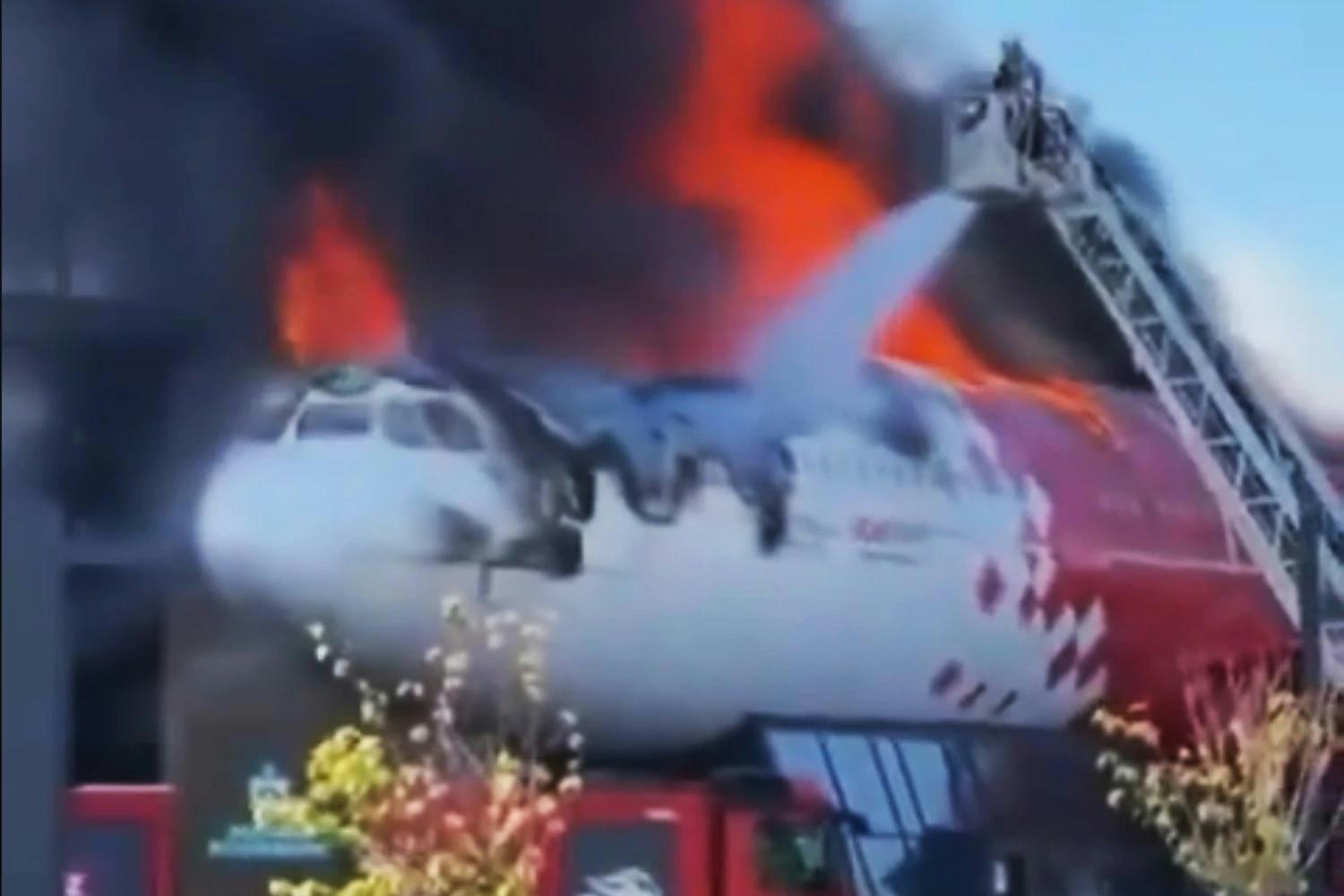
Retired Turkish Airlines A340 Destroyed by Fire at Aviation Center
Retired Turkish Airlines A340 Destroyed by Fire at Aviation Center
A retired Turkish Airlines Airbus A340 was destroyed by a significant fire on Saturday, September 5, at the UçakPark Aviation and Science Center in Çayırova, located in Turkey’s Kocaeli province. The aircraft, which had served Turkish Airlines for over two decades as a key component of its long-haul fleet, had been preserved as an educational exhibit following its retirement from commercial service.
The Fire Incident and Immediate Aftermath
Footage from the scene captured intense flames engulfing the fuselage as firefighters worked to control the blaze. During the fire, the rear section of the aircraft lost structural integrity, causing the tail to collapse onto nearby firefighting vehicles. Despite the severity of the incident, local authorities confirmed that no injuries occurred. The cause of the fire remains under investigation.
The aircraft, registered as TC-JDL, was an Airbus A340-311 delivered new to Turkish Airlines in 1994. Throughout its operational life, it played a pivotal role in the airline’s international expansion and was at one point adorned with Star Alliance livery. Turkish Airlines eventually retired its A340 fleet in favor of more fuel-efficient twin-engine widebodies as part of a broader modernization effort.
From Retirement to Public Exhibit
Following its retirement, TC-JDL was acquired by the municipality of Çayırova with initial plans to convert the aircraft into a restaurant, involving an investment of 1.5 million Turkish lira. However, this project was abandoned after a change in local government, leaving the aircraft exposed to weather conditions and drawing criticism over the unused public funds. By 2020, reports had already highlighted the aircraft’s deteriorating condition.
Subsequently, the A340 found a renewed purpose as the centerpiece of UçakPark, an aviation and science center aimed at fostering public interest in aviation and technology. Visitors were able to explore the interior of the former widebody jet, and the facility hosted various educational activities. The destruction of TC-JDL thus marks the end of an unusual second life for the aircraft, which had avoided scrapping and served as a distinctive public attraction.
Broader Context and Implications
The incident occurs amid a challenging period for Turkish Airlines, which is managing capacity growth and operational pressures as markets recover from recent regional conflicts, including tensions related to Iran. While the loss of the retired A340 does not directly affect current flight operations, it may invite scrutiny regarding the airline’s fleet management and safety protocols. Potential consequences include increased maintenance costs, insurance claims, and reputational risks. Competitors may also seek to leverage any perceived operational vulnerabilities as Turkish Airlines pursues expansion in Asia and strengthens its network in China.
The Airbus A340, introduced in 1993 as Airbus’s first four-engine widebody, ceased production in 2011 after 377 units were built. Although few remain in passenger service, many retired aircraft have been repurposed as government transports, test platforms, or museum exhibits. The extensive damage to TC-JDL, with much of the fuselage destroyed and the rear section collapsed, highlights the challenges involved in preserving historic aircraft and underscores the necessity of stringent safety measures at public aviation sites.

Etihad Airways Suspends Airbus A380 Flights on Key Route

Aditya Birla Group Seeks Approval for Aircraft Leasing in GIFT City

Qatar Airways Highlights Innovation and Connectivity at Arabian Travel Market 2026

Hong Kong's Five-Year Plan Includes Andrew Fan's Aircraft Parts Processing Hub Proposal

ACIA Aero Leasing Delivers ATR72-600 to Air Nostrum

RTX Appoints Jill Albertelli as Head of Pratt & Whitney

TAT Technologies Joins Beyond Aero Hydrogen Aircraft Program

AURAK Study Highlights Barriers to Air Taxi Adoption in Emerging Economies

Xiamen Air Selects Altitude for 787 Maintenance at Heathrow

Etihad and Swissport Extend Global Partnership
