
حوّل رؤى الذكاء الاصطناعي إلى أفعال منسّقة

الرائج الآن
Categories
Rolls-Royce and easyJet Complete Hydrogen Engine Test
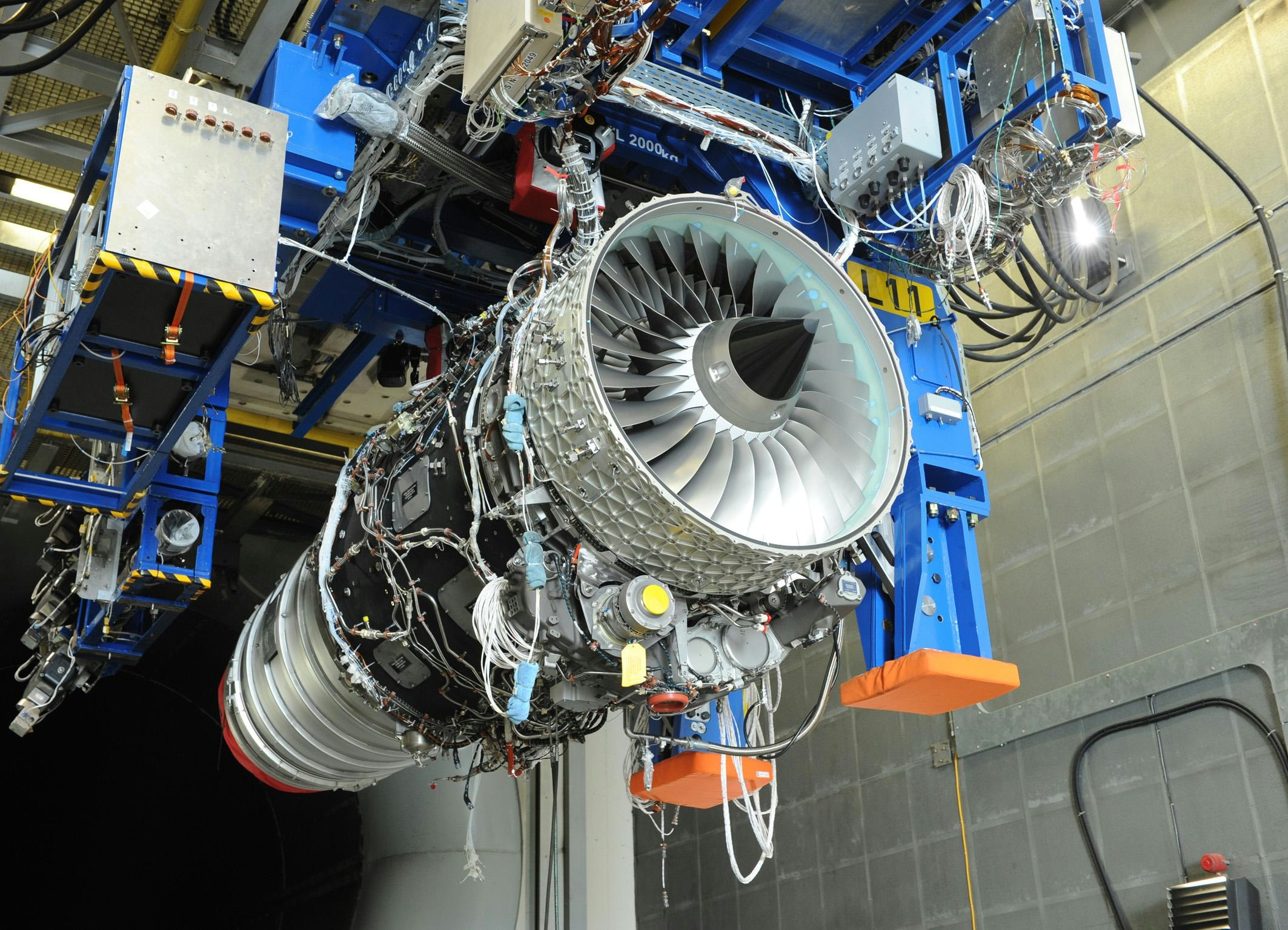
Rolls-Royce and easyJet Complete Groundbreaking Hydrogen Engine Test
Rolls-Royce and easyJet have successfully completed a pioneering ground test of a modified Pearl 15 jet engine powered entirely by hydrogen at full takeoff thrust. Conducted at NASA’s Stennis Space Center in Mississippi, the test demonstrated the engine’s capability to operate on 100% hydrogen throughout a simulated flight cycle, including start-up, takeoff, cruise, and landing phases under realistic conditions. This achievement marks a significant advancement in the aviation industry’s efforts to develop sustainable fuel alternatives.
A Milestone in Hydrogen-Powered Aviation
The companies described the test as an industry first, representing a crucial step in validating hydrogen as a viable aviation fuel. This milestone culminates a four-year demonstration program involving Rolls-Royce, easyJet, and several partners. Earlier phases of the program included running a Rolls-Royce AE2100 engine on green hydrogen in the UK in 2022 and testing a Pearl engine combustor on hydrogen at the German Aerospace Center in 2023.
David Morgan, easyJet’s Chief Operating Officer, highlighted the rapid progress achieved through the partnership with Rolls-Royce, noting that the project advanced hydrogen technology from concept to full engine build and successful testing within a few years. He emphasized that the test represents an important step toward easyJet’s goal of net zero carbon emissions and the broader decarbonization of the aviation sector.
Technical Insights and Industry Implications
The test program yielded valuable data on hydrogen combustion, fuel and control systems, and engine integration. Engineers also evaluated fault scenarios and maximum-power operation, providing critical insights into the safety and performance of hydrogen in a modern jet engine. Adam Newman, Chief Engineer of the Rolls-Royce Hydrogen Demonstrator Program, stated that the findings offer the clearest industry understanding to date of hydrogen’s behavior in aero gas turbines. He affirmed Rolls-Royce’s conviction that gas turbines will play a key role in aviation’s transition to lower emissions.
Despite this breakthrough, significant challenges remain before hydrogen-powered commercial aircraft can become widespread. The complexity and cost of hydrogen fuel systems, the need for extensive new infrastructure for hydrogen production, storage, and refueling, as well as regulatory approval and stringent safety standards, present formidable obstacles. Nonetheless, the successful test is expected to stimulate greater investor interest in sustainable aviation technologies and may accelerate hydrogen research and development across the industry.
Future Prospects and Strategic Context
The Pearl 15 engine, originally developed by Rolls-Royce for business jets such as the Bombardier Global 5500 and 6500, served as the test platform. Insights gained from this program will inform future projects, including Rolls-Royce’s next-generation UltraFan engine, which aims to deliver higher efficiency and reduced emissions.
Support for the program included contributions from the UK’s Health and Safety Executive Science and Research Centre, which assisted in building and testing the pressurized hydrogen infrastructure, and Tata Consultancy Services, which provided engineering support.
Hydrogen remains a central element of easyJet’s long-term emissions reduction strategy, alongside investments in newer Airbus A320neo-family aircraft, sustainable aviation fuels, and operational improvements. The UK-based airline, which carried over 100 million passengers in 2025 and operates a fleet of more than 350 aircraft across 1,000 routes, continues to prioritize technologies that facilitate the transition to greener aviation.

Etihad Airways Suspends Airbus A380 Flights on Key Route

Aditya Birla Group Seeks Approval for Aircraft Leasing in GIFT City

Qatar Airways Highlights Innovation and Connectivity at Arabian Travel Market 2026

Hong Kong's Five-Year Plan Includes Andrew Fan's Aircraft Parts Processing Hub Proposal

ACIA Aero Leasing Delivers ATR72-600 to Air Nostrum

RTX Appoints Jill Albertelli as Head of Pratt & Whitney

TAT Technologies Joins Beyond Aero Hydrogen Aircraft Program

AURAK Study Highlights Barriers to Air Taxi Adoption in Emerging Economies

Xiamen Air Selects Altitude for 787 Maintenance at Heathrow

Etihad and Swissport Extend Global Partnership
