
حوّل رؤى الذكاء الاصطناعي إلى أفعال منسّقة

الرائج الآن
Categories
Rolls-Royce to Supply Engines for Etihad Fleet Expansion
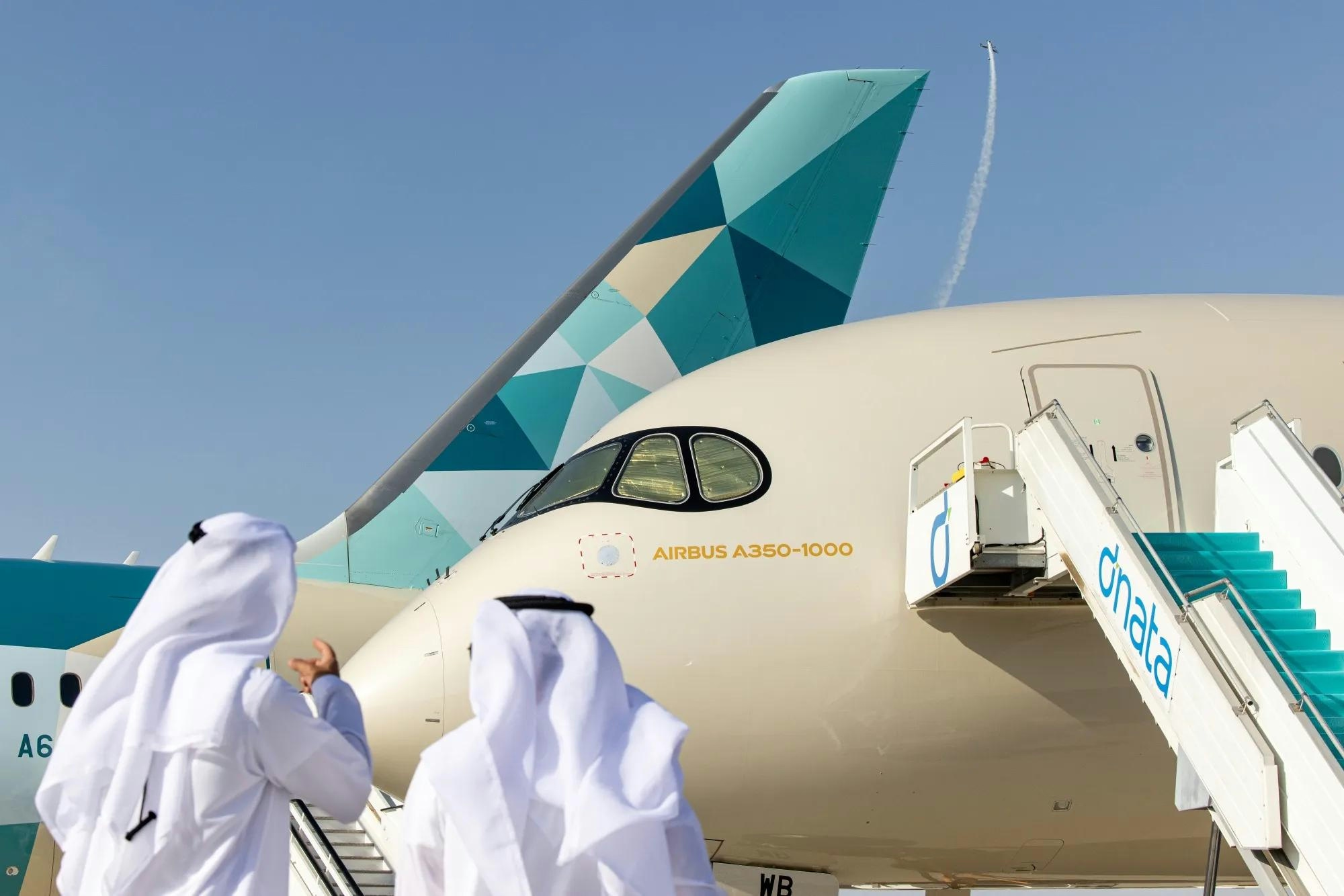
Rolls-Royce to Power Etihad Airways’ Fleet Expansion Amid Industry Shifts
Rolls-Royce has been selected to supply engines for Etihad Airways’ significant fleet expansion, announced at the Dubai Airshow. The Middle Eastern carrier plans to acquire 15 Airbus A330neo aircraft powered by the Trent 7000 engine, alongside seven Airbus A350-1000s and 10 Airbus A350F freighters, both equipped with the Trent XWB-97 engine. This deal reinforces Rolls-Royce’s pivotal role in supporting Etihad’s growth and the broader Middle Eastern aviation market.
Engine Performance and Technological Advancements
Rob Watson, President of Civil Aerospace at Rolls-Royce, highlighted the company’s commitment to its Middle Eastern customers, emphasizing ongoing investments aimed at enhancing engine durability and performance. Rolls-Royce is targeting a doubling of engine time on wing in Middle Eastern operating environments by 2028, reflecting the demanding conditions in the region.
The Trent 7000 engine, exclusive to the Airbus A330neo, has accumulated over three million flight hours since its introduction in late 2018. Rolls-Royce is investing £1 billion across its Trent engine family to improve durability by an average of 80%, with many upgrades expected by 2025. Recent enhancements to the Trent 7000 have already tripled its time on wing in some cases, with further improvements of up to 30% anticipated by 2026.
Similarly, the Trent XWB-97 engine, which powers the A350-1000 and A350F, has demonstrated strong reliability over seven years and more than three million engine flying hours. Two of three planned durability enhancement phases are currently in service, delivering a 60% increase in time on wing. The final phase, scheduled for 2028, aims to double time on wing in challenging environments and improve performance by 50% under less demanding conditions.
Industry Challenges and Future Prospects
Despite these advancements, Rolls-Royce faces significant challenges as the aviation industry accelerates its transition toward sustainable fuels and technologies. The adaptation of engines to accommodate alternative fuels such as methanol will require substantial engineering innovation. Market analysts are closely monitoring Rolls-Royce’s ability to fulfill its commitments to enhanced performance and sustainability, particularly as competitors advance their own engine technologies, including upgrades to the Trent 1000 engine’s XE standard.
Beyond civil aerospace, Rolls-Royce is expanding its footprint in nuclear technology through the development of small modular reactors. While this diversification presents new growth opportunities, it also introduces regulatory complexities and market acceptance challenges.
As Etihad’s fleet expansion highlights the ongoing demand for advanced and reliable engines in the Middle East, Rolls-Royce’s capacity to innovate and adapt will be crucial. Meeting customer expectations and maintaining a competitive edge in a rapidly evolving industry remain central to the company’s strategic priorities.

Etihad Airways Suspends Airbus A380 Flights on Key Route

Aditya Birla Group Seeks Approval for Aircraft Leasing in GIFT City

Qatar Airways Highlights Innovation and Connectivity at Arabian Travel Market 2026

Hong Kong's Five-Year Plan Includes Andrew Fan's Aircraft Parts Processing Hub Proposal

ACIA Aero Leasing Delivers ATR72-600 to Air Nostrum

RTX Appoints Jill Albertelli as Head of Pratt & Whitney

TAT Technologies Joins Beyond Aero Hydrogen Aircraft Program

AURAK Study Highlights Barriers to Air Taxi Adoption in Emerging Economies

Xiamen Air Selects Altitude for 787 Maintenance at Heathrow

Etihad and Swissport Extend Global Partnership
