
حوّل رؤى الذكاء الاصطناعي إلى أفعال منسّقة

الرائج الآن
Categories
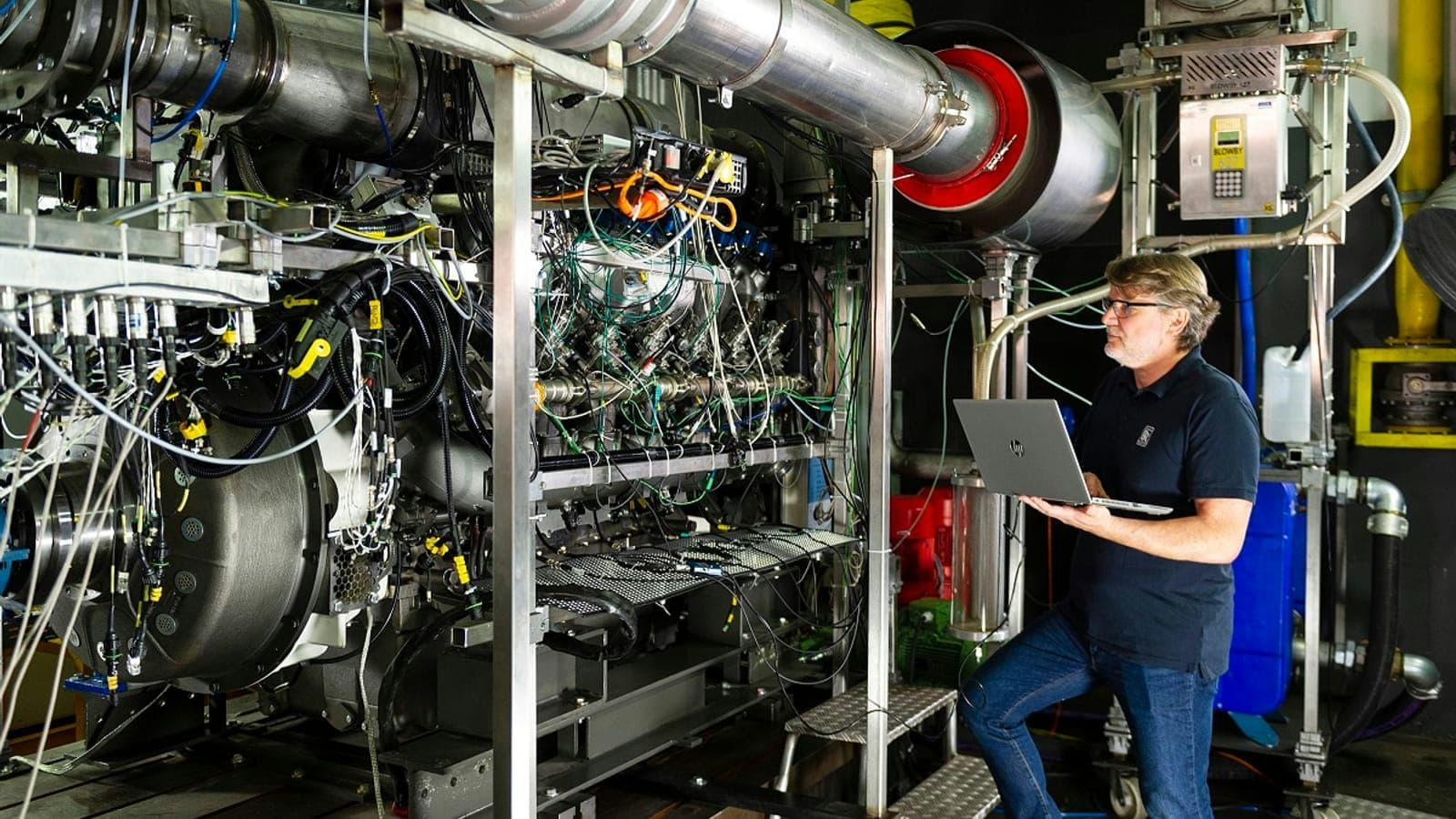
Rolls-Royce Unveils Hydrogen Engine Concept for Jet Power
Rolls-Royce Unveils Hydrogen Engine Concept for Jet Power
The aviation sector is under increasing pressure to achieve decarbonization by 2050. While Sustainable Aviation Fuel (SAF) offers a near-term solution, concerns remain regarding its scalability and long-term emissions impact. In contrast, hydrogen is gaining attention as a viable alternative, capable of delivering zero carbon emissions at the point of use. British engine manufacturer Rolls-Royce, in partnership with easyJet and leading research institutions, has made a significant breakthrough by developing and testing hydrogen-powered gas turbine engines, potentially transforming the future of jet propulsion.
The Promise of Hydrogen in Aviation
Hydrogen’s potential as an aviation fuel is not a recent discovery. In the 1950s, the US National Advisory Committee for Aeronautics (NACA), the predecessor to NASA, conducted ground tests on liquid hydrogen-fueled engines. These efforts culminated in the world’s first hydrogen-powered flight in 1957, using a modified Martin B-57 Canberra bomber. While early research primarily focused on performance, contemporary interest is driven by hydrogen’s environmental advantages.
Hydrogen combustion produces only water vapor, eliminating carbon dioxide emissions, which are a major contributor to global warming. This characteristic makes hydrogen particularly attractive for decarbonizing aviation, especially when produced through renewable energy sources, known as “green hydrogen.” Additionally, hydrogen combustion generates up to 90% less nitrogen oxides than conventional jet fuel and eliminates particulate matter, thereby improving air quality around airports. Although water vapor emissions from hydrogen combustion can form contrails, studies suggest a 30 to 50 percent reduction in overall climate impact compared to kerosene-powered aircraft. This reduction could increase to between 75 and 90 percent with the adoption of future fuel cell technologies.
Beyond environmental benefits, hydrogen offers operational advantages. It contains nearly three times the energy per kilogram compared to kerosene, meaning less fuel weight is required for the same energy output. Hydrogen can theoretically be produced wherever water and electricity are available, potentially enabling airports to generate their own fuel and reducing reliance on complex oil supply chains. Furthermore, the cryogenic properties of liquid hydrogen open possibilities for innovative engine and system designs.
Challenges and Industry Outlook
Despite its promise, Rolls-Royce’s hydrogen engine concept faces considerable challenges. High development and manufacturing costs, the need for extensive new infrastructure to support hydrogen fuel distribution, and competition from alternative propulsion technologies present significant obstacles. Major aerospace companies such as General Electric and Pratt & Whitney are also actively exploring hydrogen solutions, intensifying the race to establish leadership in the emerging green aviation market.
Market response to Rolls-Royce’s announcement has been notably positive. The company’s shares have more than doubled since the beginning of the year, reflecting strong investor confidence in its growth prospects and commitment to sustainable aviation.
As Rolls-Royce and its partners continue to advance hydrogen engine technology, the aviation industry is watching closely. The success of these initiatives could signal a pivotal shift toward cleaner skies and a more sustainable future for air travel.

Etihad Airways Suspends Airbus A380 Flights on Key Route

Aditya Birla Group Seeks Approval for Aircraft Leasing in GIFT City

Qatar Airways Highlights Innovation and Connectivity at Arabian Travel Market 2026

Hong Kong's Five-Year Plan Includes Andrew Fan's Aircraft Parts Processing Hub Proposal

ACIA Aero Leasing Delivers ATR72-600 to Air Nostrum

RTX Appoints Jill Albertelli as Head of Pratt & Whitney

TAT Technologies Joins Beyond Aero Hydrogen Aircraft Program

AURAK Study Highlights Barriers to Air Taxi Adoption in Emerging Economies

Xiamen Air Selects Altitude for 787 Maintenance at Heathrow

Etihad and Swissport Extend Global Partnership
