
حوّل رؤى الذكاء الاصطناعي إلى أفعال منسّقة

الرائج الآن
Categories
Russia Starts Modifying Be-200 Amphibious Aircraft with Domestic PD-8 Engine
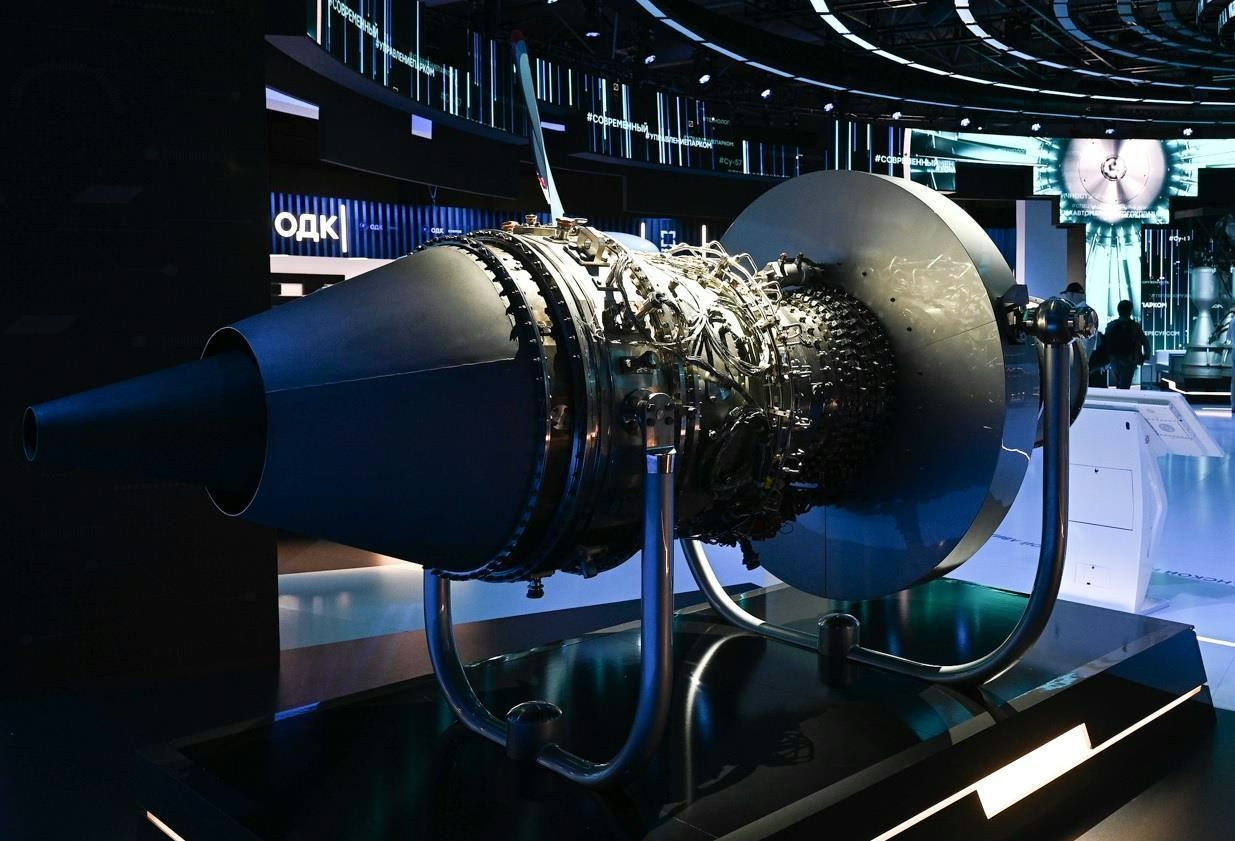
Russia Advances Modification of Be-200 Amphibious Aircraft with Indigenous PD-8 Engine
Russia has initiated the process of adapting its domestically developed PD-8 turbofan engine for use in the Be-200 amphibious aircraft, a critical asset for the Ministry of Emergency Situations, particularly in aerial firefighting missions. This development reflects Moscow’s strategic effort to replace Western-made components amid ongoing international sanctions and increasing geopolitical isolation.
Development and Adaptation of the PD-8 Engine
The PD-8 engine, produced by the United Engine Corporation (UEC), was originally designed for the SJ-100 regional airliner—a fully Russian iteration of the SuperJet—created to substitute Western systems. Currently, the engine is being modified for integration into the Be-200 at the Beriev Aviation Complex in Taganrog, as confirmed by Yuri Slyusar, former head of United Aircraft Corporation and acting governor of the Rostov region.
Since entering service in 2003, the Be-200 has proven to be a reliable platform for firefighting, especially in remote and mountainous regions. Its amphibious design allows it to scoop up to 12 tons of water in just 15 seconds during low-level passes over water bodies, while also enabling both runway and water takeoffs and landings.
Originally, the Be-200 ‘Altair’ was powered by two Progress D-436 engines manufactured in Ukraine. However, the destruction of the Ukrainian engine factory in May 2022 amid the Russian military invasion has compelled Russia to accelerate the development and integration of the PD-8 as a replacement. The PD-8, currently undergoing certification testing on both the SJ-100 and Be-200 platforms, delivers approximately eight tons of thrust and incorporates core technologies derived from the larger PD-14 engine used in the MC-21 airliner.
Challenges and Market Implications
Despite these advancements, the transition to the PD-8 engine presents considerable technical and commercial challenges. As a relatively new design still in the certification phase, the PD-8’s development may encounter unforeseen technical difficulties. Furthermore, Russia’s geopolitical isolation and the persistence of international sanctions could foster skepticism among potential foreign buyers, thereby limiting export prospects for the modified Be-200.
In addition, global competitors in the amphibious aircraft sector are likely to respond by accelerating their own technological innovations and adopting more aggressive pricing strategies. This competitive environment may further complicate Russia’s efforts to establish the PD-8-equipped Be-200 in the international market.
As Russia proceeds with the PD-8 integration, the outcome will be closely monitored for its implications on the domestic aviation industry and the broader global market for specialized firefighting and amphibious aircraft.

Etihad Airways Suspends Airbus A380 Flights on Key Route

Aditya Birla Group Seeks Approval for Aircraft Leasing in GIFT City

Qatar Airways Highlights Innovation and Connectivity at Arabian Travel Market 2026

Hong Kong's Five-Year Plan Includes Andrew Fan's Aircraft Parts Processing Hub Proposal

ACIA Aero Leasing Delivers ATR72-600 to Air Nostrum

RTX Appoints Jill Albertelli as Head of Pratt & Whitney

TAT Technologies Joins Beyond Aero Hydrogen Aircraft Program

AURAK Study Highlights Barriers to Air Taxi Adoption in Emerging Economies

Xiamen Air Selects Altitude for 787 Maintenance at Heathrow

Etihad and Swissport Extend Global Partnership
