image

AeroGenie - مساعد الطيار الذكي الخاص بك.

اسأل أي شيء. حلل كل شيء. تصرف فورًا.

الرائج الآن

Categories

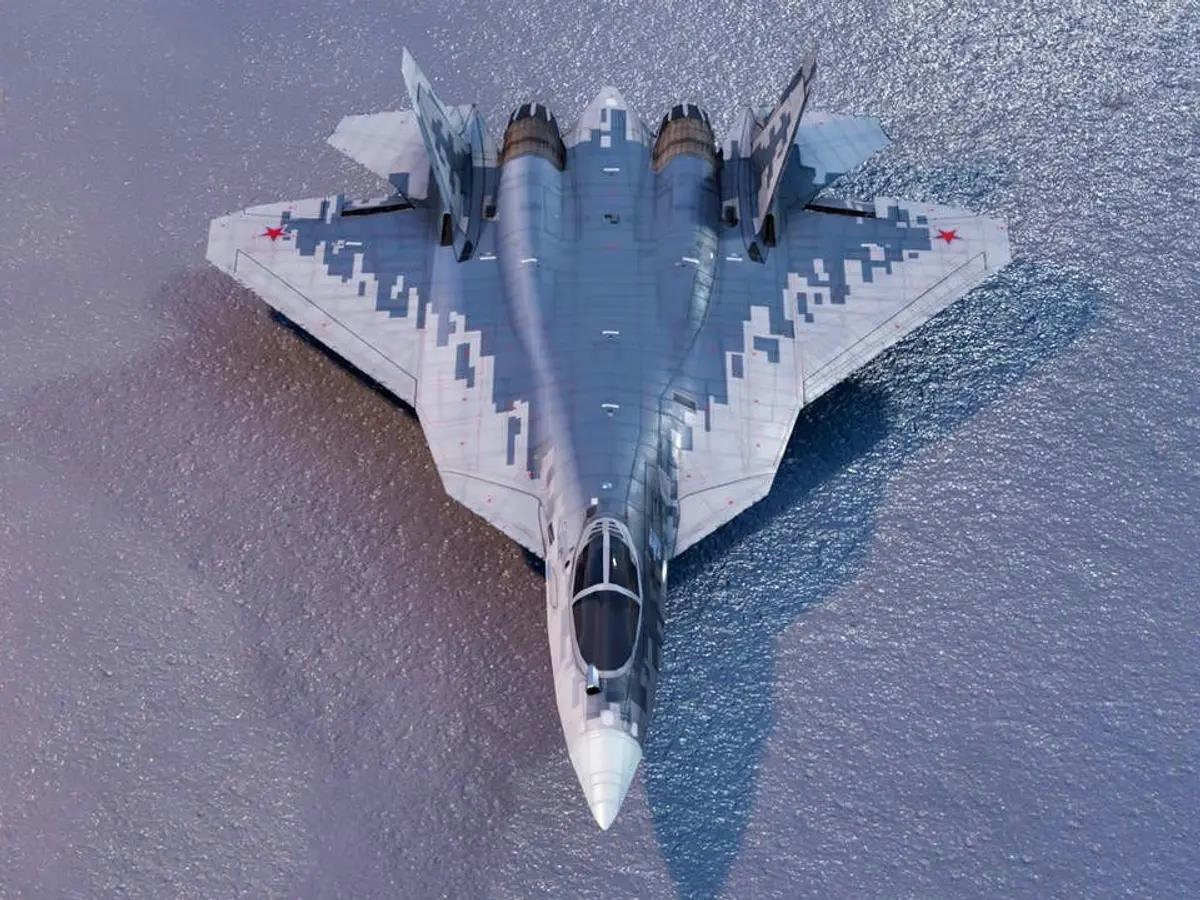
Russia Tests New Engine on Su-57 Fighter Jet
December 22, 2025By ePlane AI
Russia Tests New Engine on Su-57 Fighter Jet
0
0
Su-57 Felon
Izdeliye 177 Engine
Russian Military Aviation

Russia Tests New Engine on Su-57 Fighter Jet Amid Global Scrutiny

Russia’s state defense conglomerate Rostec has announced a significant milestone in the development of its Su-57 Felon fifth-generation fighter jet, revealing that the aircraft has completed its first flight powered by a new engine, designated “izdeliye 177.” This advancement represents a crucial step in the modernization of Russia’s tactical aviation capabilities.

Enhanced Performance and Technological Advances

The newly tested engine reportedly delivers a maximum afterburner thrust of 16,000 kilogram-force, while also offering improved fuel efficiency and an extended service life compared to its predecessors. The flight testing program is being conducted by the United Aircraft Corporation and United Engine Corporation, both subsidiaries of Rostec, as part of the Su-57’s broader fifth-generation aviation complex development. Rostec confirmed that the inaugural flight proceeded according to plan and successfully met all assigned objectives.

Rostec attributes the engine’s enhanced performance to the integration of new technologies, advanced materials, and innovative design solutions. These improvements have resulted in a powerplant with superior technical characteristics relative to earlier engine models. The Su-57 itself is described by Russian officials as a multirole fighter capable of engaging aerial, ground, and maritime targets under diverse operational conditions, including adverse weather and complex electronic warfare environments. Its stealth features are designed to increase survivability against modern air defense systems.

According to Rostec, the Su-57 has demonstrated effective performance in real combat scenarios, confirming its compliance with the stringent requirements of fifth-generation aviation complexes, particularly in terms of stealth capabilities. The company also highlighted ongoing modernization efforts informed by operational experience, especially from deployments in the Special Military Operation (SVO) zone, which have led to upgrades in weapons systems and onboard technologies. The introduction of the “izdeliye 177” engine is expected to further enhance the aircraft’s flight performance and serve as a foundation for future development.

Challenges and International Implications

Despite these advancements, the Su-57 program faces significant challenges. International sanctions and export restrictions imposed on Russia threaten to limit access to critical advanced technologies and materials necessary for the continued development and production of the new engine. These constraints could slow the pace of testing, certification, and eventual mass production of the “izdeliye 177” engine variant.

The global defense community is closely observing Russia’s progress with the Su-57. The aircraft’s technological advancements have attracted increased scrutiny from Western defense contractors and may prompt competitor nations, including the United States and China, to accelerate their own development of next-generation fighter technologies. This competitive dynamic has the potential to influence the global balance of military capabilities and drive further innovation within the sector.

Despite these obstacles, Rostec asserts that export deliveries of the Su-57 are already underway and that international interest in the aircraft remains robust. While the company has not provided a specific timeline for the certification or mass production of the “izdeliye 177” engine, it emphasized that flight testing will continue as part of the ongoing evolution of the Su-57 platform.

More news
Air India to Receive First Boeing 787-9 Dreamliner in Early 2026

Air India to Receive First Boeing 787-9 Dreamliner in Early 2026

Air India to Receive First Boeing 787-9 Dreamliner in Early 2026 Tata Group-owned Air India is set to take delivery of its first Boeing 787-9 Dreamliner, registered as VT-AWA, in early 2026. This acquisition marks a pivotal advancement in the airline’s ongoing wide-body fleet modernization efforts. Scheduled to arrive before the end of the first quarter, the new aircraft will enhance Air India’s long-haul capacity from major hubs such as Delhi and Mumbai, addressing the rising demand for international travel. Fleet Modernization and Aircraft Features The Boeing 787-9 Dreamliner occupies a middle ground between the smaller 787-8 and the larger 787-10 variants, offering a longer fuselage, increased payload, and extended range compared to Air India’s existing 787-8 fleet. Typically configured to seat between 250 and 290 passengers across three classes, Air India’s 787-9s are expected to showcase a refreshed cabin design. This includes an expanded premium economy section and an upgraded business class, recently unveiled to elevate passenger comfort and appeal particularly to business travelers. Constructed with advanced composite materials, the 787-9 is approximately 20% more fuel-efficient than older wide-body aircraft. Its next-generation engines contribute to reduced fuel consumption, lower emissions, and diminished noise levels. With a range of roughly 7,565 nautical miles, the aircraft is capable of nonstop flights to destinations across Europe, East Asia, and North America. Passenger comfort is further enhanced through features such as larger windows, improved cabin pressurization, advanced air filtration systems, and higher humidity levels, all designed to mitigate fatigue on ultra-long-haul journeys. Strategic Expansion and Operational Considerations This delivery represents the first of 20 Boeing 787-9s ordered by Air India as part of its substantial 2023 order exceeding 200 Boeing aircraft. The airline plans a phased induction of these Dreamliners over the next two years. Alongside the 787-9s, Air India anticipates adding Airbus A350-1000s to its fleet in 2026, while simultaneously retiring older leased aircraft to maintain a stable fleet size and reduce the average age of its aircraft. Integrating the new Dreamliners presents both opportunities and challenges. Air India must ensure that the upgraded business class and cabin enhancements meet the evolving expectations of passengers, while seamlessly incorporating the aircraft into its operations to avoid disruptions. Maintaining competitive pricing will be essential, particularly as rival carriers may respond by upgrading their own fleets or adjusting fares to protect market share. Industry analysts expect heightened interest in Air India’s services, especially among premium travelers. Boeing’s recent stock surge and forecasts for increased 787 deliveries in 2026 underscore strong market confidence in the Dreamliner program, a development that could indirectly benefit Air India as it expands its international reach. Industry Challenges and Future Outlook Despite these positive developments, broader industry constraints persist. Boeing has emphasized that aircraft supply is only one factor influencing capacity growth in India. Infrastructure readiness at major airports, availability of landing and parking slots, regulatory approval timelines, and global maintenance capacity remain critical considerations. Additionally, challenges related to pilot availability and engine maintenance bottlenecks continue to affect operational efficiency. As Air India prepares to welcome its first 787-9, the airline is positioning itself to better align international demand with available capacity, aiming to strengthen its competitive position in the rapidly evolving global aviation landscape.
New American eVTOL Aims to Transform Air Taxi Industry

New American eVTOL Aims to Transform Air Taxi Industry

New American eVTOL Aims to Transform Air Taxi Industry A Strategic Entry into Urban Air Mobility LIFT Aircraft, a Texas-based startup, is making a distinctive entrance into the commercial air taxi sector by adopting a measured and innovative approach that diverges from the strategies of established industry leaders. Instead of immediately developing a complex, heavy-duty air taxi subject to prolonged certification processes, LIFT began with the Hexa-U, an ultralight, non-commercial personal eVTOL. This initial step enabled the company to validate its core technologies and collect valuable real-world data without the immediate pressures associated with commercial certification. Building on this foundation, LIFT expanded its portfolio with the Hexa-S, a sport version designed for broader recreational applications. The company has now unveiled its most ambitious model to date: the Hexa-C. This type-certified eVTOL is engineered specifically for fully autonomous air taxi service. The Federal Aviation Administration (FAA) certification process for the Hexa-C is currently underway, positioning the aircraft to enter the commercial market in the near future. Innovation and Competitive Positioning LIFT asserts that the Hexa-C distinguishes itself through cost efficiency, claiming it is the only air taxi with operating expenses comparable to those of ground-based ridesharing services. This cost advantage is a critical differentiator in a market where most competitors focus on larger, more expensive aircraft. LIFT’s strategy of leveraging a single, validated platform across all three Hexa models has helped mitigate development risks and reduce costs. Each variant shares the same distributed electric propulsion system and intuitive flight controls, with the Hexa-C featuring long-range battery packs capable of up to 40 minutes of flight and compliance with instrument flight rules (IFR) weather requirements. Despite these advantages, LIFT is entering a rapidly evolving and fiercely competitive market. Established players such as Joby Aviation are scaling production aggressively, targeting a manufacturing rate of four eVTOL air taxis per month by 2027. The sector continues to attract substantial investor interest, exemplified by Beta Technologies’ stock surge following a $1 billion motor supply agreement with Eve Air Mobility. The competitive landscape is further intensified by legal disputes, including Joby Aviation’s lawsuit against Archer Aviation over alleged trade secret theft, highlighting the high stakes involved. Regulatory and Infrastructure Challenges Beyond competition, the eVTOL industry faces significant regulatory and infrastructure hurdles. The FAA’s evolving certification standards present ongoing challenges for all operators seeking to bring air taxis to market. Additionally, the development of suitable landing sites remains a critical obstacle. To address these infrastructure gaps, innovative solutions such as solar-powered water platforms are being explored, aiming to expand the operational flexibility of eVTOL aircraft. LIFT’s incremental approach—progressing from recreational and sport models to commercial service—may provide the company with a competitive edge in terms of cost control and operational adaptability. The ultimate objective is to realize fully autonomous, self-flying commercial air mobility. If successful, the compact, single-seat Hexa-C, with its distinctive 18-motor configuration, could offer an affordable and accessible alternative to traditional urban transportation. Meanwhile, LIFT continues to market the Hexa-U for personal use, which requires no pilot’s license, through its flight experience centers, alongside the Hexa-S for sport applications. As the air taxi industry accelerates, LIFT’s innovative strategy and emphasis on affordability position it to carve out a significant niche within the emerging urban air mobility market.
Trends Point to a Strong Year for M&A in the MRO Sector in 2026

Trends Point to a Strong Year for M&A in the MRO Sector in 2026

Trends Point to a Strong Year for M&A in the MRO Sector in 2026 Ryan Kirby, junior partner at Alderman & Company, provides a comprehensive end-of-year analysis of the mid-market aviation sector, emphasizing several enduring factors that suggest a robust outlook for mergers and acquisitions (M&A) within the Maintenance, Repair, and Overhaul (MRO) industry as 2026 approaches. Stable Demand Amid Constrained Supply Global commercial air travel demand has demonstrated remarkable resilience despite aircraft production remaining below pre-pandemic levels. Data from Airports Council International projects global passenger traffic to reach 9.8 billion in 2025, marking a 3.7% increase year-on-year. International travel is expected to grow by 5.3%, surpassing domestic travel growth, which is forecasted at 2.4%. In the United States, Transportation Security Administration (TSA) figures reveal that 828 million passengers were screened from January to November 2025, representing a 6.9% increase compared to the same period in 2019. However, the modest 0.3% rise from 2024 suggests a stabilization in travel demand. This balance in demand is influenced by a combination of economic factors, pricing strategies, capacity limitations, and shifting travel behaviors. Conversely, the supply side presents a more constrained picture. The International Air Transport Association (IATA) reports that commercial jet production remains significantly below historical averages, with order backlogs exceeding 17,000 aircraft—equivalent to nearly 60% of the active global fleet, compared to 30-40% prior to 2019. Engine availability continues to be a critical bottleneck, compounded by broader production challenges. IATA forecasts that the disparity between production capacity and airline requirements may not resolve until between 2031 and 2034. Aftermarket Strength and M&A Momentum These supply constraints have contributed to an aging global airline fleet, which now averages 15.1 years, up from 11.1 years in 2019. This trend has sustained strong demand for commercial aircraft aftermarket services. Contrary to early pandemic predictions of a slowdown, ongoing production delays and heightened safety concerns have maintained elevated demand for MRO offerings. Valuations within the sector reflect this sustained momentum. As of late 2025, trailing twelve-month price-to-earnings (P/E) ratios for leading MRO companies remain notably high: AAR Corp at 103, Heico Corp at 68, StandardAero at 49, and TransDigm Group at 40. These robust valuations, coupled with persistent aftermarket demand, are attracting significant buyer interest and are expected to drive active M&A activity throughout 2026. Challenges and Competitive Dynamics Despite the optimistic outlook, several challenges could moderate enthusiasm for M&A transactions. Regulatory scrutiny, particularly concerning antitrust issues, is anticipated to intensify as consolidation accelerates within the sector. Inflationary pressures and rising costs of living may also influence deal structures and valuations. Furthermore, potential supply-side disruptions stemming from a weakening labor market could prompt increased caution among investors. In response to these challenges, industry competitors are likely to pursue aggressive consolidation strategies, including platform roll-ups, to achieve greater scale and foster innovation. Such initiatives aim to strengthen market positions and leverage the sector’s strong fundamentals, even as companies navigate regulatory hurdles and economic uncertainties. Outlook With sustained demand, an aging fleet, and constrained new aircraft supply, the MRO sector is positioned for a dynamic year of mergers and acquisitions in 2026. Industry participants will need to carefully balance growth objectives with regulatory compliance and evolving market risks to fully capitalize on the sector’s potential.
AI and Robotics Transform Aviation Maintenance

AI and Robotics Transform Aviation Maintenance

AI and Robotics Transform Aviation Maintenance Artificial intelligence (AI), robotics, and blockchain technologies are increasingly reshaping aviation maintenance, offering the promise of enhanced efficiency, transparency, and safety. Historically, the aviation sector has been slower than other industries to adopt advanced AI solutions, despite possessing extensive operational data. However, recent advancements indicate a significant shift toward digital transformation within this critical field. Blockchain: Enhancing Security and Transparency in Aviation Records Blockchain technology, a decentralized form of distributed ledger, records data across multiple computers, making retroactive alterations virtually impossible. Each transaction, or “block,” is cryptographically linked to the previous one, creating a continuous, time-stamped chain. This structure ensures transparency, traceability, and data integrity without dependence on a central authority. Originally developed for digital currencies, blockchain has found applications in sectors requiring rigorous verification and auditability, including aviation. Given the aviation industry's stringent safety standards and complex supply chains, blockchain’s attributes of immutability and cryptographic trust are particularly valuable. Currently, aviation compliance often relies on paper-based or siloed digital systems. International studies reveal that up to 60% of critical documents—such as licenses, certificates, and training records—remain in non-integrated formats. This fragmentation results in costly verification delays, documentation inconsistencies, and heightened risks of fraud or counterfeit parts. Blockchain’s tamper-evident audit trails and cryptographic verification mechanisms have the potential to streamline compliance processes, reduce human error, and enable instant authentication of credentials on a global scale. Mindaugas Rainys, CEO of AERVIVA, emphasizes the importance of blockchain in aviation safety: “Compliance and verification are fundamental to safety. Blockchain introduces a layer of trust that is both technological and procedural. It ensures that every credential, entry, and certification can be authenticated instantly, anywhere in the world.” Several industry pilots are already underway. SITA, in collaboration with the International Civil Aviation Organization (ICAO), has demonstrated privacy-preserving, offline verification of electronic personnel licenses, setting the stage for global standards. Meanwhile, the International Air Transport Association (IATA) is advancing digital identity initiatives that leverage blockchain and decentralized identifiers to create trusted, portable credentials for both staff and passengers. Active pilots are exploring the use of these technologies for staff authentication across various operations. AI and Robotics: Tackling Workforce Shortages and Improving Efficiency Despite the transformative potential of AI and robotics, skepticism remains among airline executives, shaped by previous disappointments and the slow maturation of applied AI technologies. Nonetheless, recent deployments of AI-driven engine technologies, such as those introduced by International Airlines Group (IAG), have been met with cautious optimism, helping to rebuild confidence in AI’s practical capabilities. In response, competitors are making substantial investments in robotics, focusing on humanoid robots and AI-enabled enterprise automation. These innovations aim to address critical challenges, including the global shortage of maintenance technicians. Solutions like Zymbly are being introduced to enhance workforce productivity by simplifying documentation and administrative tasks, thereby allowing technicians to concentrate on essential maintenance activities. Outlook for Digital Transformation in Aviation Maintenance Market indicators reflect a growing interest in digital transformation within the aviation sector. Industry surveys from 2021 reveal that nearly 59% of airlines had planned blockchain pilot or research programs. As AI, robotics, and blockchain technologies continue to evolve, their integration is expected to deliver safer, more efficient, and more reliable aviation maintenance—contingent on the industry’s ability to overcome persistent skepticism and operational challenges.
New $1.5 Billion Infrastructure Plan, Road-Trip App, and Air Taxi Proposal Signal Transport Changes

New $1.5 Billion Infrastructure Plan, Road-Trip App, and Air Taxi Proposal Signal Transport Changes

U.S. Unveils $1.5 Billion Infrastructure Plan Alongside Road-Trip App and Air Taxi Strategy WASHINGTON, D.C. — In a comprehensive effort to reshape the nation’s transportation landscape, U.S. Transportation Secretary Sean P. Duffy announced a series of initiatives last week aimed at modernizing infrastructure and enhancing travel experiences across the country. Central to these efforts is a $1.5 billion funding opportunity under the Better Utilizing Investments to Leverage Development (BUILD) grant program for Fiscal Year 2026, alongside the launch of a nationwide road-trip app and the introduction of the country’s first National Strategy for Advanced Air Mobility. BUILD Grants to Support Large-Scale Transportation Projects The $1.5 billion Notice of Funding Opportunity under the BUILD program is designed to finance significant surface transportation projects, including highways, rail systems, ports, and truck parking facilities. The Department of Transportation emphasized that these competitive grants will prioritize safety improvements, expanded transportation options, increased roadway capacity, and affordability. Revised criteria also highlight infrastructure that enhances the travel experience, supports tourism, improves accessibility for individuals with disabilities, and advances U.S. energy interests. Secretary Duffy framed the initiative as a decisive shift toward practical investments aimed at lowering costs and modernizing aging transportation networks, moving away from the climate and social priorities of previous administrations. He stated, “Under President Trump, America is building again.” Applications for the BUILD grants are due by February 24, 2026, at 5:00 p.m. Eastern. Since its inception in 2009, the program has awarded over $18 billion across 18 funding rounds. The scale of this investment is comparable to international projects such as Kenya’s recent $1.5 billion highway expansion backed by China, underscoring the global competition for infrastructure leadership. Despite the ambitious scope, the plan faces potential challenges, including securing full funding and navigating complex regulatory environments. Market responses have been mixed, with some investors optimistic about the prospects for infrastructure development, while others remain cautious. Competitors may seek to leverage existing infrastructure or invest in complementary technologies to maintain a competitive edge. Explore250 App Encourages National Travel Ahead of 250th Anniversary In conjunction with the funding announcement, the Department of Transportation introduced Explore250, a new mobile application developed in partnership with General Motors and HERE Technologies. Available for free on Apple and Google platforms, the app is designed to inspire Americans to explore the country in anticipation of the nation’s 250th anniversary in 2026. Users can plan road trips, discover more than 250 historic and cultural destinations, and collect digital “stamps” as they travel. Secretary Duffy described Explore250 as a modern tool to reconnect families with America’s geography and history. Mary Barra, Chair and CEO of General Motors, underscored the automaker’s commitment to supporting travel and U.S. manufacturing through this initiative. National Strategy for Advanced Air Mobility Charts Future of Air Travel Looking ahead, Secretary Duffy unveiled the nation’s first Advanced Air Mobility (AAM) National Strategy, which outlines a comprehensive roadmap for integrating highly automated aircraft, including air taxis, into U.S. airspace. The strategy presents 40 recommendations across six key pillars, encompassing airspace integration, infrastructure development, workforce training, and security measures. The emerging AAM market has attracted growing interest, with companies such as Beta Technologies experiencing stock gains following major deals. Archer Aviation’s plans to deploy air taxis in Miami illustrate both the potential and challenges of this sector, as issues related to business aviation infrastructure and regulatory approval remain. The Trump administration’s pilot program aims to accelerate the adoption of new aircraft types and influence market dynamics favorably. Industry groups, airport operators, and technology firms have praised the AAM strategy as a vital step to maintain U.S. competitiveness in next-generation aerospace. Additionally, the Department announced enhanced Federal Railroad Administration oversight of cross-border freight rail operations, addressing safety concerns linked to limited English proficiency among some inbound train crews. Together, these initiatives represent a broad and multifaceted approach to modernizing U.S. transportation, balancing innovation with practical investment while responding to both domestic needs and global infrastructure challenges.
Joby Aviation Plans to Double U.S. Production to Expand Aerial Travel

Joby Aviation Plans to Double U.S. Production to Expand Aerial Travel

Joby Aviation to Double U.S. Production, Expanding the Future of Aerial Travel Joby Aviation, a pioneer in electric air taxi technology, has announced plans to double its production capacity in the United States. The company aims to increase manufacturing to four aircraft per month by 2027, a strategic move designed to meet growing demand for faster, environmentally friendly, and visually engaging travel options across American cities. Responding to Rising Demand Amid Industry Challenges The planned expansion of Joby’s U.S. production facilities underscores the increasing interest in urban air mobility (UAM) and sustainable tourism. By scaling up output, Joby intends to cater to both domestic and international travelers seeking efficient urban commutes and unique aerial views of major landmarks. The prospect of quietly flying over cities such as Los Angeles, New York, or Miami in an electric air taxi promises to transform routine travel into an immersive sightseeing experience. Despite the optimism, Joby faces significant challenges. Investor sentiment remains divided, with some expressing confidence in the future of advanced air mobility, while others remain cautious due to regulatory uncertainties and intense competition within the sector. The competitive landscape is further complicated by ongoing legal disputes, including Joby’s lawsuit against rival Archer Aviation over alleged theft of trade secrets. Strategic Alliances and Regulatory Developments To bolster its manufacturing capabilities and market presence, Joby has entered into a strategic partnership with Toyota. This collaboration is expected to enhance production efficiency and support the company’s ambitious expansion plans. Concurrently, U.S. regulatory bodies, notably the Federal Aviation Administration (FAA), are collaborating closely with Joby and other industry players to facilitate the safe integration of air taxis into urban airspace. This cooperation aims to establish regulated routes and guided flight paths, ensuring that safety remains paramount alongside the goals of speed and convenience. The Promise of Air Taxis for Urban Travelers Joby’s electric air taxis feature quiet vertical take-off and landing (VTOL) capabilities, making them well-suited for operation in dense urban environments where traditional aircraft are impractical. For tourists, this technology offers novel opportunities to explore cityscapes, waterways, and coastlines in comfort and style. The elevated vantage point is ideal for photography, sightseeing, or simply enjoying a distinctive travel experience. As more cities consider adopting air taxi services, these aircraft are poised to connect airports with city centers and major attractions, effectively bypassing ground traffic and significantly reducing travel times. Sustainability and the Future of Urban Tourism Electric air taxis present a more sustainable alternative to helicopters and conventional car travel, appealing to environmentally conscious travelers. Joby’s commitment to minimizing noise pollution and emissions aligns with broader global trends toward sustainable tourism, enabling passengers to reduce their carbon footprint without compromising on comfort or efficiency. Looking Forward Travelers interested in incorporating air taxis into their journeys should stay informed about developments in pilot cities, available routes, and booking options. Early adopters may soon experience a new era of urban travel that combines speed, sustainability, and breathtaking aerial views.
Bengaluru Begins Ground Testing for Air Taxi Program

Bengaluru Begins Ground Testing for Air Taxi Program

Bengaluru Advances Air Taxi Program with Ground Testing Milestone Sarla Aviation has initiated ground testing of its half-scale electric air taxi demonstrator, marking a pivotal development in India’s burgeoning aerospace sector. Conducted at the company’s Bengaluru facility, these tests signify a transition from theoretical design and simulation to practical validation of an actual aircraft. The SYLLA SYL-X1 Demonstrator: A Substantial Step Forward The demonstrator, designated SYLLA SYL-X1, boasts a 7.5-metre wingspan and currently stands as the largest privately developed electric vertical takeoff and landing (eVTOL) aircraft in India. Constructed within nine months and at a fraction of the cost of comparable international projects, the SYL-X1 is engineered to assess the integration of structural, propulsion, and safety systems at a realistic scale. Unlike smaller experimental models, this sub-scale aircraft enables engineers to examine system interactions comprehensively before progressing to flight testing. This ground testing phase is critical for Sarla Aviation’s trajectory toward certification and commercial production. Having secured $13 million in funding, the company plans to evolve from demonstration milestones to developing a full-scale aircraft with a 15-metre wingspan. From inception, the SYL-X1 has been designed to comply with global aerospace standards, prioritizing safety, certification, and operational viability over rapid market entry. Rakesh Gaonkar, Co-Founder and Chief Technical Officer, highlighted that this achievement reflects the capabilities of Indian engineering teams operating at international standards. He underscored the multifaceted challenges encountered, including the development of novel testing protocols, overcoming supply chain limitations, and rapidly expanding the team from two founders to nearly 70 engineers within a single development cycle. Navigating Challenges Amidst Growing Competition Sarla Aviation’s progress coincides with the nascent stage of India’s urban air mobility sector, which faces considerable regulatory, safety, and technological challenges. Despite these obstacles, investor interest and stakeholder optimism are rising, driven by the potential for urban air mobility solutions to alleviate congestion in India’s cities. On the global front, Sarla Aviation contends with established competitors such as Joby Aviation, Archer Aviation, and Eve Air Mobility, all of which are advancing eVTOL development, scaling production, establishing vertiport infrastructure, and securing significant commercial contracts. This intensifying competition is expected to catalyse further innovation and accelerate sector-wide progress. The broader aerospace and defense landscape is undergoing rapid transformation, encompassing advancements in electric air taxis, autonomous combat aircraft, and lunar exploration missions. This dynamic environment highlights both the opportunities and pressures confronting Bengaluru’s air taxi initiative. Sarla Aviation asserts that its technology aims to deliver helicopter-level mission capabilities while reducing operating costs and complexity through electric propulsion and integrated system design. The company views successful certification, scalable production, and sustained operations as essential to securing India’s role in the future of urban air mobility.
FAA Certifies Bombardier Global 8000 Aircraft

FAA Certifies Bombardier Global 8000 Aircraft

FAA Grants Certification to Bombardier Global 8000 Business Jet Bombardier has announced that its Global 8000 business jet has received certification from the U.S. Federal Aviation Administration (FAA), marking a significant milestone for the Canadian manufacturer. This approval follows the aircraft’s type certification from Transport Canada (TC) on November 5. Certification from the European Union Aviation Safety Agency (EASA) is still pending. Stephen McCullough, Senior Vice President of Engineering and Product Development at Bombardier, attributed this achievement to the collaborative efforts of the company’s skilled workforce, suppliers, and regulatory authorities. He emphasized the commitment to excellence that underpinned the certification process with both Transport Canada and the FAA. Advanced Features and Market Introduction The Global 8000 distinguishes itself in the business aviation sector with its notably low cabin altitude of 2,691 feet, the lowest among production business jets. This feature enhances passenger comfort during flights cruising at 41,000 feet, a condition Bombardier likens to standing atop the Burj Khalifa, the world’s tallest building. The aircraft also offers a top speed of Mach 0.95 and an extended range of 8,000 nautical miles, positioning it as a leader in ultra-long-range business jets. The jet officially entered service earlier this month, with entrepreneur Patrick Dovigi receiving the first delivery at Bombardier’s assembly centre in Mississauga, Ontario. The handover ceremony included a performance by Canadian rock musician Tom Cochrane, presented by Rolling Stone Canada. Market Challenges and Competitive Landscape Despite this certification success, Bombardier faces considerable challenges in the ultra-long-range business jet market. Established competitors such as Gulfstream and Dassault continue to compete aggressively for market share and may expedite their own development programs in response to the Global 8000’s launch. The market’s reception of ultra-long-range jets remains uncertain; while some investors view the FAA certification as a positive development, others express reservations regarding the aircraft’s high price and the niche nature of its target clientele. As Bombardier advances, it will need to address these competitive pressures and adapt to evolving customer expectations to solidify the Global 8000’s standing within the business aviation industry.
Boeing-Backed Autonomous VTOL Air Taxi Completes First Flight

Boeing-Backed Autonomous VTOL Air Taxi Completes First Flight

Boeing-Backed Wisk Aero’s Autonomous Air Taxi Achieves First Flight Wisk Aero, an autonomous aviation company formed through a partnership between Boeing and Larry Page’s Kitty Hawk, has reached a significant milestone in the development of electric vertical takeoff and landing (eVTOL) aircraft. The company’s Generation 6 air taxi, known as Cora, recently completed its inaugural flight at Wisk’s facility in Hollister, California. This achievement marks a crucial step toward the realization of commercial autonomous passenger flights. The Gen 6 Prototype and Flight Testing Described by Wisk as the “world’s first self-flying, all-electric, four-seat air taxi,” the Gen 6 prototype successfully executed a series of vertical takeoffs, hovering, and stabilized flight maneuvers during its initial test. This flight builds upon more than 1,750 test flights conducted with earlier versions of the aircraft and initiates a rigorous new phase of testing aimed at validating the Gen 6 design, simulation models, and overall system performance. Although Wisk has not disclosed specific technical details from the flight, the company confirmed that the next phase of testing will concentrate on the hover regime, including takeoffs, landings, and low-speed stability. If these tests prove successful, subsequent evaluations will expand to higher speeds and altitudes, incorporating more complex maneuvers such as longitudinal and lateral transitions and pedal turns. Market Context and Industry Implications Wisk’s progress arrives at a pivotal moment for the eVTOL sector, which is experiencing intensified competition as companies like Joby Aviation advance their own aircraft testing programs, including operations in the Gulf region. The successful flight of the Gen 6 prototype is expected to influence market dynamics, potentially accelerating development timelines among competitors. Furthermore, this milestone may encourage greater participation in initiatives such as the eVTOL and Advanced Air Mobility (AAM) Integration Pilot Program (eIPP), as industry stakeholders seek to explore real-world eVTOL operations. Design and Operational Features The Cora air taxi is designed to be fully electric and autonomous, equipped with 12 motor-driven propellers—six on each wing—and capable of carrying up to four passengers along with their carry-on luggage. While the aircraft operates without an onboard pilot, flights are monitored remotely from ground stations known as Multi-Vehicle Supervisor centers, ensuring continuous oversight. Wisk is collaborating closely with government agencies and private partners, including the Federal Aviation Administration (FAA), NASA, and SkyGrid, to advance the Cora program. The company asserts that its Generation 6 VTOL is the first candidate for FAA certification as a commercial autonomous passenger aircraft in the United States. Although a certification timeline remains uncertain, Wisk has identified Houston, Los Angeles, and Miami as initial launch markets once regulatory approval is obtained. Advancing Urban Air Mobility As Wisk continues to refine the aircraft’s control laws, structural loads, and dynamics, alongside enhancements to detect-and-avoid and navigation systems, the company is positioning itself at the forefront of the emerging urban air mobility market. The successful first flight of the Gen 6 prototype not only represents a technical achievement for Wisk but also signals a new phase of competition and innovation within the rapidly evolving eVTOL industry.
Austrian Airlines Unveils AI-Generated Christmas Song for Holiday Travel

Austrian Airlines Unveils AI-Generated Christmas Song for Holiday Travel

Austrian Airlines Unveils AI-Generated Christmas Song for Holiday Travel Innovation in Holiday Marketing Austrian Airlines has introduced a novel approach to its holiday campaign by releasing an electro-pop Christmas song created entirely through artificial intelligence. The "Merry Flynachten" initiative marks a significant departure from the traditional choral arrangements commonly associated with airline holiday advertising. Both the lyrics and music were generated using advanced AI tools, reflecting the airline’s commitment to embracing digital innovation. The campaign’s music video, produced internally, features a diverse group of employees, including cabin crew, engineers, and ground staff. This choice highlights the operational realities and camaraderie that define the busy winter travel season. The song itself incorporates urban beats and industrial sounds, such as turbine noise, aiming to evoke the distinctive atmosphere of airport operations during the holidays. Strategic Positioning and Industry Context Ingrid Gogl, Head of Brand Communications at Austrian Airlines, explained that the campaign seeks to showcase the professionalism and humor of the airline’s staff during peak travel periods. The airline is positioning itself as a modern, digitally savvy brand within a highly competitive international market. The campaign will be disseminated across social media, digital advertising platforms, and internal channels as part of a comprehensive 360-degree marketing strategy. However, the use of AI-generated content in holiday marketing carries inherent risks. Recent industry examples illustrate mixed consumer reactions. For instance, McDonald’s AI-generated Christmas advertisement faced criticism for perceived lack of authenticity and inappropriate tone, as reported by The Verge. This underscores a potential challenge for Austrian Airlines, especially as travelers increasingly seek genuine and positive holiday experiences. This demand coincides with a broader trend of rising holiday travel interest and forecasts of lower airfares in 2025, according to Hotel News Resource. Industry analysts note that airlines are progressively adopting in-house productions and AI-driven content to reduce marketing costs and enhance employee engagement. Austrian Airlines’ strategy blurs the line between internal motivation and external customer outreach by featuring real employees in the music video, thereby aiming to boost authenticity. As competitors may respond by either embracing similar AI-powered campaigns or reinforcing traditional, human-created holiday content, the success of such digital strategies will likely hinge on consumer preferences for emotional resonance and authenticity. Technological Implications and Future Outlook From a technical perspective, the campaign exemplifies the expanding role of AI and digitalization within the aviation sector. Beyond operational applications such as route optimization and data transmission, generative AI is now influencing creative marketing processes. These tools enable rapid production of timely, wide-reaching content, signaling a shift from conventional acoustic cues to rhythm-driven communication that reflects the dynamic nature of modern travel. Austrian Airlines’ AI-generated Christmas song thus functions both as a branding instrument and an experiment in the potential of technological innovation to enhance—or possibly challenge—the authenticity that travelers expect during the holiday season.
Ask AeroGenie










