image

AeroGenie - مساعد الطيار الذكي الخاص بك.

اسأل أي شيء. حلل كل شيء. تصرف فورًا.

الرائج الآن

Categories

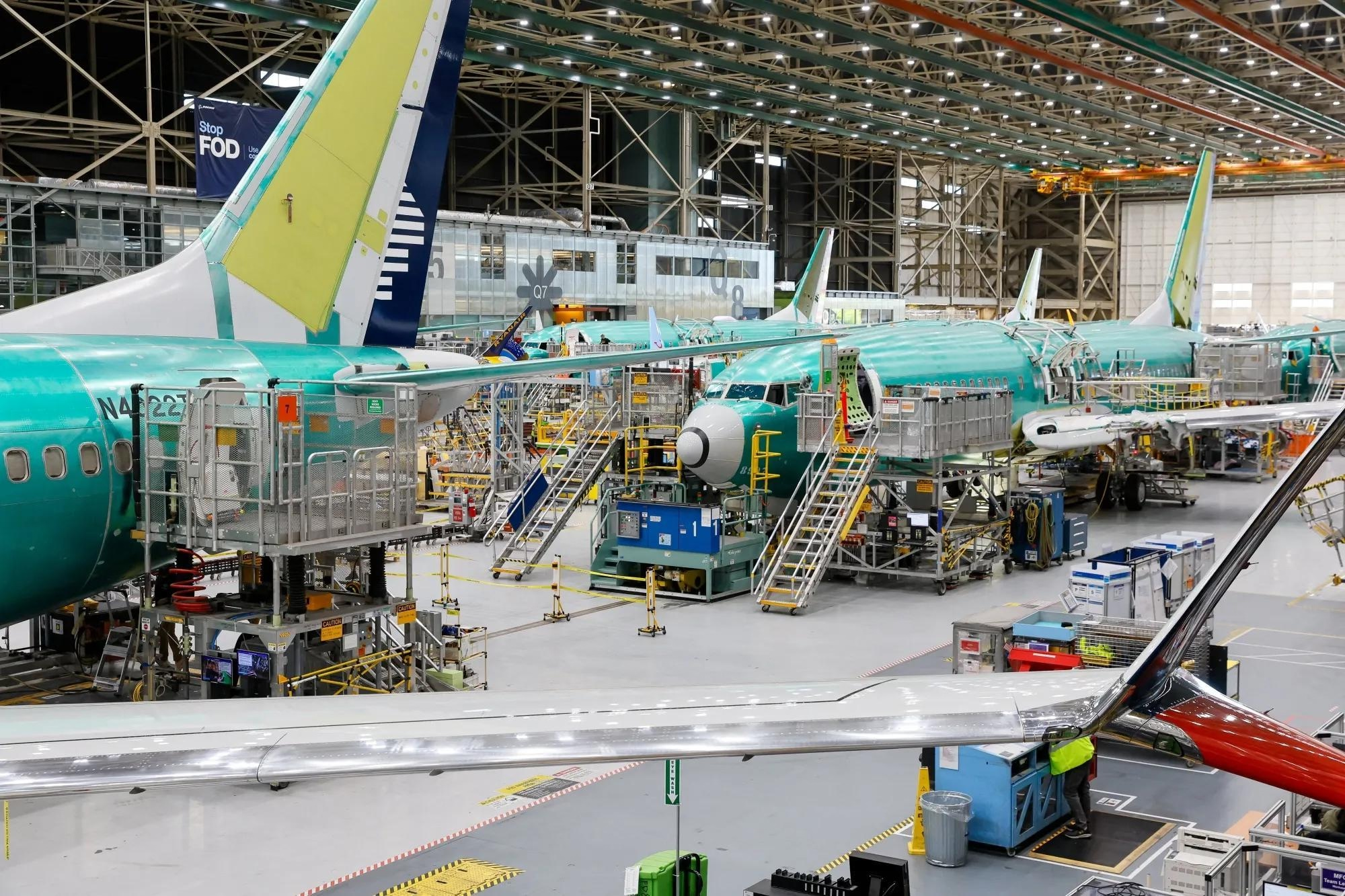
Saudi Arabia to Order 30 Boeing 737 MAX Jets Ahead of Trump Visit
May 13, 2025By ePlane AI
Saudi Arabia to Order 30 Boeing 737 MAX Jets Ahead of Trump Visit
0
0
Boeing 737 MAX
AviLease
Aircraft Order

Saudi Arabia Confirms Order for 30 Boeing 737 MAX Jets Ahead of Trump Visit

Saudi Arabia has placed a substantial order for up to 30 Boeing 737 MAX aircraft, coinciding with the forthcoming visit of US President Donald Trump to the kingdom. Valued in the billions, this agreement represents a significant boost for Boeing as it contends with a challenging global market and intensifying competition from European rival Airbus.

AviLease’s Landmark Direct Purchase

The order originates from AviLease, an aircraft leasing company supported by Saudi Arabia’s Public Investment Fund. This transaction marks AviLease’s first direct purchase from Boeing, consisting of 20 firm orders for the 737 MAX 8 model, with options for an additional 10 jets. The deal reflects AviLease’s strategic ambition to expand its global presence and aligns closely with Saudi Arabia’s Vision 2030 initiative, which aims to diversify the kingdom’s economy beyond its traditional reliance on oil.

Edward O’Byrne, CEO of AviLease, emphasized the significance of the deal, stating that the new aircraft will accelerate the company’s growth and enable it to offer the latest generation of fuel-efficient fleet solutions. Established in 2022, AviLease currently manages a portfolio of 165 aircraft valued at approximately $6 billion, serving major international carriers including American Airlines, China Eastern Airlines, Delta Air Lines, as well as Saudi-based airlines flyadeal and flynas. The company’s focus on modern, fuel-efficient aircraft underscores the aviation industry’s broader shift toward sustainability and positions AviLease as a key player in global aviation finance.

Strategic Timing and Diplomatic Context

The timing of the order is closely linked to President Trump’s visit, which marks the first stop on his Middle East tour encompassing Qatar and the United Arab Emirates. Accompanied by Boeing CEO Kelly Ortberg, Trump’s trip is widely viewed as an effort to reinforce economic and security ties with the region. During the visit, several Memoranda of Understanding were signed across sectors including energy, defense, and space, with the AviLease-Boeing agreement among the most prominent announcements.

Saudi Arabia is also reportedly pursuing a major security pact with the United States, underscoring the strategic importance of the visit. The kingdom’s drive to attract US investment is a central pillar of Vision 2030, which seeks to reduce the economy’s heavy dependence on oil revenues—currently accounting for over 20 percent of GDP—by fostering growth in sectors such as aviation.

Market Implications and Competitive Dynamics

While the Boeing order represents a significant win for the American manufacturer, it occurs amid intense competition with Airbus, which remains a formidable presence in the Middle Eastern aviation market. Saudi Arabia’s decision may prompt counteroffers from Airbus as it strives to maintain its regional market share. Furthermore, Boeing is reportedly negotiating a separate deal to supply 150 737 MAX jets to a new Saudi airline, signaling the kingdom’s broader ambitions to develop its aviation sector.

The market response to the AviLease order has been favorable for Boeing, which has recently faced setbacks including China’s ban on its aircraft deliveries amid ongoing trade tensions. Industry analysts caution, however, that competitors are likely to respond with strategic initiatives aimed at securing future contracts in the Middle East.

Supporting Saudi Arabia’s Vision 2030

AviLease’s expansion and its partnership with Boeing are integral components of Saudi Arabia’s Vision 2030, which aspires to transform the kingdom into a global investment hub. By investing in advanced, fuel-efficient aircraft and cultivating a diverse customer base, AviLease is positioned to play a pivotal role in shaping the future of aviation finance while supporting the country’s broader economic transformation.

More news
Dubai’s 2026 Plans: Key Developments from Flying Taxis to the Year of the Family

Dubai’s 2026 Plans: Key Developments from Flying Taxis to the Year of the Family

Dubai’s 2026 Plans: Key Developments from Flying Taxis to the Year of the Family Dubai is preparing for a transformative year in 2026, with a series of ambitious projects and policy initiatives poised to reshape the daily lives of residents and visitors alike. The emirate’s forward-looking vision continues to attract global attention, as it advances pioneering transport solutions and social programs designed to enhance quality of life. Several key developments stand out as emblematic of Dubai’s evolving landscape. Advancements in Transportation Infrastructure One of the most anticipated projects is the launch of the Etihad Rail passenger service, which will connect all seven emirates through a modern rail network. While the freight segment of the network is already operational, the introduction of passenger services in 2026 is expected to significantly reduce travel times between major cities. This development offers a sustainable and efficient alternative to road travel, marking a major milestone in the UAE’s transportation sector. In parallel, Dubai is set to introduce flying taxis, utilizing electric vertical takeoff and landing (eVTOL) vehicles from companies such as Joby Aviation. These air taxis will provide rapid transit between key locations including Dubai International Airport, Atlantis The Royal, and Dubai Mall, operating from dedicated vertiports. The first vertiport is scheduled to become operational by March 2026, with plans to expand the network throughout the year. Despite the excitement surrounding this innovation, the rollout faces significant challenges, including regulatory approvals and the establishment of necessary infrastructure. The market is becoming increasingly competitive, with global players like Archer Aviation and China’s XPeng AeroHT entering the sector. This competition is likely to spur collaborations and technological advancements as companies vie for market share. If successfully implemented, flying taxis could revolutionize urban mobility and alleviate traffic congestion, though substantial investment in vertiport networks and regulatory frameworks will be essential. Cultural and Social Initiatives In addition to transportation advancements, Dubai is investing in cultural and social projects that reinforce its status as a global city. The iconic Dubai Fountain is undergoing a major upgrade, set to reopen in 2026 with enhanced technology, improved choreography, and a new sound and lighting system. Having been closed for maintenance in 2025, the revamped fountain aims to deliver even more captivating performances, solidifying its position as a premier attraction for both tourists and residents. On the public health front, Dubai will implement a new sugar tax system starting January 1, 2026. Building on the 2019 excise tax on sugary drinks, the updated policy introduces a tiered tax structure based on sugar content. This measure is designed to encourage healthier consumption habits among the population, reflecting the emirate’s commitment to promoting public well-being. Furthermore, 2026 has been designated as the “Year of the Family,” emphasizing the importance of family values and community cohesion. This initiative will feature a variety of programs and events aimed at supporting families and fostering social unity across the emirate. Dubai’s agenda for 2026 highlights its dedication to innovation and enhancing quality of life, even as it navigates the complexities associated with new technologies and regulatory environments. These developments underscore the city’s ongoing evolution and its ambition to maintain a leading role in global urban development.
CALC Orders 30 Airbus A320neo Jets to Expand Fleet by 2026

CALC Orders 30 Airbus A320neo Jets to Expand Fleet by 2026

CALC Confirms Order for 30 Airbus A320neo Jets to Expand Fleet by 2026 China Aircraft Leasing Group Holdings Limited (CALC) has finalized a firm order for 30 additional Airbus A320neo Family aircraft, underscoring its confidence in the ongoing recovery of the global aviation sector. The agreement, concluded on December 30, 2025, is valued in the billions and reinforces CALC’s position as a leading global aircraft lessor. This move also highlights the increasing demand within the industry for fuel-efficient, narrow-body jets that meet evolving operational and environmental requirements. This latest acquisition represents CALC’s fifth direct purchase from Airbus since their partnership began in 2012. With these new aircraft, CALC’s total Airbus order book rises to 282, including 203 from the A320neo Family. The decision aligns with airlines’ growing preference for modern, eco-conscious fleets designed to comply with tightening environmental regulations worldwide. Strategic Considerations and Market Context Mike Poon, Executive Director and CEO of CALC, emphasized the strategic importance of the order, stating, “Our enduring partnership with Airbus has been central to CALC’s growth. This order reflects our commitment to providing airline customers with high-value, modern aircraft solutions that align with a sustainable aviation ecosystem.” The Airbus A320neo is widely regarded as the benchmark for narrow-body jets due to its superior fuel efficiency, passenger comfort, and operational versatility. The aircraft delivers at least 20% fuel savings and significant reductions in CO2 emissions compared to previous generations. Its cabin, the widest among single-aisle aircraft, offers enhanced comfort for short- and medium-haul travelers. Furthermore, CALC’s agreement includes conversion rights, allowing flexibility to switch between the standard A320neo and the larger, longer-range A321neo to meet diverse client requirements. A notable feature of the A320neo is its compatibility with Sustainable Aviation Fuel (SAF). Currently capable of operating with a 50% SAF blend, Airbus aims to achieve 100% SAF capability by 2030. As environmental regulations become more stringent across Europe and Asia, CALC’s investment in the A320neo family represents a proactive effort to future-proof its portfolio against carbon taxes and rising passenger expectations for greener travel. Challenges and Competitive Environment Despite the positive outlook, CALC’s expansion faces potential challenges. Global supply chain disruptions and manufacturing constraints could delay aircraft deliveries. Additionally, competition remains intense, particularly from Boeing. While Boeing’s 737 MAX continues to encounter regulatory scrutiny, giving Airbus a competitive advantage in the Chinese market, the broader competitive landscape remains dynamic and uncertain. This order coincides with similar fleet expansion initiatives by CALC’s rivals. Chinese carriers such as Spring Airlines and Juneyao Air have recently placed their own orders for A320neo aircraft, potentially accelerating their growth plans. This intensifying competition may influence market dynamics and prompt further strategic responses across the sector. Implications for the Market CALC’s latest order is expected to bolster investor confidence in its growth strategy and strengthen Airbus’s foothold in China, especially as Boeing seeks to regain market share. As the aviation industry moves into 2026, CALC’s commitment to sustainable and efficient aircraft underscores a broader industry shift toward eco-conscious, future-ready fleets, setting a precedent for the next phase of global aviation.
AI in Travel Planning: Benefits, Risks, and Future Prospects

AI in Travel Planning: Benefits, Risks, and Future Prospects

AI in Travel Planning: Benefits, Risks, and Future Prospects As artificial intelligence increasingly integrates into travel planning, a growing number of travelers are relying on AI-powered tools for tasks ranging from comparing flight fares to uncovering lesser-known attractions at their destinations. These platforms offer remarkable efficiency by generating personalized itineraries, suggesting unique experiences, and simplifying the booking process. However, experts caution that despite these advantages, the technology is still evolving and requires careful use. The Role and Limitations of AI in Travel Planning Juan Luis Nicolau, the J. Willard and Alice S. Marriott Professor of Revenue Management at Virginia Tech’s Pamplin College of Business, stresses that while AI is highly effective at providing inspiration and initial ideas, it should not replace thorough verification. He advises travelers to treat AI-generated suggestions as preliminary drafts rather than finalized plans. Nicolau warns that AI itineraries may sometimes contain outdated information, recommend attractions that no longer exist, or omit critical details such as holiday closures—errors that can result in costly or disappointing travel experiences. To reduce these risks, travelers are encouraged to cross-check AI recommendations with official airline websites, consult multiple review sources, and verify practical details like operating hours and public transportation options. Nicolau also highlights the importance of providing detailed prompts to AI systems, including budget constraints, preferred activities, or accessibility requirements, to obtain more tailored and relevant results. He recommends requesting several itinerary options optimized for different priorities—such as affordability, convenience, or cultural immersion—to better understand trade-offs and make informed decisions. Security and Privacy Concerns Security remains a significant challenge in AI-driven travel planning. Sharing sensitive personal information, including passport or payment details, with AI chatbots can expose travelers to privacy breaches, as data protection standards have yet to fully keep pace with technological advancements. Furthermore, most travel insurance policies do not cover losses stemming from AI-generated errors, leaving travelers vulnerable to financial risks caused by misinformation or mistakes. Industry Response and Market Trends The aviation and hospitality industries are rapidly adopting AI technologies to improve efficiency, safety, and customer experience. As of early 2026, the global AI aviation market is valued between $8 billion and $9 billion, with projections exceeding $170 billion by 2033. Airlines and airports are utilizing AI for biometric security, predictive maintenance, dynamic pricing, and personalized customer service. Leading organizations such as Delta, Lufthansa, Heathrow, and Dubai International are at the forefront of this transformation. Despite these advances, market feedback reveals persistent traveler dissatisfaction with AI-enabled booking experiences. In response, competitors are developing integrated AI hospitality ecosystems designed to create more seamless and satisfying journeys across sectors. The most successful companies are expected to leverage AI not only to enhance customer experiences but also to reduce waste and promote more responsible operations. Looking Ahead: The Future of AI in Travel Nicolau foresees the emergence of “agentic” AI—advanced systems capable of proactively managing bookings, monitoring for upgrades, anticipating disruptions, and handling re-bookings. These innovations promise highly adaptive and individualized travel planning that could significantly reduce stress and enhance personalization. Nonetheless, human oversight remains indispensable. While AI can efficiently generate options, it lacks the nuanced understanding of personal values and the intangible joy that makes travel meaningful. As AI adoption grows, particularly among younger travelers, the challenge will be to balance technological convenience with personal discernment, ensuring that travel remains both intelligent and deeply rewarding.
Airline Operated Largest Widebody Fleet in 2025

Airline Operated Largest Widebody Fleet in 2025

Emirates Operates World’s Largest Widebody Fleet in 2025 Emirates, the flag carrier of the United Arab Emirates, has reinforced its status as a global aviation leader in 2025 by operating the world’s largest widebody fleet. Since its inception in 1985 with just two aircraft, the Dubai-based airline has grown into a dominant force in international air travel. Its strategic focus on long-haul routes and premium service, combined with its advantageous geographic position, enables Emirates to efficiently connect passengers across Europe, Asia, Africa, and the Americas. Fleet Composition and Service Excellence The airline’s fleet is composed exclusively of widebody aircraft, prominently featuring the Airbus A380 and Boeing 777 models. This composition allows Emirates to serve high-demand international routes with substantial passenger capacity while maintaining a high standard of onboard comfort. Emirates’ dedication to innovation is reflected in its continuous investment in modern aircraft, cutting-edge in-flight entertainment systems, and enhanced onboard connectivity, delivering a superior travel experience across all cabin classes. Dubai International Airport (DXB) functions as Emirates’ primary hub, equipped with state-of-the-art facilities that accommodate millions of travelers annually. Its strategic location at the crossroads of Europe, Asia, and Africa enables the airline to optimize its global network, facilitating efficient transfers and supporting rapid expansion. The airport’s modern terminals, advanced baggage handling systems, and luxurious lounges contribute to a seamless and high-quality service environment, further establishing Dubai as a premier global aviation hub. Industry Challenges and Competitive Landscape Despite its remarkable growth and operational scale, Emirates faces several industry-wide challenges in 2025. Notably, supply chain disruptions, including delays in Boeing’s widebody aircraft deliveries, pose potential obstacles to fleet expansion and scheduling. These issues are not unique to Emirates; other major carriers such as Delta Air Lines and Alaska Airlines are encountering similar difficulties as they seek to expand their widebody fleets. In response, these airlines are enhancing their international route offerings and leveraging strategic partnerships to improve operational efficiency and maintain competitiveness. Market sentiment towards Emirates’ growth strategy remains optimistic, with strong investor interest underscoring confidence in the airline’s long-term prospects. Delta Air Lines, in particular, has demonstrated resilience in its stock performance amid industry disruptions, indicating a robust outlook for leading carriers operating within the widebody segment. As Emirates continues to modernize its fleet and broaden its global network, its emphasis on quality, connectivity, and passenger comfort positions it to maintain its leadership role in international aviation. The airline’s capacity to adapt to evolving market dynamics and operational challenges will be critical to sustaining its prominence in the years ahead.
Tel Aviv Plans First Vertiport to Support Air Taxi Services

Tel Aviv Plans First Vertiport to Support Air Taxi Services

Tel Aviv to Establish Israel’s First Vertiport for Air Taxi Services Tel Aviv is preparing to construct Israel’s inaugural vertiport dedicated to aerial taxis at Atidim Park, a prominent business and high-tech district. The ATIDIM Vertiport, anticipated to become operational within three years, will serve as a critical infrastructure hub for electric vertical takeoff and landing aircraft (eVTOLs). This development marks a significant advancement in urban air mobility for the region. Initial Focus on Medical Aerial Logistics In its initial phase, the vertiport will prioritize medical aerial logistics, functioning as a specialized center for the rapid transport of medical equipment, pharmaceuticals, and laboratory samples. A recent demonstration flight highlighted the project’s capabilities, featuring an autonomous drone that flew between temporary landing pads at Atidim Park and Medica Rafeal Hospital within the complex. The event, organized by Dronery—a company specializing in urban drone delivery—received approval from Israel’s Civil Aviation Authority and was attended by key municipal officials, including Tel Aviv-Jaffa city engineer Udi Carmeli and city architect Yoav David. The initiative seeks to alleviate transportation challenges in Israel’s densely populated metropolitan area. Project leaders estimate that aerial transport could reduce travel times by 60 to 80 percent compared to private vehicles, potentially saving millions of hours monthly and generating substantial economic benefits. Development and Regulatory Challenges The project is led by Atidim Park Tel Aviv through ATI (Air Taxi Israel), an entity focused on the development, regulation, and future operation of advanced aerial mobility infrastructure. ATI operates within CityZone, an urban innovation laboratory and smart-city technology testing ground located at the park. The vertiport has been designated as a primary pilot site in a national initiative spearheaded by the Israel Innovation Authority. Despite the promising outlook, several challenges remain. Regulatory approval for passenger-carrying eVTOL operations is a significant obstacle, alongside the necessity for comprehensive infrastructure development and rigorous safety protocols applicable to both medical and future passenger flights. Additionally, the efficient integration of aerial mobility with existing urban transportation systems will be essential for the project’s success. Market Interest and Future Prospects The project has garnered positive market reactions, with increasing interest from urban air mobility companies eager to engage in Israel’s emerging sector. International competitors such as Joby Aviation and Archer are concurrently expanding their vertiport networks, and Tel Aviv’s initiative may accelerate their development and regulatory efforts to secure a foothold in the region. Looking forward, the ATIDIM Vertiport is expected to extend its services beyond medical logistics. Regulatory and planning processes are underway to certify the facility for commercial electric air taxi operations. Eyal Zahavi, CEO of ATI, emphasized the transformative potential of the technology, stating, “Quiet, electric aircraft with accessible operating costs represent a revolution. Commercial public service is expected within about three years, which makes now the right time to plan, build and regulate national and municipal infrastructure.” If successful, this project could establish Tel Aviv as a pioneer in urban air mobility, setting a benchmark for other cities in Israel and internationally.
Pilot’s Distress Call Captures Near-Engine Failure Incident

Pilot’s Distress Call Captures Near-Engine Failure Incident

Pilot’s Distress Call Captures Near-Engine Failure Incident A Harrowing Account from Alaska Airlines Flight 2059 Newly released cockpit voice recordings have shed light on a terrifying episode aboard Alaska Airlines Flight 2059, operated by Horizon Air, on October 22, 2023. The audio, made public in January 2026 following the conclusion of legal proceedings, reveals the tense moments when off-duty pilot Joseph Emerson attempted to shut down the aircraft’s engines mid-flight. The Embraer 175 was en route from Everett, Washington, to San Francisco when the incident unfolded. The recording captures Emerson, seated in the cockpit jump seat, breathing heavily before declaring, “I’m not okay.” Initially misunderstood by the captain, Emerson’s repeated assertion of distress escalated into a physical struggle as he lunged for the two red fire suppression T-handles—critical controls that, if fully engaged, would have cut fuel to the engines and rendered the aircraft powerless. The flight crew intervened swiftly, restraining Emerson and preventing a potential disaster. Timeline and Emergency Response Flight 2059 departed Everett at 5:45 PM. Approximately thirty minutes into the flight, Emerson expressed his distress to the crew. Within moments, he attempted to pull the T-handles, prompting the pilots to physically restrain him. The crew promptly declared an emergency to air traffic control, reporting, “We’ve got a jump seater who tried to shut our engines off.” The aircraft then initiated an emergency descent to Portland International Airport, where it landed safely at 6:42 PM. Emerson was immediately taken into custody by Port of Portland Police. Investigation and Industry Repercussions Subsequent investigations revealed that Emerson was undergoing a severe mental health crisis at the time of the incident. His condition was reportedly exacerbated by the use of psilocybin mushrooms two days prior and a prolonged period of sleep deprivation exceeding 40 hours. Emerson described feeling trapped in a “dream” from which he desperately sought to awaken. The incident has prompted intensified scrutiny of aviation safety protocols, particularly concerning cockpit access and mental health screening for flight personnel. Regulatory authorities are reportedly considering new investigations and potential revisions to existing safety measures. Airlines across the industry have responded by reinforcing internal protocols and launching public communications aimed at reassuring passengers and preserving consumer confidence. Market reactions have been immediate, with airline stock prices experiencing volatility amid investor concerns over safety and regulatory implications. Industry analysts emphasize that the airline’s transparent handling of the event may influence both public perception and forthcoming regulatory decisions. The episode has also intensified calls for enhanced mental health support for flight crews and more stringent oversight to prevent similar occurrences. As the aviation sector confronts renewed pressure to bolster safety standards, the events aboard Flight 2059 underscore the critical importance of vigilance, preparedness, and comprehensive mental health resources within the industry.
The Small Cold War Helicopter Considered by the Marines for Combat

The Small Cold War Helicopter Considered by the Marines for Combat

The Small Cold War Helicopter Considered by the Marines for Combat The 1950s were a transformative era in aviation, characterized by rapid technological advancements as the world adjusted to the post-World War II landscape. Amid the escalating tensions of the Cold War, the United States military pursued innovative solutions to gain strategic advantages. Among these efforts were pioneering experiments in personal rotorcraft, notably the Hiller YROE-1 Rotorcycle and the Hiller Flying Platform. These early single-person aircraft concepts aimed to revolutionize reconnaissance, personal mobility, and combat tactics. The Drive for Personal Helicopters In the aftermath of World War II, the U.S. military identified a critical need for enhanced battlefield mobility. While traditional helicopters had already demonstrated their value, their size and logistical demands limited their deployment in certain combat scenarios. This spurred interest in developing compact, collapsible helicopters capable of rapid, tactical movement, particularly in environments where larger aircraft faced operational constraints. Hiller Aircraft Corporation, a prominent innovator in rotorcraft technology, undertook two ambitious projects sponsored by the U.S. Navy and the Office of Naval Research: the Hiller YROE-1 Rotorcycle and the Hiller Flying Platform. These designs sought to expand the possibilities of vertical takeoff and landing (VTOL) technology by creating lightweight, portable aircraft for individual use. The Hiller YROE-1 Rotorcycle The Rotorcycle was conceived as a small, single-seat helicopter emphasizing portability and ease of operation. Its primary role was envisioned as reconnaissance and liaison for the U.S. Marine Corps rather than direct combat or heavy transport. A distinctive feature of the Rotorcycle was its collapsible frame, which allowed it to be packed for transport or even delivered by parachute to isolated personnel such as downed pilots or small units in the field. This capability promised to provide dispersed forces with unprecedented rapid mobility. Designed for simplicity, the Rotorcycle could reportedly be piloted by individuals with minimal training—Hiller claimed that a nonpilot could master solo flight after approximately eight hours of instruction. The aircraft cruised at around 52 miles per hour and had an operational range near 40 miles, marking a significant step toward practical personal vertical flight. Modern Parallels and Continuing Challenges Although the Rotorcycle never entered active service, its conceptual legacy persists in contemporary efforts to develop agile, deployable aerial platforms. The U.S. Marine Corps continues to investigate advanced technologies such as the Neros Archer unmanned aerial vehicles (UAVs) to enhance battlefield reconnaissance and mobility. However, these modern systems face challenges reminiscent of those encountered in earlier experimental programs. Regulatory constraints imposed by the Federal Aviation Administration complicate scheduling for UAV training ranges, while technical difficulties including communication link losses and mechanical failures remain ongoing concerns. Simultaneously, the broader aerospace and defense sectors are advancing with programs like the U.S. Army’s Future Long-Range Assault Aircraft and the U.S. Air Force’s Collaborative Combat Aircraft initiative. These developments unfold amid economic uncertainties shaped by internal Federal Reserve divisions and volatile market conditions, factors expected to influence defense procurement and innovation through 2026. A Legacy of Innovation While the Hiller Rotorcycle and Flying Platform never saw combat deployment, their development represents a pivotal chapter in the evolution of vertical flight and personal aviation. The enduring pursuit of enhanced battlefield mobility and adaptability continues to drive military innovation, underscoring the relevance of these early Cold War experiments in today’s defense landscape.
Boeing and Airbus Orders Race in 2025: Who Leads?

Boeing and Airbus Orders Race in 2025: Who Leads?

Boeing and Airbus Orders Race in 2025: Who Leads? The commercial aircraft market in 2025 remains firmly dominated by two industry titans: Boeing and Airbus. While other manufacturers such as Embraer and China’s COMAC maintain a presence, they do not rival the scale or global influence of these aerospace giants. This year, the competition between Boeing and Airbus intensified, with Boeing ultimately emerging as the leader in overall aircraft orders. Market Performance and Order Statistics Airbus, established in 1970, has long been Boeing’s principal competitor. The company marked a significant achievement in October 2025 when its A320 family became the most-delivered aircraft globally, surpassing Boeing’s 737 series. Data from September 2025 revealed that the Airbus A320 family logged 1,414,516 total flights, outstripping the Boeing 737 family’s 1,102,536 flights. This milestone underscores Airbus’s dominance in the narrowbody segment, particularly bolstered by the A220, a model without a direct Boeing counterpart. Despite Airbus’s strong showing in narrowbody aircraft, Boeing demonstrated notable resilience and regained momentum throughout 2025. In November alone, Boeing secured 149 new orders, nearly doubling Airbus’s 75 orders for the month. This surge was instrumental in Boeing’s overall lead in the annual orders tally, with the company selling 812 commercial aircraft compared to Airbus’s 640. Segment-Specific Dynamics In the small narrowbody category, Airbus maintained its lead, largely driven by the A220, which Boeing does not directly compete against. The large narrowbody segment saw Airbus narrowly outpace Boeing, with 504 orders for the A320neo family compared to 461 for Boeing’s 737 MAX series. However, Boeing dominated the medium widebody segment, where the 787 Dreamliner secured 351 orders, significantly surpassing the Airbus A330neo’s 96 orders. While Airbus experienced a decline in A320neo deliveries in November, Boeing benefited from strong demand for its 787 models. This positive market momentum was reflected in Boeing’s stock performance, which closed at $204.38 on December 12, 2025, marking a 1.2% increase for the week. The stock gains were supported by factors including the integration of Spirit AeroSystems and ongoing Federal Aviation Administration (FAA) scrutiny of the 737 MAX 10. External Influences and Defense Contracts Boeing’s resurgence in 2025 was also shaped by broader geopolitical and trade factors. Efforts by the Trump administration to negotiate trade agreements and address trade deficits contributed to increased international orders for Boeing aircraft. Despite challenges such as safety concerns related to the 737 MAX, Boeing’s reputation as a reliable global supplier remained intact. In addition to its commercial aviation success, Boeing secured significant contracts in the defense sector. The U.S. military awarded Boeing a $2.7 billion contract for post-production support of the Apache helicopter fleet, following a previous $4.7 billion contract for the Apache AH-64E attack helicopter and associated systems. These defense contracts further bolstered Boeing’s position in 2025. Outlook While Airbus continues to excel in narrowbody aircraft and maintains a strong global footprint, 2025 saw Boeing reclaim the lead in overall aircraft orders. With sustained demand for its widebody jets and key defense contracts, Boeing appears well-positioned to maintain its momentum as the year concludes.
Air China Shares Rise After $9.5 Billion Airbus Jet Order

Air China Shares Rise After $9.5 Billion Airbus Jet Order

Air China Shares Rise Following $9.5 Billion Airbus Jet Order Air China’s shares listed in Shanghai closed 3.3% higher at 9.37 yuan after the airline announced a significant order for 60 Airbus A320neo aircraft, valued at approximately $9.5 billion at list prices. The jets are scheduled for delivery between 2028 and 2032, according to a filing with the Shanghai Stock Exchange. This purchase, revealed just before the Chinese stock markets closed for the New Year holiday, underscores the airline’s commitment to fleet expansion despite ongoing challenges in the aviation sector, including fare pressures and intense competition. Growing Demand for Airbus Amid Industry Challenges The order adds to a recent wave of Airbus purchases by Chinese carriers, with Spring Airlines and Juneyao Airlines also announcing substantial acquisitions of Airbus aircraft in recent weeks. This trend reflects strong demand for the A320neo, Airbus’s updated, fuel-efficient single-aisle model, even as the manufacturer grapples with operational difficulties. Airbus is currently addressing a software issue affecting approximately 6,000 A320-family jets, alongside quality concerns related to fuselage panels. These problems have contributed to a sharp decline in Airbus’s share price and raised doubts about its ability to meet delivery targets for 2025. Nevertheless, the positive market reaction to Air China’s order indicates sustained confidence in Airbus’s product offerings. The purchase is part of a broader 2022 framework agreement between China Aviation Supplies Holding Company and Airbus, which encompasses 132 A320-family aircraft and eight A350 widebodies. Li Hanming, a U.S.-based independent aviation analyst, noted that “negotiations for individual contracts take time,” highlighting the ongoing nature of these procurement discussions. Strategic Shifts in China’s Aviation Market The order also reflects shifting dynamics within China’s aviation industry, where Airbus has gained a competitive edge over Boeing amid persistent geopolitical tensions between Beijing and Washington. These tensions have hindered Boeing’s ability to secure new orders in China, thereby strengthening Airbus’s market position. Investor attention remains focused on Air China’s long-term capital expenditure and fleet renewal strategy, with deliveries commencing in 2028. The airline’s move coincides with a broader recovery among China’s three largest carriers—including China Southern Airlines and China Eastern Airlines, which saw share gains of 4.6% and 5.8% respectively—following a return to collective profitability in the third quarter of 2025, supported by robust summer travel demand. However, analysts caution that the recovery remains fragile due to intense domestic competition and the impact of high-speed rail on short-haul routes. In addition to the aircraft order, Air China has announced plans to raise up to 20 billion yuan through a private placement aimed at strengthening its balance sheet. This initiative keeps investor focus on the airline’s cost management and pricing power as the industry continues to rebuild international routes and expand capacity. Market participants are closely monitoring passenger yields and fuel prices amid this evolving landscape. China’s stock and interbank foreign exchange markets remain closed for the New Year holiday and are expected to resume trading next week. Despite recent setbacks faced by Airbus, the strong market response to Air China’s order signals enduring optimism about the future prospects of China’s aviation sector.
Why Airbus Chose Four Engines for the A380

Why Airbus Chose Four Engines for the A380

Why Airbus Chose Four Engines for the A380 The Airbus A380 remains one of the most iconic aircraft in aviation history, distinguished by its two full-length passenger decks, an expansive wingspan of nearly 80 meters (262 feet), and four powerful high-bypass turbofan engines. Despite its engineering marvel and impressive size, the A380 faced significant operational challenges. Its large dimensions often rendered it unprofitable for many airlines, and its fuel consumption was notably higher than that of its twin-engine competitors. The Four-Engine Configuration and Its Implications A central factor contributing to the A380’s operational difficulties was its four-engine design. The aircraft was equipped with either the Engine Alliance GP7200 or Rolls-Royce Trent 900 engines, both advanced for their time. However, the presence of four engines inherently resulted in greater fuel consumption and elevated maintenance costs compared to twinjets such as the Boeing 777. The complexity and expense of maintaining two additional engines increased the overall operating costs, making the A380 less appealing to airlines prioritizing efficiency and cost-effectiveness. This dynamic is evident in the aircraft’s sales performance. Airbus delivered only 251 A380s, a stark contrast to the over 800 units sold of Boeing’s largest 777 variant, the 777-300ER. The market’s preference for twin-engine aircraft has only intensified, as demonstrated by the commercial success of the Airbus A350 and Boeing 787, both designed around the principle of maximizing efficiency with just two engines. The Necessity Behind Four Engines Airbus’s decision to equip the A380 with four engines was driven primarily by the aircraft’s unprecedented scale. With a maximum takeoff weight (MTOW) of 575 tonnes—significantly heavier than the 777-300ER’s 351 tonnes—the A380 required more thrust than the most powerful twinjet engines available could deliver. Each of the A380’s engines produces up to 76,752 pounds of thrust, enabling the aircraft to generate over 307,000 pounds of thrust at takeoff, a level unattainable with a twin-engine configuration. The timing of the A380’s development further influenced its design and commercial trajectory. Its engines were based on late-1990s technology, introduced after earlier widebody aircraft but before the advent of the next generation of highly efficient engines featured on the Boeing 787 and Airbus A350. Consequently, the A380 was caught between technological eras, unable to capitalize on the latest advancements in fuel efficiency. Market Response and Airbus’s Broader Challenges Reactions within the aviation industry to Airbus’s four-engine strategy have been mixed. Some carriers, such as Global Airlines, continue to operate the A380 despite skepticism and rising operational costs. Meanwhile, competitors have intensified their focus on developing more fuel-efficient twinjets, further diminishing the A380’s market share. Compounding Airbus’s challenges are recent issues with its A320 family, including a software recall and concerns over the quality of metal panels. These problems have complicated Airbus’s position in an increasingly competitive market. In essence, the A380’s four-engine configuration was a technical necessity born of ambition and the aircraft’s immense size. However, it also came to symbolize the commercial difficulties faced by the A380 in an era dominated by the pursuit of efficiency.
Ask AeroGenie










