
حوّل رؤى الذكاء الاصطناعي إلى أفعال منسّقة

الرائج الآن
Categories
Scandinavian Airlines CEO Says AI Can Reduce Disruption Response Times
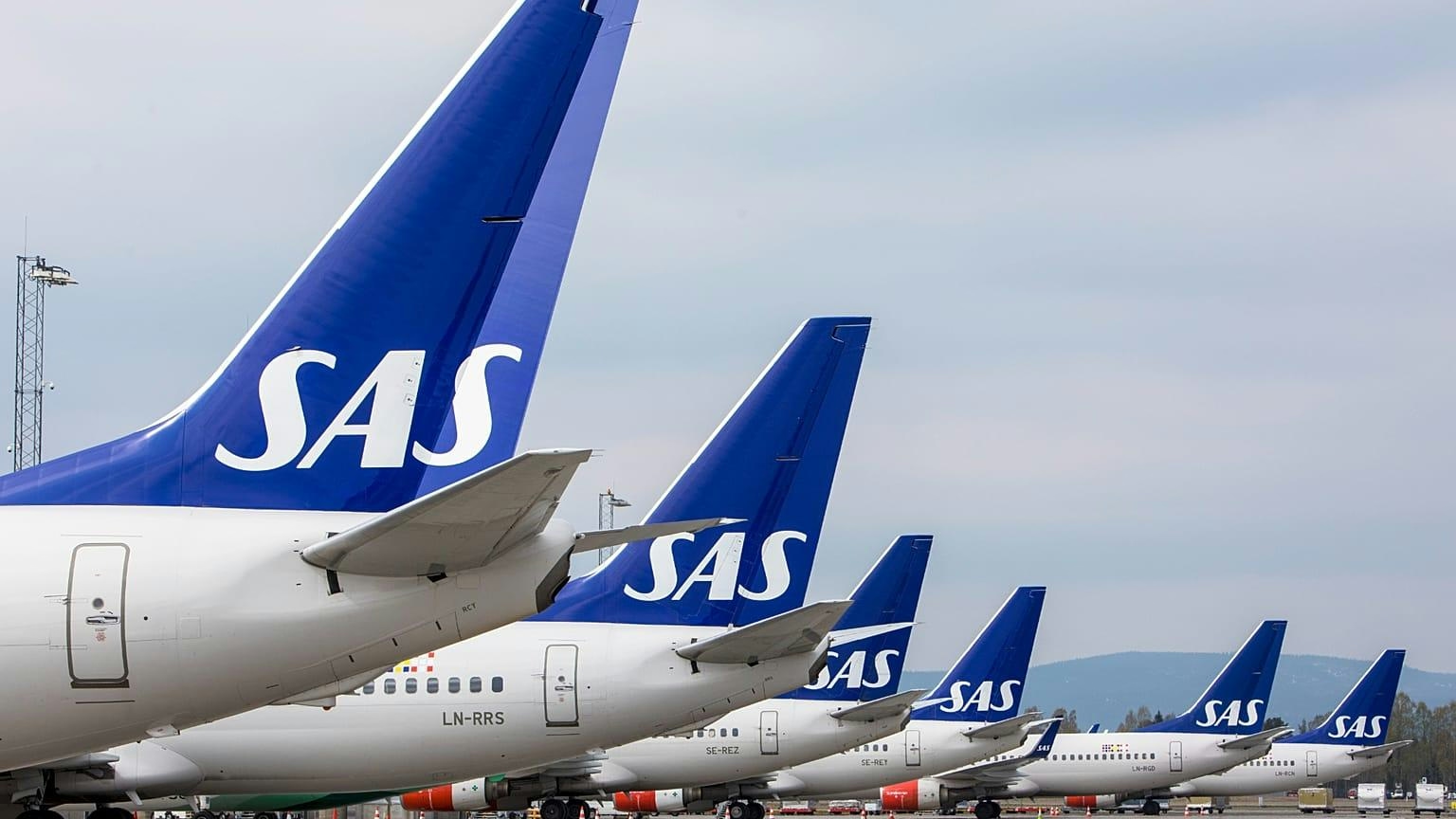
Scandinavian Airlines CEO Highlights AI’s Role in Accelerating Disruption Response
As the European aviation industry undergoes rapid technological transformation and consolidation, Scandinavian Airlines (SAS) is positioning itself for growth while awaiting regulatory approval for its planned integration with the Air France-KLM group. Speaking at the World Governments Summit in Dubai, SAS President and CEO Anko van der Werff detailed the airline’s strategic ambitions, the practical applications of artificial intelligence (AI), and the challenges posed by an evolving competitive landscape.
Regulatory Approval and Strategic Implications
SAS is currently navigating the regulatory process required to join the Air France-KLM group, a move that remains pending approval from European authorities. Van der Werff expressed frustration with the protracted timeline, stating, “We expect to get regulatory approval in the second half of the year. I’m always a bit impatient… it’s a slow process.” He emphasized that many of SAS’s strategic initiatives are on hold until the deal is finalized, highlighting the critical importance of regulatory clearance to unlock the benefits of a broader global network.
Growth Prospects Within the Air France-KLM Group
Despite concerns surrounding industry consolidation, van der Werff remains confident in the resilience and future growth of the SAS brand under its new parent company. He pointed to the distinctive geography of the Scandinavian network, particularly the strategic position of Copenhagen, as a natural catalyst for expansion. “The brand will absolutely survive this,” he affirmed. “There will be real, real growth potential.” Van der Werff anticipates that SAS will leverage capacity constraints at other group hubs to increase its presence and market share in the Nordic region.
Artificial Intelligence as a Practical Tool for Operational Efficiency
Beyond consolidation, SAS is placing significant emphasis on the transformative potential of artificial intelligence within its operations. Van der Werff underscored that AI is not merely a buzzword but a critical component of the airline’s strategy, identifying “five big bets” aimed at enhancing customer experience. One of the most promising applications lies in managing operational disruptions, a frequent challenge for a Nordic carrier contending with severe winter weather. Van der Werff described scenarios involving “100 cancellations a day” during snowstorms, resulting in widespread operational chaos. In such instances, AI can facilitate faster schedule reconstruction and resource reallocation, outperforming traditional human-led responses. “We believe that AI will work through those variables infinitely better,” he stated.
Navigating a Competitive and AI-Driven Industry Landscape
SAS’s AI initiatives come amid broader shifts in the aviation and technology sectors. The anticipated consolidation within the mid-market enterprise software industry, as noted in recent studies, is expected to intensify competition and compel airlines like SAS to adopt AI more effectively. Market volatility, reflected in plunging software stocks amid AI disruption, further underscores the unpredictable environment. Meanwhile, competitors such as Air France-KLM are pursuing strategic ambitions to establish themselves as “European global champions,” raising the stakes for SAS to maintain and strengthen its market position.
The significance of AI extends beyond customer service to technical operations, particularly in the maintenance, repair, and overhaul (MRO) sector, where predictive maintenance powered by AI is becoming increasingly vital. For SAS, investing in advanced AI technologies is essential not only for operational resilience but also for sustaining competitiveness in a rapidly evolving industry.
As SAS awaits regulatory clarity, its leadership is placing considerable faith in the intelligent integration of AI across both customer-facing and technical domains as a cornerstone for success in the next phase of European aviation.

Etihad Airways Suspends Airbus A380 Flights on Key Route

Aditya Birla Group Seeks Approval for Aircraft Leasing in GIFT City

Qatar Airways Highlights Innovation and Connectivity at Arabian Travel Market 2026

Hong Kong's Five-Year Plan Includes Andrew Fan's Aircraft Parts Processing Hub Proposal

ACIA Aero Leasing Delivers ATR72-600 to Air Nostrum

RTX Appoints Jill Albertelli as Head of Pratt & Whitney

TAT Technologies Joins Beyond Aero Hydrogen Aircraft Program

AURAK Study Highlights Barriers to Air Taxi Adoption in Emerging Economies

Xiamen Air Selects Altitude for 787 Maintenance at Heathrow

Etihad and Swissport Extend Global Partnership
