
حوّل رؤى الذكاء الاصطناعي إلى أفعال منسّقة

الرائج الآن
Categories
Shield AI Demonstrates Autonomous Fighter Jet Capabilities
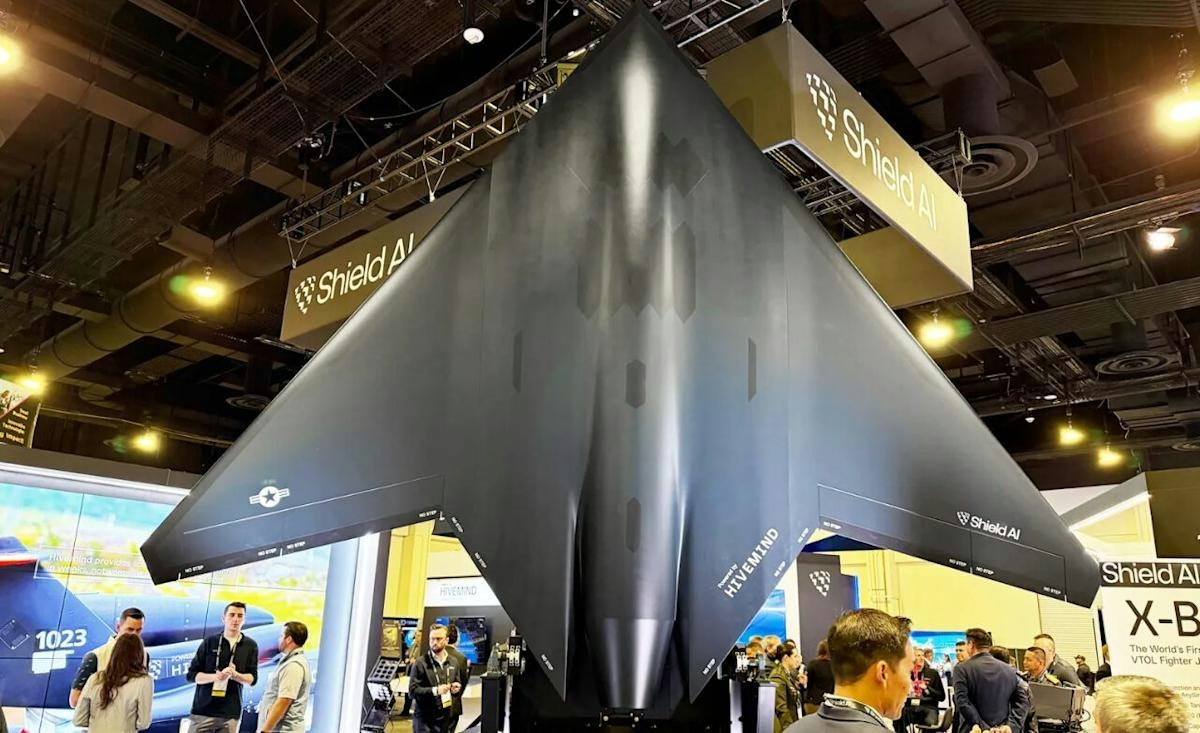
Shield AI Advances Autonomous Fighter Jet Technology Amid Rising Industry Competition
Shield AI has recently highlighted significant progress in the development of autonomous fighter jet technology, drawing attention through a LinkedIn post featuring insights from J.J. Cummings, a former U.S. Navy fighter pilot and TOPGUN alumnus. Cummings, who now contributes to Shield AI’s AI-piloted VTOL fighter jet program known as X-BAT, shared his experiences during a recent episode of the Fighter Pilot Podcast. His discussion spanned a range of topics, including carrier aviation, his advisory role on the film Top Gun: Maverick, and his current involvement at the forefront of autonomous air combat innovation.
Strategic Talent Acquisition and Organizational Culture
Cummings commended Shield AI for its mission-driven culture and collaborative work environment, emphasizing the company’s appeal to seasoned defense professionals eager to make a meaningful impact. This focus on recruiting and retaining elite military aviation talent is viewed as a strategic asset, potentially enhancing Shield AI’s human capital and supporting its long-term objectives in the rapidly evolving autonomous defense aviation sector.
Industry Challenges and Competitive Landscape
Shield AI’s advancements come amid a highly competitive and technically challenging environment. Established defense contractors such as General Atomics, Anduril, and Northrop Grumman are actively competing for leadership in the U.S. Air Force’s collaborative combat aircraft program. The sector has recently faced setbacks, including General Atomics’ decision to suspend flight tests following a crash, highlighting the inherent risks associated with developing autonomous fighter jets. These incidents have introduced a degree of market caution, underscoring the technical complexities involved.
As competitors intensify efforts to validate their technologies and secure critical defense contracts, the competitive landscape is expected to grow increasingly aggressive. Shield AI’s capacity to demonstrate reliable and effective autonomous capabilities will be essential to maintaining its position within this dynamic market.
Market Context and Future Outlook
The broader expansion of the global counter-unmanned aerial systems (counter-UAS) market, driven by rising defense budgets worldwide, further influences Shield AI’s strategic positioning and funding needs. Success in this domain will depend not only on technological innovation but also on the company’s ability to navigate shifting market dynamics and regulatory frameworks.
For investors, Shield AI’s emphasis on attracting top-tier defense talent and advancing autonomous aviation technology may indicate promising long-term potential. Nevertheless, the company must continue to address competitive pressures and operational risks as it seeks to establish a lasting role in the future of defense aviation.

Etihad Airways Suspends Airbus A380 Flights on Key Route

Aditya Birla Group Seeks Approval for Aircraft Leasing in GIFT City

Qatar Airways Highlights Innovation and Connectivity at Arabian Travel Market 2026

Hong Kong's Five-Year Plan Includes Andrew Fan's Aircraft Parts Processing Hub Proposal

ACIA Aero Leasing Delivers ATR72-600 to Air Nostrum

RTX Appoints Jill Albertelli as Head of Pratt & Whitney

TAT Technologies Joins Beyond Aero Hydrogen Aircraft Program

AURAK Study Highlights Barriers to Air Taxi Adoption in Emerging Economies

Xiamen Air Selects Altitude for 787 Maintenance at Heathrow

Etihad and Swissport Extend Global Partnership
