
حوّل رؤى الذكاء الاصطناعي إلى أفعال منسّقة

الرائج الآن
Categories
South Korea Chooses GE Aerospace Engines for KDDX Destroyers
South Korea Chooses GE Aerospace Engines for KDDX Destroyers
Modernizing the Korean Navy with Advanced Propulsion
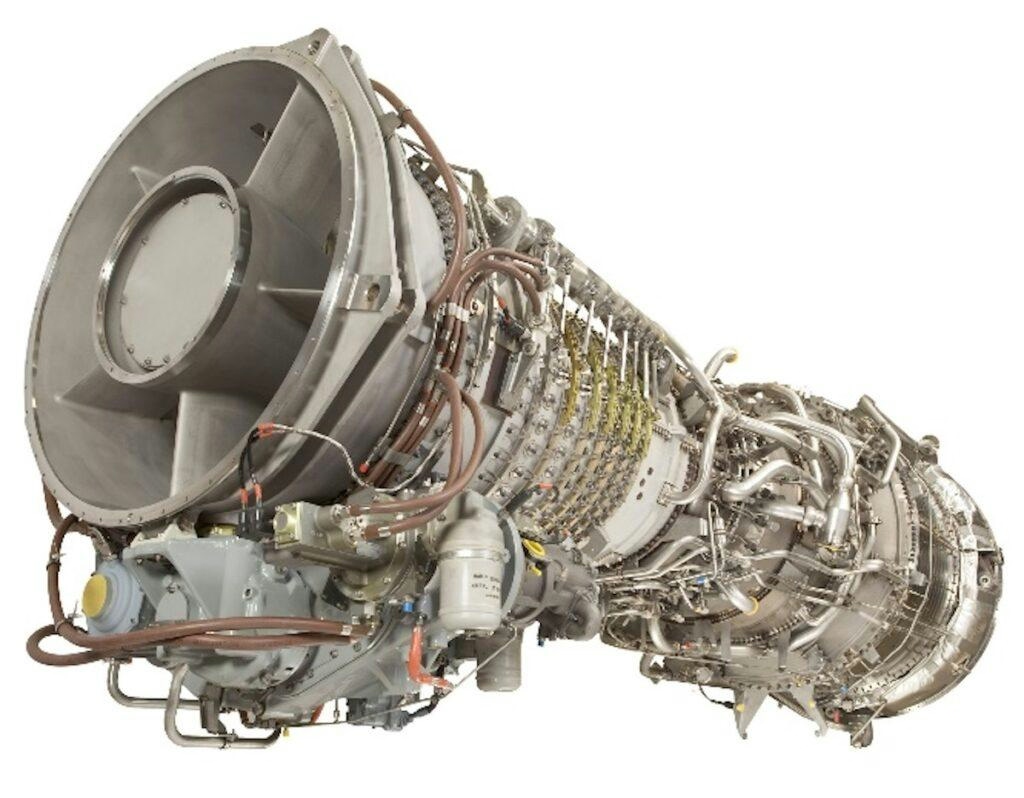
South Korea has selected GE Aerospace to supply twelve LM2500+G4 marine gas turbines for its upcoming fleet of six KDDX destroyers, marking a pivotal advancement in the modernization of the Korean Navy. These engines will be integrated into the destroyers’ full electric propulsion systems, enabling sophisticated capabilities such as stealth-integrated radar and the launch of both anti-aircraft and land-attack missiles.
The LM2500+G4 configuration is designed to deliver enhanced fuel efficiency, operational flexibility, and improved survivability, while providing sufficient power to accommodate future upgrades. Asha Belarski, Vice President and General Manager at GE Aerospace, described the transition to full electric propulsion as “a step toward the next generation of naval power.” She further highlighted that the selection of GE’s technology “strengthens our strong collaborations in Korea and demonstrates our commitment to local manufacturing.”
Technical Innovations and Local Collaboration
The LM2500+G4 engine features a zero-stage high-pressure compressor blisk and other technical improvements, resulting in a 33 percent increase in airflow and higher firing temperatures without expanding its physical size. This engine model is already operational on Italian, French, Egyptian, and Moroccan FREMM frigates and has been chosen by the US Navy for its Constellation-class (FFG-62) vessels and the DDG(X) Land Based Test Site.
GE Aerospace will work closely with South Korean licensed manufacturers to deliver the engines, with each KDDX destroyer equipped with two turbines housed in the company’s latest lightweight composite enclosures. The partnership involves collaboration with prime contractor Hanwha Aerospace on the lead ship, focusing on manufacturing and assembling engine components, conducting system testing, and providing local service support. Additionally, South Korean firm NRTEC will produce the lightweight composite engine enclosures in Busan. These enclosures weigh over 2,500 kilograms (5,512 pounds) less than their steel predecessors while maintaining the same footprint as the LM2500. They are engineered to enhance crew conditions by reducing noise levels by 60 percent and lowering wall temperatures by 25 to 50 degrees Fahrenheit (14 to 28 degrees Celsius).
Strategic Implications and Industry Challenges
South Korea’s adoption of GE Aerospace’s LM2500+G4 turbines reflects a broader shift toward advanced naval propulsion technologies. However, the integration of sophisticated electric propulsion systems and reliance on local manufacturing partnerships present potential challenges. The ability of domestic firms to meet stringent technological and quality standards will be critical to the program’s success. While collaboration with Hanwha Aerospace and NRTEC is expected to strengthen South Korea’s defense industry, any deficiencies in local production could adversely affect the project.
Market analysts suggest that this decision may boost global demand for GE Aerospace’s naval propulsion technology, potentially prompting competitors such as Hyundai to accelerate the development of their own advanced systems. As South Korea advances its naval capabilities, the effectiveness of these partnerships and the integration of cutting-edge propulsion technology will be closely monitored both domestically and internationally.

Etihad Airways Suspends Airbus A380 Flights on Key Route

Aditya Birla Group Seeks Approval for Aircraft Leasing in GIFT City

Qatar Airways Highlights Innovation and Connectivity at Arabian Travel Market 2026

Hong Kong's Five-Year Plan Includes Andrew Fan's Aircraft Parts Processing Hub Proposal

ACIA Aero Leasing Delivers ATR72-600 to Air Nostrum

RTX Appoints Jill Albertelli as Head of Pratt & Whitney

TAT Technologies Joins Beyond Aero Hydrogen Aircraft Program

AURAK Study Highlights Barriers to Air Taxi Adoption in Emerging Economies

Xiamen Air Selects Altitude for 787 Maintenance at Heathrow

Etihad and Swissport Extend Global Partnership
