
حوّل رؤى الذكاء الاصطناعي إلى أفعال منسّقة

الرائج الآن
Categories
SpaceX Plans Another Attempt for Starship Flight 13 After Engine and Weather Delays
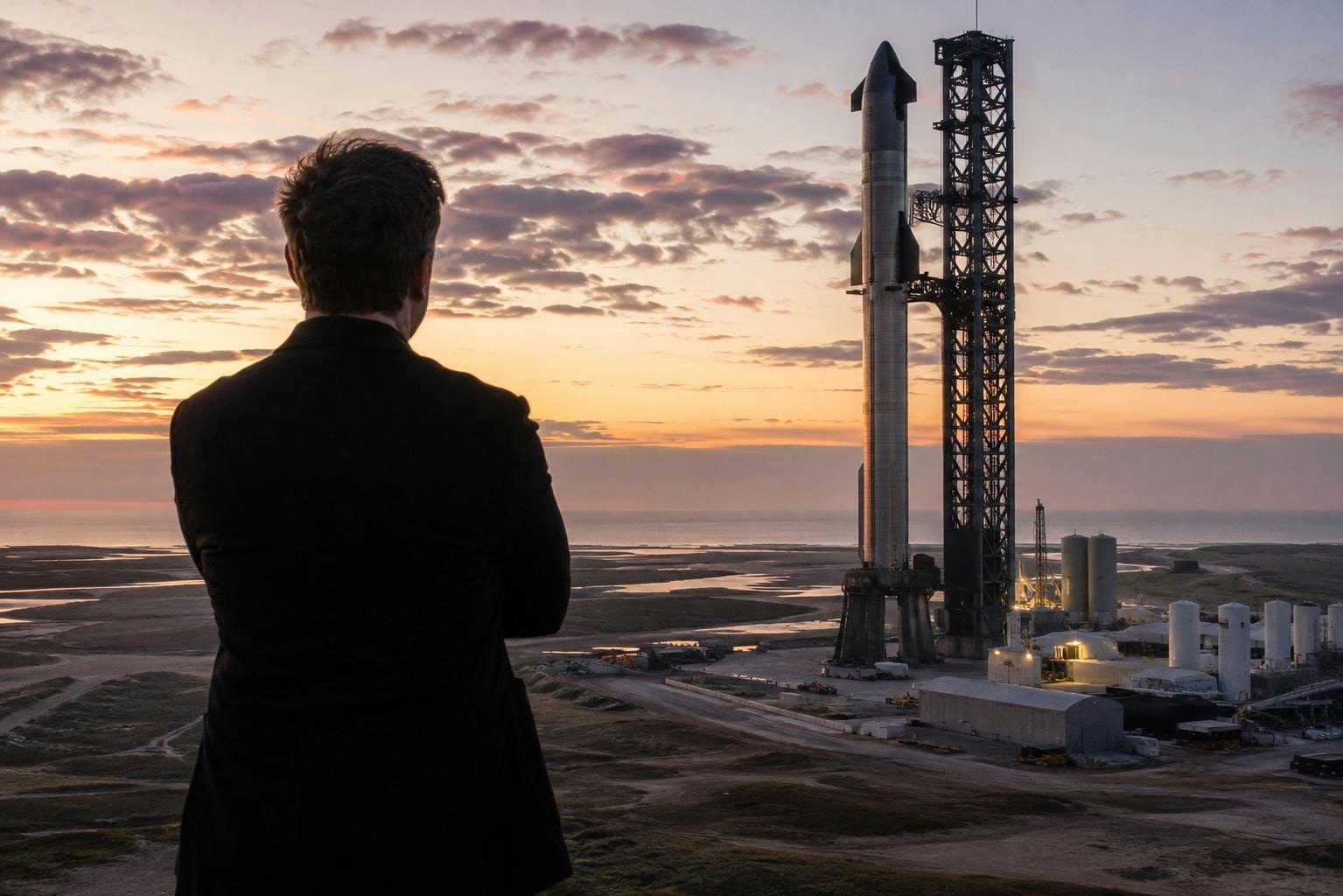
SpaceX Schedules New Attempt for Starship Flight 13 Following Engine and Weather Delays
SpaceX is preparing for a renewed effort to launch its Starship rocket after a series of setbacks involving engine malfunctions and adverse weather conditions. The 13th flight test is now slated for a 90-minute window beginning at 17:45 Central Time on Friday, July 24, following a 24-hour delay prompted by poor visibility.
Technical Challenges and Preflight Preparations
The previous launch attempt on July 16 was aborted moments before liftoff when four of the Super Heavy booster’s Raptor engines failed to ignite. In response, SpaceX CEO Elon Musk confirmed that two of the engines would be removed and replaced. Despite this engine swap, the company chose not to conduct a full static fire test with the new engines on July 22, instead performing what appeared to be a leak check. SpaceX announced on its social media platform X that "additional preflight testing on Super Heavy [is] complete," though it declined to provide further details when questioned.
Earlier in the month, a static fire test conducted on July 2 had successfully demonstrated the readiness of Starship’s engines, marking a key milestone ahead of the planned launch. Nevertheless, the recent pattern of last-second shutdowns—whether during static fire tests or launch attempts—has raised concerns about the reliability of the Raptor engines under operational stress.
Weather and Mission Objectives
Weather conditions have also significantly influenced the launch schedule. SpaceX emphasized that a primary objective of this flight is to obtain clear ground imagery of Starship’s heatshield as it experiences increased dynamic pressure during ascent. The company noted that visibility is expected to be optimal for the Friday launch attempt, underscoring the importance of favorable weather for capturing critical data.
Strategic Context and Mission Profile
The Starship program faces heightened scrutiny as NASA requires the vehicle to demonstrate orbital capability in preparation for the Artemis III mission scheduled for 2027, which aims to support a lunar landing in 2028. As a publicly traded company, SpaceX is also managing investor expectations amid a recent decline in its stock price below the initial public offering level. Despite these challenges, the broader market has remained resilient, and SpaceX’s Starlink satellite constellation continues to expand rapidly.
If the launch proceeds as planned, the mission will last just over an hour. Following liftoff, the Super Heavy booster is expected to execute a controlled splashdown in the Gulf of Mexico. Starship will then use its Raptor engines to enter a suborbital trajectory before descending into the Indian Ocean. Prior to re-entry, SpaceX intends to deploy 20 Starlink V3 satellites, which will accompany the vehicle along its flight path. The mission will also include an attempt to relight a Raptor engine, a critical milestone toward achieving full orbital capability.
While competitor responses to SpaceX’s recent challenges remain uncertain, the upcoming launch is widely anticipated as a crucial test of the company’s progress and reliability in advancing its ambitious spaceflight objectives.

Etihad and Swissport Extend Global Partnership

Sepehran Airlines B737 Returns to Mashhad After Tyre and Engine Issues

Etihad Deploys Widebody Fleet to Meet Strong Demand

Korean Air Finalizes $36.2 Billion Deal with Boeing

Australia’s RFDS Queensland Section Orders Six King Air 260Cs

Korean Air Finalizes Order for 103 Boeing Jets and Engines
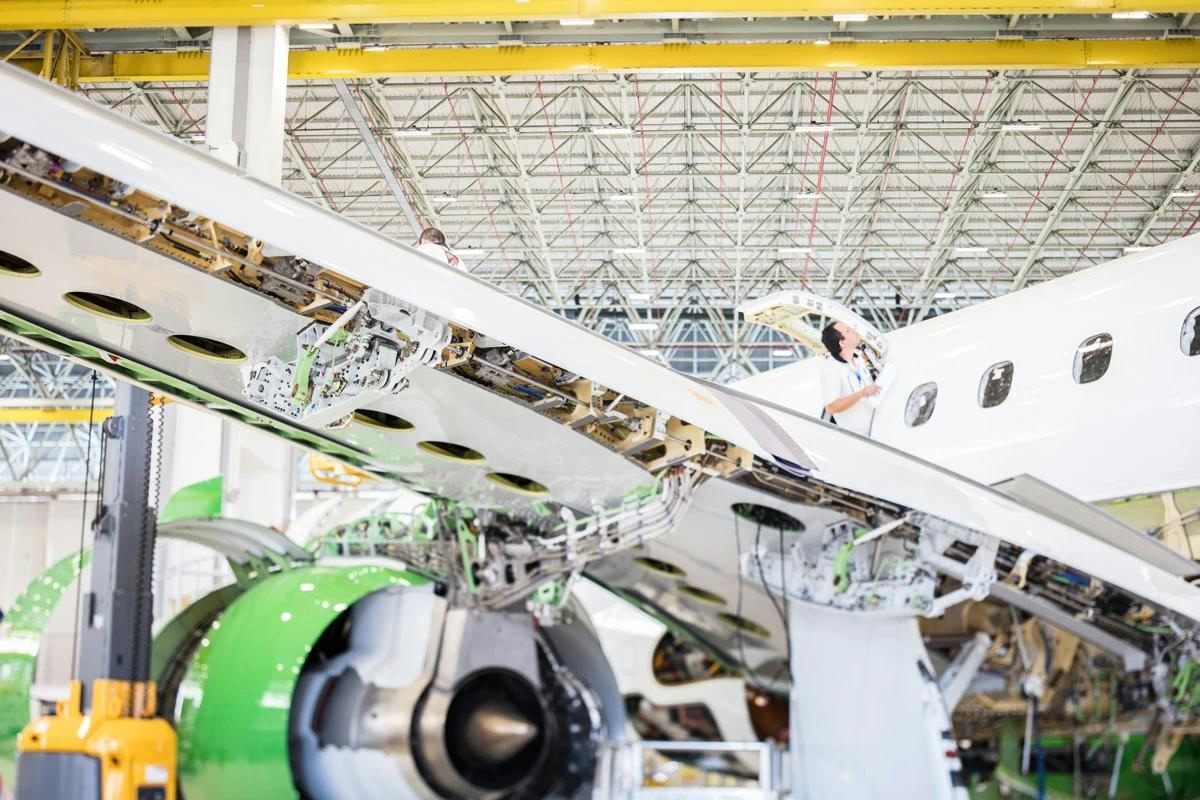
Embraer E195-E2 Features Distinctive Engine Placement Among Regional Jets

What Passengers Can Expect on Boeing’s New 777X Jet

How Ethiopian Airlines Became Africa’s Leading Carrier Amid Gulf Competition

Joby Aviation Extends Autonomous Flight Capabilities with Cross-Country Tour
