
حوّل رؤى الذكاء الاصطناعي إلى أفعال منسّقة

الرائج الآن
Categories
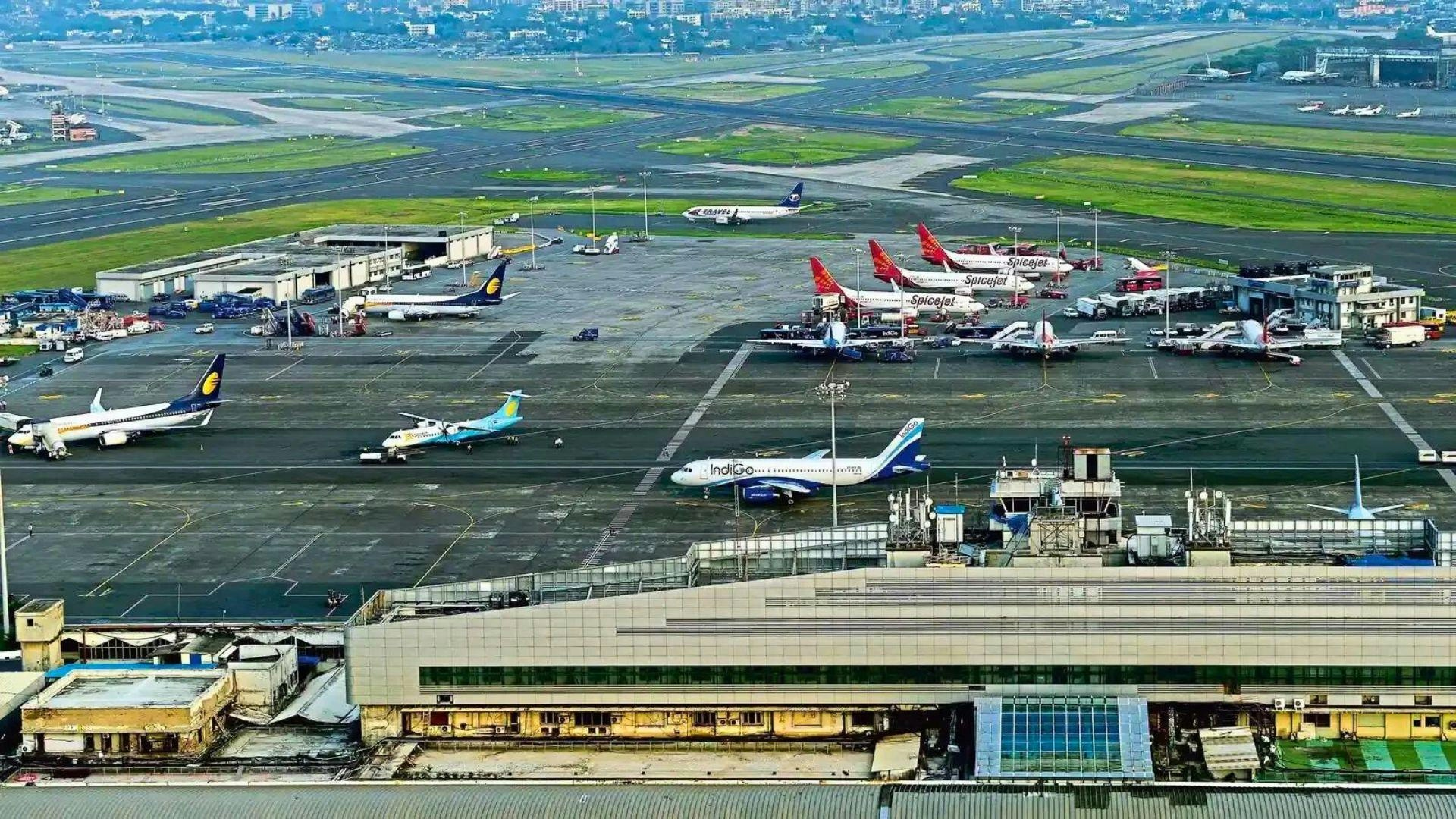
Technology Advances Transform Indian Airports
Technology Advances Transform Indian Airports
Indian airports are experiencing a significant transformation as smart terminals equipped with integrated digital technologies become increasingly prevalent. Major hubs including Delhi, Mumbai, Bengaluru, and Hyderabad have introduced biometric-based entry and boarding systems, most notably through the government’s Digi Yatra initiative. Utilizing facial recognition technology, Digi Yatra facilitates contactless and paperless movement within terminals, eliminating the need for physical identification checks and substantially accelerating security and boarding processes.
Expansion and Impact of Digi Yatra
The Digi Yatra initiative currently encompasses a growing number of key airports and aims to serve 90% of India’s domestic air travelers. Plans are underway to extend the program to international pilot projects by 2025. As these technologies become more widespread, they are reshaping passenger expectations, with travelers increasingly seeking faster, safer, and more seamless airport experiences.
Challenges in Implementation and Industry Response
Despite the clear benefits, the rapid adoption of advanced technologies presents several challenges. Integrating new digital systems with existing airport infrastructure demands meticulous planning and significant financial investment. Securing adequate funding for these upgrades remains a pressing concern, especially as airports strive to maintain operational efficiency amid rising passenger volumes. Furthermore, the emphasis on automation and digital processes has intensified scrutiny over safety protocols and service quality, with regulators and passengers closely monitoring the effects of these changes.
The competitive landscape within India’s aviation sector is also evolving. Leading airports that embrace technological innovation are prompting competitors to adopt similar advancements to maintain relevance. Meanwhile, some airports are choosing to differentiate themselves by focusing on customer service and operational efficiency, aiming to balance the advantages of technology with a personalized travel experience.
As India’s aviation industry continues its modernization journey, the integration of digital technologies is poised to redefine airport operations and passenger journeys. The ultimate success of these initiatives will depend not only on technological capabilities but also on effective implementation, sustained funding, and a steadfast commitment to safety and service standards.

Etihad Airways Suspends Airbus A380 Flights on Key Route

Aditya Birla Group Seeks Approval for Aircraft Leasing in GIFT City

Qatar Airways Highlights Innovation and Connectivity at Arabian Travel Market 2026

Hong Kong's Five-Year Plan Includes Andrew Fan's Aircraft Parts Processing Hub Proposal

ACIA Aero Leasing Delivers ATR72-600 to Air Nostrum

RTX Appoints Jill Albertelli as Head of Pratt & Whitney

TAT Technologies Joins Beyond Aero Hydrogen Aircraft Program

AURAK Study Highlights Barriers to Air Taxi Adoption in Emerging Economies

Xiamen Air Selects Altitude for 787 Maintenance at Heathrow

Etihad and Swissport Extend Global Partnership
