
حوّل رؤى الذكاء الاصطناعي إلى أفعال منسّقة

الرائج الآن
Categories
Thales redefines the airport journey with AI-powered biometrics
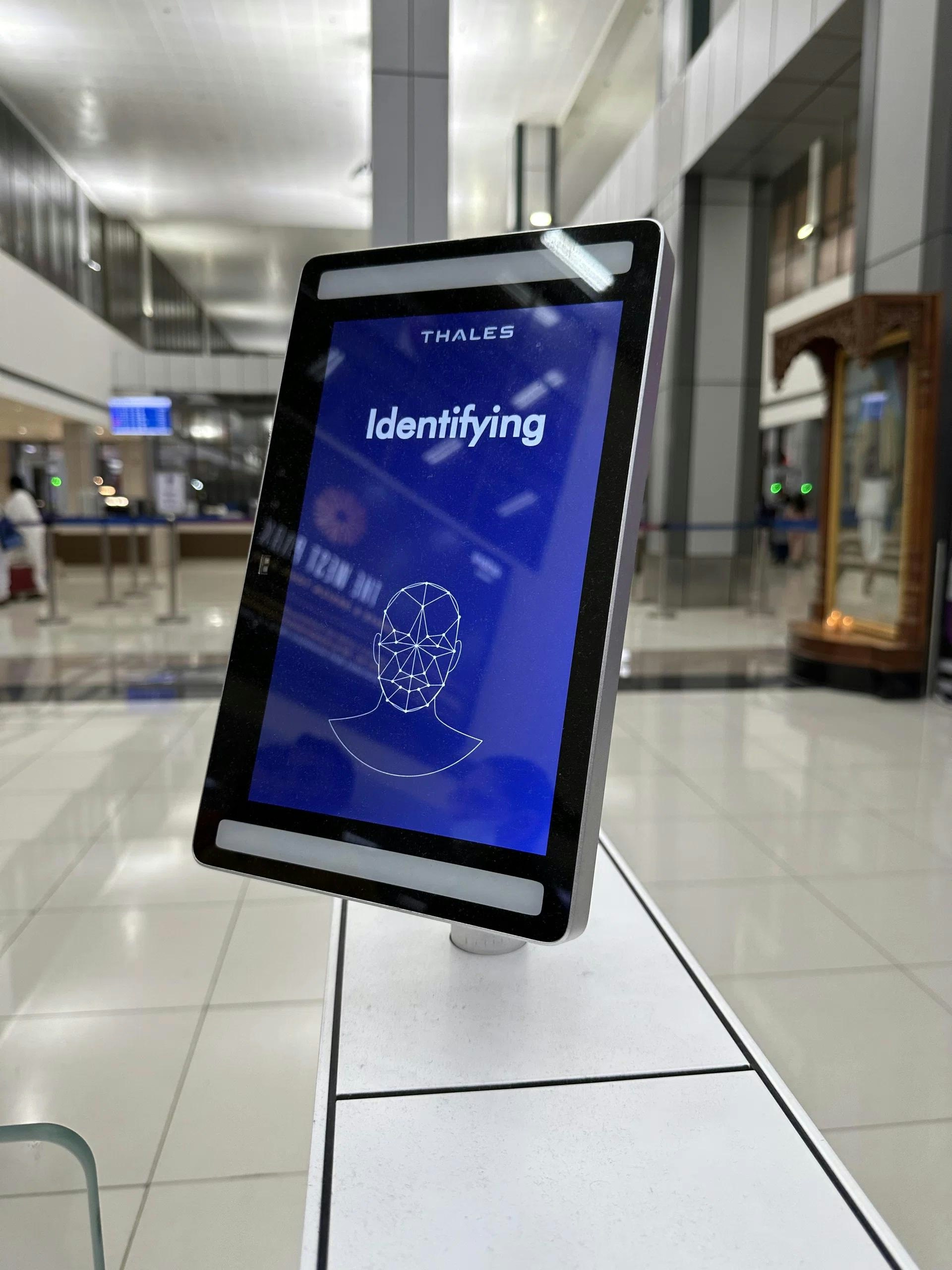
Thales Redefines the Airport Journey with AI-Powered Biometrics
Transforming Passenger Experience through Technology
Navigating airports has long been associated with lengthy queues, repetitive identity checks, and cumbersome procedures. Thales is poised to revolutionize this experience with its Fly to Gate solution, an AI-driven biometric system designed to streamline passenger movement from check-in through to boarding. By harnessing artificial intelligence and facial recognition technology, Fly to Gate enables a touchless and secure passage through airport checkpoints, significantly reducing the need for travelers to repeatedly present identification documents or boarding passes.
The system aligns with the International Air Transport Association’s One ID concept, allowing passengers to create a digital identity through a one-time enrollment process. This involves capturing a selfie and scanning an ID document via a mobile phone or kiosk, after which the digital identity is securely stored in the passenger’s digital wallet. With the traveler’s consent, this digital ID is shared with the airport for each journey, facilitating face identification at every checkpoint and thereby expediting the entire airport experience.
Technological Advancements and Operational Impact
Currently deployed across more than 600 airport touchpoints, Fly to Gate delivers an average recognition time of just two seconds per checkpoint. Thales reports that the system can reduce boarding times by up to 30% and increase terminal throughput by at least 20%. These gains are the product of extensive research involving interviews and observations with passengers, airport personnel, airlines, and security teams, complemented by real-world pilot testing and iterative improvements based on user feedback.
The AI facial recognition technology underpinning Fly to Gate boasts a 99.8% accuracy rate, as validated by the National Institute of Standards and Technology. Its biometric engine can conduct a one-to-10,000 search in under one second, dramatically lowering the risk of identity fraud and cutting manual verification time by 80%. The system incorporates advanced liveness detection to protect against spoofing attempts, including the use of photos, video replays, masks, and deepfakes. Additionally, it automatically authenticates both chip and non-chip documents, verifying data against a global database encompassing over 2,500 travel documents.
Privacy, Ethics, and Industry Challenges
Central to Fly to Gate’s design is a commitment to privacy and ethical AI use. The solution adheres to Thales’ TrUE AI framework—standing for transparent, understandable, and ethical AI—developed in accordance with the EU AI Act. This framework prioritizes validity, security, explainability, and responsibility, with biometric tokens stored locally within government-grade digital environments to safeguard passenger data.
Despite these technological advancements, Thales faces several challenges in integrating AI-powered biometrics into existing airport infrastructures. Ensuring seamless compatibility requires significant investment, and privacy concerns persist among travelers wary of how their biometric data is used and stored. The cost of implementation may also pose a barrier for some airports. Furthermore, the competitive landscape is rapidly evolving, with rivals likely to enhance their own AI solutions or develop similar technologies to maintain market share. The broader adoption of AI in government technology and cybersecurity highlights a dynamic environment where innovation and security are increasingly intertwined.
As airports and airlines strive to balance efficiency, security, and passenger trust, Thales’ Fly to Gate represents a notable advancement toward the future of air travel—one where technology promises a smoother, safer, and more personalized journey.

Etihad Airways Suspends Airbus A380 Flights on Key Route

Aditya Birla Group Seeks Approval for Aircraft Leasing in GIFT City

Qatar Airways Highlights Innovation and Connectivity at Arabian Travel Market 2026

Hong Kong's Five-Year Plan Includes Andrew Fan's Aircraft Parts Processing Hub Proposal

ACIA Aero Leasing Delivers ATR72-600 to Air Nostrum

RTX Appoints Jill Albertelli as Head of Pratt & Whitney

TAT Technologies Joins Beyond Aero Hydrogen Aircraft Program

AURAK Study Highlights Barriers to Air Taxi Adoption in Emerging Economies

Xiamen Air Selects Altitude for 787 Maintenance at Heathrow

Etihad and Swissport Extend Global Partnership
