
حوّل رؤى الذكاء الاصطناعي إلى أفعال منسّقة

الرائج الآن
Categories
The Airbus A330 MRTT: From Passenger Jet to Military Tanker
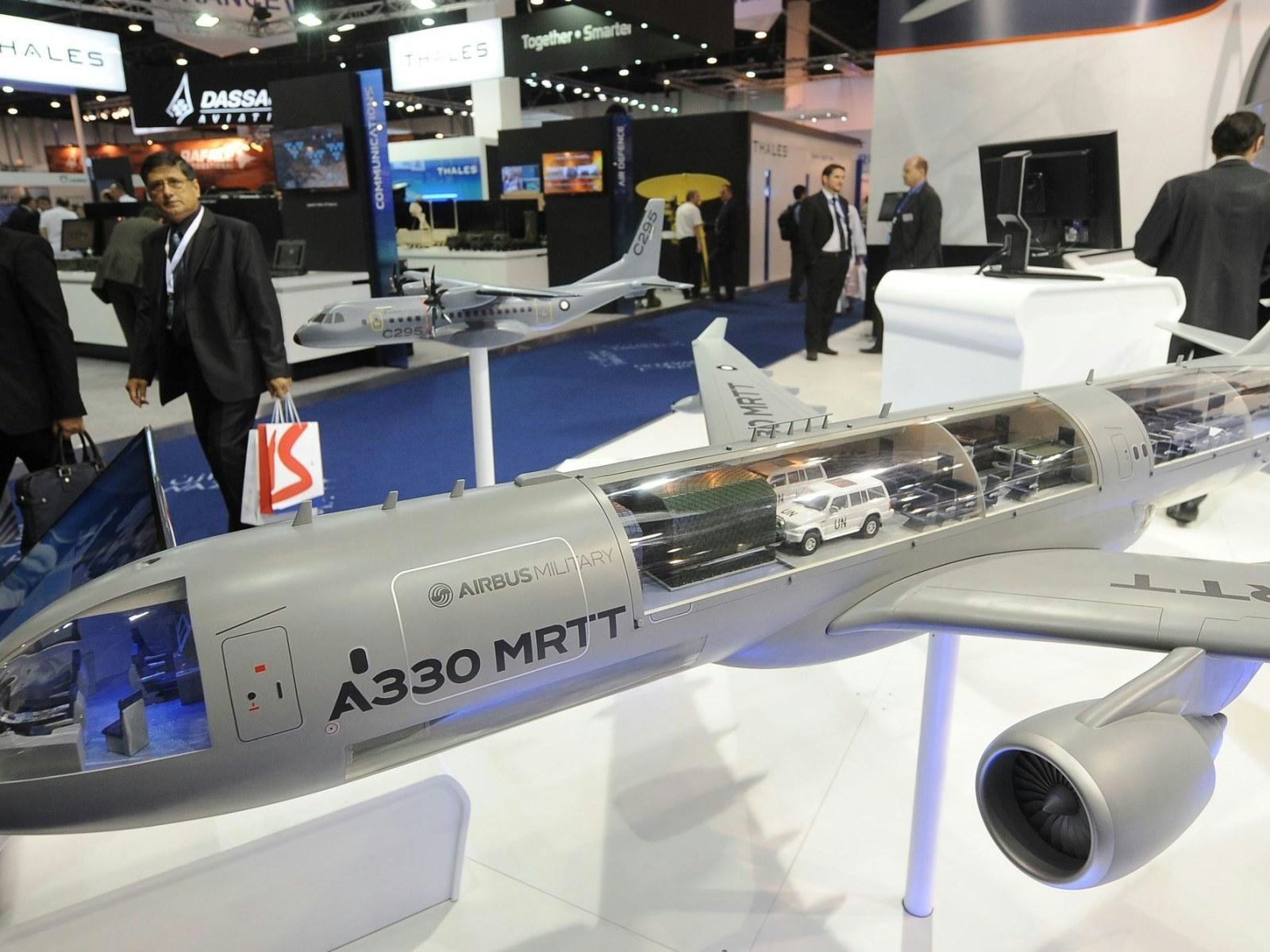
The Airbus A330 MRTT: From Passenger Jet to Military Tanker
The Airbus A330 Multi Role Tanker Transport (MRTT) has established itself as a premier choice for air forces around the world, providing a versatile platform capable of aerial refueling, troop and cargo transport, and surge capacity during crises. Derived from the proven Airbus A330-200 airliner and converted at Airbus’s facility in Getafe, Spain, the MRTT merges commercial reliability with sophisticated military mission systems. Its key features include a fly-by-wire refueling boom, under-wing hose-and-drogue pods, advanced mission avionics, and a flexible cabin and cargo hold. This combination enables the aircraft to deliver substantial fuel offload while maintaining the payload capacity expected of a widebody aircraft.
Versatility and Operational Use
The MRTT’s adaptability is a defining characteristic, allowing it to transport hundreds of passengers, palletized freight, or roll-on medical modules without compromising its primary tanker function. This flexibility has made it indispensable for major coalitions such as NATO, where Europe’s pooled Multinational MRTT Fleet ensures sustained operations over extended distances. The United Kingdom’s Royal Air Force operates the “Voyager” variant to support global deployments, while Australia, the program’s launch customer, has demonstrated the aircraft’s operational utility in the Pacific region. With orders now in the mid-80s and deliveries surpassing the mid-60s, the MRTT continues to enjoy strong demand as Airbus prepares an advanced successor based on the A330neo platform.
At its core, the A330 MRTT is a long-range adaptation of the A330-200, utilizing existing wing and center fuel tanks without requiring major structural modifications. The lower deck remains available for freight, accommodating up to 27 LD3 containers or eight NATO pallets, while the widebody cabin can seat between 250 and 300 troops or be rapidly reconfigured for medical evacuation missions. In tanker mode, operators can employ either the fly-by-wire Aerial Refuelling Boom System (ARBS) or Cobham hose-and-drogue pods to refuel probe-equipped receiver aircraft within the same sortie. The flight deck integrates military systems designed to enhance crew coordination and reduce workload. Planned upgrades include the evolution of Link-16 tactical data links and wideband satellite communications, which will support automatic air-to-air refueling and improve command and control capabilities.
Market Dynamics and Competitive Landscape
The MRTT’s success unfolds amid intense competition and shifting dynamics within the global aviation market. Airbus faces ongoing pressure from Boeing, underscored by the recent milestone of the Airbus A320 surpassing the Boeing 737 in deliveries. Geopolitical factors, such as US-China trade tensions affecting China’s C919 jet program, further highlight the sector’s volatility. Additionally, emerging competitors like Boeing’s tanker offerings and the Sukhoi Superjet-100—now entering the Indian market through a Russian partnership—add complexity to Airbus’s position in military aircraft conversions. These developments illustrate a highly competitive and dynamic environment where market responsiveness and strategic positioning are critical for sustained success.
For defense ministries, the MRTT presents a compelling value proposition: a single airframe that reduces operational risk while simplifying training and logistical support. For Airbus, the program represents a durable and “sticky” defense asset, firmly anchored by the company’s strong commercial foundation. As the aerial refueling market continues to evolve, the A330 MRTT remains a central player, balancing proven capability with adaptability in an industry marked by rapid change.

Etihad Airways Suspends Airbus A380 Flights on Key Route

Aditya Birla Group Seeks Approval for Aircraft Leasing in GIFT City

Qatar Airways Highlights Innovation and Connectivity at Arabian Travel Market 2026

Hong Kong's Five-Year Plan Includes Andrew Fan's Aircraft Parts Processing Hub Proposal

ACIA Aero Leasing Delivers ATR72-600 to Air Nostrum

RTX Appoints Jill Albertelli as Head of Pratt & Whitney

TAT Technologies Joins Beyond Aero Hydrogen Aircraft Program

AURAK Study Highlights Barriers to Air Taxi Adoption in Emerging Economies

Xiamen Air Selects Altitude for 787 Maintenance at Heathrow

Etihad and Swissport Extend Global Partnership
