
حوّل رؤى الذكاء الاصطناعي إلى أفعال منسّقة

الرائج الآن
Categories
The Changing Engine Market and Its Impact on MROs
The Changing Engine Market and Its Impact on MROs
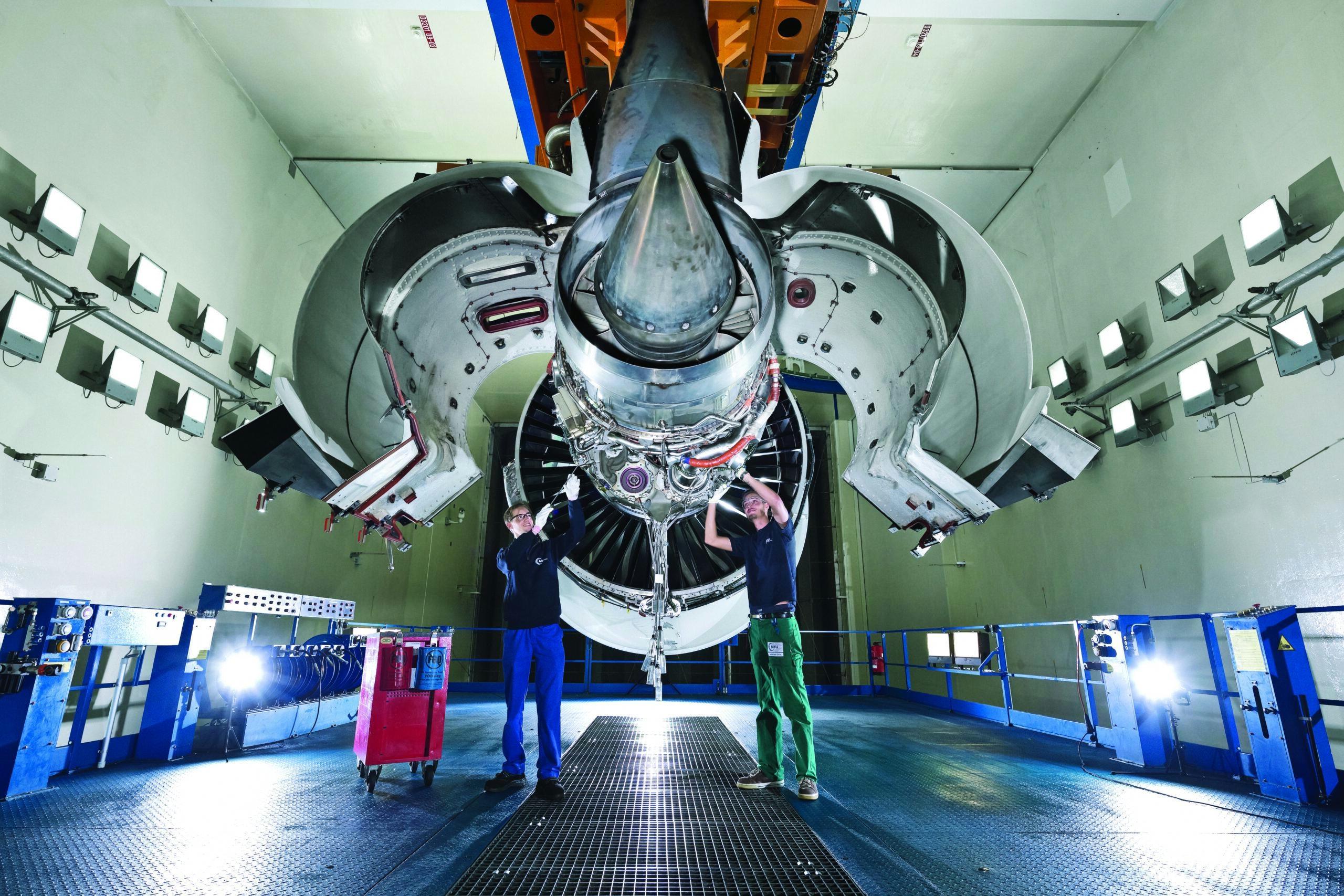
Data from EngineStands.com provides a revealing insight into the evolving challenges faced by maintenance, repair, and overhaul (MRO) operations amid mounting pressures in the global engine market. In 2025, the utilization of stands for new-generation narrowbody engines more than doubled compared to 2023, with LEAP-1A usage alone increasing by 179%. This surge highlights the ongoing difficulties surrounding new-generation engines, as airlines and MROs grapple with nearly 6,000 shop visits for models including the PW1100G, PW1500G, and LEAP-1A/1B.
Operational Strains and Legacy Engine Demand
By late 2025, over 800 geared turbofan (GTF) engines were grounded worldwide due to turbine component contamination, effectively sidelining nearly 38% of the A320neo fleet. In response, airlines extended the operational life of older aircraft, resulting in legacy engines such as the CFM56 and V2500 being returned to MRO facilities for extensive, age-related maintenance. This shift increased MRO demand by approximately $23 billion and placed additional strain on ground support infrastructure.
EngineStands.com data further reveals that stand utilization for legacy engines rose by one third in 2025 compared to 2024, with CFM56-5A/B stand usage increasing by 60% year-on-year. Leasing durations mirrored these trends: rental periods for CFM56-7B and CFM56-5A/B stands grew by 48% and 21%, respectively, while V2500 project timelines extended by 53%. Among new-generation engines, LEAP-1B leasing periods expanded by 133%, whereas LEAP-1A durations shortened slightly by 2%. Leasing periods for PW1100 and PW1500 engines declined by 16% and 2%, respectively. Widebody engine stand rentals experienced even more pronounced fluctuations, with PW4000-94 rental periods surging 262% and Trent 700 leases decreasing by 17%.
Hanna Lavinskaja, Head of EngineStands.com, observed that the 2025 figures clearly reflect the pressures faced across the engine maintenance ecosystem, including longer shop visit turnaround times, constrained MRO capacity, and more intensive maintenance events. She emphasized that these trends indicate slower stand circulation and tighter availability, underscoring the importance of advance equipment planning and close coordination with maintenance schedules to minimize operational disruptions.
Industry-Wide Implications and Market Responses
Across the industry, engine overhaul turnaround times increased by 35% for legacy engines and over 150% for new-generation engines compared to five years ago, with maintenance slot wait times extending from two to six months. Total engine maintenance expenditure reached $62.4 billion in 2025, divided among $29.6 billion for narrowbody, $27.4 billion for widebody, and $5.4 billion for regional engines. Delayed deliveries and aging fleets contributed an additional $11 billion in costs, according to the International Air Transport Association (IATA).
These challenges are further compounded by fundamental issues with new engines from Pratt & Whitney and Safran, which have intensified production delays and increased Federal Aviation Administration (FAA) scrutiny of Boeing’s quality controls. Despite these obstacles, the MRO market is gaining momentum, supported by robust global air traffic demand. Industry players are responding accordingly: Pratt & Whitney’s efforts to resolve its powdered metal issue are expected to reduce the number of grounded aircraft, while rising prices for original equipment manufacturer (OEM) shop visits and spare parts are enhancing shareholder returns for service-oriented business models.
EngineStands.com data also highlights how various stakeholders are adapting to the evolving market conditions. Airlines continue to rely on CFM56, V2500, and new-generation stands to support aging fleets and address new engine durability challenges. Lessors focus on LEAP-1A, PW1100G, and widebody models to manage maintenance exposure and preserve asset value in a constrained market. MRO providers are managing scheduled maintenance and overhauls for both legacy and new-generation engines amid extended operating cycles. Meanwhile, traders are overseeing engine transitions, teardowns, and episodic storage requirements during periods of market stress.
As the engine market continues to evolve, the capacity to anticipate and adapt to these operational pressures will remain critical for all stakeholders within the aviation maintenance ecosystem.

Etihad Airways Suspends Airbus A380 Flights on Key Route

Aditya Birla Group Seeks Approval for Aircraft Leasing in GIFT City

Qatar Airways Highlights Innovation and Connectivity at Arabian Travel Market 2026

Hong Kong's Five-Year Plan Includes Andrew Fan's Aircraft Parts Processing Hub Proposal

ACIA Aero Leasing Delivers ATR72-600 to Air Nostrum

RTX Appoints Jill Albertelli as Head of Pratt & Whitney

TAT Technologies Joins Beyond Aero Hydrogen Aircraft Program

AURAK Study Highlights Barriers to Air Taxi Adoption in Emerging Economies

Xiamen Air Selects Altitude for 787 Maintenance at Heathrow

Etihad and Swissport Extend Global Partnership
