صورة

أيروجيني — مساعدك الذكي للطيران.

اسأل عن أي شيء. قم بتحليل كل شيء. تصرّف فورًا.

الرائج الآن

Categories

The Cost of a Boeing 747 Engine
March 9, 2026By ePlane AI
The Cost of a Boeing 747 Engine
0
0
Boeing 747
GEnx-2B Engine
Engine Pricing

The Cost of a Boeing 747 Engine

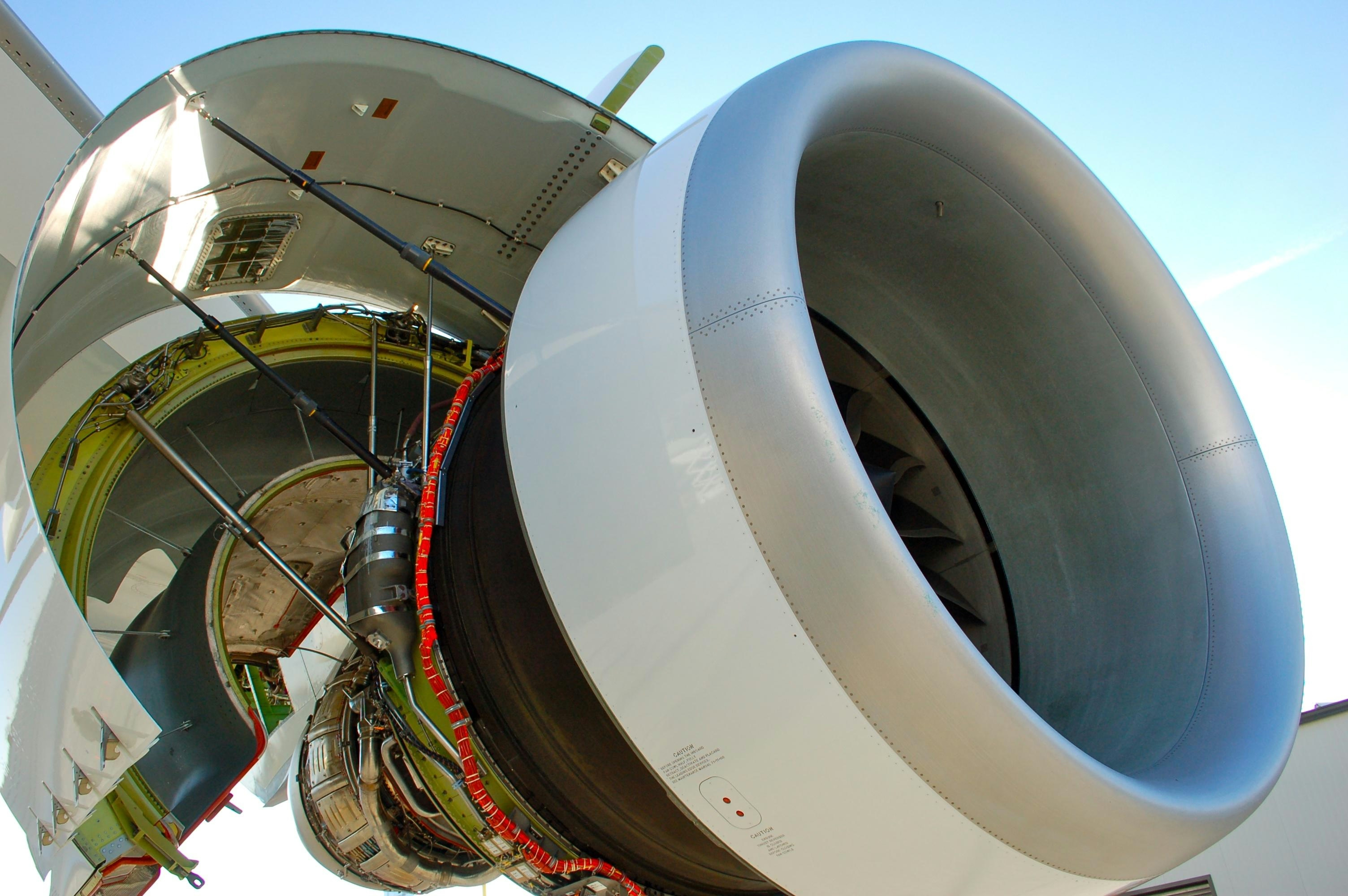
The engine of a Boeing 747 remains one of the most substantial financial commitments for operators of this iconic aircraft. As the 747 has transitioned from a passenger workhorse to a specialized cargo transporter, the market for its engines has bifurcated into two primary segments: legacy powerplants for the 747-400 and advanced units for the 747-8. This division is clearly reflected in the multi-million dollar price tags attached to these massive turbofans, making the engine the single most expensive component of the aircraft.

Pricing and Market Segmentation

A new GEnx-2B engine designed for the 747-8 is currently priced between $25 million and $30 million per unit. By contrast, a used but serviceable CF6 or PW4000 engine for the older 747-400 can be acquired on the secondary market for anywhere from $2 million to $8 million, depending on its maintenance history and remaining flight cycles. This significant price disparity explains why many smaller cargo operators continue to favor the 747-400, despite the operational advantages offered by the newer 747-8 model.

The cost of these engines is influenced by more than just raw materials. Factors such as maintenance records, technical reliability, and the number of cycles remaining on life-limited components all contribute to whether an engine is valued at a modest $2 million or commands a premium of $25 million. Each engine cycle—comprising a start and shutdown—brings the engine closer to a mandatory overhaul, which can itself cost upwards of $5 million. For many 747-400 freighters still in operation, the expense of a major engine overhaul may even surpass the market value of the airframe.

Industry Dynamics and Technological Advances

The market for 747 engines is further shaped by broader industry forces. Fluctuating demand, competition from other engine manufacturers such as Rolls-Royce and Pratt & Whitney, and potential supply chain disruptions all affect pricing and availability. Airlines frequently adjust their purchasing decisions based on engine performance, cost efficiency, and the latest technological innovations. In response, competitors may modify pricing strategies, accelerate innovation, or pursue strategic partnerships to maintain or expand their market share. Notably, MTU Aero Engines has projected an increase in commercial business revenue by 2026, a development that could further influence market dynamics and pricing strategies across the sector.

Historically, the cost of engines has outpaced inflation, driven by the integration of advanced materials such as carbon fiber and 3D-printed alloys. In the 1970s, a JT9D engine for the original 747-100 was priced at approximately $1 million—equivalent to roughly $7 million in today’s dollars. Modern engines now cost about four times that amount in real terms, reflecting the increased complexity and performance requirements necessary to meet contemporary environmental and operational standards.

Ultimately, the final cost of a 747 engine is determined by a complex interplay of technical, economic, and market factors. For operators, navigating this landscape demands careful consideration not only of the initial purchase price but also of long-term maintenance, reliability, and the evolving dynamics of a highly competitive global market.

More news
The Most Fuel-Efficient Widebody Aircraft in Commercial Service in 2026

The Most Fuel-Efficient Widebody Aircraft in Commercial Service in 2026

The Most Fuel-Efficient Widebody Aircraft in Commercial Service in 2026 Aircraft manufacturers continue to advance fuel efficiency through the integration of lightweight composite materials, refined aerodynamics, and next-generation high-bypass turbofan engines. Over the past twenty years, models such as the Boeing 787 Dreamliner and Airbus A350 have redefined long-haul efficiency, achieving up to 25% reductions in fuel consumption compared to earlier aircraft. Given that fuel remains one of the largest operational costs for airlines, these technological improvements are vital for enhancing both profitability and environmental sustainability. The competitive landscape for fuel efficiency in 2026 is influenced not only by technological progress but also by evolving market conditions and geopolitical tensions. Persistent friction between the United States and China poses challenges to Boeing’s delivery schedules and its long-term order pipeline in the Asia-Pacific region, a critical market for widebody aircraft. Meanwhile, American Airlines trails behind Delta and United in expanding its widebody fleet, potentially constraining its growth in lucrative long-haul markets. Conversely, GE Aerospace has reported a significant increase in engine deliveries, signaling strong demand for the latest fuel-efficient aircraft. North America alone is projected to receive over 4,500 commercial aircraft in the coming decade, with Boeing maintaining a dominant position in the widebody segment. Measuring Fuel Efficiency In aviation, fuel efficiency is commonly expressed as liters of fuel consumed per passenger per 100 kilometers, a metric comparable to miles per gallon in the automotive industry. These figures vary considerably depending on factors such as seating density, route length, and payload. The following assessment reflects typical multi-class cabin configurations on long-haul routes. Airbus A330-900neo: A Notable Contender The Airbus A330-900neo, or "New Engine Option," represents the second generation of the widely used A330 family. Introduced in 2014 as a direct competitor to the Boeing 787, the A330neo features Rolls-Royce Trent 7000 engines, an extended wingspan, and redesigned composite sharklets to improve aerodynamic performance. These enhancements enable the aircraft to reduce fuel consumption by approximately 14% per seat compared to its predecessor, according to Airbus. The Trent 7000 engines boast a bypass ratio of 10:1, the highest within the Trent engine family, contributing to both improved fuel efficiency and a quieter cabin environment. The A330neo is available in two variants: the A330-800neo and the more commercially successful A330-900neo, which has secured over 450 outstanding orders. Among the largest operators of the A330-900neo as of March 2026 are Delta Air Lines with 39 aircraft in service since 2019, TAP Air Portugal with 19 units as the launch customer since 2018, Condor with 18 aircraft since 2022, ITA Airways with 15 since 2023, and Cebu Pacific with 14 since 2021. Despite its technical strengths, the A330-900neo’s market appeal is somewhat constrained. Its economic advantages are most pronounced under specific operating conditions, and it faces intense competition from the Airbus A350 and Boeing 787. In high-density seating configurations, the aircraft can achieve fuel consumption as low as 2.1 liters per passenger per 100 kilometers, while typical three-class layouts see this figure rise to approximately 2.48 liters. As airlines confront rising fuel costs, shifting fleet strategies, and geopolitical uncertainties, the role of the most fuel-efficient widebody aircraft in 2026 will be critical in shaping the future of long-haul air travel.
Corrosion Caused Engine Failure in Naples Jet Crash, Final Report Finds

Corrosion Caused Engine Failure in Naples Jet Crash, Final Report Finds

Corrosion Caused Engine Failure in Naples Jet Crash, Final Report Finds Engine Failure Attributed to Severe Corrosion The National Transportation Safety Board (NTSB) has concluded that severe corrosion in both engines was the primary cause of the fatal crash involving a business jet attempting to land on Interstate 75 in Naples earlier this year. The final report, released Thursday, identifies extensive corrosion in the high-pressure compressors of the Bombardier Challenger 600’s GE CF34-3B engines as the critical factor leading to a catastrophic loss of thrust during the aircraft’s approach to Naples Municipal Airport on February 9, 2024. According to the report, the corrosion precipitated near-simultaneous, sub-idle rotating compressor stalls in both engines, resulting in an unrecoverable loss of thrust at low altitude. This sudden failure left the pilots with limited options, forcing an emergency landing attempt on a heavily trafficked section of I-75. Although the aircraft touched down, it veered off the roadway, collided with a wall, and erupted into flames. Both pilots perished in the crash, while the flight attendant and two passengers escaped before the fire consumed the plane. Investigation Details and Contributing Factors The flight had originated from Ohio State University Airport, carrying two passengers and a flight attendant. Flight data recorders documented three master warnings beginning at 3:09 p.m., less than two minutes before impact. The NTSB report highlights a prior “hung start” incident approximately one month earlier, which may have indicated internal corrosion. Despite this, no additional inspections were conducted following successful troubleshooting and engine restarts, consistent with GE Aerospace’s maintenance recommendations at the time. The report also criticizes GE Aerospace for insufficient guidance on detecting corrosion in critical engine components. The Challenger 600 had predominantly operated in marine environments such as Barbados and Fort Lauderdale, where prolonged exposure to salt air likely accelerated corrosion buildup. This environmental factor underscores the vulnerability of aircraft engines operating in coastal regions and the necessity for enhanced inspection protocols. Industry and Legal Implications The NTSB’s findings have intensified scrutiny of engine maintenance standards and regulatory oversight. Industry analysts anticipate potential regulatory reforms and foresee increased insurance costs for operators of similar aircraft. The identification of corroded variable geometry parts within the GE CF34 engine has also influenced market dynamics, contributing to a temporary decline in GE Aviation’s stock price. Competitors may leverage this development by emphasizing corrosion-resistant engine technologies and improved maintenance services. Furthermore, the investigation appears to bolster a class-action lawsuit filed by Hop-A-Jet and its subsidiaries against GE Aerospace and affiliated maintenance firms. The suit alleges defective engine design and failure to disclose the risks associated with internal corrosion. The Challenger 600 had completed 33 flights without incident in the 25 days preceding the accident. The NTSB’s conclusion that corrosion developed gradually highlights the ongoing risks faced by aircraft operating in corrosive environments and the critical need for more rigorous inspection and maintenance protocols.
Marina Council and Airport Commission Approve Joby Ground Lease

Marina Council and Airport Commission Approve Joby Ground Lease

Marina Council and Airport Commission Approve Joby Ground Lease The Marina City Council and Airport Commission have granted approval for a ground lease to Joby Aviation, enabling the company to proceed with the construction of a new deck designed to support its ongoing flight testing and certification activities. City officials have indicated that the installation process is expected to be completed within a month, after which Joby will be able to utilize the facility immediately. Legal and Regulatory Challenges This approval arrives amid a series of legal and regulatory challenges confronting Joby Aviation. Rival air taxi developer Archer Aviation has leveled accusations against Joby, alleging that the company misrepresented its business operations and partnerships in China, as well as improperly labeling imports on customs documentation. These claims have sparked ongoing legal disputes between the two firms. Furthermore, Joby is under investigation by the US International Trade Commission concerning potential violations related to the importation of aircraft components. The findings of this investigation could have significant repercussions for Joby’s ability to procure parts and sustain its competitive edge within the rapidly evolving electric vertical takeoff and landing (eVTOL) market. Strategic Partnerships and Future Prospects Despite these obstacles, Joby continues to pursue strategic alliances to bolster its business prospects. Notably, the company recently partnered with L3Harris to demonstrate an autonomous rotorcraft for the US Army, a collaboration that may enhance Joby’s prospects of securing valuable military contracts. Such partnerships could provide a degree of resilience against the pressures arising from legal disputes and regulatory scrutiny. As Joby prepares to expand its operations in Marina, the company’s trajectory will likely hinge on the resolution of its current legal and regulatory challenges, alongside its capacity to leverage emerging opportunities in both commercial and defense sectors.
The Design Rationale Behind Airbus’s A321XLR Cabin Architecture

The Design Rationale Behind Airbus’s A321XLR Cabin Architecture

The Design Rationale Behind Airbus’s A321XLR Cabin Architecture Airbus’s Airspace cabin concept, initially introduced in 2016 on the A330neo and A350 models, has now been extended to the A320neo family, including the newly launched A321XLR. Centered on four key pillars—comfort, services, ambience, and design—the Airspace cabin seeks to transform the passenger experience. It incorporates features such as increased personal space, larger overhead storage bins, modern lavatories, and customizable LED lighting to enhance the overall journey. Widebody Comfort in a Single-Aisle Aircraft The cabin architecture of the A321XLR was meticulously developed to bring the comfort typically associated with widebody aircraft to the single-aisle segment. This aircraft offers the widest single-aisle interior in its class, complemented by larger windows that allow more natural light into the cabin. The cabin altitude is maintained at 6,000 feet during cruise, a design choice aimed at reducing fatigue for both passengers and crew. Overhead bins have been expanded by 60 percent, significantly reducing the need for gate-checking luggage and facilitating faster boarding and disembarkation processes. These improvements contribute to quicker turnaround times for airlines, enhancing operational efficiency. Innovations Focused on Passenger Well-Being Passenger comfort and well-being are central to the A321XLR’s cabin design. The aircraft features customizable LED lighting systems that create a premium ambience while helping to alleviate the effects of jet lag. Standard amenities include in-seat wireless in-flight entertainment and seamless connectivity. The business class cabin, equipped with Thompson Aero Seating, offers lie-flat beds arranged in a 1-1 configuration, sliding doors for enhanced privacy, and suite-style amenities. Economy passengers benefit from wider seats than industry norms, measuring 18 inches in a 3-3 layout, alongside a walk-up snack bar designed to elevate the onboard experience. Business class seats provide a 22-inch width and 46-inch pitch, complete with massage functions, USB and USB-C ports, power outlets, and ample storage space. The latest 4K Ultra High Definition 18-inch touchscreens deliver state-of-the-art in-flight entertainment, underscoring Airbus’s commitment to premium passenger experience. Flexibility and Market Impact The A321XLR offers airlines a highly flexible cabin configuration, ranging from an all-economy layout to a two-class arrangement featuring 14 lie-flat business seats and 168 economy seats. This adaptability allows the aircraft to serve short-, medium-, and long-haul routes effectively. Coupled with lower operating costs and improved fuel efficiency, the A321XLR presents a low-risk option for airlines seeking to open new long-haul markets. Major carriers such as United Airlines and Air Canada have embraced the aircraft, investing in it to replace aging fleets like the Boeing 757 and to leverage its extended range and sustainability advantages. Competitive Landscape and Industry Response The innovations introduced with the A321XLR, particularly the Airspace XL overhead bins and premium cabin features, are setting new industry standards. Competitors, including Boeing, are anticipated to respond by developing comparable long-haul capabilities within their narrow-body aircraft offerings. Airbus’s emphasis on sustainability, demonstrated by a 50 percent reduction in noise levels and lower CO2 emissions, further consolidates its competitive position in the market. With the A321XLR, Airbus is advancing passenger comfort and operational flexibility while establishing new benchmarks for single-aisle aircraft. The Airspace cabin’s thoughtful design and advanced features are expected to influence the future of medium- and long-haul air travel, challenging competitors and elevating passenger expectations.
Boeing Sticks to 787 Delivery Goal Despite Seat and Engine Delays

Boeing Sticks to 787 Delivery Goal Despite Seat and Engine Delays

Boeing Maintains 787 Delivery Target Amid Supply Chain Challenges Boeing remains committed to delivering between 90 and 100 787 Dreamliners this year despite ongoing delays caused by supply chain disruptions affecting premium seats and engine availability. The company reported delivering 15 aircraft in the first quarter and has increased production at its Charleston facility to eight planes per month, with plans to further raise output to ten monthly later in the year. Certification and Supply Delays Impact Deliveries During a first-quarter briefing on April 22, Chief Executive Kelly Ortberg acknowledged that certification delays for new premium seat configurations have hindered the delivery schedule. He emphasized that Boeing continues to collaborate closely with customers and the U.S. Federal Aviation Administration (FAA) to resolve these certification issues. The company has also introduced earlier partnerships in the development process and contractual off-ramps designed to mitigate future delays. Ortberg explained that while these certification delays do not significantly affect factory production—since aircraft can be assembled without the certified seats—they do prevent completed jets from being handed over to customers. He described the current backlog as needing to “get the pig through the python,” noting that a substantial number of 787s are awaiting seat certification. Despite the extended certification timeline, Ortberg stressed that no major obstacles remain and that clearing this backlog will enable Boeing to resume deliveries at the planned pace. Engine supply has also posed challenges. Ortberg described the quarter as “tough” regarding engine deliveries but assured that Boeing has implemented a recovery plan to maintain the production ramp-up. Progress and Outlook Amid Operational Challenges Despite these hurdles, Boeing’s commercial aircraft division showed signs of recovery in the first quarter of 2026, delivering 143 jets—the highest quarterly total since 2019—even with a temporary halt in 737 Max deliveries due to a wiring issue. The company reported a 10% increase in overall deliveries and a reduction in quarterly losses, indicating progress toward operational stability. Ortberg highlighted that unlike the 737 program, the 787 does not benefit from an inventory buffer, making it more vulnerable to supply chain disruptions. However, improvements in production efficiency are evident, with rework hours decreasing by more than 25% compared to the same period last year as output increased from five to eight aircraft per month. Looking forward, Boeing remains focused on resolving supply chain issues and meeting its delivery commitments. The company also faces potential risks from geopolitical tensions, particularly between the United States and China, which could affect its delivery schedule and order book in the Asia-Pacific market. “We’ve done a good job of stabilizing as we’ve moved up in production rates,” Ortberg said. “Now, it’s about executing our recovery plans and working through the remaining certification and supply challenges to meet our commitments.”
Chinese Rival Challenges Joby and Archer Aviation's Market Prospects

Chinese Rival Challenges Joby and Archer Aviation's Market Prospects

Chinese Rival Challenges Joby and Archer Aviation's Market Prospects The emerging market for electric vertical takeoff and landing vehicles (eVTOLs) is witnessing a significant shift as a Chinese competitor challenges the established focus of U.S.-based startups Joby Aviation and Archer Aviation. While these American companies have concentrated primarily on developing passenger air taxi services, a new freight-oriented approach from China is reshaping the competitive landscape and raising questions about the future direction of the industry. The Passenger Air Taxi Model Under Scrutiny Joby and Archer have championed eVTOLs as urban air taxis designed to transport passengers swiftly between city centers and airports, promising reduced travel times and quieter, more environmentally friendly alternatives to helicopters. Despite these advantages, the model faces considerable obstacles. The high initial costs and uncertain maintenance expenses pose financial challenges, while the service competes directly with existing helicopter operations, which remain a niche luxury market. Moreover, for many travelers in the United States, driving to the airport remains a practical, if inconvenient, option, limiting the immediate appeal of air taxis. In more remote or geographically challenging regions such as parts of Kazakhstan and Serbia—where Joby and Archer have secured early customers—the lack of infrastructure for both ground and air travel presents a potential opportunity for eVTOLs. However, the demand for small, short-range passenger aircraft in these areas remains uncertain, leaving the long-term viability of the air taxi concept open to question. Autoflight’s Freight-Centric Disruption Contrasting with the passenger-focused strategies of Joby and Archer, Chinese company Autoflight is pioneering a freight-first approach to eVTOL technology. Its Matrix V5000, recently demonstrated in a test flight, is promoted as the world’s first 5-ton eVTOL capable of carrying heavy cargo loads beyond the capacity of traditional helicopters. Autoflight aims to streamline logistics by transporting freight directly from origin to destination, thereby reducing the need for multiple handling stages and lowering associated costs. This freight-centric model may prove more sustainable and commercially viable, particularly in regions where infrastructure is underdeveloped. By addressing a tangible logistical challenge rather than a luxury transport niche, Autoflight’s strategy introduces a new dimension to the eVTOL market that could disrupt the passenger air taxi narrative. Legal and Regulatory Challenges Complicate the Market Amid intensifying competition, Joby and Archer are also entangled in legal and regulatory disputes that threaten to undermine their market positions. Archer has accused Joby of misrepresenting its business operations and relationships in China, including allegations of customs violations related to import documentation. These claims have prompted an investigation by the U.S. International Trade Commission into Joby’s import practices following Archer’s formal complaint. Further complicating matters, Archer alleges that Joby has mischaracterized itself as a domestically based U.S. company while relying heavily on a Chinese subsidiary for critical components. These legal battles introduce significant uncertainty regarding both companies’ ability to secure government contracts and maintain competitive advantages, especially as U.S. authorities increase scrutiny of foreign supply chains and corporate affiliations within the aerospace sector. Navigating a Shifting Competitive Landscape As Autoflight’s freight eVTOLs gain momentum and legal disputes escalate, Joby and Archer confront a rapidly evolving market environment. The future trajectory of eVTOL technology may hinge not only on advances in passenger and freight transport but also on regulatory decisions and international competitive dynamics. The coming years will be critical in determining whether the industry’s growth is driven by technological innovation, strategic market positioning, or the resolution of complex legal and geopolitical challenges.
JetBlue’s New York Slots, Mint Fleet, and A321XLR Orders Position It as an Acquisition Target

JetBlue’s New York Slots, Mint Fleet, and A321XLR Orders Position It as an Acquisition Target

JetBlue’s Strategic Assets Heighten Acquisition Speculation JetBlue Airways, the prominent US low-cost carrier, has firmly denied that any formal sales process is underway despite mounting speculation about its future. The airline’s management continues to prioritize the multi-year JetForward turnaround plan, which aims to restore financial stability and operational strength. Nevertheless, the resurgence of takeover rumors highlights a fundamental truth: JetBlue remains one of the most strategically valuable assets in the US aviation sector, attracting significant attention from analysts and potential buyers alike. Financial Maneuvers and Market Reactions Recent financial developments have intensified acquisition chatter. JetBlue secured $500 million in financing by leveraging 22 Airbus aircraft as collateral, a move that has prompted questions regarding its financial position and long-term independence. Reports suggest that the airline has engaged advisers to explore the possibility of a sale to major competitors such as United Airlines, Alaska Airlines, or Southwest Airlines. This speculation emerges just two years after JetBlue’s proposed merger with Spirit Airlines was blocked on antitrust grounds. The announcement of a potential sale triggered a 14% surge in JetBlue’s share price, underscoring investor recognition of the carrier’s strategic value. Strategic Market Presence and Fleet Advantages JetBlue’s appeal is not rooted in current financial dominance but in its control of assets that are exceptionally difficult to replicate, particularly in constrained coastal markets where scale, airport slots, gates, and customer loyalty are critical. This is most apparent in New York City, where JetBlue maintains a significant presence at JFK Airport. Anchored by its base at Terminal 5 and ongoing expansion into Terminal 6, the airline’s footprint is further enhanced by its Blue Sky partnership with United Airlines. This collaboration amplifies JetBlue’s value in the New York market, making it an attractive acquisition target for any airline seeking rapid network expansion in the region. Beyond New York, JetBlue holds entrenched positions at Boston Logan International Airport and several Florida airports, providing unique access to lucrative Northeast-to-Florida travel corridors as well as strong Caribbean and Latin American routes. The airline’s leadership in Boston and Fort Lauderdale, combined with renewed growth in these markets, further bolsters its strategic appeal. A defining feature of JetBlue’s competitive edge lies in its product and fleet strategy. Operating primarily an Airbus fleet, the airline has integrated A220 aircraft alongside its A320 family jets, achieving operational efficiencies through fleet commonality. Its Mint premium cabin has redefined standards for transcontinental and transatlantic travel, while the Airbus A321LR and the forthcoming A321XLR aircraft support JetBlue’s ambitions to serve long, thin premium routes from Boston and New York. JetBlue’s unique combination of hard-to-access New York slots, a differentiated premium product, and a forward-looking fleet strategy positions it as a rare and valuable acquisition prospect. Although the airline remains focused on organic recovery and the execution of its JetForward plan, the interplay of financial pressures and distinctive operational assets ensures that JetBlue will continue to be a focal point of industry speculation in the near term.
Black Forest Ventures Acquires MAC Air Group

Black Forest Ventures Acquires MAC Air Group

Black Forest Ventures Expands Northeast Aviation Footprint with MAC Air Group Acquisition Texas-based asset management firm Black Forest Ventures, the parent company of Wing Aviation, has announced the acquisition of MAC Air Group, including its Part 135 charter division, MAC Jet Charter, headquartered at Portland International Jetport. This strategic move significantly broadens Black Forest Ventures’ presence in the Northeast business aviation market, reinforcing its position in a region known for its dynamic corporate and leisure aviation demand. Expanding Fleet and Operational Capabilities As of February, MAC Jet Charter operated a diverse fleet under its Part 135 certificate, comprising two Challenger 800 (CRJ200) aircraft, a Challenger 850, a Citation Jet 4, two Falcon 900Bs, and two variants of the BAe-125-1000 series. Beyond these, the company manages additional aircraft including a Global Express XRS, a Global 5000, a Citation XLS Gen2, and another BAe-125-1000A. A notable asset within the group is a specially configured CRJ700 Srs 701ER, utilized by Intelsat as a test platform for high-speed inflight internet connectivity, underscoring MAC Air Group’s role in advancing aviation technology. The acquisition also includes MAC Jets’ 28,800-square-foot fixed-base operation (FBO) at Portland International Jetport. This facility serves as a critical gateway to the Northeast’s coastal destinations, supporting a robust mix of corporate, charter, and seasonal leisure aviation traffic. Jeremy Gee, managing director of Black Forest Ventures Aviation, emphasized the strategic importance of Portland International Jetport in connecting the region’s key markets. In addition to flight operations, MAC Air Group brings a Part 145-certified aircraft maintenance unit housed in a 12,000-square-foot hangar, alongside a sales and advisory division. Black Forest Ventures has expressed intentions to expand this infrastructure to support sustained growth and enhance service offerings in the region. Integration and Market Implications With the acquisition of MAC Air Group, Black Forest Ventures now oversees two Part 135 operators: Wing Aviation, which operates a fleet of 21 fixed-wing aircraft, and Paradigm Helicopters, with two rotary-wing aircraft. This complements its existing portfolio, which includes the Galaxy FBO chain, MW Aircraft Services—a Part 145-certified maintenance provider acquired last month—and the brokerage and advisory firm Feldberg Aero. Despite the strategic benefits, integrating MAC Air Group presents several challenges. Black Forest Ventures must effectively consolidate operations while ensuring strict compliance with industry regulations and maintaining the high service standards expected by its clientele. The acquisition is poised to intensify competition among business aviation providers in the Northeast, potentially triggering price adjustments and shifts in market share. Competitors may respond by enhancing their maintenance capabilities or customer service to safeguard their market positions. This expansion underscores Black Forest Ventures’ commitment to strengthening its foothold in the Northeast business aviation sector. Industry observers will be closely monitoring the company’s ability to navigate the complexities of integration and evolving market dynamics.
RTX Reports Decline in GTF Groundings Following Maintenance Increase

RTX Reports Decline in GTF Groundings Following Maintenance Increase

RTX Reports Decline in GTF Groundings Following Maintenance Increase Maintenance Expansion and Production Boost Reduce Grounded Jets RTX has announced a 15% reduction in the number of jets grounded due to issues with Pratt & Whitney’s PW1100G geared turbofan (GTF) engines during the first quarter of the year. This improvement follows a significant $100 million investment aimed at expanding GTF maintenance capacity, including facility upgrades and new equipment across three U.S. maintenance sites. These enhancements have collectively increased maintenance output by 40%, enabling a more rapid turnaround of affected engines. According to Cirium data, nearly 1,900 aircraft equipped with PW1000G engines remain in active service, while approximately 770 are currently in storage. Although the specific reasons for storage are not detailed, industry analysts attribute most of these groundings to engine-related issues stemming from a recall. The recall was initiated after production errors involving powder metal led to defective metallic parts, necessitating extensive inspections and part replacements across hundreds of commercial aircraft. Progress in Recall Recovery and Production Challenges During RTX’s first-quarter earnings call on April 21, CEO Chris Calio confirmed that the recovery plan for the GTF recall is proceeding as expected. He noted a 15% decline in aircraft on ground (AOG) cases related to the PW1100G engine compared to the end of the previous year, with expectations for this downward trend to continue. Calio highlighted a 23% year-over-year increase in maintenance, repair, and overhaul (MRO) output for the PW1100G, which powers the Airbus A320neo family. Other GTF variants, including the PW1500G for the Airbus A220 and the PW1900G for Embraer E2 jets, have also been affected by the recall, though the PW1100G has experienced the most significant impact. To address the shortage of critical engine parts, Pratt & Whitney has increased production of structural engine castings by 10% and forged components by 18% year over year. The company continues to face the complex task of balancing limited parts supply between maintenance operations—essential for returning grounded engines to service—and new engine production lines for customers such as Airbus. In the first quarter, Pratt & Whitney delivered 235 large commercial engines, including GTF models, a slight decrease from 250 engines delivered in the same period last year. Financial Performance and Future Outlook Despite these operational challenges, RTX reported an 11% increase in first-quarter sales year over year, reaching $8.2 billion. Operating profit rose 22% to $710 million, prompting the company to raise its profit and revenue forecasts. This positive outlook is supported by strong demand for defense products and sustained aftermarket sales. Additionally, the GTF Advantage engine recently received certification from European regulatory authorities, marking further progress in resolving manufacturing issues that have affected over a thousand aircraft globally. Looking ahead, RTX anticipates Pratt & Whitney’s sales in 2026 to grow in the mid-single-digit percentage range year over year, with operating profit projected between $225 million and $325 million. CEO Calio emphasized the resilience of market demand, stating, “While the environment is dynamic right now, the underlying demand for our products and aftermarket services remains durable.”
Rep. Laura Gillen Questions NASA Administrator on Aviation Noise and Space Innovation

Rep. Laura Gillen Questions NASA Administrator on Aviation Noise and Space Innovation

Rep. Laura Gillen Questions NASA Administrator on Aviation Noise and Space Innovation Congressional Scrutiny of NASA’s Innovation and Regional Impact At a recent hearing before the House Science, Space, and Technology Committee, Representative Laura Gillen (D-NY) engaged NASA Administrator Jared Isaacman on the agency’s efforts to advance innovation in aviation technology, with particular attention to reducing aviation noise. Gillen highlighted Long Island’s strategic importance as a hub for research and technology, pressing NASA to accelerate the development of quieter aircraft solutions that could alleviate the impact of noise pollution on local communities. In response, Isaacman reaffirmed NASA’s commitment to supporting regional innovation centers and underscored the critical role of public-private partnerships in fostering technological progress. He emphasized that collaboration with industry leaders is vital for the successful development and deployment of quieter aviation technologies. Isaacman also acknowledged Long Island’s historical contributions to NASA’s aerospace legacy and expressed willingness to work closely with Gillen’s office to enhance the region’s role in future aerospace initiatives. Balancing Innovation with Ongoing Agency Challenges This exchange occurs amid heightened scrutiny of NASA’s broader operational challenges. An ongoing audit has raised concerns regarding the readiness of the agency’s spacesuits for the forthcoming Artemis lunar missions, drawing attention to issues in project management and resource allocation. While the push for quieter aviation technologies is viewed by some stakeholders as a promising avenue for innovation and industry collaboration, questions remain about NASA’s capacity to simultaneously deliver on critical projects such as spacesuit development. Market responses to NASA’s focus on aviation noise reduction have been varied. Aviation technology stakeholders see potential for innovation and partnership opportunities, whereas private aerospace companies are closely monitoring NASA’s progress on both noise mitigation and the Artemis program. These companies are assessing the agency’s ability to manage multiple priorities effectively amid ongoing challenges. Rep. Gillen’s advocacy for Long Island’s involvement in NASA’s future projects underscores the region’s longstanding relationship with the agency and its potential to contribute significantly to next-generation aerospace solutions. As NASA seeks to balance its ambitions for quieter skies with the demands of high-profile space missions, its capacity to manage competing priorities will remain under close observation by lawmakers and industry alike. Legislative Initiatives and Financial Overview In parallel with her congressional oversight, Rep. Gillen has introduced legislation aimed at enhancing transportation safety and technological advancement, including the Aviation Weather Safety Improvement Act and the Advancing Regional Quantum Hubs Act. Financial disclosures reveal that Gillen raised $618,500 in the third quarter of 2025, maintaining $1.5 million in cash reserves at the close of the reporting period. Her estimated net worth is approximately $1.3 million, with no publicly reported investments in traded assets. As NASA continues to navigate the intersection of innovation and operational challenges, its engagement with Congress and industry stakeholders will be pivotal in shaping the trajectory of American aerospace development.
line










