
حوّل رؤى الذكاء الاصطناعي إلى أفعال منسّقة

الرائج الآن
Categories
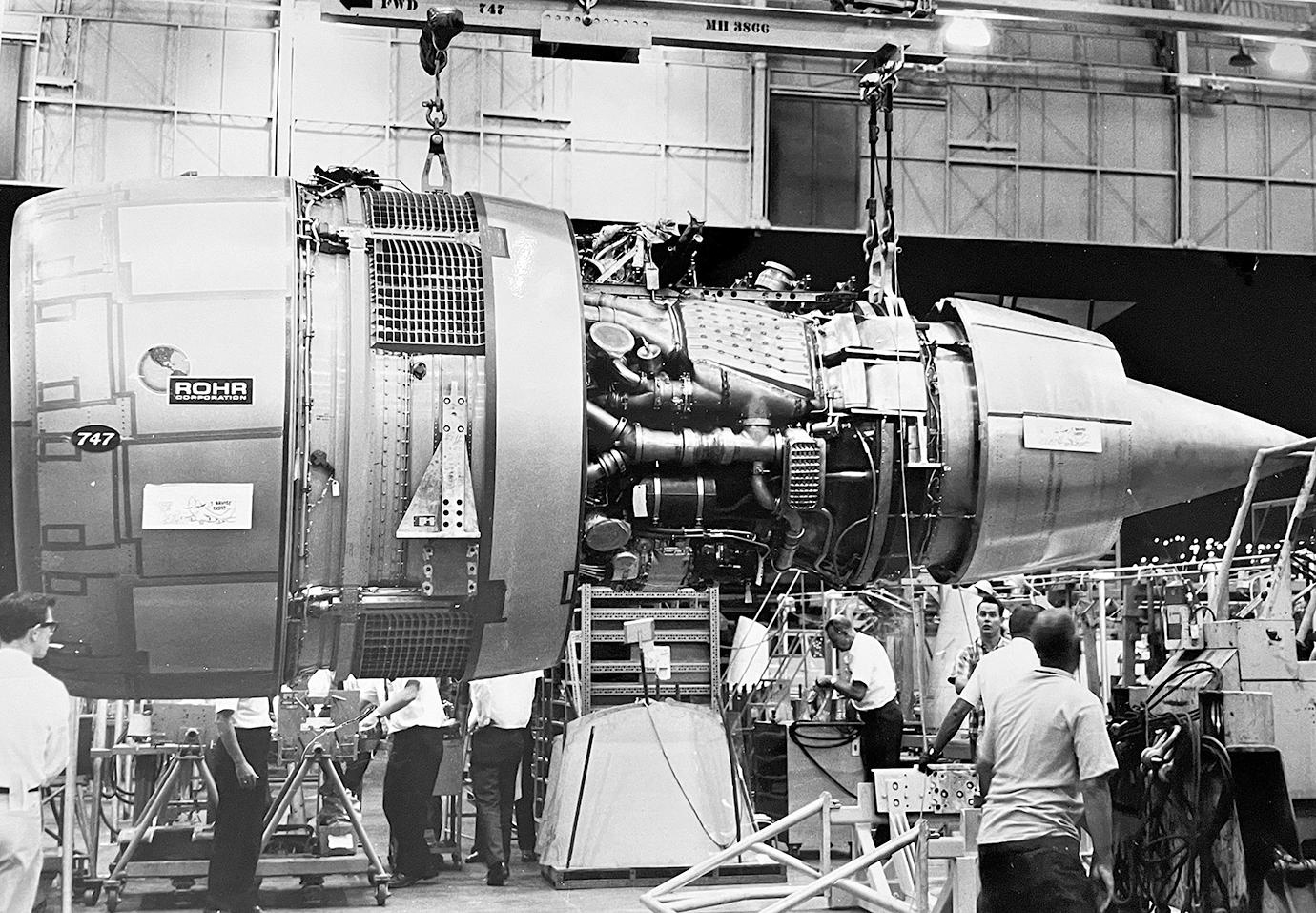
The Enduring Legacy of the Boeing 747 in Aviation Engineering
The Enduring Legacy of the Boeing 747 in Aviation Engineering
The Boeing 747 stands as a monumental achievement in the history of aviation, embodying ambition, innovation, and a lasting influence that transcends its operational lifespan. Although commercial production has ceased and most airlines have retired the aircraft, the “Queen of the Skies” continues to command respect and admiration from aviation professionals and enthusiasts worldwide. Its legacy persists not only through the memories of those who traveled aboard but also in the ongoing advancements within aviation engineering.
A Giant Is Born
The inception of the Boeing 747 program in the 1960s marked a transformative moment in long-haul air travel. The first flight on February 9, 1969, heralded the beginning of the widebody era, with the aircraft’s unprecedented capacity and range redefining commercial aviation. This innovation enabled the opening of new intercontinental routes, making global travel more accessible to millions.
The development of the 747 is steeped in aviation lore, notably the pivotal handshake agreement between Pan Am and Boeing in 1965 that set the project in motion. To accommodate the scale of the undertaking, Boeing constructed the world’s largest building by volume at its Everett, Washington facility, underscoring the program’s ambition. Beyond its commercial success, the 747 became a symbol of prestige and power, most famously serving as the U.S. presidential aircraft. The VC-25A, a modified 747-200B, has operated as Air Force One since 1990, exemplifying the aircraft’s durability and versatility in both civilian and governmental roles.
Engineering Marvels and Market Shifts
The Boeing 747 introduced numerous engineering advancements that established new benchmarks for safety, reliability, and passenger comfort. Its distinctive upper deck “hump,” sophisticated avionics, and four-engine design made it an instantly recognizable icon and a technological leader of its era.
However, the aviation industry has evolved significantly since the 747’s debut. The final iteration, the 747-8, represented the culmination of the model’s development, offered in both passenger and freighter configurations. Yet, its arrival coincided with the emergence of highly efficient twin-engine widebodies such as the Boeing 777, 787, and Airbus A350. These newer aircraft provide comparable range capabilities while delivering substantially lower fuel consumption and maintenance costs, accelerating the decline of four-engine jets like the 747.
Competitive Pressures and the Path Forward
The legacy of the 747 now contends with intensifying global competition. A notable development is the partnership between India’s Hindustan Aeronautics Ltd (HAL) and Russia to produce the SJ-100, a collaboration that threatens to diminish Boeing’s market share in strategic regions. Industry analysts emphasize that Boeing’s continued competitiveness hinges on investing in clean-sheet aircraft designs and next-generation engine technologies.
Despite these challenges, Boeing has maintained the 747’s relevance in niche markets. The company’s recent turnkey service catering to VIP 747 owners highlights ongoing demand within private and specialized aviation sectors. Nevertheless, Boeing faces financial pressures, with delays in the 777X program potentially resulting in a $4 billion charge in the company’s forthcoming third-quarter earnings report, raising investor concerns about its strategic direction.
An Enduring Icon
Although the Boeing 747’s role as a mainstream passenger aircraft is nearing its conclusion, its impact on aviation engineering and culture remains profound. The aircraft’s pioneering innovations, adaptability, and iconic stature secure its place in history. As the industry advances toward more efficient, next-generation designs, the 747 endures as a benchmark against which all widebody jets are measured—a testament to the enduring power of visionary engineering.

Etihad Airways Suspends Airbus A380 Flights on Key Route

Aditya Birla Group Seeks Approval for Aircraft Leasing in GIFT City

Qatar Airways Highlights Innovation and Connectivity at Arabian Travel Market 2026

Hong Kong's Five-Year Plan Includes Andrew Fan's Aircraft Parts Processing Hub Proposal

ACIA Aero Leasing Delivers ATR72-600 to Air Nostrum

RTX Appoints Jill Albertelli as Head of Pratt & Whitney

TAT Technologies Joins Beyond Aero Hydrogen Aircraft Program

AURAK Study Highlights Barriers to Air Taxi Adoption in Emerging Economies

Xiamen Air Selects Altitude for 787 Maintenance at Heathrow

Etihad and Swissport Extend Global Partnership
