
حوّل رؤى الذكاء الاصطناعي إلى أفعال منسّقة

الرائج الآن
Categories
The Rise of Personal Air Travel and Air Taxis
The Rise of Personal Air Travel and Air Taxis
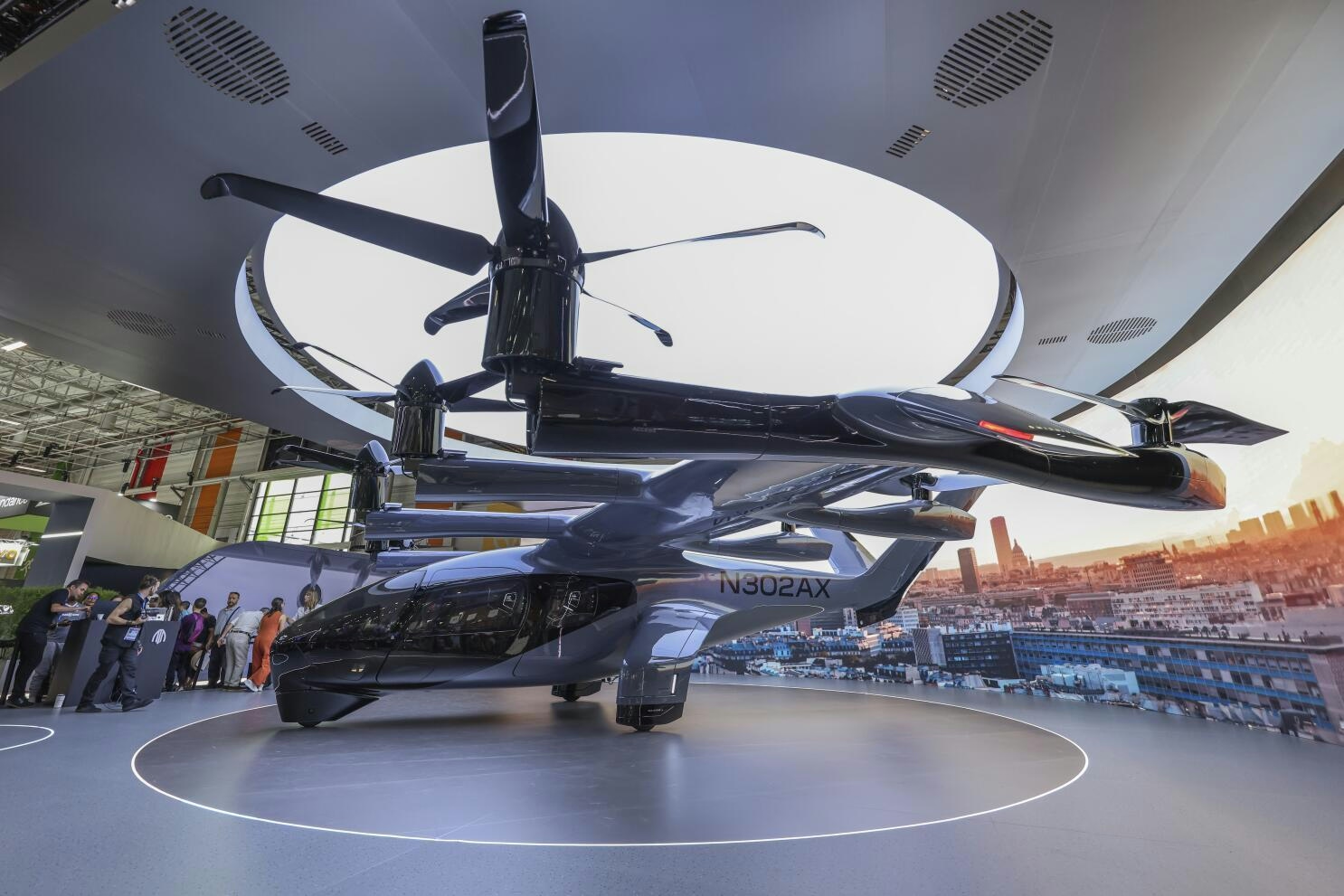
The advent of electric vertical takeoff and landing vehicles (eVTOLs) marks a significant turning point in both personal and commercial transportation. These battery-powered aircraft, capable of quiet and efficient flight, are rapidly approaching commercial viability after thousands of miles of test flights worldwide. Their introduction is expected to revolutionize logistics, supply chains, and everyday travel by offering a fundamentally new mode of aerial mobility.
Transforming Urban and Regional Mobility
Unlike conventional airplanes that operate at high altitudes, eVTOLs fly at much lower levels, typically between 1,500 and 3,500 feet. Their innovative design incorporates multiple motors, propellers, and redundant battery systems to ensure enhanced safety. The ability to take off and land vertically eliminates the need for traditional runways, allowing these vehicles to operate from urban centers and other confined spaces. While initial commercial operations will likely integrate with existing airports and air traffic systems, the flexibility of eVTOL technology opens new possibilities for urban and regional transportation networks.
The first generation of these flying vehicles targets short-distance trips that are inconvenient by car but too brief for commercial flights. For instance, a journey from John F. Kennedy International Airport to downtown Manhattan, which can take up to an hour by road, could be reduced to a mere seven minutes by eVTOL. Infrastructure development is already underway, with New York City planning a dedicated heliport to accommodate this emerging mode of transport.
Diverse Categories and Industry Challenges
The eVTOL market encompasses several distinct categories. Personal Aerial Vehicles (PAVs) are single-passenger ultralights regulated by the Federal Aviation Administration (FAA) that do not require a pilot’s license and are expected to be priced between $95,000 and $300,000. Multi-passenger eVTOLs, typically operated by professional pilots, are designed to shuttle several passengers between locations. Roadable aircraft, capable of both driving on roads and flying, represent another innovative segment. Autonomous air taxis, which function as self-flying vehicles with pre-programmed routes, are currently being piloted primarily in Asian markets.
Despite rapid technological progress, the industry faces significant challenges. Legal disputes, such as the ongoing litigation between Joby Aviation and Archer Aviation over trade secrets, highlight competitive tensions. Meanwhile, companies like Archer Aviation and Vertical Aerospace are actively pursuing regulatory approval, aiming to launch commercial air taxi services by 2028. The FAA has initiated a pilot program to evaluate the feasibility of air taxis in major metropolitan areas, signaling governmental support for the sector’s potential to generate employment and maintain American leadership in aviation.
Market Outlook and Future Prospects
Market responses to the rise of eVTOLs remain varied. While outbound U.S. air travel is expanding more rapidly than inbound international visitation, reflecting uneven global adoption, investment in electric flying vehicles continues to grow. Major industry players are committing resources to develop air taxi networks and the necessary supporting infrastructure.
As the electric aerial revolution unfolds, it promises to redefine personal travel and unlock new efficiencies in urban mobility, emergency response, and beyond, heralding a transformative era in aviation.

Etihad Airways Suspends Airbus A380 Flights on Key Route

Aditya Birla Group Seeks Approval for Aircraft Leasing in GIFT City

Qatar Airways Highlights Innovation and Connectivity at Arabian Travel Market 2026

Hong Kong's Five-Year Plan Includes Andrew Fan's Aircraft Parts Processing Hub Proposal

ACIA Aero Leasing Delivers ATR72-600 to Air Nostrum

RTX Appoints Jill Albertelli as Head of Pratt & Whitney

TAT Technologies Joins Beyond Aero Hydrogen Aircraft Program

AURAK Study Highlights Barriers to Air Taxi Adoption in Emerging Economies

Xiamen Air Selects Altitude for 787 Maintenance at Heathrow

Etihad and Swissport Extend Global Partnership
