
حوّل رؤى الذكاء الاصطناعي إلى أفعال منسّقة

الرائج الآن
Categories
The Rise of Premium Economy on Ultra-Long-Haul Flights
The Rise of Premium Economy on Ultra-Long-Haul Flights
A Growing Middle Ground in Air Travel
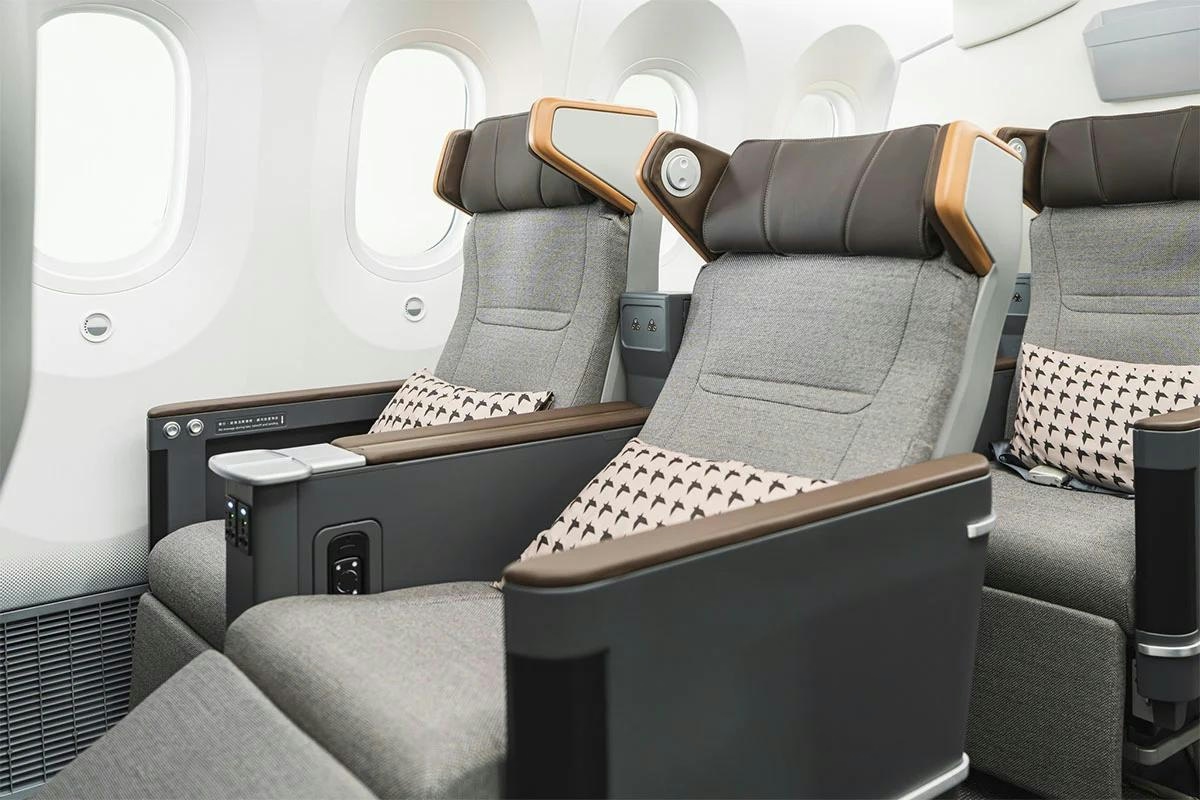
Premium economy class is experiencing rapid expansion worldwide, outpacing the growth rates of both economy and business class tickets. Much like the transformation business class underwent decades ago, premium economy has established itself as a middle ground, bridging the affordability of economy with the enhanced comfort of business class. This development is especially evident on long and ultra-long-haul flights, where shifting passenger demographics and evolving expectations are driving significant changes within the airline industry.
Modern travelers increasingly seek a balance between comfort and cost. While budget-conscious flyers continue to support the rise of low-cost carriers, a substantial segment of passengers is willing to pay a premium for improved comfort and amenities without incurring the high expense associated with business class. This demand has positioned premium economy as an appealing choice for leisure travelers desiring additional space and services, as well as for business travelers aiming to control expenses.
Economic Implications and Market Trends
For airlines, premium cabins—including premium economy—have become vital revenue generators. Amid rising operating costs and ongoing geopolitical uncertainties, carriers are consolidating their market positions by focusing on higher-yield segments. This strategic shift has widened the divide between premium and economy classes, often leaving budget travelers with fewer affordable and comfortable options.
Market data highlights this trend clearly. According to Aviation Week, North Atlantic airline capacity increased by 5.9% in 2024, while premium economy capacity surged by 8.0%. Forecasts for 2025 suggest that premium economy will continue to be the fastest-growing cabin class. Although economy and business class seating are still expanding, their growth rates lag behind that of premium economy. Meanwhile, first class is experiencing a steep decline, down approximately 40% compared to 2019. Several airlines, including Air New Zealand, Malaysian Airlines, and South African Airways, have eliminated first class entirely, while others such as Qantas now offer it only on select aircraft.
Major U.S. carriers—Delta, American Airlines, and United Airlines—are responding by enhancing their premium offerings to attract high-paying passengers. This competitive emphasis on premium cabins is reshaping the industry landscape, as airlines strive to differentiate themselves and capture a larger share of the lucrative premium traveler market.
Future Outlook
Industry experts anticipate that these trends will persist, with airlines investing in modernizing air traffic control systems and further refining their premium products. As the sector adapts to changing passenger expectations and economic pressures, premium economy is set to assume an increasingly central role on ultra-long-haul routes. It offers a compromise between luxury and value that aligns with the preferences of today’s global travelers.

Hong Kong's Five-Year Plan Includes Andrew Fan's Aircraft Parts Processing Hub Proposal

ACIA Aero Leasing Delivers ATR72-600 to Air Nostrum

RTX Appoints Jill Albertelli as Head of Pratt & Whitney

TAT Technologies Joins Beyond Aero Hydrogen Aircraft Program

AURAK Study Highlights Barriers to Air Taxi Adoption in Emerging Economies

Xiamen Air Selects Altitude for 787 Maintenance at Heathrow

Etihad and Swissport Extend Global Partnership

Sepehran Airlines B737 Returns to Mashhad After Tyre and Engine Issues

Etihad Deploys Widebody Fleet to Meet Strong Demand

Korean Air Finalizes $36.2 Billion Deal with Boeing
