
حوّل رؤى الذكاء الاصطناعي إلى أفعال منسّقة

الرائج الآن
Categories
The Role of Artificial Intelligence in Aircraft Engine Maintenance
The Role of Artificial Intelligence in Aircraft Engine Maintenance
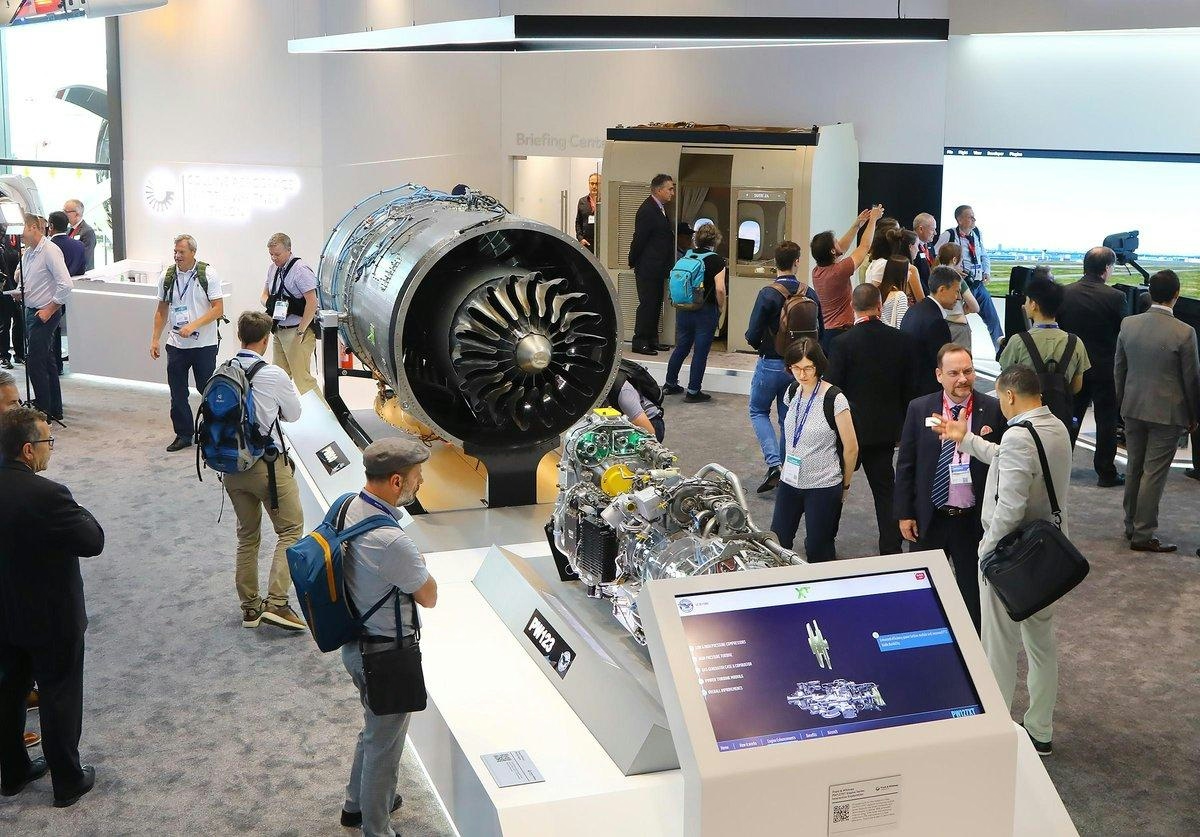
Artificial Intelligence (AI) is transforming the aviation industry in multifaceted ways, extending beyond the optimization of maintenance procedures and operational efficiency. A novel development has emerged wherein older aircraft jet engines are being repurposed to generate electricity for AI data centers. This shift responds to the escalating demand for power, which is increasingly outstripping the capacity of traditional utility providers. The repurposing of jet engines for energy production is set to disrupt the already strained aircraft engine maintenance, repair, and overhaul (MRO) sector.
Jet Engines as Power Sources for AI Data Centers
The rapid expansion of AI technologies has driven a surge in the number and scale of data centers, facilities that require substantial electrical power to operate high-performance computing infrastructure. In light of this, some operators have turned to aircraft jet engines as an expedient solution for on-site power generation. Even aerospace companies such as Boom Supersonic, which is actively developing a new supersonic passenger aircraft and engine, are contemplating diverting engines to power data centers. This approach is viewed as a potential means to finance ongoing aerospace development projects.
Market Pressures and Engine Shortages
This emerging trend coincides with a period of significant challenges for the aviation industry. There is a pronounced shortage of aircraft engines, compounded by persistent maintenance difficulties with key models like the Pratt & Whitney GTF and the CFM LEAP. The scarcity of spare engines and repair components has compelled airlines to extend the operational lifespan of older aircraft and engines, while reevaluating the financial viability of extensive overhauls.
The shortage has driven engine and parts prices to unprecedented levels, to the point where some relatively new aircraft are being dismantled solely for their components, which now hold greater value than the aircraft themselves. The International Air Transport Association (IATA) has issued warnings that aircraft demand will exceed production capacity, even before accounting for the additional demand generated by AI data centers. The potential diversion of hundreds of engines to power these centers threatens to further inflate prices and exacerbate the imbalance within the MRO market, which is not anticipated to stabilize until at least 2030.
AI’s Complex Influence on Maintenance Practices
While AI is generating new demand for engines outside the traditional aviation context, its integration into aircraft engine maintenance introduces both opportunities and challenges. The deployment of AI-driven maintenance systems has the potential to disrupt established practices, possibly rendering certain workforce skills obsolete and provoking resistance from companies concerned about the substantial costs associated with adopting new technologies. Industry competitors may feel compelled to invest heavily in AI to preserve their competitive advantage, yet investor sentiment remains divided. Some view AI as a transformative innovation, while others remain cautious due to the risks and significant capital investment required.
Conclusion
The rapid growth of AI is placing considerable strain on both the electrical power grid and the aviation supply chain. Utilizing aircraft engines to supply energy for data centers offers a short-term solution to pressing power needs but risks further destabilizing the aircraft engine MRO market, which is already under pressure from supply shortages and the lingering effects of the pandemic. As AI continues to drive demand for both computational power and advanced maintenance technologies, the aviation industry is poised to experience a period of heightened volatility, with engine supply and maintenance capacity expected to remain under significant stress for the foreseeable future.

Etihad Airways Suspends Airbus A380 Flights on Key Route

Aditya Birla Group Seeks Approval for Aircraft Leasing in GIFT City

Qatar Airways Highlights Innovation and Connectivity at Arabian Travel Market 2026

Hong Kong's Five-Year Plan Includes Andrew Fan's Aircraft Parts Processing Hub Proposal

ACIA Aero Leasing Delivers ATR72-600 to Air Nostrum

RTX Appoints Jill Albertelli as Head of Pratt & Whitney

TAT Technologies Joins Beyond Aero Hydrogen Aircraft Program

AURAK Study Highlights Barriers to Air Taxi Adoption in Emerging Economies

Xiamen Air Selects Altitude for 787 Maintenance at Heathrow

Etihad and Swissport Extend Global Partnership
