
حوّل رؤى الذكاء الاصطناعي إلى أفعال منسّقة

الرائج الآن
Categories
Tianjin Receives Largest Single Shipment of Airbus Components
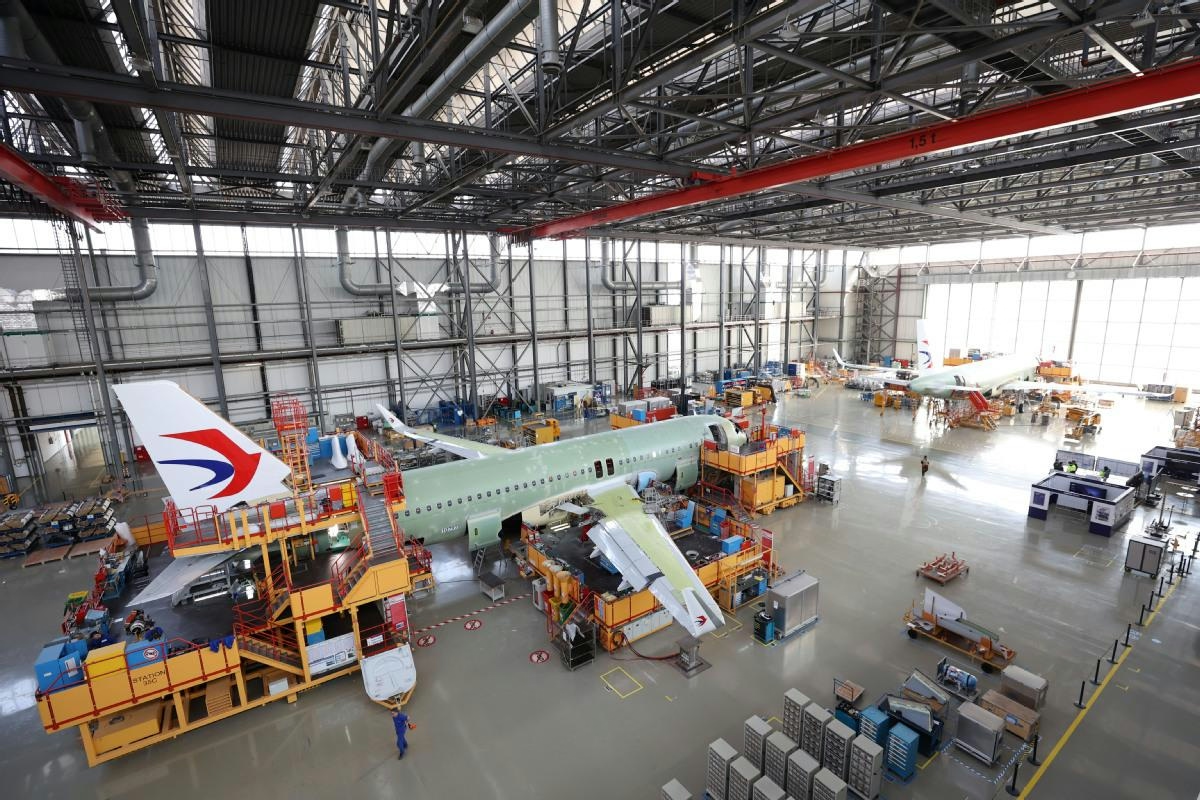
Tianjin Receives Record Shipment of Airbus Components Amid Industry Expansion
Tianjin port recently received its largest single shipment of Airbus aircraft components, marking a significant milestone in the city’s role within the global aviation supply chain. On Tuesday morning, twelve large parts arrived aboard the container ship OOCL Denmark, transported from Hamburg, Germany. This shipment set a new record for the highest volume of Airbus components entering Tianjin in a single consignment, underscoring the growing importance of the port as a hub for aerospace manufacturing.
Expansion of Airbus Operations in Tianjin
The surge in shipments coincides with the accelerated pace of Airbus component deliveries to North China, particularly following the inauguration of a new Final Assembly Line (FAL) for the A320 family in Tianjin last October. Spanning approximately 300,000 square meters and comprising thirteen buildings—including assembly workshops and painting hangars—the facility effectively doubles Airbus’ final assembly capacity in China. The Tianjin FAL produces the A319, A320, and A321 models, reflecting Airbus’ strategic confidence in China’s robust civil aviation market and resilient supply chain infrastructure.
Airbus CEO Guillaume Faury has highlighted the critical role of the Tianjin facility in achieving the company’s ambitious goal of producing 75 A320 aircraft per month by 2027. The assembly line is equipped to handle large components such as fuselage sections and wings, which are assembled, painted, tested, and delivered to customers both within China and internationally. The increased volume of deliveries has intensified the need for efficient maritime import routes from Europe, reinforcing China’s stable and pivotal position in the global aviation industry.
Industry analyst Qi Qi remarked that the smooth operation of this maritime route not only demonstrates efficient transportation links between Europe and China but also underscores China’s central role in the international aviation sector.
Challenges Amid Growth and Market Competition
Despite these advancements, Airbus faces notable challenges. The company recently encountered a quality control issue involving metal panels on certain A320 aircraft, which triggered a sharp decline in its share price—dropping as much as 10%. This development has raised concerns about Airbus’ ability to meet its delivery targets, drawing close scrutiny from the aviation industry. The issue is particularly sensitive given the ongoing competition between Airbus and Boeing, as both manufacturers vie for market share in a sector where the global commercial fleet is projected to double by 2044.
Over the past four decades, Airbus has steadily expanded its presence in China. George Xu, CEO of Airbus China, noted that the company’s market share in the country has grown from less than 10 percent in 1995 to more than half today. Xu emphasized that Airbus’ growth has not only enhanced its competitiveness and industrial resilience but also contributed significantly to the development of China’s aviation sector and the broader global supply chain.
The record shipment to Tianjin thus reflects the deepening economic ties between China and Europe, as well as the evolving dynamics of the global aviation industry. Manufacturers continue to navigate a complex landscape of opportunities and challenges amid a rapidly expanding market.
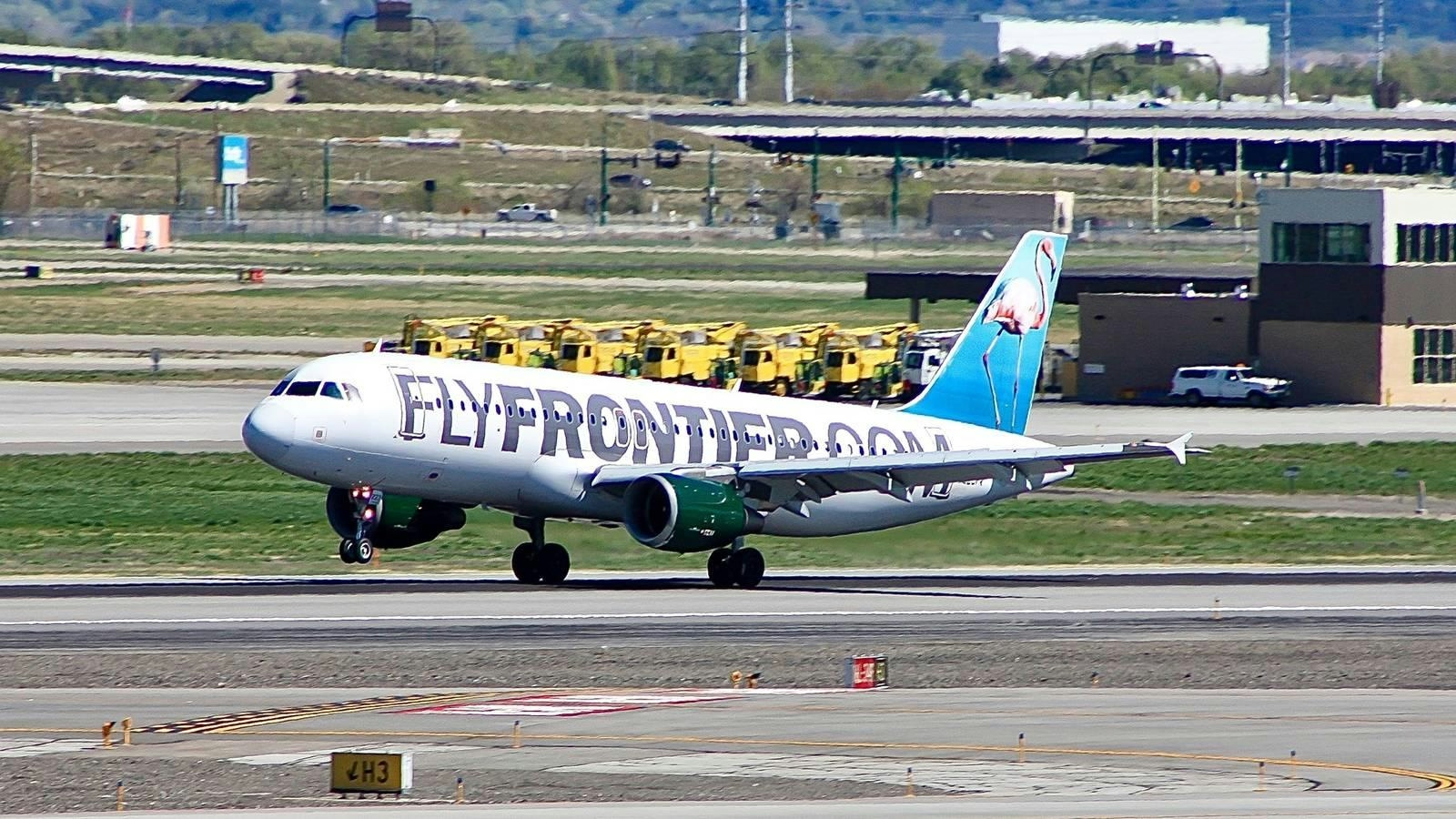
Man Ingested by Frontier Airlines Engine Marks Denver’s Sixth Airfield Security Breach in Three Years

Former Spirit Employees Express Concerns Over AI Partnership With Google
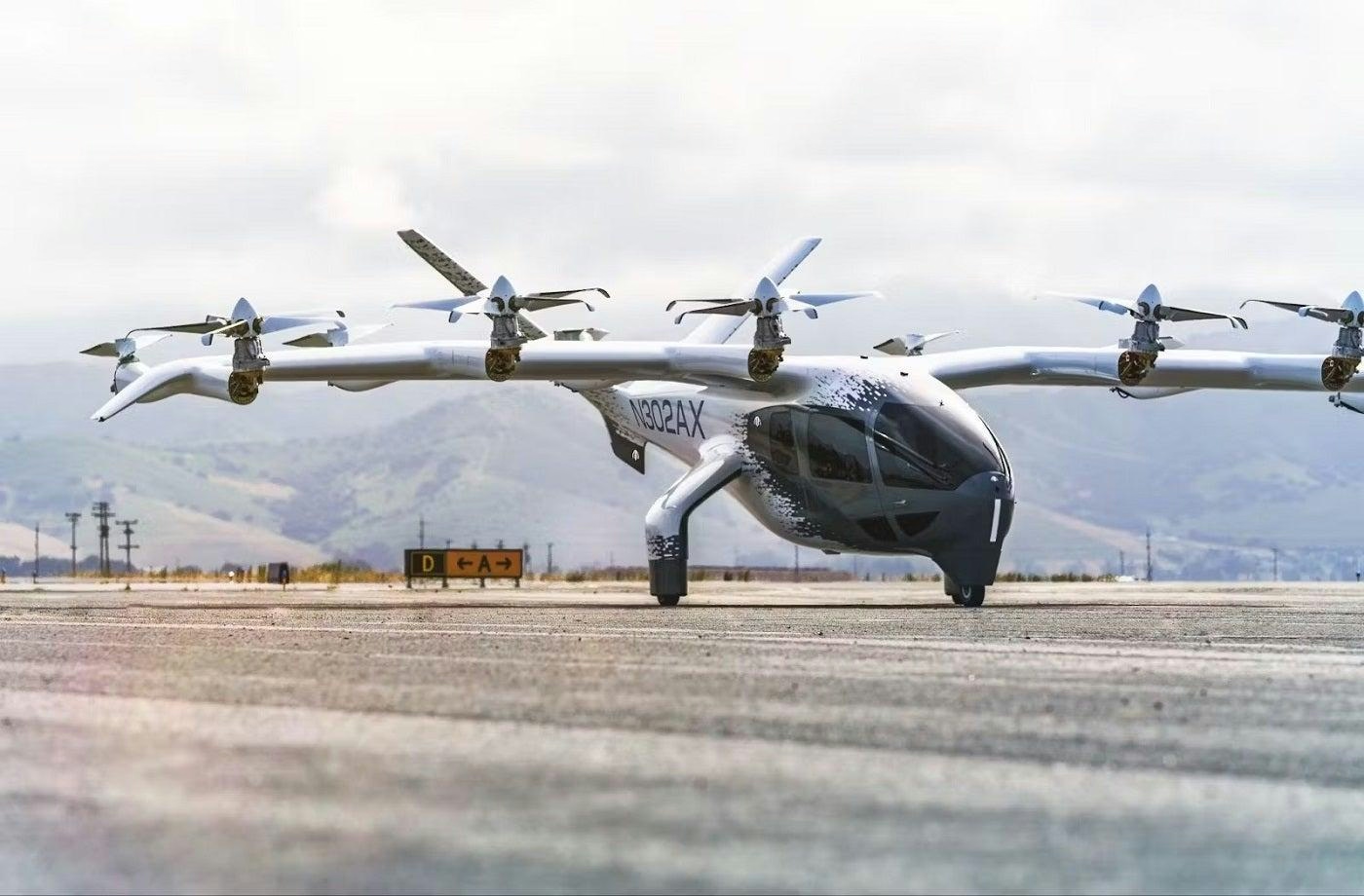
China Certifies Pilotless Air Taxi for Export; Sri Lanka First Buyer

US Pilot Hourly Pay Ranges from $90 for Regional to $465 for Widebody Flights

NASA Chooses University Teams to Support Aviation Research

Airbus Conducts Freighter First Flight as Delivery Figures Influence Stock

Hypersonic blast converts diamond to graphite, could aid defense armor

Achieving the AMES Rating in a Lockwood AirCam
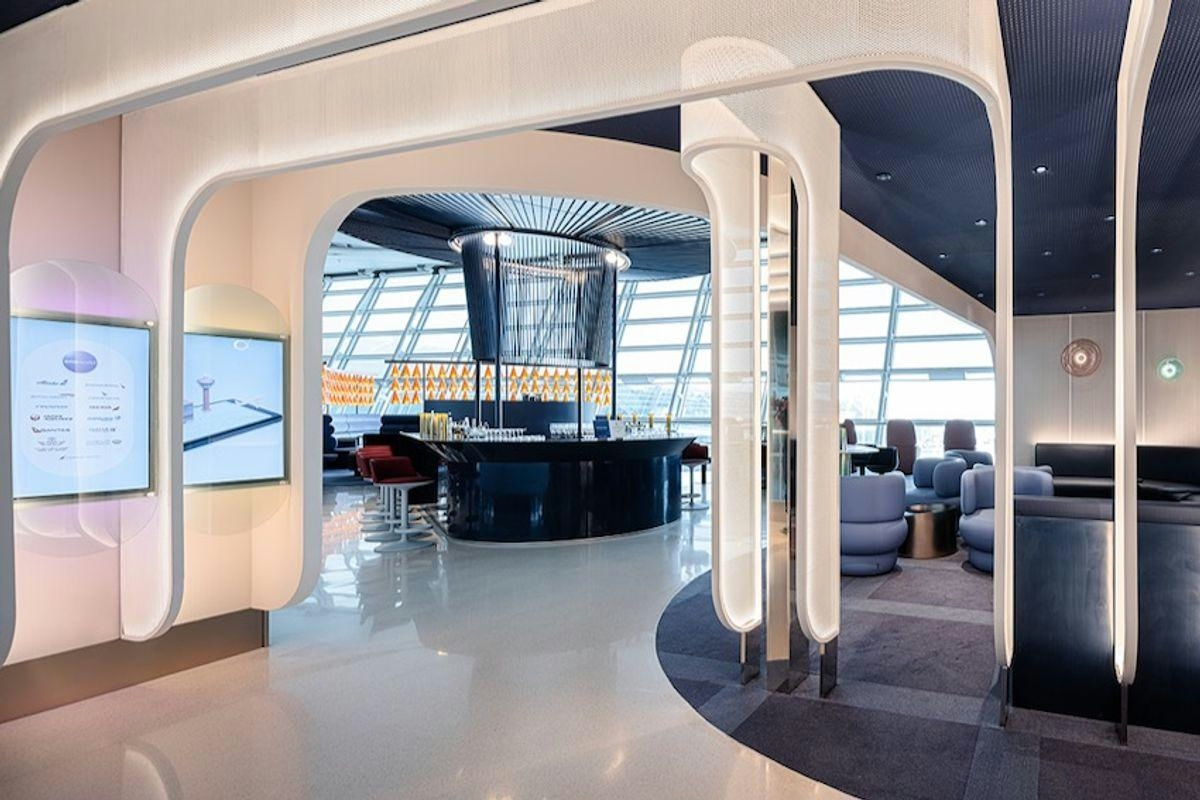
Oneworld on Digital Transformation and Passenger Experience in Airport Technology
CALC and HAECO Establish Aircraft Engine Maintenance Center in Hong Kong
