صورة

حوّل رؤى الذكاء الاصطناعي إلى أفعال منسّقة

انضم إلى قائمة الانتظار لـ AeroGenie اليوم!

الرائج الآن

Categories

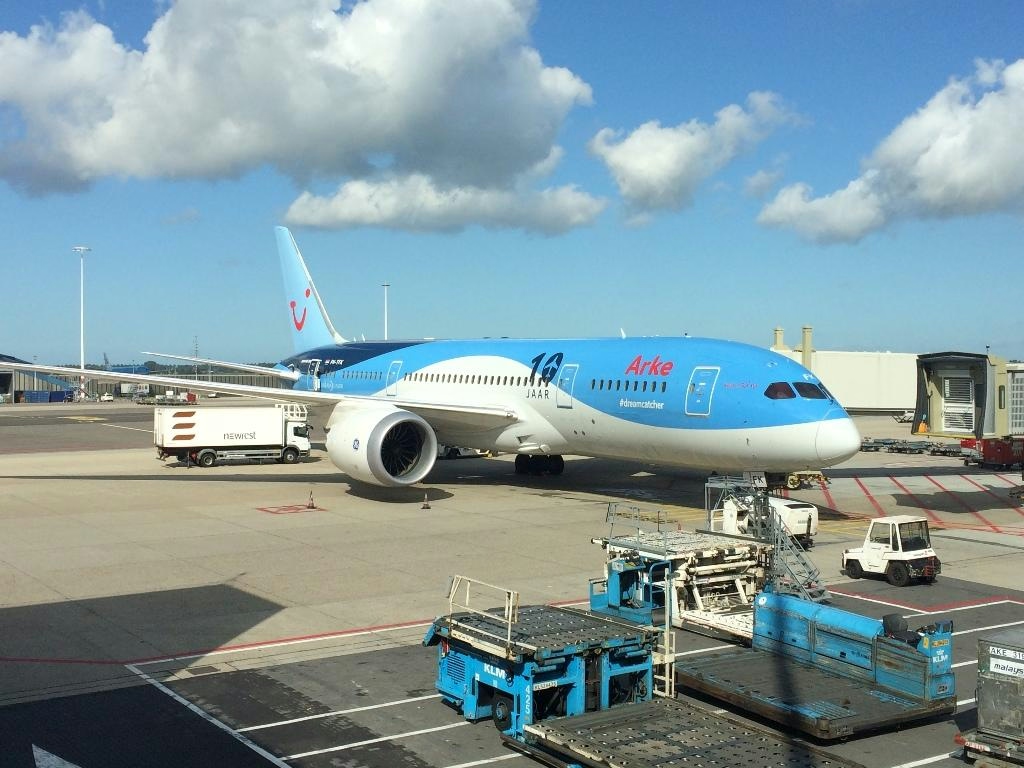
TUI fly Adds Boeing 787 Flights to Curaçao to Ease Winter Travel Disruptions
June 20, 2026By ePlane AI
TUI fly Adds Boeing 787 Flights to Curaçao to Ease Winter Travel Disruptions
0
0
TUI fly
Boeing 787 Dreamliner
Winter Travel Disruptions

TUI fly Expands Boeing 787 Services to Curaçao Amid Winter Travel Challenges

In response to widespread travel disruptions across Europe, TUI fly is significantly enhancing its Caribbean operations this winter by introducing Boeing 787 Dreamliner flights to Curaçao. Announced on June 20, 2026, this strategic move addresses the persistent flight cancellations and congestion at major European hubs, offering travelers a more reliable route to sun destinations during the peak winter season.

Addressing Demand with Increased Capacity

TUI fly’s decision is driven by surging demand and record load factors, with some recent flights reaching full capacity. The airline will operate direct Boeing 787 services to Curaçao twice weekly, on Mondays and Thursdays, throughout the winter schedule. This expansion adds over 27,000 seats to the market, providing much-needed relief for passengers seeking alternatives to the increasingly congested European airspace.

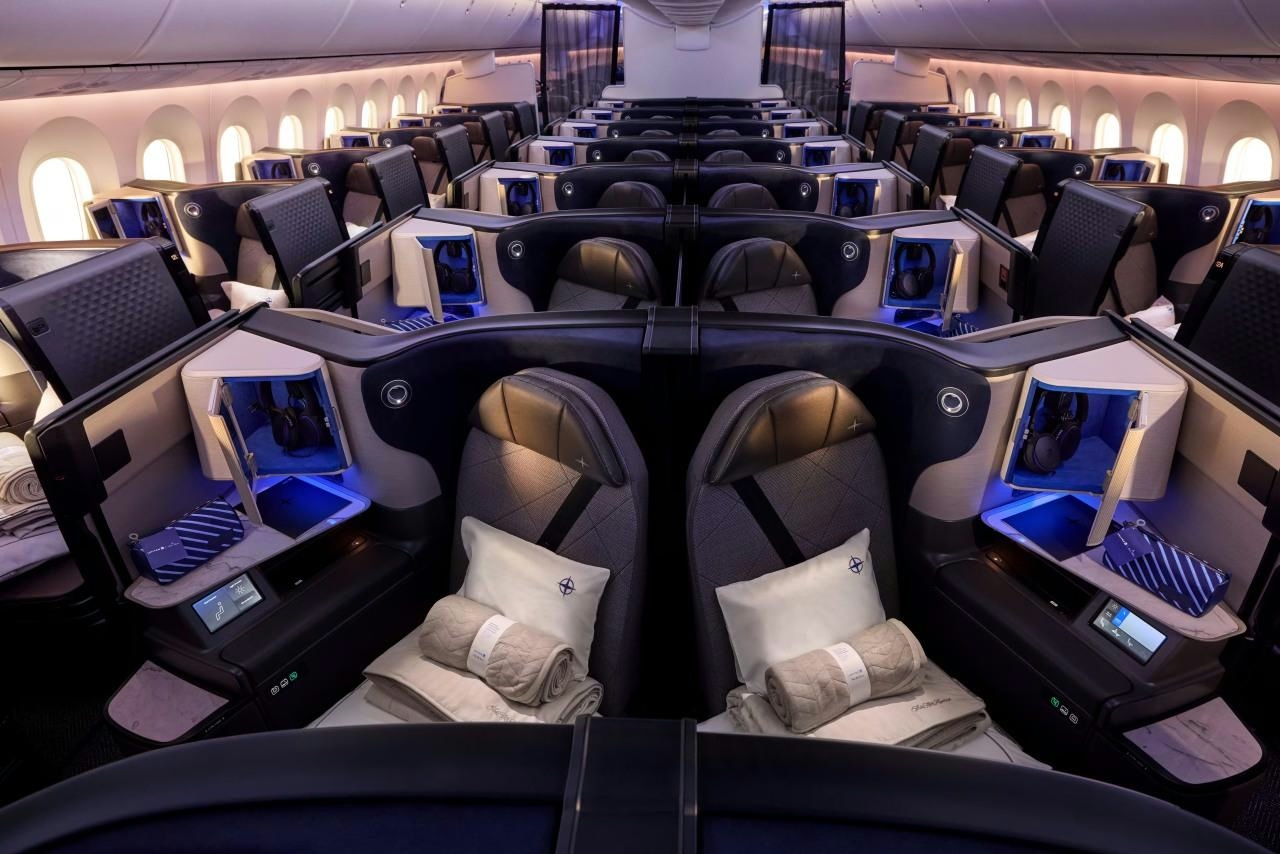
The Boeing 787, configured to accommodate approximately 305 passengers, represents a significant operational upgrade for TUI fly. By deploying these widebody aircraft, the airline enhances both efficiency and cost-effectiveness while reinforcing its presence in the Dutch Caribbean. Curaçao, in particular, has emerged as TUI fly’s premier Caribbean destination, outpacing steady traffic to Aruba and Bonaire and solidifying its role as the centerpiece of the airline’s regional network.

Industry Context and Strategic Implications

This capacity increase aligns with broader industry trends as airlines adjust to post-pandemic travel patterns and ongoing structural challenges. European carriers are increasingly utilizing larger aircraft to manage high passenger volumes amid chronic capacity constraints and cascading delays. However, TUI fly’s expansion occurs against a backdrop of rising operating costs and geopolitical uncertainties, which have spurred consolidation among major European airlines.

Competitors such as Lufthansa are intensifying competition by introducing premium cabin products like the Allegris on new routes, heightening the stakes in an already competitive market. In parallel, TUI is investing in longer leisure routes with its expanding Boeing 737 MAX fleet, seeking to balance operational flexibility with evolving market demands.

Environmental considerations also weigh heavily on the industry’s future. Airlines, including TUI, face mounting pressure to accelerate sustainability initiatives and transition to more efficient fuels amid increasing regulatory scrutiny and public concern.

Impact on Travelers and the Broader Network

For travelers, TUI fly’s expanded service to Curaçao offers a crucial alternative to the congested European airspace. The airline’s phased departure schedule is designed to optimize gate capacity and support the broader transportation infrastructure in the region. Passengers are advised to monitor official airline channels and flight tracking platforms such as FlightAware for real-time updates on schedules and potential disruptions.

As the winter travel season approaches, TUI fly’s deployment of the Boeing 787 to Curaçao represents a pivotal development. It underscores the adaptive strategies airlines must employ to navigate a volatile and highly competitive aviation environment while meeting the evolving needs of their customers.
More news
Lufthansa Technik Begins Construction of Clark MRO Hub

Lufthansa Technik Begins Construction of Clark MRO Hub

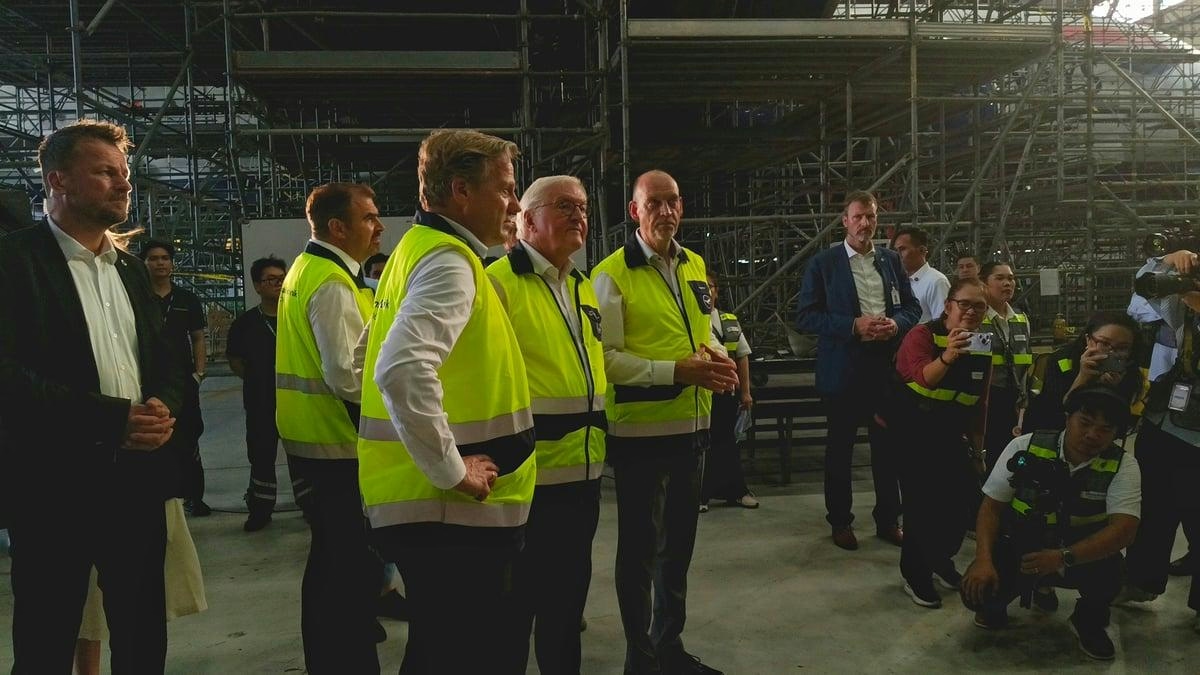
Lufthansa Technik Initiates Construction of Clark MRO Hub Amid Industry Dynamics Lufthansa Technik Philippines has officially begun construction on a new maintenance, repair, and overhaul (MRO) facility at Clark International Airport, marking a pivotal development within the Clark AeroDistrict. The expansive site, covering 157,000 square meters, represents a multi-hundred-million-dollar investment and is expected to generate approximately 1,200 skilled jobs upon its anticipated completion in 2028. Expanding Capabilities and Regional Presence This new facility will serve as Lufthansa Technik’s second operation in the Philippines, complementing its existing base at Ninoy Aquino International Airport. The Clark hub is designed to offer comprehensive widebody aircraft maintenance services, including a dedicated paint shop and specialized non-destructive testing workshops. It will also enhance support for next-generation aircraft models such as the Airbus A350 and Boeing 787, thereby broadening the company’s service offerings in Southeast Asia. The decision to expand comes amid a complex environment for the global aviation maintenance sector. Despite challenges including market volatility, supply chain disruptions, and rising material costs, Lufthansa Technik reported an 11% increase in revenues, reaching €4.4 billion in the first half of 2026. While geopolitical tensions and fluctuating demand have exerted pressure on profit margins, the company’s investment in Clark signals confidence in the region’s long-term aviation growth prospects. Strategic Significance and Market Implications Luzon International Premiere Airport Development (LIPAD), the authority managing Clark International Airport, has welcomed the project as a significant endorsement of Clark’s potential and the capabilities of Filipino talent. LIPAD Chairperson Josephine Gotianun Yap described the initiative as a strong vote of confidence in the country’s aviation sector, while LIPAD President and CEO Noel Manankil emphasized that the new facility advances the vision of the Clark AeroDistrict as a competitive global aviation and logistics hub. The establishment of Lufthansa Technik’s Clark hub is expected to intensify competition among existing MRO providers in the region. Industry analysts suggest that this development may prompt competitors to upgrade their services and could lead to increased price competition as companies seek to capture a larger share of Southeast Asia’s expanding aviation market. Market responses to the Clark MRO hub have been largely positive, with stakeholders highlighting its potential to stimulate local employment, elevate the Philippines’ standing in global aviation, and attract further aerospace and logistics investments. As construction advances, Lufthansa Technik’s expansion is poised to play a crucial role in shaping the future landscape of aircraft maintenance in the region.
Pawan Hans Partners with Neomi Aerospace to Advance Seaplane Technology and Regional Connectivity

Pawan Hans Partners with Neomi Aerospace to Advance Seaplane Technology and Regional Connectivity

Pawan Hans Partners with Neomi Aerospace to Advance Seaplane Technology and Regional Connectivity Pawan Hans Limited (PHL), a Government of India enterprise operating under the Ministry of Civil Aviation, has entered into a Non-Binding Memorandum of Understanding (MoU) with Norway-based Neomi Aerospace (Elfly AS) to explore collaboration in next-generation sustainable aviation technologies, with a particular focus on electric seaplane solutions. The agreement was formalized by Sunil Kumar Nagdawne, Chairman and Managing Director of Pawan Hans, and Eric François Lithun, CEO of Neomi Aerospace, in the presence of Minister of Civil Aviation Ram Mohan Naidu Kinjarapu and Ministry Secretary Samir Kumar Sinha. Scope and Objectives of the Partnership The MoU establishes a framework for cooperation across several critical areas, including the development of electric seaplane technologies, skill development and capacity building, technical knowledge sharing through workshops, and conducting feasibility studies. This initiative is closely aligned with the Indian government’s broader agenda to enhance regional and island connectivity, promote green aviation, and foster innovation-driven growth within the civil aviation sector. Minister Ram Mohan Naidu Kinjarapu underscored the strategic importance of this partnership, emphasizing the government’s commitment to strengthening indigenous capabilities. “Our vision is not limited to operating seaplanes in India; we also want to build them in India, guided by Prime Minister Narendra Modi’s Make in India vision,” he stated, highlighting the emphasis on domestic manufacturing and technological self-reliance. Government Support and Industry Challenges The Union Budget 2026 further reinforces the government’s dedication to advancing seaplane operations by proposing incentives aimed at the indigenization of seaplane manufacturing. Additionally, a Seaplane Viability Gap Funding (VGF) Scheme is set to be introduced to support the operational viability of seaplane services. Over the past two years, the government has implemented dedicated Seaplane Operations Guidelines, simplified regulatory frameworks, and conducted demonstration flights to encourage participation from various stakeholders. Despite these positive developments, industry experts caution that challenges remain. A notable shortage of technical expertise and reluctance among original equipment manufacturers to share critical manuals and proprietary knowledge could impede the rapid adoption and scaling of electric seaplane technology in India. Nevertheless, the market response has been encouraging. Neomi Aerospace recently secured €3 million in funding for the development of its electric amphibious aircraft, signaling robust industry interest and evolving market dynamics. This momentum may prompt competitors to pursue strategic partnerships or increase investments in similar technologies to maintain their competitive edge. Future Prospects and Strategic Significance It is important to note that the MoU between Pawan Hans and Neomi Aerospace is exploratory in nature and does not involve any immediate financial, procurement, or investment commitments. Any future collaboration will be contingent upon separate definitive agreements and requisite government approvals, in compliance with applicable laws and procedures. As India seeks to integrate global technological expertise with domestic manufacturing capabilities, the collaboration between Pawan Hans and Neomi Aerospace holds significant potential. It could play a pivotal role in addressing local and regional demand for sustainable seaplane solutions, while advancing the country’s ambitions in green aviation and enhancing regional connectivity.
Air India Appoints Tewolde Gebremariam as CEO
Air India Appoints Tewolde Gebremariam as CEO

Air India Appoints Tewolde Gebremariam as CEO Air India has announced the appointment of Tewolde Gebremariam as its new Chief Executive Officer and Managing Director, succeeding Campbell Wilson. This leadership change occurs at a critical juncture in the airline’s transformation, as it strives to establish itself as a world-class global carrier. Leadership Selection and Experience The Air India board emphasized that their search prioritized a leader with a demonstrated ability to manage large-scale airline turnarounds, operational excellence, safety, service quality, and profitable growth. After a comprehensive evaluation process, Gebremariam was unanimously chosen for his combination of leadership skills, operational expertise, and strategic vision, which are deemed essential for the airline’s forthcoming phase of expansion. Gebremariam brings extensive experience from his previous role as CEO of Ethiopian Airlines Group, where he spearheaded a multi-billion-dollar expansion that elevated the airline to Africa’s largest and most profitable carrier. Under his leadership, Ethiopian Airlines’ revenue increased more than fourfold, and its fleet size nearly tripled. The board highlighted his proficiency in managing complex operations, driving cultural transformation, developing global hubs, and establishing world-class maintenance and training facilities. Strategic Vision for Air India’s Growth As Air India transitions from its foundational turnaround phase into a period focused on growth and execution, Gebremariam’s expertise in expanding international long-haul networks and building hub operations is considered particularly valuable. He is widely recognized for his unwavering commitment to safety, engineering quality, operational reliability, and sustained profitability, even amid challenging economic conditions and volatile global markets. His strengths in workforce development and fostering a high-performance, customer-centric culture further reinforce his suitability for the role. N. Chandrasekaran, Chairman of Tata Sons and Air India, welcomed the appointment, noting that with the initial phase of stabilization, integration, and fleet commitments completed under Campbell Wilson, the airline is now entering a critical era of execution and expansion. Chandrasekaran praised Gebremariam’s track record in building one of the world’s most efficient and profitable airline groups, describing him as uniquely qualified to lead Air India. He emphasized that Gebremariam’s operational expertise, dedication to safety, and vision for hub development will be pivotal in establishing Air India as a premier global carrier and a source of national pride. Gebremariam expressed his enthusiasm for the new role, stating that it is a profound honor to lead Air India at such a historic moment. He acknowledged the airline’s rich legacy and the unique opportunity to build a world-class global airline that reflects India’s remarkable economic potential. He pledged to work closely with Chairman Chandrasekaran, the Board, employees, and government and industry partners to deliver exceptional operational reliability, warm Indian hospitality, and sustained long-term growth. Challenges Ahead Gebremariam’s appointment comes as Air India confronts significant industry challenges, including the ongoing effects of the COVID-19 pandemic and intensifying competition from other major carriers. Market analysts are expected to closely observe his crisis management capabilities, which were demonstrated during his tenure at Ethiopian Airlines. Competitors may respond with strategies aimed at countering any improvements Air India implements under his leadership, as the airline seeks to reclaim its position as a leading force in global aviation.
Joby Plans Texas Air Taxi Flights in September, Aims for Passenger Service by 2026
Joby Plans Texas Air Taxi Flights in September, Aims for Passenger Service by 2026

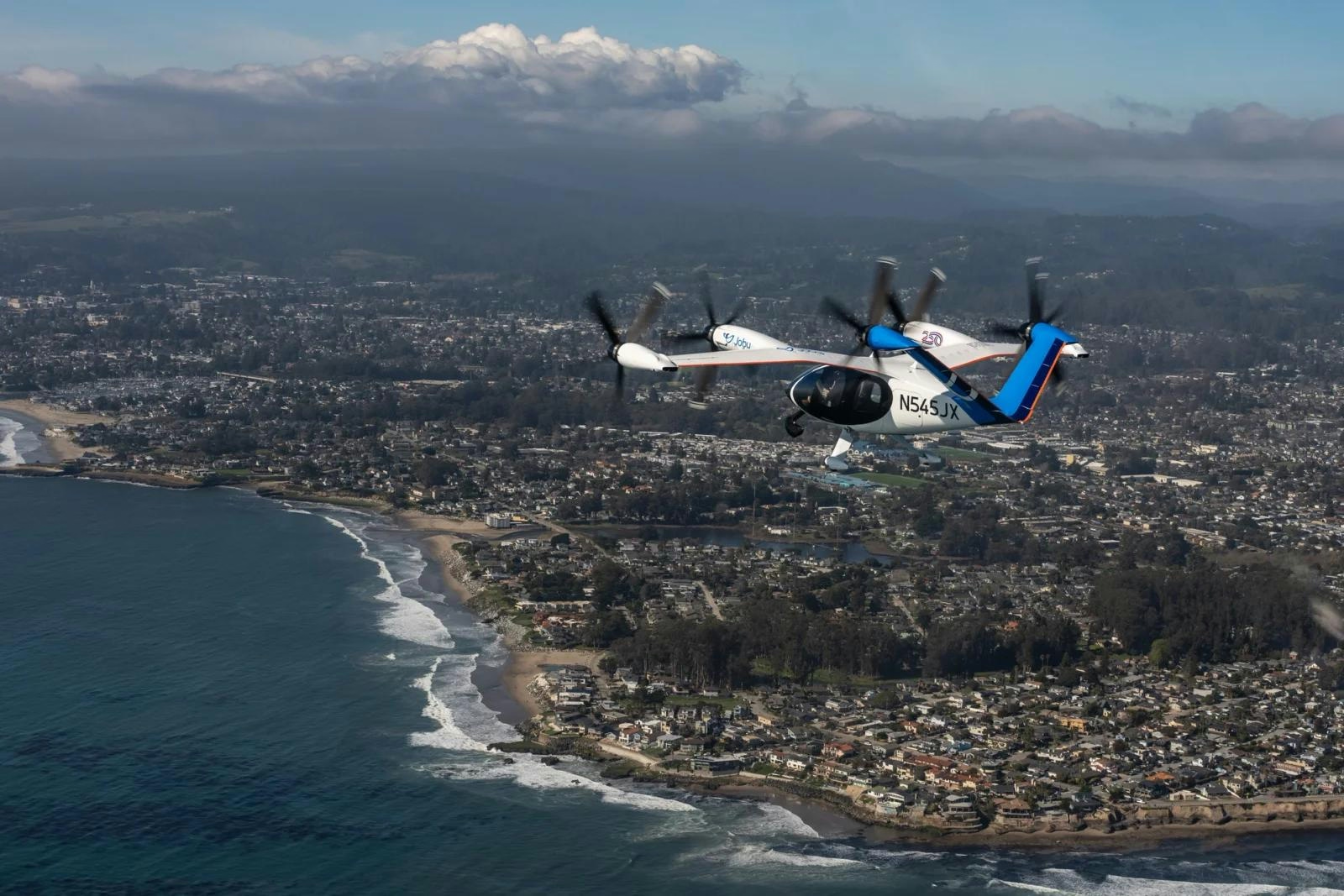
Joby Aviation to Launch Texas Air Taxi Flights in September, Targets Passenger Service by 2026 **Santa Cruz, Calif.** — Joby Aviation, Inc. (NYSE: JOBY), a frontrunner in the development of electric air taxis, has announced its second quarter 2026 financial results alongside key operational milestones as it advances toward commercial passenger service. The company is set to commence its initial electric air taxi flights in Texas this September, with plans to begin carrying passengers by 2026. Progress Toward Certification and Production Expansion Joby’s advancements come amid heightened interest in advanced air mobility, as the company moves through the fifth and final stage of the Federal Aviation Administration (FAA) Type Certification process. This certification, initiated with a pilot program in March 2026, represents a crucial step toward full commercial operations. Currently, Joby operates five aircraft in flight and has 12 additional units in production, signaling a significant increase in manufacturing capacity. A major challenge facing Joby and the broader air taxi sector is the establishment of new access points, such as heliports and vertiports, to enhance the accessibility and utility of air taxi services. To address this, Joby has formed a strategic partnership with Atoms, an industrial AI and infrastructure company founded by Travis Kalanick, to develop multimodal transportation hubs in key U.S. launch markets. Financial Performance and Strategic Partnerships Investor confidence in Joby remains robust, supported by major partners including Toyota, Uber, and Delta Air Lines. The company’s joint venture with Toyota is laying the foundation for a strategic manufacturing alliance designed to enable high-volume production. Market analysts recognize the transformative potential of air taxis to revolutionize transportation by replacing many medium-distance trips and overcoming traditional geographic limitations. The competitive landscape is intensifying as other companies also pursue certification, reflecting the rapid evolution of advanced air mobility. For the quarter ending June 30, 2026, Joby reported $36.2 million in revenue, primarily generated through its partnership with Blade. This performance has led the company to raise its full-year 2026 revenue forecast to between $115 million and $125 million. As of June 30, Joby held $2.3 billion in cash and short-term investments. The company expects to expend between $385 million and $415 million in cash, cash equivalents, and short-term investments during the second half of 2026 to support certification efforts, manufacturing scale-up, and commercialization activities. Founder and CEO JoeBen Bevirt stated, “With meaningful progress on certification, partnerships, infrastructure, and commercial readiness, we are unlocking the third dimension of mobility and turning electric vertical flight from an extraordinary technology into an everyday reality, giving people their time back and fundamentally changing the way we move.” Joby will host a live webcast to discuss its second quarter results on Wednesday, August 5, at 2:00 p.m. PT (5:00 p.m. ET). A replay will be made available on the company’s website. About Joby Aviation Joby Aviation is a California-based transportation company focused on developing all-electric, vertical take-off and landing air taxis. The company aims to provide fast, quiet, and convenient urban air mobility solutions.
National Airlines Completes Nearly 10,000-Nautical-Mile Nonstop Engine Part Delivery
National Airlines Completes Nearly 10,000-Nautical-Mile Nonstop Engine Part Delivery

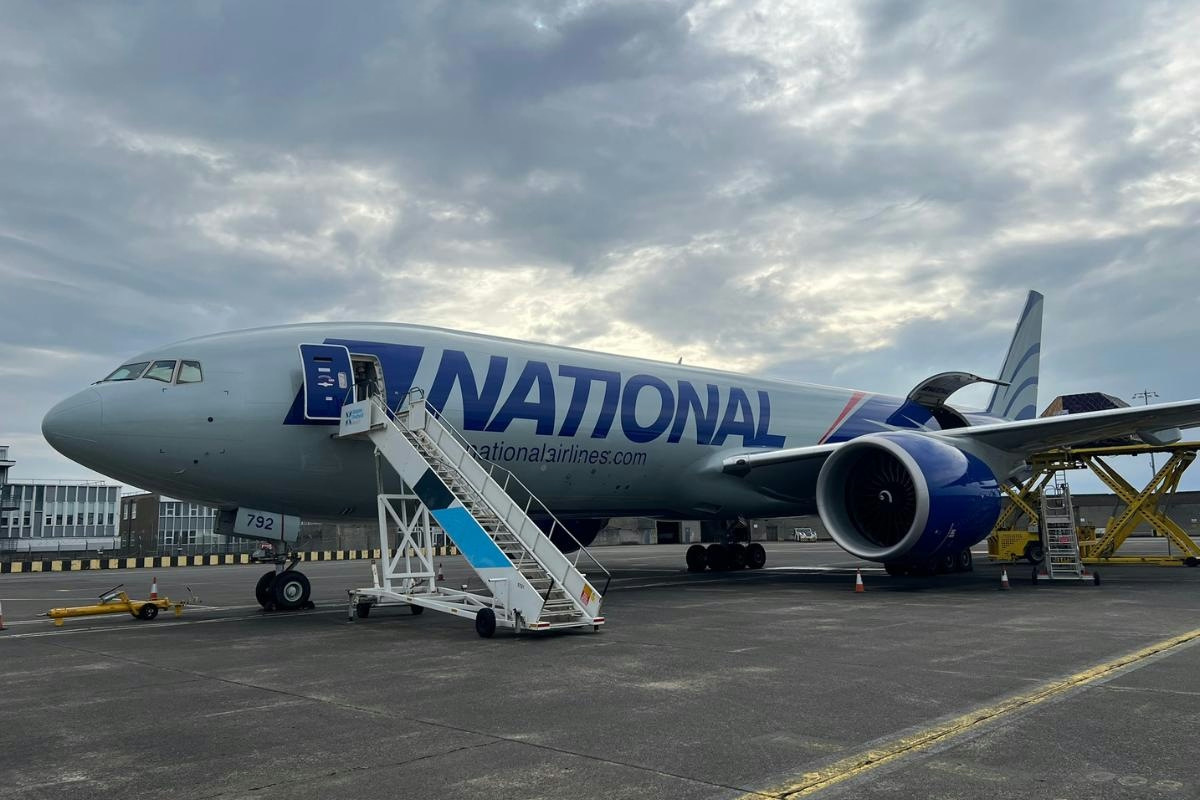
National Airlines Completes Nearly 10,000-Nautical-Mile Nonstop Engine Part Delivery A Record-Breaking Flight to Resolve Aircraft Downtime National Airlines has set a new benchmark in cargo aviation by completing a nonstop Boeing 777 freighter flight covering 9,849 nautical miles to deliver a critical engine component. The Florida-based carrier reported that the journey lasted 19 hours and 23 minutes, marking what it claims to be the longest nonstop commercial flight ever operated by a Boeing 777 freighter. This mission underscores the urgency and precision required when an aircraft is grounded due to missing parts, where every hour of delay translates into significant operational and financial consequences. Precision and Planning Behind the Mission The delivery involved transporting a single, urgently needed engine part intended to return a grounded aircraft to service without delay. National Airlines chose a direct, nonstop route to avoid the risks and time lost through multiple stops. The flight was conducted on behalf of Golden Aviation using one of National’s newest Boeing 777Fs, registered N792CA, an aircraft designed for long-range operations but pushed to the limits of its commercial capabilities on this mission. The flight connected Prestwick Airport in Scotland with Melbourne, Australia—two locations nearly on opposite sides of the globe. While local sources suggest the engine part originated from an aerospace supplier near Prestwick, National Airlines has not officially confirmed this. To achieve the unprecedented nonstop distance, the airline carefully managed the aircraft’s payload and fuel load, ensuring it remained light enough to avoid refueling stops. Such ultra-long-haul cargo flights require meticulous planning around factors including wind conditions, weight restrictions, and contingency airports. Operational Stakes and Industry Implications For airlines and leasing companies, a grounded aircraft represents a substantial financial burden, with lost revenue and potential passenger compensation mounting with each day of inactivity. This urgency often justifies the expense of dedicated charters, even those involving nearly a full day of continuous flight. National Airlines specializes in Aircraft on Ground (AOG) services, where rapid delivery of critical parts can save days compared to scheduled cargo routes that involve transfers and layovers. The Boeing 777F typically has a maximum range of approximately 4,970 nautical miles at full payload. By carrying only a single engine part, National Airlines was able to significantly reduce weight and maximize fuel capacity, effectively nearly doubling the aircraft’s standard range. This strategic adjustment was key to enabling the record-setting nonstop journey. National Airlines’ achievement highlights the logistical complexities, regulatory compliance, and operational risks inherent in such demanding missions. The successful delivery not only demonstrates the airline’s expertise in managing ultra-long-haul flights but also positions it as a leader in high-stakes cargo charters. The industry has taken note, and this accomplishment is likely to attract further urgent and specialized cargo contracts. Competitors may respond by expanding their ultra-long-range aircraft fleets or refining their logistics networks to match National Airlines’ efficiency in executing demanding operations. As the cargo aviation sector evolves, the standards for rapid, global delivery continue to rise.
How A Bankrupt Carrier Handed Delta Air Lines Its Most Valuable Widebody

How A Bankrupt Carrier Handed Delta Air Lines Its Most Valuable Widebody

How a Bankrupt Carrier Handed Delta Air Lines Its Most Valuable Widebody Airline mergers often present significant operational, logistical, and strategic challenges, particularly when it comes to fleet integration. Aircraft represent one of the largest investments for any carrier, and mergers frequently result in a heterogeneous mix of plane types, each with unique operating, maintenance, and ownership costs. This complexity can lead to inefficiencies and redundancies, prompting some airlines to retire or divest certain models acquired through mergers. For example, Alaska Airlines phased out Virgin America’s Airbus A320s, while Southwest Airlines retired AirTran’s Boeing 717s. Delta Air Lines encountered a similar situation following its 2008 merger with Northwest Airlines. At the time, Northwest operated a varied fleet that included the Airbus A320 family, A330, Boeing 747, 757, and McDonnell Douglas DC-9, whereas Delta’s fleet comprised the Boeing 737, 757, 767, 777, MD-80, and MD-90. Over time, Delta retired the DC-9s and 747s, but retained the A320s due to their operational similarity with the 737. However, it was the Airbus A330s inherited from Northwest that emerged as Delta’s most valuable widebody aircraft. The A330s Delta Inherited Northwest Airlines was the first U.S. carrier to place orders for the Airbus A330, initially in the late 1980s. Although early plans were abandoned amid financial difficulties, Northwest renewed its commitment to the A330 in 2000, ultimately taking delivery of 21 A330-300s and 11 A330-200s between 2003 and 2007. Many of these aircraft were relatively new when Delta acquired them through the merger. These A330s were powered by Pratt & Whitney PW4000 engines, which aligned with the engines used on Delta’s existing 767-300ER fleet, thereby simplifying maintenance and operational logistics. With a maximum takeoff weight of 233 tons, the A330s were well-suited for transatlantic routes, and the smaller A330-200s were capable of serving select transpacific flights. Following the merger, Delta gradually transitioned the A330s from transpacific to transatlantic service, operating them alongside its 767s. Initially concentrated at Northwest’s Detroit and Minneapolis hubs, the A330s were later deployed at Delta’s Atlanta and New York bases. Over time, seating configurations were adjusted to better align with market demand and enhance passenger experience. Strategic Impact and Market Response The Airbus A330’s efficiency and range have established it as a cornerstone of Delta’s transatlantic operations, outperforming the Boeing 767 in both popularity and economic performance. This strategic advantage has attracted attention within the industry, bolstering investor confidence and contributing positively to Delta’s stock performance. Competitors such as American Airlines and United Airlines have taken note of Delta’s success with the A330 fleet, prompting internal reviews of their own fleet strategies. Some have responded with cost-cutting measures, fleet modernization programs, or by exploring merger opportunities to maintain competitive parity. Notably, United Airlines had previously considered a merger with Delta, and Delta’s strengthened position through its A330 fleet could potentially revive such discussions. While integrating the assets of a bankrupt carrier presents challenges—particularly in maintaining service quality and operational consistency—Delta’s experience with the A330 demonstrates how a carefully managed merger can transform a potential liability into a strategic asset, reshaping the competitive dynamics of the U.S. airline industry.
APOC Aviation Appoints Darren Naughton as Head of Engine Business

APOC Aviation Appoints Darren Naughton as Head of Engine Business

APOC Aviation Appoints Darren Naughton as Head of Engine Business APOC Aviation has announced the appointment of Darren Naughton as vice president of engines, a strategic move aimed at strengthening its leadership team amid plans to expand its global engine leasing and trading operations. With 13 years of experience in aircraft and engine leasing, Naughton has held various commercial, pricing, and trading roles at multiple lessors. In his new capacity, he will oversee the company’s engines division, managing leasing, exchanges, teardowns, and component sales, while fostering collaboration with airlines, lessors, maintenance, repair and overhaul (MRO) providers, and original equipment manufacturers (OEMs). Expanding Engine Capabilities Amid Market Challenges Naughton’s appointment comes at a time when demand for green-time engine leasing is increasing, driven by rising MRO costs, persistent labor shortages, and ongoing supply chain disruptions. APOC aims to leverage these market dynamics by broadening its engine capabilities alongside its existing airframe, landing gear, and component businesses. The company’s engine strategy will maintain a broad focus, emphasizing disciplined asset management, strong customer partnerships, and the pursuit of opportunities across diverse engine types and geographic markets. Despite these ambitions, the aviation engine leasing sector remains highly competitive. APOC faces the challenge of managing escalating MRO expenses and workforce constraints while striving to meet evolving customer needs. Industry observers will be closely monitoring how effectively APOC utilizes Naughton’s expertise to enhance its flexible engine solutions. Meanwhile, competitors are expected to intensify efforts to attract top talent and strengthen their own engine leasing portfolios to sustain their market positions. APOC’s leadership expresses confidence that Naughton’s extensive experience and industry insight will be pivotal in driving growth and innovation within the engine business, positioning the company to navigate current challenges and capitalize on future opportunities in the global aviation market.
GetJet Unit Expands Maintenance Operations in Vilnius

GetJet Unit Expands Maintenance Operations in Vilnius

GetJet Unit Expands Maintenance Operations in Vilnius Strategic Expansion at Vilnius International Airport GetJet Group’s subsidiary, Airhub Aviation (Airhub), has secured a pivotal site at Vilnius International Airport, marking a significant advancement in the company’s aircraft maintenance, repair, and overhaul (MRO) capabilities. Through a land lease auction conducted by Lithuanian Airports, Airhub obtained the rights to lease an 11,200 square meter plot for a duration of 40 years. The company intends to invest approximately €25 million to develop a new MRO hangar on this site, a project anticipated to create over 100 jobs once operational. This development forms a core part of GetJet Group’s broader strategy to enhance its in-house MRO infrastructure. By building its own technical facilities, the group aims to increase operational flexibility, reduce dependence on external maintenance providers, and expand its service portfolio for airline clients. The new hangar will be situated adjacent to a 4,700 square meter plot previously leased by GetJet Group, where an additional €10 million investment is planned between 2025 and 2029 to construct another maintenance facility. Challenges and Market Dynamics Despite the promising outlook, the expansion presents several challenges. GetJet must navigate complex regulatory environments and adapt to varying infrastructure standards across different jurisdictions as it scales its operations in Vilnius. Furthermore, the company is entering a competitive MRO market where increased activity could elevate operational costs, necessitating strategic adjustments to sustain efficiency and profitability. The move is likely to intensify competition within the sector, with established players such as Lufthansa Technik continuing to invest heavily in technical aircraft services. The MRO industry remains subject to volatility, and GetJet’s pursuit of technical independence is viewed as a proactive approach to mitigate risks associated with market fluctuations and reliance on external service providers. Commitment to Growth and Technical Self-Sufficiency Despite these challenges, GetJet Group’s substantial investment highlights its commitment to long-term growth and technical autonomy. The new facilities are expected to strengthen the company’s position within the European MRO sector, supporting both its own fleet and offering expanded maintenance services to airline customers across the region. This strategic expansion underscores GetJet’s ambition to become a more resilient and competitive player in the evolving aviation maintenance landscape.
How Pilots Use Autoland to Land Widebody Aircraft in Near-Zero Visibility

How Pilots Use Autoland to Land Widebody Aircraft in Near-Zero Visibility

How Pilots Use Autoland to Land Widebody Aircraft in Near-Zero Visibility Dense fog presents one of the most formidable challenges in aviation. While passengers may perceive only a gray wall outside their windows during an approach, pilots are executing one of commercial aviation’s most advanced procedures: the autoland. Even when visibility is so limited that the runway becomes visible only after touchdown, widebody aircraft can land safely by relying on a sophisticated integration of automation, radio signals, and onboard sensors rather than human eyesight. Autoland is often misunderstood as a fully autonomous system that lands the aircraft without pilot involvement. In reality, it is a carefully coordinated process involving certified aircraft, specially equipped airports, advanced avionics, and highly trained flight crews. During a Category III instrument approach, multiple autopilot computers, radio navigation signals, radio altimeters, and redundant flight control systems work in unison to guide a large airliner from thousands of feet above the ground to a precise touchdown on the runway centerline. Throughout this process, pilots remain fully engaged, continuously monitoring the aircraft’s performance, verifying flight modes, and prepared to intervene immediately should any parameter deviate from expectations. This seamless integration of technology and human oversight stands as one of modern aviation’s most impressive achievements, enabling safe operations in weather conditions that would otherwise ground flights and disrupt airport activity. The Instrument Landing System: Precision Guidance in Low Visibility The foundation of every autoland procedure is the Instrument Landing System (ILS), the global standard for precision approaches in low visibility conditions. Prior to the approach, flight crews tune and verify the correct ILS frequency for the assigned runway. Despite advances in satellite navigation, the ILS remains indispensable because it provides highly accurate lateral and vertical guidance directly to the runway. The ILS consists of two primary radio signals. The localizer projects a beam along the runway centerline, allowing the aircraft’s navigation systems to determine whether it is left or right of the intended course. The autopilot continuously makes subtle corrections to maintain alignment with this beam. The glideslope provides vertical guidance, establishing a descent path—typically around three degrees—ensuring the aircraft remains centered on the electronic glide path until reaching the runway threshold. During autoland, pilots engage multiple autopilot channels before intercepting the ILS signals. As the aircraft captures both the localizer and glideslope, cockpit displays confirm that the automation is correctly tracking these signals. Pilots vigilantly monitor these indications, ensuring that every system functions as intended throughout the approach and landing. Certification, Market Dynamics, and Industry Competition The implementation of autoland capabilities on widebody aircraft in near-zero visibility conditions involves significant challenges. Certification processes are rigorous; for instance, Boeing’s 737-10 has encountered difficulties in demonstrating system reliability to regulatory authorities. As airlines increasingly prioritize safer landing solutions, demand for advanced avionics has surged. This trend has driven avionics manufacturers to innovate rapidly. Garmin, for example, has already installed its Emergency Autoland system on over 2,000 aircraft. Competitors are responding by enhancing their own autoland technologies, striving to match or exceed the capabilities of market leaders. Ultimately, autoland represents a convergence of engineering excellence, regulatory oversight, and operational expertise. It enables airlines to uphold schedules and maintain safety standards even under the most adverse weather conditions, reflecting the aviation industry’s ongoing commitment to continuous improvement and passenger safety.
NASCII Initiative Aims to Strengthen U.S. Aerospace Supply Chain

NASCII Initiative Aims to Strengthen U.S. Aerospace Supply Chain

NASCII Initiative Aims to Strengthen U.S. Aerospace Supply Chain Amid Rising Global Pressures The National Aerospace Supply Chain Integrity Initiative (NASCII) has been launched as an independent effort to enhance the resilience, traceability, and security of the U.S. aerospace supply chain. This move comes in response to escalating challenges faced by the commercial aviation and defense sectors, including supplier risk, counterfeit components, documentation integrity, and ongoing supply chain disruptions. NASCII seeks to address these critical vulnerabilities at a time when global aerospace supply chains are becoming increasingly complex and production demands continue to grow. Addressing Industry Vulnerabilities Through Collaboration and Innovation Founded by Yane Brunacio, a seasoned aerospace supply chain executive with prior experience at Embraer, NASCII underscores the urgent need for coordinated action within the industry. Brunacio highlights the “acute” vulnerabilities revealed by recent shortages and the heightened risk environment confronting aerospace manufacturers and suppliers. The initiative’s core strategy revolves around fostering collaboration among industry stakeholders to develop practical frameworks that enhance supply chain governance and reliability. NASCII plans to leverage research and artificial intelligence-assisted methodologies to support manufacturers, suppliers, and maintenance, repair, and operations (MRO) organizations. These tools aim to improve supplier oversight, traceability, regulatory compliance, and predictive risk management. In addition to these efforts, NASCII serves as a platform for disseminating research findings, technical articles, and implementation frameworks, thereby promoting knowledge exchange and continuous improvement across the aerospace ecosystem. Focus on Safety-Critical Components and Governance Integration The initiative’s inaugural white paper, titled “Strengthening Integrity, Traceability, and Resilience for Safety-Critical Forged Aerospace Components,” addresses persistent shortages of essential forged parts, constrained qualified manufacturing capacity, and extended lead times. Rather than advocating for a purely software-based solution, the paper recommends an integrated governance approach that unites procurement, quality assurance, engineering, maintenance, and regulatory functions into a cohesive model. This holistic framework is designed to enhance the integrity and resilience of safety-critical components vital to aerospace operations. Navigating Geopolitical and Competitive Challenges Despite its ambitious goals, NASCII faces considerable obstacles in implementing its vision. The U.S. aerospace supply chain remains susceptible to disruptions stemming from geopolitical tensions and intensifying competition from foreign aerospace sectors. These pressures have led to increased scrutiny of domestic supply chains and may prompt shifts in procurement policies as both government agencies and private companies seek to mitigate risk. Moreover, foreign aerospace firms are expected to respond by reinforcing their own supply chains and market positions. Some may engage in lobbying efforts aimed at influencing U.S. policy decisions, adding further complexity to the operating environment for domestic stakeholders. In this challenging context, NASCII’s emphasis on collaboration and research-driven, practical solutions seeks to position the U.S. aerospace supply chain for enhanced security and resilience amid an evolving global landscape.
line