
حوّل رؤى الذكاء الاصطناعي إلى أفعال منسّقة

الرائج الآن
Categories
Ufa Designers Develop Afterburner Increasing Turbofan Engine Thrust by 30%
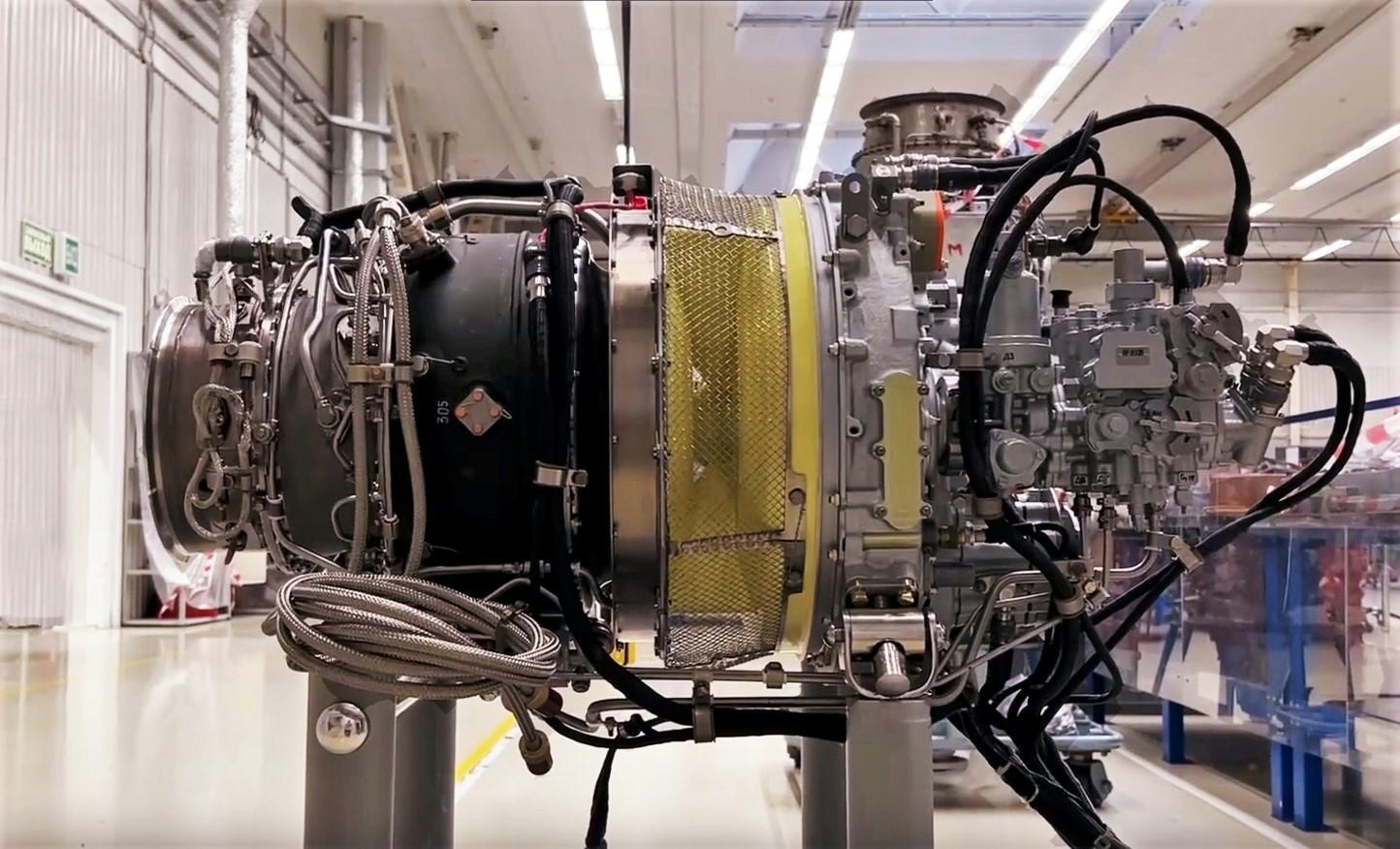
Ufa Designers Develop Afterburner Increasing Turbofan Engine Thrust by 30%
Innovative Detonation Thrust Amplifier Enhances Engine Performance
Engineers at the Ufa-based ODK-UMPO plant have introduced a groundbreaking detonation thrust amplifier designed to enhance the performance of existing turbofan engines by up to 30%. This novel system, intended for integration with current turbofan (TRDD) platforms, provides a temporary thrust increase ranging from 15 to 30 percent when activated. The technology holds the potential to significantly impact both civil and military aviation propulsion by offering a powerful yet adaptable boost to engine output.
The amplifier functions as an annular detonation chamber composed of a diffuser, a cylindrical section, and an outlet confuser. Fuel is supplied through an annular manifold equipped with nozzles angled at 70 degrees relative to the airflow. Upon activation, an initiator generates a continuous spin detonation wave, accelerating the airflow within the amplifier to speeds between Mach 1.0 and 1.3. This process sharply elevates the temperature and pressure of the gases, producing additional thrust that supplements the main engine’s output. Designed to be installed on the outer contour of a two-spool turbofan engine, the device is intended for use only when a short-term thrust increase is necessary, potentially serving as an alternative to conventional afterburner systems.
Strategic Context and Industry Implications
The development of this detonation thrust amplifier comes amid growing interest in propulsion innovation, as both airlines and defense contractors seek more efficient and powerful engine solutions. The recent selection of the GEK800 turbofan by the U.S. Air Force for the JASSM cruise missile highlights the strategic importance of advanced engine technologies. Ufa’s new amplifier may attract considerable attention from commercial and military sectors alike, offering performance enhancements without the need to develop entirely new engine platforms.
Despite its promise, the path to widespread adoption presents several challenges. The afterburner must comply with rigorous regulatory standards and demonstrate seamless integration with existing aircraft systems. Furthermore, ODK-UMPO faces intense competition from established global manufacturers such as Safran Aircraft Engines, GE Aerospace, Pratt & Whitney, Rolls-Royce, MTU Aero Engines, IHI Corporation, Kawasaki Heavy Industries, and GKN Aerospace. The introduction of this technology could prompt these industry leaders to accelerate their own research and development efforts, potentially igniting a new wave of innovation within the turbofan engine market.
As the aviation sector continues to prioritize efficiency and enhanced performance, the Ufa-designed detonation thrust amplifier represents a notable advancement. Its ultimate success will depend on regulatory approval, market acceptance, and its ability to outperform or effectively complement existing propulsion technologies in a highly competitive environment.

Etihad Airways Suspends Airbus A380 Flights on Key Route

Aditya Birla Group Seeks Approval for Aircraft Leasing in GIFT City

Qatar Airways Highlights Innovation and Connectivity at Arabian Travel Market 2026

Hong Kong's Five-Year Plan Includes Andrew Fan's Aircraft Parts Processing Hub Proposal

ACIA Aero Leasing Delivers ATR72-600 to Air Nostrum

RTX Appoints Jill Albertelli as Head of Pratt & Whitney

TAT Technologies Joins Beyond Aero Hydrogen Aircraft Program

AURAK Study Highlights Barriers to Air Taxi Adoption in Emerging Economies

Xiamen Air Selects Altitude for 787 Maintenance at Heathrow

Etihad and Swissport Extend Global Partnership
