
حوّل رؤى الذكاء الاصطناعي إلى أفعال منسّقة

الرائج الآن
Categories
UK Military Explores Electric Flying Taxi with 2029 Launch Target
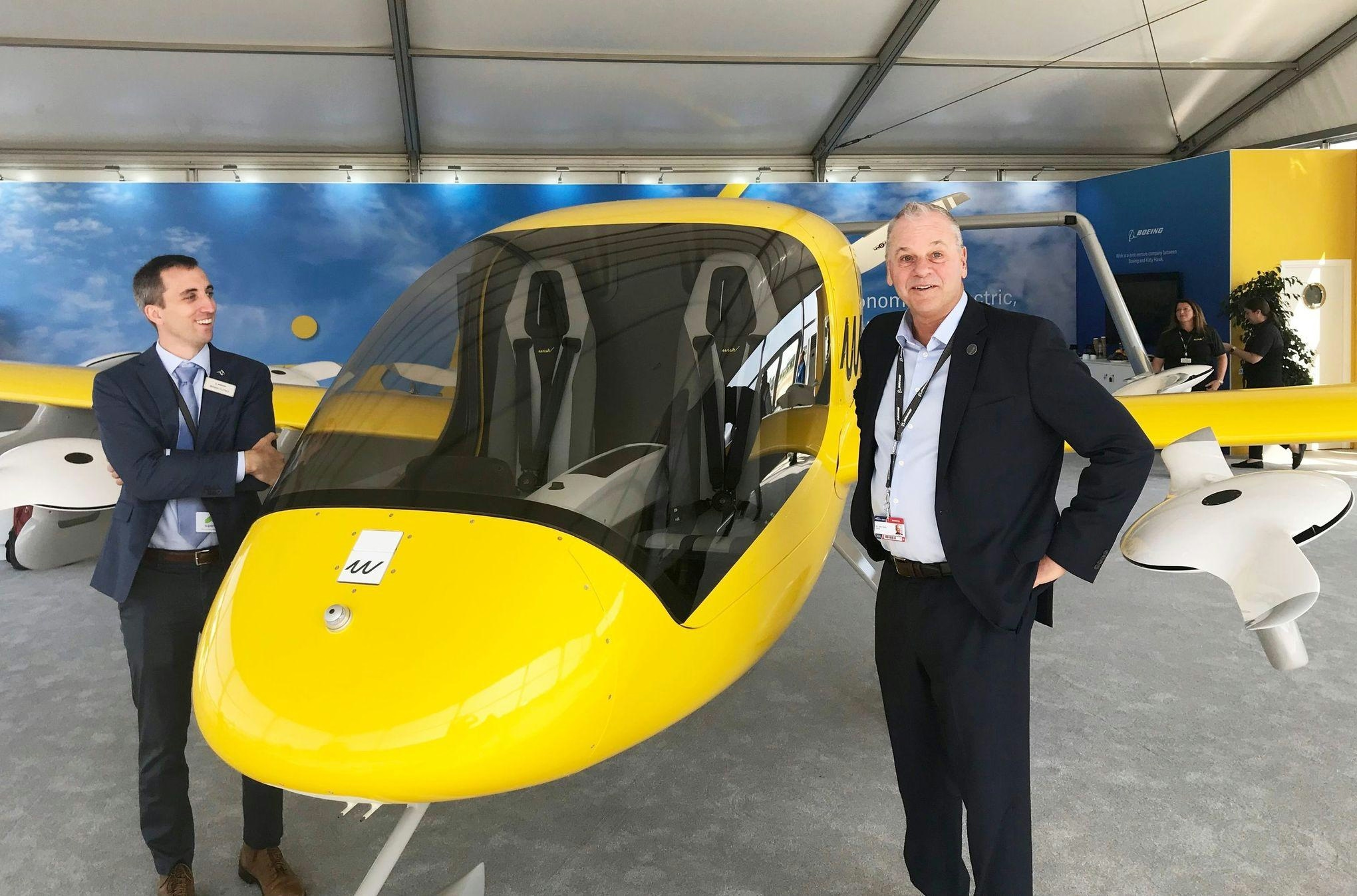
UK Military Explores Electric Flying Taxi with 2029 Launch Target
Vertical Aerospace Advances eVTOL Technology Amid Government Support
British aerospace startup Vertical Aerospace has disclosed that the UK government is considering acquiring a military variant of its electric flying taxi, as the company intensifies efforts to obtain regulatory approval for commercial passenger operations. The announcement coincided with the unveiling of Vertical’s prototype at the Farnborough International Airshow, located west of London, where the company also secured an additional £10 million government grant. This latest funding brings the total UK state investment in Vertical Aerospace to £48 million.
Vertical’s aircraft belongs to a new generation of electric vertical takeoff and landing (eVTOL) vehicles designed to revolutionize urban transportation. These aircraft offer quieter landings compared to traditional helicopters and produce zero direct emissions, making them appealing for both civilian and military use. On Monday, Vertical’s Valo model successfully completed its first public demonstration, transitioning from winged flight to vertical hover and executing a smooth landing on the Farnborough runway.
Challenges and Competition in the eVTOL Sector
Despite the promising technology, the eVTOL industry faces considerable challenges. Numerous companies have struggled to bring passenger flights to market, with several collapsing following the post-pandemic investment downturn. Vertical Aerospace itself narrowly avoided insolvency in 2024, a crisis that precipitated the departure of founder Stephen Fitzpatrick and the company’s acquisition by US distressed debt investor Jason Mudrick. Currently, Vertical is navigating the complex certification process with the UK Civil Aviation Authority, targeting a commercial launch by 2029, a timeline that has been pushed back from earlier projections.
The competitive landscape is intense. US-based Joby Aviation, which recently conducted public test flights between New York’s JFK airport and Manhattan, stands as a prominent rival. Other key players include Eve, supported by Brazilian jet manufacturer Embraer; Archer Aviation, developing its Thunder hybrid eVTOL in partnership with defense firm Anduril; and several emerging Chinese startups. The industry is also closely monitoring the US Federal Aviation Administration’s pilot program, which involves Joby and Electra, as it gathers operational data to shape future regulatory frameworks.
Military Interest and Technological Innovations
The UK military’s interest in eVTOL technology reflects a broader global trend among armed forces seeking innovative mobility solutions. Vertical Aerospace is developing a hybrid version of its aircraft that combines electric motors with a gas turbine engine to extend range and enable faster refueling. According to Vertical CEO Stuart Simpson, this hybrid system “leverages the commercial airframe, but with a different powertrain, which the military are very interested in.” The hybrid configuration could facilitate silent takeoffs and landings while offering a cruising range of up to 1,000 miles.
Nonetheless, safety and regulatory concerns persist. The sector has come under scrutiny following a lawsuit against Boeing-owned Wisk Aero, which alleges that software testing was curtailed to meet stringent deadlines. Furthermore, the widespread deployment of eVTOLs will necessitate the development of new infrastructure for takeoff and landing sites beyond existing airports, posing logistical challenges for both civilian and military operators.
As Vertical Aerospace and its competitors advance toward certification, the future of the eVTOL industry hinges on overcoming significant technical, regulatory, and operational obstacles. The UK government’s engagement signals growing momentum, yet the broad adoption of electric flying taxis remains several years away.

Etihad and Swissport Extend Global Partnership

Sepehran Airlines B737 Returns to Mashhad After Tyre and Engine Issues

Etihad Deploys Widebody Fleet to Meet Strong Demand

Korean Air Finalizes $36.2 Billion Deal with Boeing
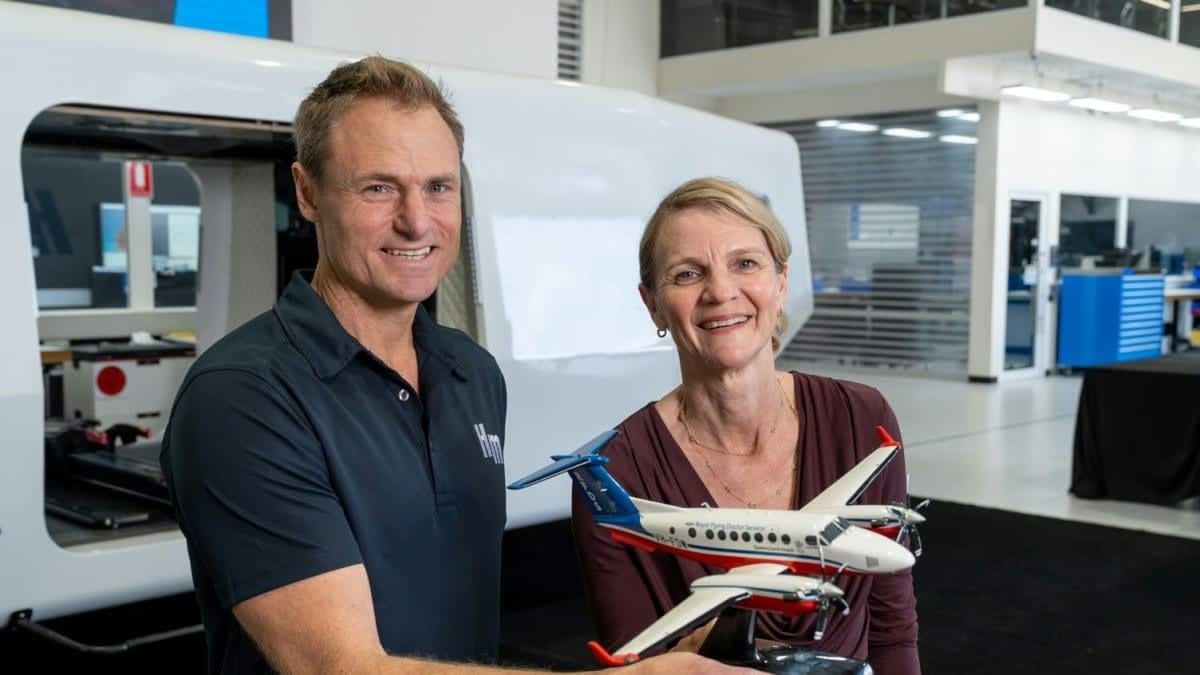
Australia’s RFDS Queensland Section Orders Six King Air 260Cs

Korean Air Finalizes Order for 103 Boeing Jets and Engines
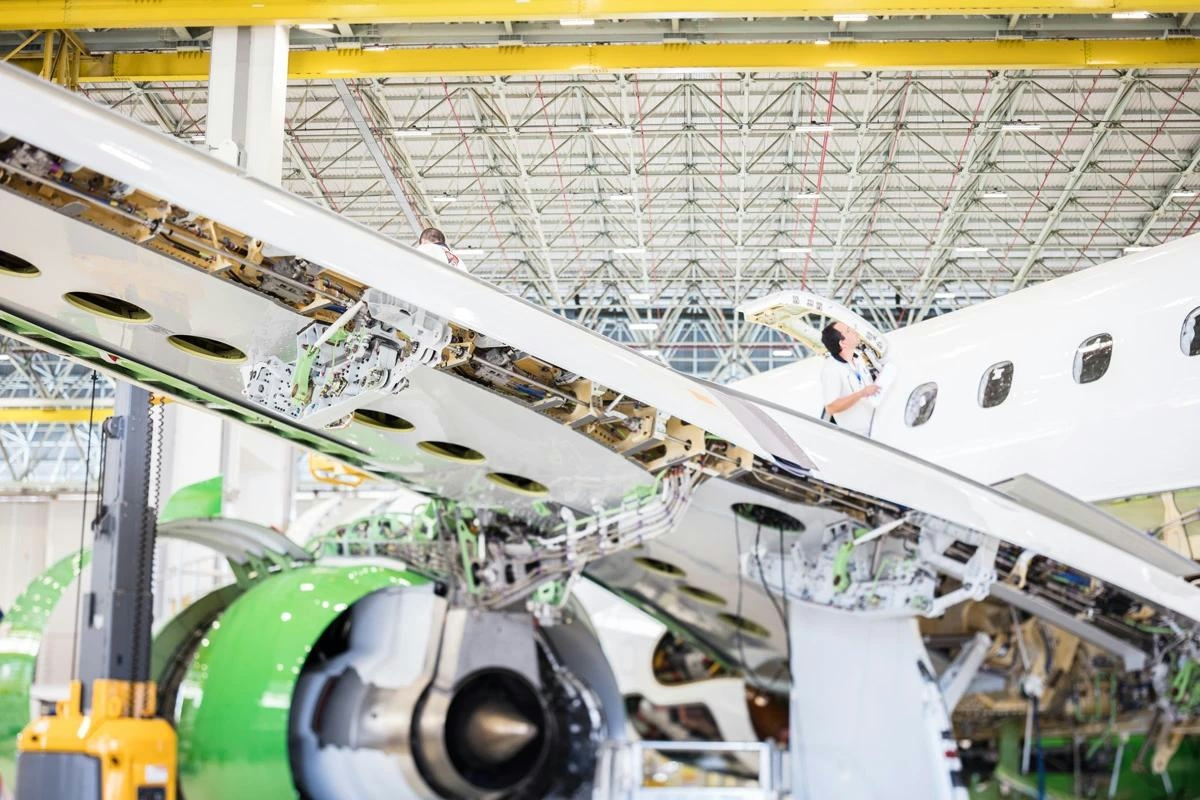
Embraer E195-E2 Features Distinctive Engine Placement Among Regional Jets
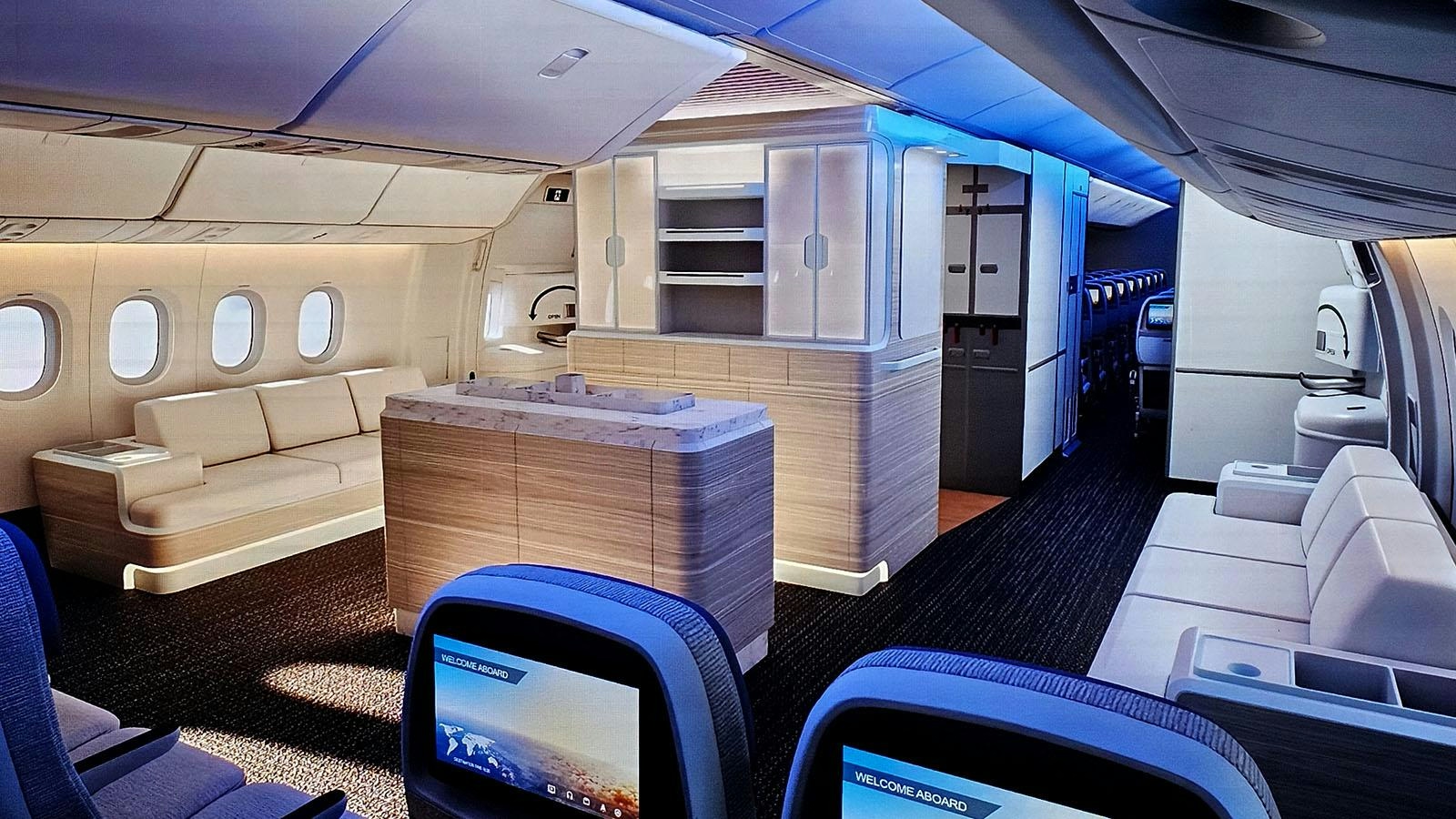
What Passengers Can Expect on Boeing’s New 777X Jet

How Ethiopian Airlines Became Africa’s Leading Carrier Amid Gulf Competition

Joby Aviation Extends Autonomous Flight Capabilities with Cross-Country Tour
