
حوّل رؤى الذكاء الاصطناعي إلى أفعال منسّقة

الرائج الآن
Categories
United Airlines’ Lie-Flat Boeing 757 Dominated Premium Transcontinental Routes and Its Upcoming Replacement
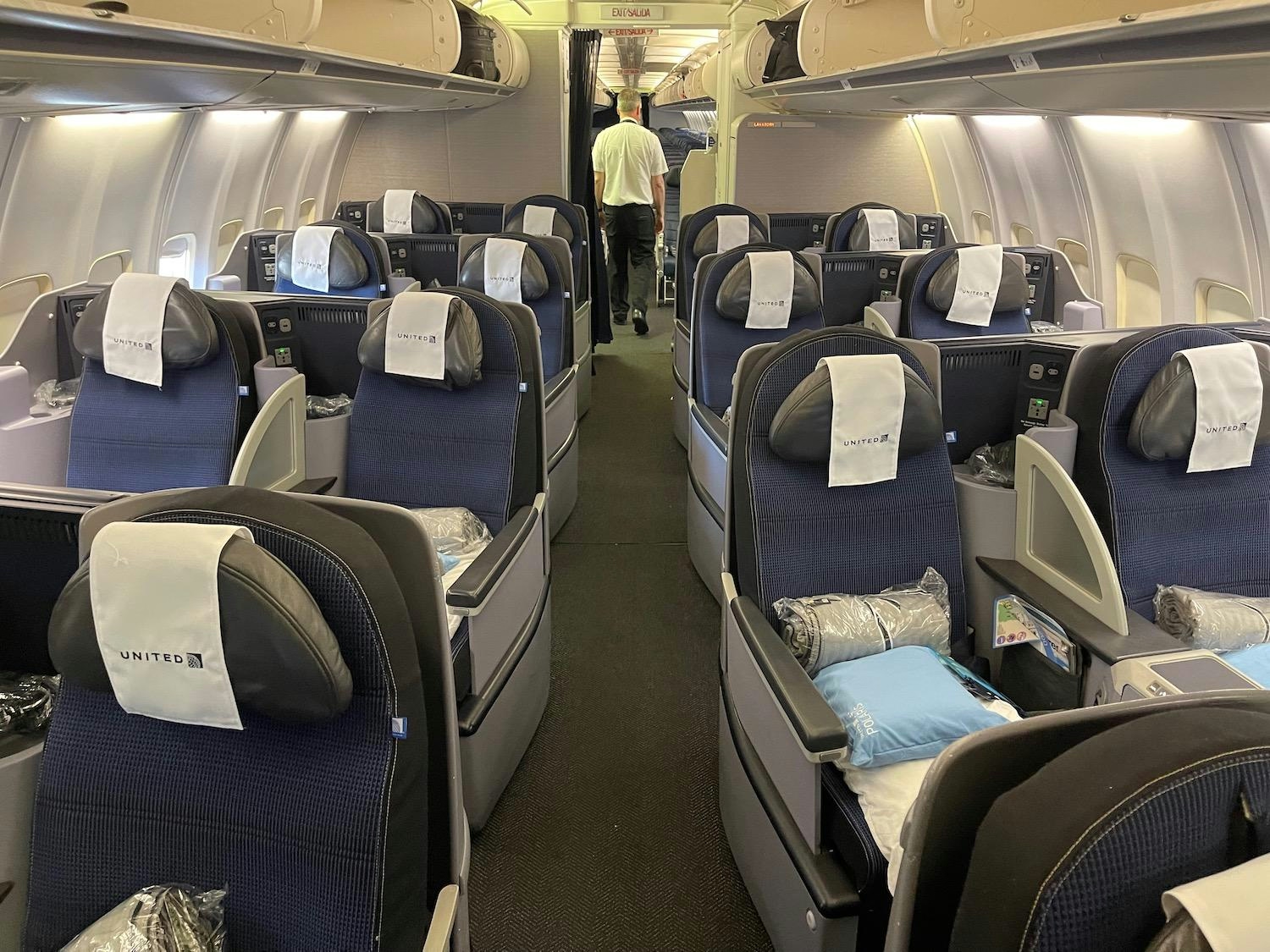
United Airlines’ Lie-Flat Boeing 757: A Premium Transcontinental Icon Nears Retirement
For nearly two decades, United Airlines’ Boeing 757-200 fleet has occupied a distinctive position in American aviation. Originally engineered as a versatile narrowbody aircraft for medium and long-haul routes, United transformed a significant portion of its 757s into a specialized platform for premium transcontinental service. Equipped with lie-flat business class seats, these aircraft delivered a level of comfort typically associated with widebody jets, while preserving the efficiency and operational flexibility inherent to a single-aisle design.
United’s premium-configured 757s became emblematic of its most prestigious domestic routes, particularly those connecting Newark Liberty International Airport (EWR) with Los Angeles (LAX) and San Francisco (SFO). These flights catered primarily to business travelers who valued overnight comfort, direct schedules, and amenities comparable to international business class. Beyond domestic service, the same aircraft frequently operated transatlantic flights to thinner European markets where deploying larger jets would be economically challenging. This adaptability enabled United to optimize aircraft utilization while maintaining a consistent premium product across diverse markets.
Origins and Configuration of the Premium 757 Fleet
The inception of United’s premium 757 operation dates back to the early 2000s, when airlines began to recognize the distinct demands of the New York–California corridor. This route attracted a high concentration of corporate executives, financial professionals, and travelers from the entertainment and technology sectors—passengers with expectations for international-grade amenities. In response, United configured approximately 40 Boeing 757-200s with fully lie-flat business class seating, international-style dining, dedicated cabin crews, expanded in-flight entertainment, and enhanced airport services. Despite the aircraft’s relatively narrow fuselage, this configuration consistently garnered strong praise from business travelers.
The premium cabin layout on these 757s featured 16 Polaris lie-flat business seats, complemented by 42 Economy Plus seats and 118 standard economy seats. This arrangement balanced comfort and capacity, enabling United to serve both premium and economy passengers effectively on high-demand transcontinental routes.
Transition to a New Generation of Aircraft
The era of United’s lie-flat 757s is now approaching its conclusion. Most of these aircraft are between 25 and 28 years old, ranking among the oldest in United’s frontline fleet. Rather than extending their operational lifespan, United is transitioning to a new generation of Airbus A321 family aircraft, including the long-range A321XLR. These newer jets promise enhanced fuel efficiency, improved passenger comfort, and significantly upgraded premium cabins. Notably, the A321XLRs will introduce an enhanced Economy Plus section featuring additional personal space, a built-in shared table, and the elimination of the middle seat to increase passenger comfort.
This fleet renewal coincides with evolving competitive dynamics within the industry. Delta Air Lines, for instance, has introduced “basic business” fares that exclude lounge access and seat selection, reflecting a broader shift in premium product offerings. Similarly, other carriers are adjusting their fleets in response to economic pressures; Icelandair plans to retire its Boeing 757s earlier than anticipated due to rising fuel costs.
As United phases out its iconic 757s, the airline closes a significant chapter in narrowbody aviation history while ushering in a new era of premium transcontinental travel. This transition highlights both the sustained demand for high-end domestic service and the relentless pace of innovation shaping the airline industry.

Hong Kong's Five-Year Plan Includes Andrew Fan's Aircraft Parts Processing Hub Proposal

ACIA Aero Leasing Delivers ATR72-600 to Air Nostrum

RTX Appoints Jill Albertelli as Head of Pratt & Whitney

TAT Technologies Joins Beyond Aero Hydrogen Aircraft Program

AURAK Study Highlights Barriers to Air Taxi Adoption in Emerging Economies

Xiamen Air Selects Altitude for 787 Maintenance at Heathrow

Etihad and Swissport Extend Global Partnership

Sepehran Airlines B737 Returns to Mashhad After Tyre and Engine Issues

Etihad Deploys Widebody Fleet to Meet Strong Demand

Korean Air Finalizes $36.2 Billion Deal with Boeing
