صورة

أيروجيني — مساعدك الذكي للطيران.

اسأل عن أي شيء. قم بتحليل كل شيء. تصرف فورًا.

الرائج الآن

Categories

United Airlines to Add 20 Boeing 787 Dreamliners in 2026, Marking Largest Widebody Expansion Since 1988
January 21, 2026By ePlane AI
United Airlines to Add 20 Boeing 787 Dreamliners in 2026, Marking Largest Widebody Expansion Since 1988
0
0
United Airlines
Boeing 787 Dreamliner
Widebody Fleet Expansion

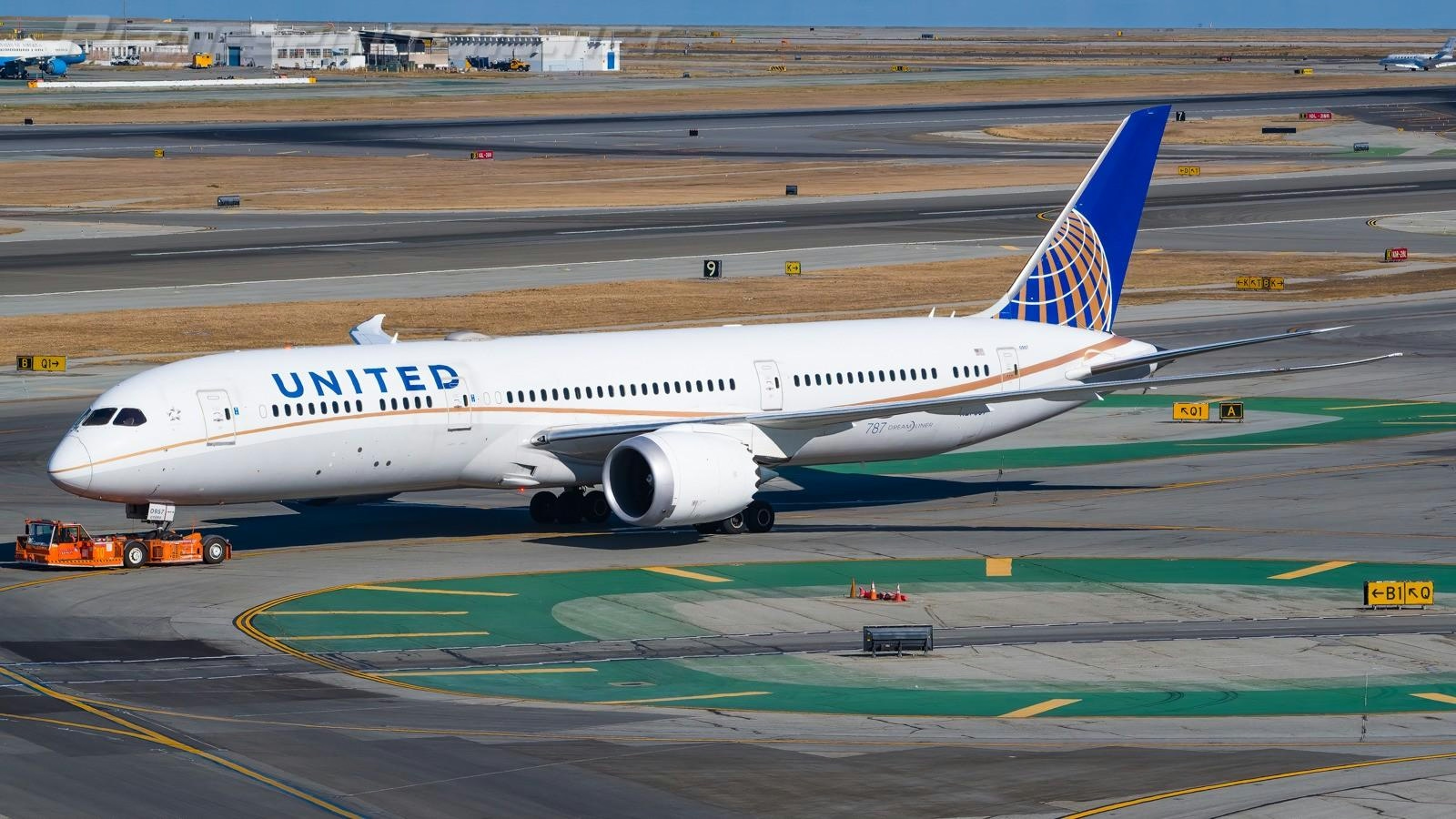
United Airlines to Expand Widebody Fleet with 20 Boeing 787 Dreamliners in 2026

United Airlines is preparing for its most substantial widebody fleet expansion in nearly four decades by adding 20 Boeing 787 Dreamliners in 2026. This delivery represents the largest widebody intake by a U.S. carrier since 1988 and will increase United’s Dreamliner fleet to over 100 aircraft. The expansion aims to support the airline’s growing international network, enhance premium seating capacity, and accelerate the phase-out of older, less fuel-efficient widebody jets.

Fleet Composition and Strategic Focus

All 20 aircraft scheduled for delivery next year will be the Boeing 787-9 variant. United, an early adopter of the Dreamliner family, currently operates all three versions—the 787-8, 787-9, and 787-10—making it one of the largest 787 operators globally. As of mid-January, the active Dreamliner fleet comprises 81 aircraft, including 12 787-8s, 48 787-9s, and 21 787-10s. The airline holds firm orders for an additional 140 Dreamliners, split between 84 787-9s and 56 787-10s. Recently, United converted 56 of its 787-9 orders to the larger 787-10, reflecting a strategic preference for higher-capacity widebodies, although all 2026 deliveries will remain 787-9s.

The new Dreamliners will be outfitted with United’s updated Elevate interior, featuring 64 Polaris business class seats, 35 Premium Plus seats, and 123 economy seats. This configuration offers the highest premium seat count of any U.S.-registered widebody aircraft. United plans to deploy these aircraft on both international and select domestic routes, capitalizing on the 787’s range and fuel efficiency, particularly for ultra-long-haul flights exceeding 15 hours.

Competitive Landscape and Operational Challenges

United’s fleet expansion occurs amid intensifying competition in the premium long-haul market. Delta Air Lines recently placed an order for up to 60 Boeing 787 Dreamliners, signaling its intent to expand its share of premium international travelers. Alongside ongoing efforts by American Airlines, this competitive environment is expected to heighten pressure on United as the three carriers vie for the lucrative long-haul segment.

The timing of United’s widebody growth also coincides with Boeing’s efforts to increase 787 production following recent manufacturing challenges. Any delays in Boeing’s delivery schedule could present operational hurdles for United as it seeks to modernize its fleet and extend its global reach.

In addition to widebody expansion, United plans to introduce up to 100 new narrowbody aircraft over the next year, including the Airbus A321neo, Boeing 737 MAX, and the first Airbus A321XLRs. These new jets will replace aging Boeing 757s, Airbus A319s and A320ceos, and earlier-generation 737s. With a current fleet comprising more than 300 Boeing 737NGs and a similarly aged Airbus narrowbody fleet, this renewal strategy is vital for maintaining operational efficiency and competitiveness.

United’s ambitious fleet expansion underscores its commitment to growing its premium international presence while navigating the competitive and operational challenges facing U.S. carriers in a rapidly evolving global aviation market.

More news
What Is Rolls-Royce's Most Popular Engine?

What Is Rolls-Royce's Most Popular Engine?

What Is Rolls-Royce's Most Popular Engine? In the realm of widebody aviation, Rolls-Royce stands as a name synonymous with engineering excellence and innovation. The British manufacturer has played a pivotal role in powering some of the most advanced long-haul aircraft, building a legacy that stretches from the iconic Merlin piston engine of World War II to the groundbreaking RB211 jet engine. Determining Rolls-Royce’s most popular engine, however, depends on the criteria used—whether by total units produced, flight hours accumulated, or current market dominance. Defining Popularity: Production, Performance, and Market Share The Rolls-Royce Merlin engine holds the historical record for production volume, with approximately 150,000 units manufactured during the Second World War. Yet, in the jet age, the Trent family of engines has become the defining hallmark of the company’s success. Among these, the Trent 700 emerges as the most successful civil engine to date. Introduced in 1995 to power the Airbus A330, the Trent 700 has seen over 2,000 units delivered, securing a commanding 60% market share for that aircraft model. Its reputation for exceptional on-wing reliability and its innovative three-spool architecture have established it as a cornerstone of global mid-to-long-haul fleets for nearly thirty years. The Trent 700’s enduring popularity is also attributed to its technical versatility. As the inaugural engine of the Trent family, it has powered not only the original A330 passenger variants but also the Airbus BelugaXL and the A330 MRTT military tanker. This adaptability across civil and military sectors has enabled the Trent 700 to accumulate more than 60 million flight hours, a milestone that few widebody engines have reached. The Emergence of the Trent XWB and Trent 900 While the Trent 700 maintains the largest installed base, the Trent XWB is rapidly establishing itself as the new industry benchmark. Designed specifically for the Airbus A350, the Trent XWB is the fastest-selling large engine in history, with over 1,800 units either in service or on order. Its advanced efficiency and reliability position it as the preferred engine for the next generation of fuel-efficient widebody aircraft. Another significant member of the Trent family is the Trent 900, which powers the Airbus A380. The Trent 900 has been instrumental in reinforcing Rolls-Royce’s modern engine portfolio, further solidifying the Trent series as the company’s most popular and versatile line. The success of these engines reflects not only technical prowess but also Rolls-Royce’s ability to respond effectively to evolving market demands. Market Impact and Industry Outlook Rolls-Royce’s strong performance across both civil aviation and defense sectors has been reflected in its share prices, which have reached record highs. This investor confidence is underpinned by robust results in defense and power systems, highlighting the importance of sustaining production rates and continuing innovation. As competitors intensify their investments in aerospace and defense technologies, Rolls-Royce’s ability to maintain its leadership position remains critical. Conclusion The Trent 700 continues to be Rolls-Royce’s most widely used civil engine, while the Trent XWB and Trent 900 exemplify the company’s ongoing evolution and market leadership. As airlines and defense customers worldwide prioritize efficiency, reliability, and adaptability, the Trent series remains the benchmark for modern aviation propulsion.
Global Aerospace’s Annual Jetstream Report Examines Aviation’s Future in Safety, Training, AI, and Geopolitics

Global Aerospace’s Annual Jetstream Report Examines Aviation’s Future in Safety, Training, AI, and Geopolitics

Global Aerospace’s Annual Jetstream Report Examines Aviation’s Future in Safety, Training, AI, and Geopolitics Morris Plains, NJ, January 29, 2026 — The aviation sector is confronting a critical juncture as it adapts to a post-pandemic surge in passenger demand, rapid technological advancements, and escalating geopolitical uncertainties. Global Aerospace’s latest Jetstream Report provides an in-depth analysis of these intersecting challenges, illustrating how airlines, manufacturers, and insurers are navigating an environment marked by both significant opportunities and complex risks. Bridging Innovation and Operational Realities Since the 1970s, global air traffic has experienced exponential growth, accompanied by the development of increasingly advanced and efficient aircraft. Despite these technological strides, the infrastructure supporting aviation—particularly air traffic management systems—has lagged behind. Congested airspace, aging systems, workforce shortages, and fragmented regulatory frameworks are placing considerable strain on operations worldwide. Although modernization efforts such as performance-based navigation and digital tower initiatives are in progress, their advancement is frequently hindered by funding limitations, governance issues, and challenges related to system interoperability. This disparity has widened the gap between the capabilities of modern aircraft and the capacity of ground infrastructure to support them effectively. Market dynamics further complicate this landscape. Airbus maintains a dominant position in single-aisle aircraft sales, while Boeing continues to face difficulties in reclaiming market share in the narrowbody segment. A recent incident involving a JetBlue A320, which suffered a significant altitude loss attributed to software malfunctions, led to the grounding of affected aircraft and injuries to 22 passengers. This event underscores the critical importance of robust safety systems and vigilant regulatory oversight in an increasingly complex operational environment. Geopolitical Risks and Market Volatility Geopolitical tensions are exerting a growing influence on aviation operations. Armed conflicts and regional instability have compelled airlines to reroute flights, resulting in increased fuel consumption, extended crew duty periods, and heightened operational complexity. Concurrently, persistent delays in aircraft deliveries are constraining fleet flexibility at a time when demand is rebounding strongly. For operators, this translates into managing a fluid and unpredictable risk environment, while insurers must reassess their exposure to war risks, political instability, supply chain disruptions, and business interruptions. These pressures have catalyzed significant activity within the aerospace sector. Mergers and acquisitions are accelerating, with aerospace parts emerging as highly sought-after assets in 2026. Airbus is aiming to increase widebody production rates to leverage favorable market conditions, and the mergers and acquisitions platforms market is projected to experience robust growth, reflecting the sector’s dynamic and evolving nature. Advancements in Training and Safety Standards As aircraft systems and operational contexts become more complex, traditional training paradigms are proving inadequate. The report highlights the increasing adoption of Competency-Based Training and Assessment (CBTA), which prioritizes real-world performance over the accumulation of flight hours. When integrated with an operator’s Safety Management System (SMS), CBTA facilitates the identification of skill gaps, reinforces decision-making capabilities, and enhances resilience in high-workload or non-standard scenarios. Leading organizations are embedding CBTA within their safety cultures, treating training as a proactive risk mitigation strategy rather than a mere regulatory requirement. Outlook The Jetstream Report portrays an industry striving to balance rapid technological innovation with the practical constraints of infrastructure and operational realities. Sustained investment, enhanced international coordination, and a renewed emphasis on safety and adaptability will be vital as aviation continues to evolve. The sector’s capacity to respond with agility and resilience amid shifting market dynamics and emerging risks will be a defining factor in its future trajectory.
Breeze Airways to Add Learjet 45s for Crew and Parts Transport

Breeze Airways to Add Learjet 45s for Crew and Parts Transport

Breeze Airways to Add Learjet 45s for Crew and Parts Transport Strategic Fleet Expansion to Enhance Operational Reliability Breeze Airways is preparing to enhance its operational capabilities by incorporating two Learjet 45 aircraft into its fleet, according to founder David Neeleman in an interview with Aviation Week Network. These jets will be dedicated to transporting parts, engineers, and repositioning flight crews, a strategy Neeleman previously employed at Azul Linhas Aéreas Brasileiras, where he continues to serve as chairman. The Learjet 45s will be stationed at Breeze’s maintenance hub at Charleston International Airport, with service expected to commence by mid-February. The airline has already recruited five of the eight pilots required to operate the jets, with training scheduled to begin on February 2. Details regarding the aircraft serial numbers and registrations have not yet been disclosed. Neeleman highlighted that this initiative aims to improve operational reliability and reduce downtime for Breeze’s expanding fleet. Currently, the airline operates 52 Airbus A220-300s, with 46 more on order and options for an additional 30 units, alongside eight Embraer E190s planned for retirement by 2026. He noted the challenges faced when serving approximately 100 cities without alternative airline service, where mechanical issues or crew shortages previously proved difficult to resolve without spare aircraft. Lessons from Azul and Operational Challenges Ahead At Azul, which operates over 200 aircraft across its mainline and Azul Conecta divisions, two PC-12 turboprops are used to transport parts and crews throughout Brazil. These aircraft, recently transferred between Azul and Azul Conecta’s RBAC 135 operations, also serve air taxi and scheduled services. While it remains unclear if both are deployed simultaneously for these missions, the model has demonstrated effectiveness in supporting operational needs. Integrating the Learjet 45s into Breeze’s operations, however, presents several challenges. The airline must ensure smooth logistical integration with existing processes and address potential supply chain disruptions. Additionally, comprehensive training will be necessary for staff to operate and maintain the new aircraft type. These adjustments come amid an increasingly competitive airline industry facing profitability pressures and intensifying market dynamics, described by analysts as “class wars” expected to escalate by 2026. Market analysts suggest that Breeze’s move may attract heightened scrutiny from competitors and regulators, potentially prompting rival carriers to adopt similar strategies to improve operational efficiency. Concurrently, Breeze is navigating a legal dispute with the Air Line Pilots Association (ALPA), which alleges bad faith negotiations. This lawsuit could complicate the airline’s operational and financial planning as it pursues fleet expansion and modernization. Despite these obstacles, Breeze Airways remains committed to its plan, aiming to leverage the Learjet 45s to reduce delays and enhance service reliability amid its rapid growth in the U.S. aviation market.
Airbus Focuses on Production Stability Amid Delivery Challenges

Airbus Focuses on Production Stability Amid Delivery Challenges

Airbus Focuses on Production Stability Amid Delivery Challenges Production Stability as a Strategic Priority Lars Wagner, the newly appointed CEO of Airbus Commercial Aircraft, has emphasized production stability as the foremost priority for the company amid increasing pressure from airlines and leasing firms to enhance delivery performance. Speaking at the Airline Economics conference in Dublin on January 26—his first public engagement since taking office earlier this year—Wagner acknowledged the complex challenges Airbus faces in sustainably ramping up output. He highlighted that the entire aerospace ecosystem is under strain, necessitating a careful approach before any further increases in production rates can be realized. Airbus concluded 2025 with its strongest delivery figures since the onset of the pandemic, delivering 793 commercial aircraft, a 4% increase over 2024. This included 607 A320-family jets and 93 A220s, driven by a vigorous year-end push. Order activity remained robust, with 1,000 gross aircraft orders from 57 customers, translating into 889 net new orders after adjustments. These results have elevated Airbus’s backlog to record levels and underpin expectations for continued production growth in 2026. Ongoing Supply Chain and Operational Challenges Despite these positive delivery trends, Airbus continues to confront persistent supply chain constraints. Shortages of next-generation engines and defective fuselage panels have disrupted both fleet availability and production schedules. Extended maintenance periods for Pratt & Whitney GTF engines have compelled airlines to ground aircraft awaiting repairs, inflating spare-engine costs and diminishing operational capacity. Delivery delays have also been exacerbated by these supply issues, compounded further by trade tensions and geopolitical uncertainties. CEO Guillaume Faury has underscored the necessity for Airbus to remain agile in navigating this evolving global environment. In this competitive landscape, Airbus maintains its dominance in the single-aisle market, outpacing Boeing in annual deliveries. Boeing’s ongoing “industrial reset” and plans to increase production rates highlight the intense rivalry between the two manufacturers. Outlook for 2026 and Beyond Wagner has identified resolving production bottlenecks across Airbus’s programs as his immediate focus. The company aims to increase aircraft deliveries to approximately 900 units in 2026, with some internal forecasts projecting even higher figures. Central to this ambition is the A320neo family, with Airbus targeting a production rate of 75 aircraft per month by 2027. Capacity expansions include the commissioning of a second A320 final-assembly line in Tianjin, expected to be fully operational by early 2026, and the conversion of an A380 assembly line in Toulouse to support A321 production by mid-year. Looking further ahead, Wagner’s secondary priority involves evaluating engine technologies for the next generation of narrow-body aircraft planned for the coming decade. Airlines have expressed concerns regarding newer engines, which, despite improved fuel efficiency, have exhibited reduced durability and increased maintenance disruptions. Wagner emphasized the need to address these durability issues to strike an appropriate balance between efficiency and reliability in future designs. Airbus has characterized 2026 as a year of gradual progress rather than rapid transformation. While rising output is anticipated, it is expected to provide only limited relief for airlines seeking earlier delivery slots. As Airbus continues to manage supply chain and operational challenges, its leadership remains committed to stabilizing production and laying the groundwork for sustained future growth.
Nigeria Seeks International Partners for Aircraft Financing

Nigeria Seeks International Partners for Aircraft Financing

Nigeria Seeks International Partners for Aircraft Financing Strategic Engagement at Global Aviation Conference Nigeria is intensifying its efforts to secure international partnerships aimed at aircraft financing and fleet renewal. This initiative was underscored by the presence of the Minister of Aviation and Aerospace Development, Festus Keyamo, who led a high-level delegation to the Airline Economics Growth Frontiers Global Conference held in Dublin, Ireland. The annual conference convenes aircraft lessors, financiers, airline executives, and policymakers from across the globe, offering Nigeria a strategic platform to engage on critical issues such as access to modern aircraft, balance-sheet optimization, and long-term sector development. The Nigerian Ministry of Aviation highlighted that the country’s participation reflects its commitment to global discussions on aircraft financing, airline competitiveness, and sustainable growth within the aviation sector. The delegation featured prominent industry leaders and regulators, including Capt. Chris Ona Najomo, Director General of the Nigerian Civil Aviation Authority; Ahmed Tijani, Director of Air Traffic Management; and airline executives Toyin Olajide of Air Peace, Dr. Obiora Okonkwo of United Nigeria Airlines, and George Urensi of Ibom Air. Minister Keyamo’s presentations were noted for their impact, with the Nigerian contingent receiving significant attention for the second consecutive year. This recognition signals Nigeria’s growing credibility within the global aviation financing community. Focus on Partnerships and Financing Solutions A central theme of this year’s conference was Nigeria’s engagement with AerCap, the world’s largest aircraft leasing company. Minister Keyamo led discussions with AerCap CEO Angus Kelly, focusing on establishing long-term strategic partnerships aligned with Nigeria’s fleet modernization objectives. The talks explored innovative leasing solutions, flexible financing structures, and practical pathways for Nigerian airlines to access modern, fuel-efficient aircraft. These initiatives are considered vital for enhancing operational efficiency, strengthening safety standards, reducing costs, and enabling Nigerian carriers to compete more effectively on both regional and international routes. In addition to AerCap, the delegation held high-level discussions with Afreximbank, represented by Executive Vice President Kanayo Awani and Director Helen Brume. These talks aimed to deepen aviation finance partnerships and leverage Afreximbank’s support for African carriers through structured financing and risk-mitigation mechanisms. Challenges and Competitive Landscape Despite these proactive engagements, Nigeria faces significant challenges in attracting international partners for aircraft financing. The complexities of navigating international financial regulations, ensuring compliance with global aviation standards, and managing risks related to political instability remain substantial obstacles. Potential investors have expressed skepticism, citing Nigeria’s historical economic volatility and the need for clear evidence demonstrating the viability of the aviation sector. Moreover, the competitive environment is intensifying as other countries and companies offer more favorable terms or capitalize on existing partnerships to maintain or expand their presence in Nigeria’s aviation market. Although Nigeria has made strides in opening its satellite market to international players such as Amazon LEO, the financing landscape for aviation remains intricate and highly competitive. Nonetheless, the Nigerian government’s active participation in international forums signals a strategic intent to position the country as a credible partner in global aviation. The Ministry of Aviation emphasized a collaborative approach between government and industry, aiming to place aviation at the forefront of economic growth, regional integration, and intra-African trade.
Roadmap for Advanced Air Mobility Type Certification: Flying Towards a Collaborative Future

Roadmap for Advanced Air Mobility Type Certification: Flying Towards a Collaborative Future

Roadmap for Advanced Air Mobility Type Certification: Flying Towards a Collaborative Future Global Progress in Advanced Air Mobility The global landscape of Advanced Air Mobility (AAM) is undergoing rapid transformation, marked by significant developments across various regions. In Dubai, the completion of the International Vertiport infrastructure, coupled with the implementation of AAM regulations, positions the city to soon launch commercial electric air taxi services. This milestone reflects Dubai’s commitment to integrating innovative urban air transport solutions into its broader mobility framework. Southeast Asia is also emerging as a key player in the AAM sector. In October 2025, EHang Holdings Limited, a prominent Chinese AAM technology firm, announced the initiation of its AAM Sandbox Initiative in Thailand. This project, conducted in partnership with the Civil Aviation Authority of Thailand and local stakeholders, seeks to expedite the commercial deployment of AAM aircraft through a pioneering regulatory trial model. Early trials indicate that Thailand may soon witness operational AAM aircraft, signaling a significant step forward for the region. Closer to home, Airservices Australia’s 2025-26 Corporate Plan identifies uncrewed aircraft and air mobility operators as critical participants in the nation’s increasingly complex airspace. The plan underscores the necessity of collaboration to ensure the safe, efficient, and sustainable management of airspace as traditional and emerging aircraft types begin to coexist. It also highlights the growing emphasis on decarbonisation, anticipating that AAM will contribute to long-term growth by delivering productivity improvements and environmental benefits, particularly in the context of escalating road congestion. Harmonising Certification for a New Era of Air Mobility As Brisbane prepares to host the 2032 Olympic and Paralympic Games, the recent announcement by the National Aviation Authorities Network—comprising aviation regulators from Australia, Canada, New Zealand, the United Kingdom, and the United States—of its Roadmap for Advanced Air Mobility Aircraft Type Certification represents a pivotal development. This Roadmap aims to harmonise and streamline the certification process for emerging AAM aircraft, including flying taxis, across member countries. By establishing unified airworthiness standards, the initiative seeks to reduce regulatory barriers and accelerate the commercial introduction of AAM technologies in these markets. Despite its promise, the Roadmap faces considerable challenges. Achieving streamlined certification across multiple jurisdictions demands extensive international cooperation and alignment of regulatory frameworks, a complex and ongoing process. Furthermore, the commercial rollout of AAM services has progressed more slowly than initially anticipated, highlighting the need for sustained collaboration and flexibility among industry stakeholders. Market responses to the Roadmap have been immediate and notable. The defence sector has expressed heightened interest, recognising the potential of AAM technologies for military applications. Meanwhile, industry competitors are leveraging the harmonised standards to expedite their own certification and market entry efforts. A significant milestone in this context is Pivotal’s recent attainment of AS9100D certification for quality management, which sets a new benchmark for scaled production and may encourage other manufacturers to elevate their standards. With aircraft movements in Australia projected to increase substantially in the coming years, the Roadmap is a critical step toward realising the vision of flying taxis, particularly in the lead-up to the 2032 Games. Wisk Aero, supported by Boeing and Kitty Hawk Corporation, has already announced plans to launch flying taxi services in Australia in time for the event, underscoring the growing momentum within the sector. As the global AAM ecosystem continues to mature, the collaborative framework established by the Roadmap will be essential in addressing regulatory, operational, and market challenges, thereby paving the way for a new era of urban air mobility.
Airports Use AI to Manage Increasing Global Passenger Traffic

Airports Use AI to Manage Increasing Global Passenger Traffic

Airports Harness Artificial Intelligence to Manage Rising Global Passenger Traffic Airports around the world are increasingly adopting artificial intelligence (AI) technologies to address the rapid growth in global air passenger traffic. According to Airports Council International, passenger numbers are expected to reach 10.2 billion by 2026, representing an annual increase of 3.9 percent. In response, airports are making significant investments in AI-driven solutions aimed at enhancing operational efficiency, streamlining passenger flow, and elevating the overall travel experience. Transforming Airport Operations Through AI AI is becoming integral to a wide range of airport functions, including passenger movement management, baggage tracking, predictive maintenance, and cybersecurity. At the recent Airport AI Exchange event, industry experts underscored how AI-powered analytics enable airports to anticipate congestion at critical points such as security checkpoints, immigration, and boarding gates. This shift from reactive crowd control to predictive, data-driven management allows airports to reduce delays and optimize resource allocation more effectively. Biometric technologies and AI-enhanced baggage handling systems are also gaining prominence. These innovations facilitate faster immigration processing by enabling passengers to pass through checkpoints without presenting physical passports, while simultaneously reducing the incidence of lost luggage. Automated check-in and boarding processes, alongside personalized passenger services, further contribute to a smoother and more efficient travel experience. Amad Malik, chief AI officer at Airport AI Exchange, noted the rapid evolution of AI since 2017, describing the past two years as a period of exponential growth in capability. However, he cautioned that the aviation sector’s adoption of AI remains comparatively limited due to its dependence on legacy systems and a stringent safety-first regulatory environment. “When you’re dealing with people’s lives, safety and regulation outweigh speed of innovation,” Malik explained. Challenges and Opportunities in AI Integration The accelerated integration of AI in airport operations presents both opportunities and challenges. The expansion of 5G networks and increased automation are driving growth in the self-organizing network AI market, offering airports new avenues to optimize their operations. At the same time, this technological advancement introduces heightened cybersecurity risks. Experts warn that as airports become more reliant on AI systems, they will face an evolving landscape of cyber threats by 2026, necessitating robust security measures to protect critical infrastructure. Environmental concerns are also emerging as a significant consideration. The travel industry’s adoption of advanced technologies contributes to rising greenhouse gas emissions in the United States, complicating airports’ efforts to achieve net-zero targets. As airports strive to deliver more efficient and personalized services through intelligent, connected systems, they must also navigate complex regulatory, environmental, and security challenges. Despite these obstacles, industry leaders remain optimistic about AI’s transformative potential. Mahmood AlSeddiqi, former vice president of IT for Bahrain Airport Company, highlighted that AI-powered analytics can enable airports to customize services according to individual passenger preferences, fostering a more seamless and efficient journey from check-in to boarding. As global passenger volumes continue to climb, airports are increasingly relying on AI to usher in a new era of safe, efficient, and customer-focused air travel.
IATA Warns of Supply Chain and Decarbonization Challenges Amid Record Passenger Demand in 2025

IATA Warns of Supply Chain and Decarbonization Challenges Amid Record Passenger Demand in 2025

IATA Highlights Supply Chain and Decarbonization Challenges Amid Record Passenger Demand in 2025 The International Air Transport Association (IATA) has reported a remarkable surge in global air travel demand in 2025, with passenger traffic increasing by 5.3% year-on-year and capacity rising by 5.2%. This growth propelled the average load factor to an unprecedented 83.6%, reflecting airlines’ efforts to accommodate robust demand despite significant operational challenges. Regional Growth and Operational Pressures International travel emerged as the primary driver of this expansion, growing by 7.1%, while domestic markets experienced a more moderate increase of 2.4%, indicating a stabilization following the post-pandemic recovery phase. The Asia-Pacific region led in both growth and load factors, whereas North America lagged due to weaker domestic performance. Nevertheless, IATA cautioned that the industry’s strong recovery is under threat from ongoing supply chain disruptions and slow progress in decarbonization efforts. Airlines encountered severe capacity constraints throughout 2025, exacerbated by delays in aircraft deliveries, engine maintenance bottlenecks, and broader supply chain complications. These issues contributed to an estimated $11 billion in additional costs, compelling carriers to extend aircraft service lives and optimize seat occupancy to maintain operational efficiency. The fragility of global supply chains was further exposed by incidents such as the temporary Jet A-1 fuel shortage at Cape Town International Airport. Persistent challenges including tariffs, trade uncertainties, labor shortages, rising material costs, and volatility in freight markets continue to exert pressure on airline operations and profitability. Decarbonization and Industry Challenges Efforts to reduce aviation’s environmental impact face significant hurdles. The adoption of sustainable aviation fuel (SAF) remains limited, accounting for only 0.7% of the global fuel supply. High costs and constrained production capacity are major impediments, prompting IATA to call for urgent innovation and stronger government policies to accelerate emissions reductions. The sector’s reliance on long-lived aircraft further complicates the transition to greener technologies, a concern highlighted by industry figures such as Bill Gates. Competition issues within the maintenance, repair, and operations (MRO) sector add another layer of complexity. IATA has warned that manufacturers’ business models often restrict aftermarket competition, potentially increasing costs and limiting airlines’ flexibility in fleet management. Looking forward, IATA urges governments to enhance policy support in 2026 to bolster supply chain resilience and scale up SAF production. Without decisive intervention, the industry risks undermining its capacity to sustain growth and achieve ambitious climate goals. Despite record passenger demand and near-84% load factors globally, the aviation sector confronts a multifaceted landscape of operational, economic, and environmental challenges. IATA’s warning underscores the imperative for coordinated action among governments, manufacturers, and airlines to secure the industry’s long-term sustainability and resilience.
Pentagon Contracts and Emerging Markets Could Support eVTOL Stock Growth

Pentagon Contracts and Emerging Markets Could Support eVTOL Stock Growth

Pentagon Contracts and Emerging Markets Could Support eVTOL Stock Growth Archer Aviation (NYSE: ACHR) is solidifying its position within the electric vertical takeoff and landing (eVTOL) industry through strategic expansions in East Asia and promising prospects for U.S. defense contracts. These developments, combined with its growing presence in Southern California, underscore the company’s potential for sustained long-term revenue, making ACHR stock an appealing consideration for investors focused on the evolving urban air mobility sector. Expanding Presence in Asia During Archer’s third-quarter earnings call, CEO Adam Goldstein emphasized the company’s significant partnerships in Asia, which are central to its growth strategy. Korean Air, South Korea’s largest airline, has designated Archer as its exclusive air taxi partner. Simultaneously, a consortium led by Archer and Japan Airlines was selected to provide air-taxi services in Tokyo. These collaborations with prominent carriers are expected to facilitate the development of essential infrastructure and marketing efforts in both countries. The urban centers of Seoul and Tokyo, notorious for their severe traffic congestion, represent substantial demand for innovative air taxi solutions. Archer’s established foothold in these markets could serve as a springboard for further expansion into other Asia-Pacific regions, including Vietnam, Australia, and the Philippines, where urban mobility challenges are similarly acute. Pentagon Contracts and Southern California Launch Archer’s outlook is further enhanced by its potential to secure contracts with the Pentagon. eVTOL aircraft offer distinct advantages for military applications such as surveillance, logistics, and reconnaissance, including low thermal signatures and reduced noise levels compared to traditional helicopters. Goldstein has indicated that defense could evolve into a strategic pillar for Archer, positioning the company to attract significant funding from the U.S. Department of Defense and allied nations. In addition, Archer’s acquisition of Hawthorne Airport in Los Angeles provides a strategic operational base for launching air-taxi services in Southern California. This region, characterized by heavy traffic congestion and a high concentration of affluent residents, offers a lucrative market for urban air mobility. The airport acquisition could afford Archer a competitive advantage over other providers seeking to establish a presence in this key metropolitan area. Competitive Landscape and Industry Challenges Despite these promising developments, Archer faces considerable challenges amid intensifying competition. Established aerospace firms such as Embraer and Boeing are increasingly directing resources toward the eVTOL and defense sectors, raising the stakes for market share and contract awards. Securing Pentagon contracts will demand not only technological innovation but also significant investment in manufacturing and production capabilities. The industry is closely monitoring how competitors leverage their industrial scale and expertise to prioritize defense and eVTOL initiatives. In response, companies may pursue strategic investments and technological advancements to strengthen their positions. Within this competitive environment, those with robust manufacturing readiness and proven execution capabilities are likely to gain favor among investors and defense partners. Regulatory Support and Market Outlook The Federal Aviation Administration’s recent commitment to fostering public-private partnerships in the eVTOL sector highlights a supportive regulatory framework that could accelerate industry growth. Archer’s strategic initiatives in Asia and Southern California, coupled with its defense ambitions, position the company favorably for expansion. However, the evolving competitive landscape and the imperative to achieve industrial scale remain critical factors that will influence long-term success. As the eVTOL market matures, investors should carefully consider both the substantial opportunities and the emerging challenges that define this dynamic sector.
Autonomous Drone Race in Abu Dhabi Highlights Advances in AI Pilot Technology

Autonomous Drone Race in Abu Dhabi Highlights Advances in AI Pilot Technology

Autonomous Drone Race in Abu Dhabi Highlights Advances in AI Pilot Technology A Tense Showdown Between Human and Machine In a gripping contest held at Abu Dhabi’s race arena, the future of autonomous flight was dramatically underscored by a narrow victory for human intuition over artificial intelligence. The final race of the A2RL Drone Championship saw Minchan Kim, the world champion first-person-view (FPV) drone pilot, edge out an AI-controlled drone after the machine clipped a gate and failed to recover. With the competition tied at four races apiece, Kim’s experience and instinct ultimately prevailed in a contest that pitted human skill against cutting-edge AI technology. The championship, held on January 21-22 during the UMEX event and organized by ASPIRE under the Advanced Technology Research Council, was more than a mere spectacle. It functioned as a rigorous real-world testing ground for the latest developments in AI pilot systems. Elite FPV pilots and leading AI research teams competed across various race formats, pushing the boundaries of both human and machine capabilities. Testing AI Under Realistic Constraints The event’s $600,000 prize pool reflected the high stakes involved, but for many participants, the primary objective was to gather valuable data and validate their technologies in a domain where milliseconds can determine outcomes. The competition imposed strict limitations on drone sensors: GPS, LiDAR, stereo cameras, and external positioning systems were prohibited. Instead, each drone relied solely on a single forward-facing RGB camera paired with an inertial measurement unit. This constraint closely mirrored the sensory input available to human pilots, ensuring that performance improvements were driven predominantly by software innovation rather than hardware advantages. This approach yielded impressive results, particularly in the AI Speed Challenge, where TII Racing’s autonomous drone recorded the fastest lap of the championship at 12.032 seconds. Giovanni Pau, technical director at TII Racing, attributed this success to disciplined software development and extensive testing, highlighting the increasing sophistication of AI-driven flight systems. The Human Advantage in FPV Piloting FPV drone pilots operate their machines through live video feeds transmitted directly to goggles, providing an immersive, real-time perspective that enables precise control and rapid decision-making. These skills remain challenging for AI to replicate fully, as evidenced by the championship’s final race outcome. The human capacity for intuition and adaptability continues to offer a competitive edge in the fast-paced, dynamic environment of drone racing. Industry Implications and Future Prospects Beyond the competition itself, the Abu Dhabi event illuminated broader challenges and opportunities facing autonomous flight technology. Regulatory frameworks and safety concerns remain significant obstacles as AI-piloted drones approach real-world applications. The demonstrated success of AI systems in high-profile competitions like the A2RL Drone Championship may positively influence market sentiment, potentially accelerating investment in AI-driven technologies and supporting forthcoming initial public offerings from companies such as Anthropic and OpenAI. Industry leaders and competitors, including firms like Anduril and SpaceX, are expected to intensify their research and development efforts to maintain a competitive edge in autonomous systems. As the market evaluates the viability and potential of AI pilots, the outcomes of events like this championship will play a crucial role in shaping the trajectory of innovation and investment within the autonomous technology sector.
line