
حوّل رؤى الذكاء الاصطناعي إلى أفعال منسّقة

الرائج الآن
Categories
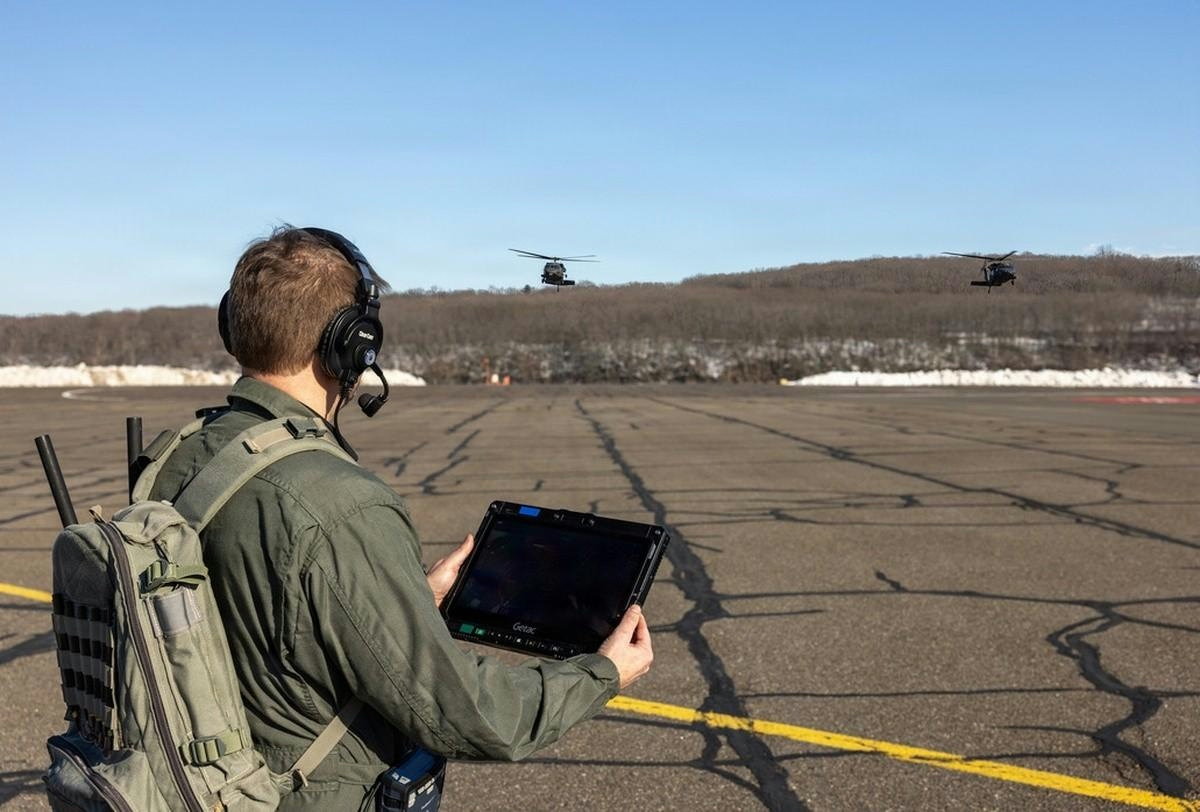
U.S. Army Receives First Autonomous-Ready Black Hawk Helicopter
U.S. Army Receives First Autonomous-Ready Black Hawk Helicopter
Fort Eustis, VA, March 19, 2026 – The U.S. Army has officially taken delivery of its first H-60Mx Black Hawk helicopter equipped with advanced autonomous capabilities, marking a significant milestone in military aviation. This next-generation aircraft, designated as an "Optimally Piloted Vehicle" (OPV), is engineered to operate either with a pilot or autonomously, introducing a new level of operational flexibility and safety to Army aviation.
A Decade of Technological Innovation
The autonomous-ready Black Hawk represents the culmination of over ten years of technological development, originating from the Defense Advanced Research Projects Agency’s (DARPA) Aircrew Labor In-Cockpit Automation System (ALIAS) program. The ALIAS initiative sought to simplify flight operations and enhance safety by creating a removable automation "kit" adaptable to existing aircraft. Sikorsky, a Lockheed Martin company, collaborated with DARPA to develop the MATRIX™ technology, which functions as the helicopter’s digital "brain."
Following extensive demonstrations on both commercial and military platforms, MATRIX™ has matured into a sophisticated system now prepared for formal military evaluation. This technology enables the Black Hawk to autonomously perform complex flight operations, including takeoff and landing, or to operate under remote supervision from ground control stations.
Advanced Features and System Integration
At the core of the OPV upgrade is the ALIAS kit, which incorporates the MATRIX™ Autonomy Mission Manager alongside a Software Development Kit (SDK). The SDK facilitates the integration of third-party software and emerging sensor technologies, ensuring the system’s adaptability and readiness for future advancements. Traditional mechanical flight controls have been replaced with a modern "fly-by-wire" electronic system, enhancing stability and handling, particularly in low-visibility or challenging environments. By automating demanding maneuvers, the system reduces pilot workload, allowing crews to concentrate on mission-critical objectives.
This modular design not only expedites the adoption of autonomous technology across the Army’s helicopter fleet but also contributes to cost reduction and faster deployment timelines.
Challenges and Industry Implications
Despite its promising capabilities, the autonomous-ready Black Hawk faces several challenges. Integrating the new system with existing military infrastructure, maintaining reliability and safety across diverse operational conditions, and navigating complex regulatory and certification processes will be critical hurdles in the coming years.
The defense industry has responded with considerable interest in the technological advancements and potential operational efficiencies offered by this platform. Competitors such as Robinson Helicopter and Enstrom Helicopter are anticipated to accelerate their own development of autonomous and uncrewed systems in response. Furthermore, increased collaboration between defense contractors and government agencies is expected as competition intensifies in the emerging autonomous helicopter market.
Looking Ahead
The Army’s acquisition of the autonomous-ready Black Hawk marks a pivotal shift toward smarter, safer, and more versatile military aviation. As rigorous testing commences, the success of this program may significantly influence the future of helicopter operations both within the United States and internationally.

Etihad Airways Suspends Airbus A380 Flights on Key Route

Aditya Birla Group Seeks Approval for Aircraft Leasing in GIFT City

Qatar Airways Highlights Innovation and Connectivity at Arabian Travel Market 2026

Hong Kong's Five-Year Plan Includes Andrew Fan's Aircraft Parts Processing Hub Proposal

ACIA Aero Leasing Delivers ATR72-600 to Air Nostrum

RTX Appoints Jill Albertelli as Head of Pratt & Whitney

TAT Technologies Joins Beyond Aero Hydrogen Aircraft Program

AURAK Study Highlights Barriers to Air Taxi Adoption in Emerging Economies

Xiamen Air Selects Altitude for 787 Maintenance at Heathrow

Etihad and Swissport Extend Global Partnership
