
حوّل رؤى الذكاء الاصطناعي إلى أفعال منسّقة

الرائج الآن
Categories
U.S. Requests Immediate Software Update for Airbus Systems
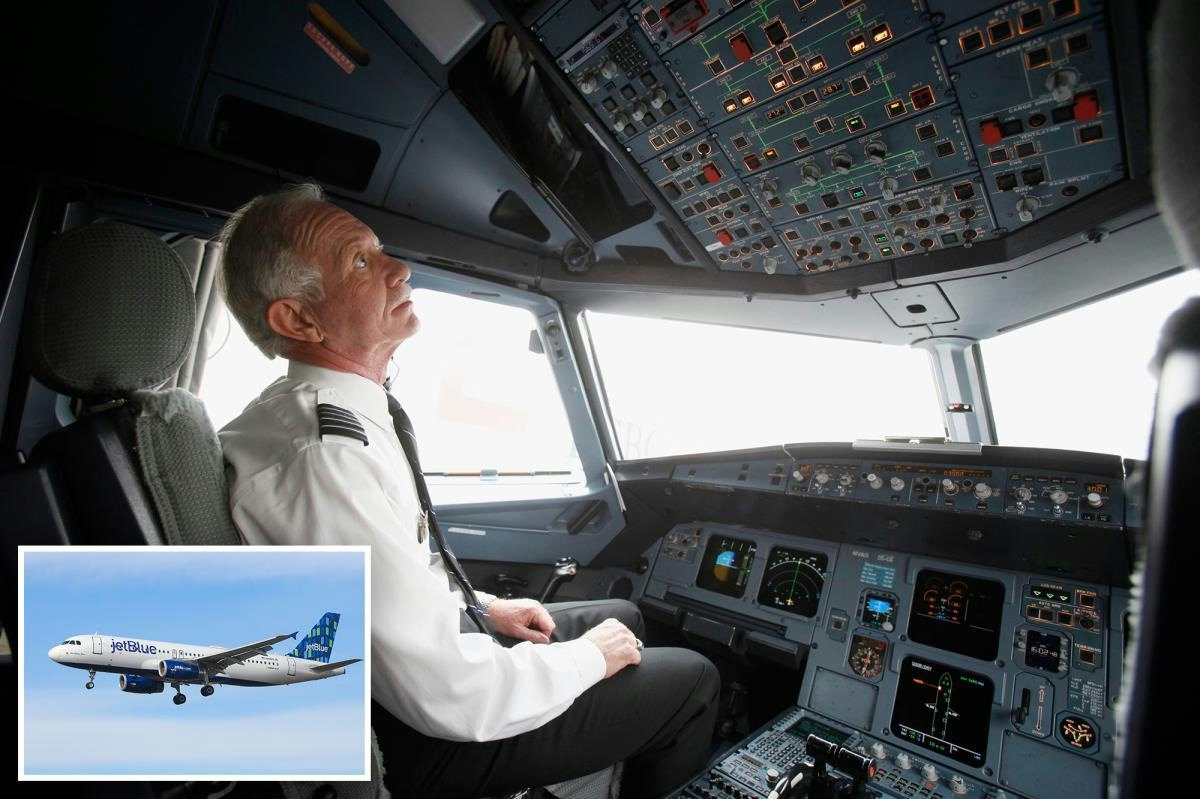
U.S. Requests Immediate Software Update for Airbus Systems
Critical Vulnerability Discovered in Airbus A320 Family
In late November, commercial aviation authorities identified a significant technical vulnerability affecting the Airbus A320 family’s attitude-control system. The flaw, located within the aircraft’s elevator and aileron control unit (ELAC), posed a risk of uncommanded in-flight descent. This issue came to light following an incident in late October when an A320 experienced an unexpected pitch-down, an abrupt nose-drop that necessitated emergency maneuvers and prompted a thorough technical investigation.
Regulatory Response and Industry Action
The Federal Aviation Administration (FAA) responded swiftly by issuing an Emergency Airworthiness Directive (EAD), requiring airlines to immediately update or modify the affected software before returning the aircraft to service. Airbus, in collaboration with European regulators, released an Alert Operators Transmission (AOT) and provided a software update alongside necessary hardware measures to mitigate the failure. The European Union Aviation Safety Agency (EASA) subsequently issued its own emergency directive, mandating prompt action from airlines.
This urgent situation triggered a global response, with airlines worldwide initiating extensive inspection and update protocols. Efforts focused on applying the software fix, rolling back problematic versions, or installing temporary safeguards. Airbus reported that the majority of the approximately 6,000 affected A320-family aircraft have now received the required updates. Nevertheless, these measures have caused operational disruptions, particularly during a period of heightened travel demand.
Impact on U.S. Carriers and Technical Insights
The operational impact has varied among U.S. airlines. Delta Air Lines anticipates only limited disruptions, while United Airlines confirmed its fleet remains unaffected. Conversely, American Airlines expects delays, as the software issue affects 340 of its aircraft.
Technical analysis indicates that the failure stemmed from data corruption within the ELAC, potentially triggered by a combination of intense solar radiation and specific software timing interactions. This rare confluence may have compromised critical flight control parameters, highlighting the susceptibility of complex aircraft systems to external environmental influences.
For most aircraft, the resolution has involved straightforward software updates or rollbacks to restore safe control logic. However, some cases have required hardware interventions, prolonging repair times and further impacting airline schedules.
Industry Coordination and Safety Implications
The coordinated response among manufacturers, regulators, and operators underscores the aviation industry’s robust safety protocols, characterized by rapid detection, transparent communication, and swift corrective action. At the same time, the incident serves as a reminder of the complex interaction between advanced aircraft software and environmental conditions, emphasizing the necessity for agile and well-coordinated responses to maintain operational safety and public confidence.

Etihad Airways Suspends Airbus A380 Flights on Key Route

Aditya Birla Group Seeks Approval for Aircraft Leasing in GIFT City

Qatar Airways Highlights Innovation and Connectivity at Arabian Travel Market 2026

Hong Kong's Five-Year Plan Includes Andrew Fan's Aircraft Parts Processing Hub Proposal

ACIA Aero Leasing Delivers ATR72-600 to Air Nostrum

RTX Appoints Jill Albertelli as Head of Pratt & Whitney

TAT Technologies Joins Beyond Aero Hydrogen Aircraft Program

AURAK Study Highlights Barriers to Air Taxi Adoption in Emerging Economies

Xiamen Air Selects Altitude for 787 Maintenance at Heathrow

Etihad and Swissport Extend Global Partnership
