
حوّل رؤى الذكاء الاصطناعي إلى أفعال منسّقة

الرائج الآن
Categories
Using AI to Find Better Summer Flight Deals
Using AI to Find Better Summer Flight Deals
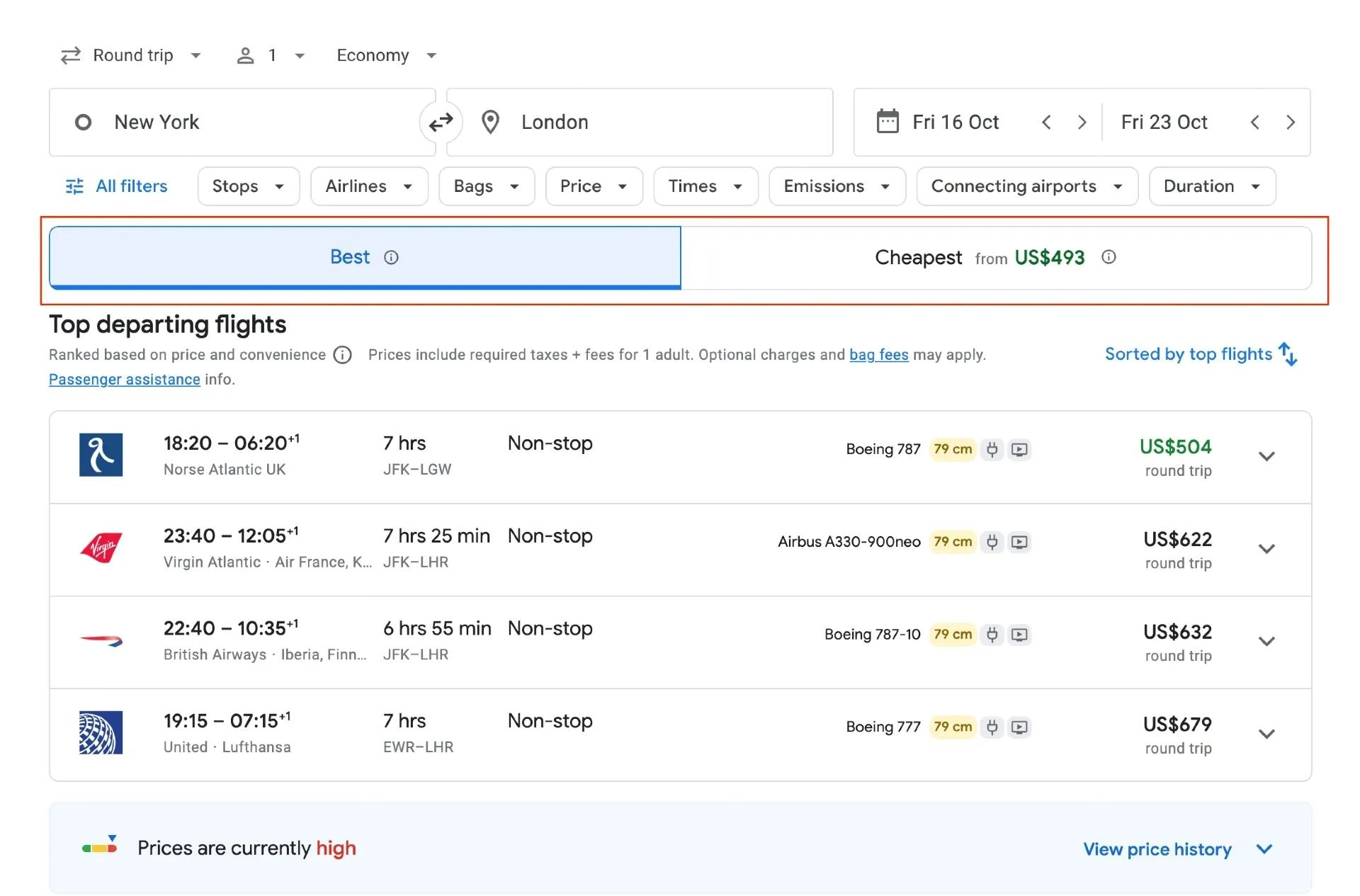
As summer vacation planning intensifies, travel experts are encouraging consumers to utilize artificial intelligence (AI) flight booking tools to secure more competitive fares and reduce travel expenses. Airlines themselves are increasingly employing AI to adjust ticket prices dynamically—sometimes on an hourly basis—responding to fluctuations in demand and competitor pricing. This rapid fare adjustment means traditional online flight searches may no longer suffice to guarantee the best deals.
The Role of AI in Dynamic Pricing
Farhana Nusrat, a marketing professor at the University of San Diego, explains that airlines continuously update fares throughout the day. “All of the airlines are using AI themselves, so it’s not just daily that they’re changing fares, it’s hourly,” she said. “They’re responding to demand for particular routes and to how their competitors are moving.” Given this environment, travelers can improve their chances of finding better prices by strategically employing AI-powered flight search technologies.
Nusrat advises booking domestic flights between one and three months in advance, while international flights should ideally be booked two to six months ahead. She also emphasizes the importance of providing detailed information when using AI tools. “The first message you send should include all the important information—your travel dates, flexibility, and preferred airports. For example, ‘I can fly any day between June 2nd and June 21st, from San Diego or nearby airports,’” she recommended.
Tools and Features for Smarter Booking
Popular free AI-enabled flight search platforms such as Google Flights, Kayak, and Skyscanner offer travelers accessible options to compare fares. For those seeking enhanced capabilities, paid subscription services—typically costing between $30 and $50 annually—provide features like deal tracking and price monitoring across both major and lesser-known airlines. Some of these services offer price freezing, allowing travelers to lock in a fare for several days. Nusrat explains, “If the price drops, you can buy at the lower rate. If it goes up, you’re protected by the frozen price.” Additionally, certain platforms can identify “mistake fares,” which are rare pricing errors that can yield substantial savings if booked promptly.
Industry Implications and Future Trends
The growing influence of AI in travel booking is also reshaping the broader industry landscape. AI travel agents increasingly rely on third-party sources such as NerdWallet and Reddit for value comparisons, rather than directing consumers to official hotel or airline websites. This trend poses a challenge for major hotels and airlines, which risk losing control over how their offerings are presented, as AI-driven recommendations may prioritize independent reviews and aggregated deals.
While consumer-facing AI adoption in the travel sector remains in its early stages, the emergence of large language models (LLMs) for trip planning represents a significant opportunity. Vertical online travel agencies (OTAs) like Agoda are exploring deeper operational integration and more sophisticated agent designs to enhance user experience. At the same time, marketers who depend solely on technology shortcuts may find themselves at a disadvantage, as travelers increasingly assess options across a wider array of sources.
As AI technology continues to evolve, both travelers and industry stakeholders will need to adapt accordingly. For now, employing AI tools thoughtfully and maintaining awareness of how recommendations are generated can help consumers secure better summer flight deals and make more informed travel decisions.

Etihad Airways Suspends Airbus A380 Flights on Key Route

Aditya Birla Group Seeks Approval for Aircraft Leasing in GIFT City

Qatar Airways Highlights Innovation and Connectivity at Arabian Travel Market 2026

Hong Kong's Five-Year Plan Includes Andrew Fan's Aircraft Parts Processing Hub Proposal

ACIA Aero Leasing Delivers ATR72-600 to Air Nostrum

RTX Appoints Jill Albertelli as Head of Pratt & Whitney

TAT Technologies Joins Beyond Aero Hydrogen Aircraft Program

AURAK Study Highlights Barriers to Air Taxi Adoption in Emerging Economies

Xiamen Air Selects Altitude for 787 Maintenance at Heathrow

Etihad and Swissport Extend Global Partnership
