
حوّل رؤى الذكاء الاصطناعي إلى أفعال منسّقة

الرائج الآن
Categories
Why Aircraft Interiors Are Aviation’s Most Strategic Space
Why Aircraft Interiors Are Aviation’s Most Strategic Space
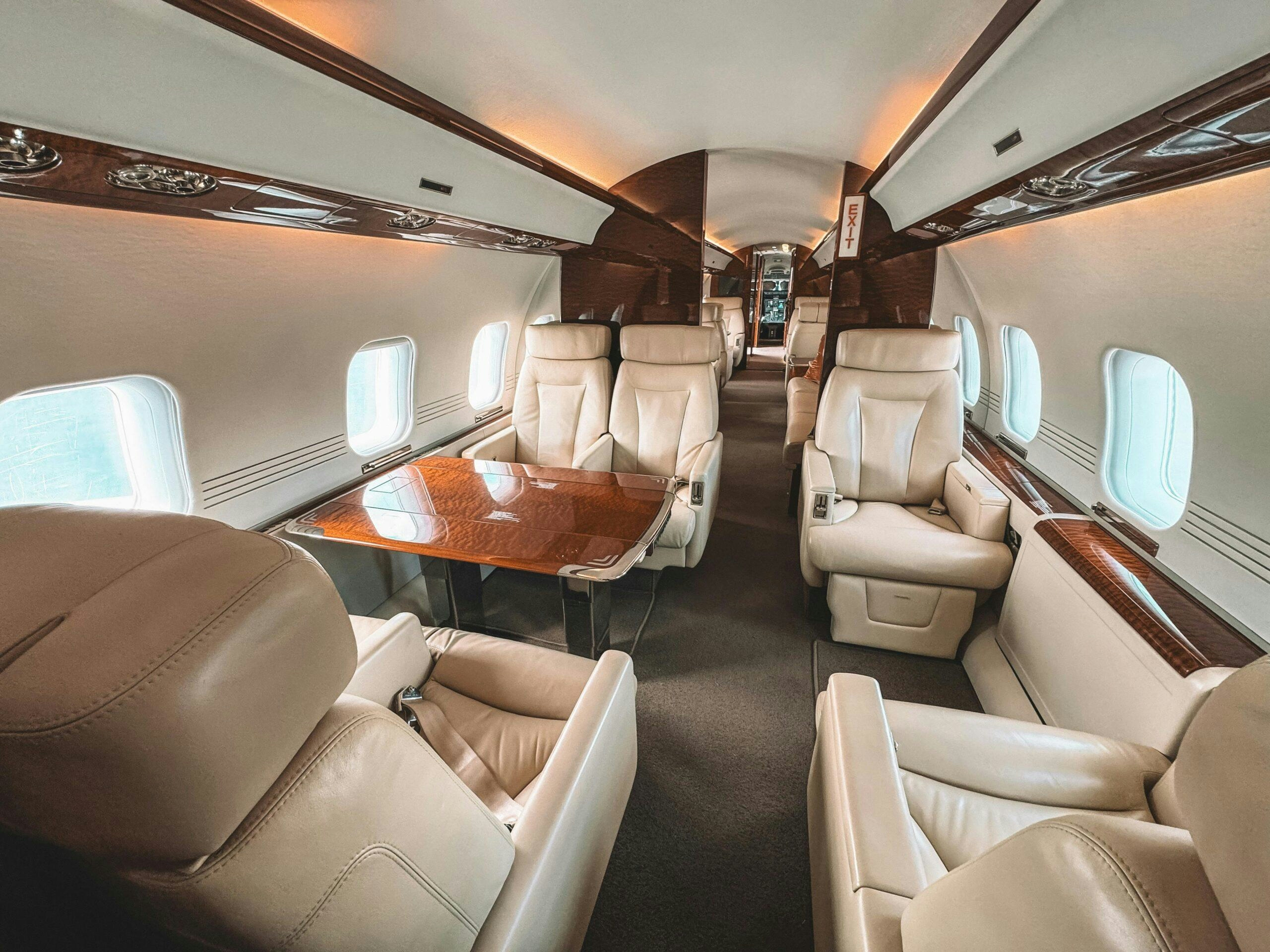
The design of aircraft interiors has undergone a significant evolution, transcending the traditional role of merely accommodating passengers within certified confines. Today, the cabin represents one of the most strategic domains in aviation, where engineering excellence, brand identity, human psychology, and operational economics intersect. Rather than being a secondary consideration shaped by aircraft architecture, cabin design has emerged as a proactive driver of value. It is no longer simply decorative; it embodies performance, responsibility, and a critical differentiator in a competitive industry.
The Passenger Experience Ratio and Design Innovation
This paradigm shift is encapsulated in the concept of the ‘Passenger Experience Ratio,’ which measures the ability to transform aviation’s stringent constraints into spatial clarity, emotional reassurance, and sustainable business impact. Challenges such as weight limitations, certification requirements, durability, and sustainability are not obstacles to creativity but rather frameworks that inspire meaningful innovation.
Modern travelers evaluate their flight experience not only against previous journeys but also in comparison with premium automotive interiors, digital ecosystems, and hospitality environments. They demand continuity, a sense of belonging, and above all, clarity. Within the cabin, this translates into intuitive spaces that are easy to navigate, environments that communicate safety and comfort, and a design that fosters a sense of control. Passengers seek privacy without isolation and openness without vulnerability, desiring an environment tailored to their needs rather than imposed upon them.
Integrating Structure, Experience, and Mobility
This evolution is reshaping design authority in the industry. An inside-out approach—where structural performance, exterior architecture, and interior experience are conceived as a cohesive system—is becoming indispensable. In advanced aircraft programs and emerging aerial mobility platforms, transportation itself is no longer the sole objective. The challenge lies in creating environments that are trustworthy, seamless, and emotionally aligned with the broader mobility journey, which begins well before boarding.
Airports are also transforming into experience hubs, with lounges and mobility interfaces redesigned to minimize friction and frustration. The aircraft cabin must now serve as a natural extension of this ground experience, rather than a disconnected segment.
Lightweight Innovation and Emerging Mobility Platforms
Lightweight innovation plays a pivotal role in this transformation. Once regarded as a technical constraint, lightweighting now presents spatial and experiential opportunities. The use of advanced composites, additive manufacturing, and hybrid materials enables designers to rethink seating, monuments, and layouts, thereby enhancing ergonomics, visual clarity, and operational flexibility. Reducing mass not only advances sustainability goals but also unlocks new freedoms in design.
Simultaneously, new air mobility platforms—such as electric vertical take-off and landing aircraft (eVTOLs) and hybrid propulsion systems—are challenging conventional cabin design. These innovations are redefining spatial typologies, passenger interaction, and expectations of personal space, accelerating the need for airlines and manufacturers to anticipate trends in materials, configurations, and experiential design.
Accessibility and Market Dynamics
Accessibility has become a central focus in cabin innovation. Industry leaders like Diehl Aviation and Boeing are refining lavatory concepts and enhancing cabin accessibility to better accommodate passengers with visual and hearing impairments. This emphasis on inclusivity is driving market demand for innovative interior solutions and prompting competitors to elevate their offerings. Strategic moves such as Setna iO’s acquisition of J&C Aero and the emergence of companies like Expliseat, which specializes in lightweight seating, illustrate a rapidly evolving competitive landscape.
Ultimately, innovation in aircraft interiors requires a rigorous, multidisciplinary process that spans from initial sketches and digital modeling to immersive visualization and rapid prototyping. As cabins increasingly become the nexus of performance, passenger experience, and inclusivity, they are shaping the future trajectory of aviation itself.

Etihad Airways Suspends Airbus A380 Flights on Key Route

Aditya Birla Group Seeks Approval for Aircraft Leasing in GIFT City

Qatar Airways Highlights Innovation and Connectivity at Arabian Travel Market 2026

Hong Kong's Five-Year Plan Includes Andrew Fan's Aircraft Parts Processing Hub Proposal

ACIA Aero Leasing Delivers ATR72-600 to Air Nostrum

RTX Appoints Jill Albertelli as Head of Pratt & Whitney

TAT Technologies Joins Beyond Aero Hydrogen Aircraft Program

AURAK Study Highlights Barriers to Air Taxi Adoption in Emerging Economies

Xiamen Air Selects Altitude for 787 Maintenance at Heathrow

Etihad and Swissport Extend Global Partnership
