
حوّل رؤى الذكاء الاصطناعي إلى أفعال منسّقة

الرائج الآن
Categories
Why First Class Is Disappearing on Major Airlines
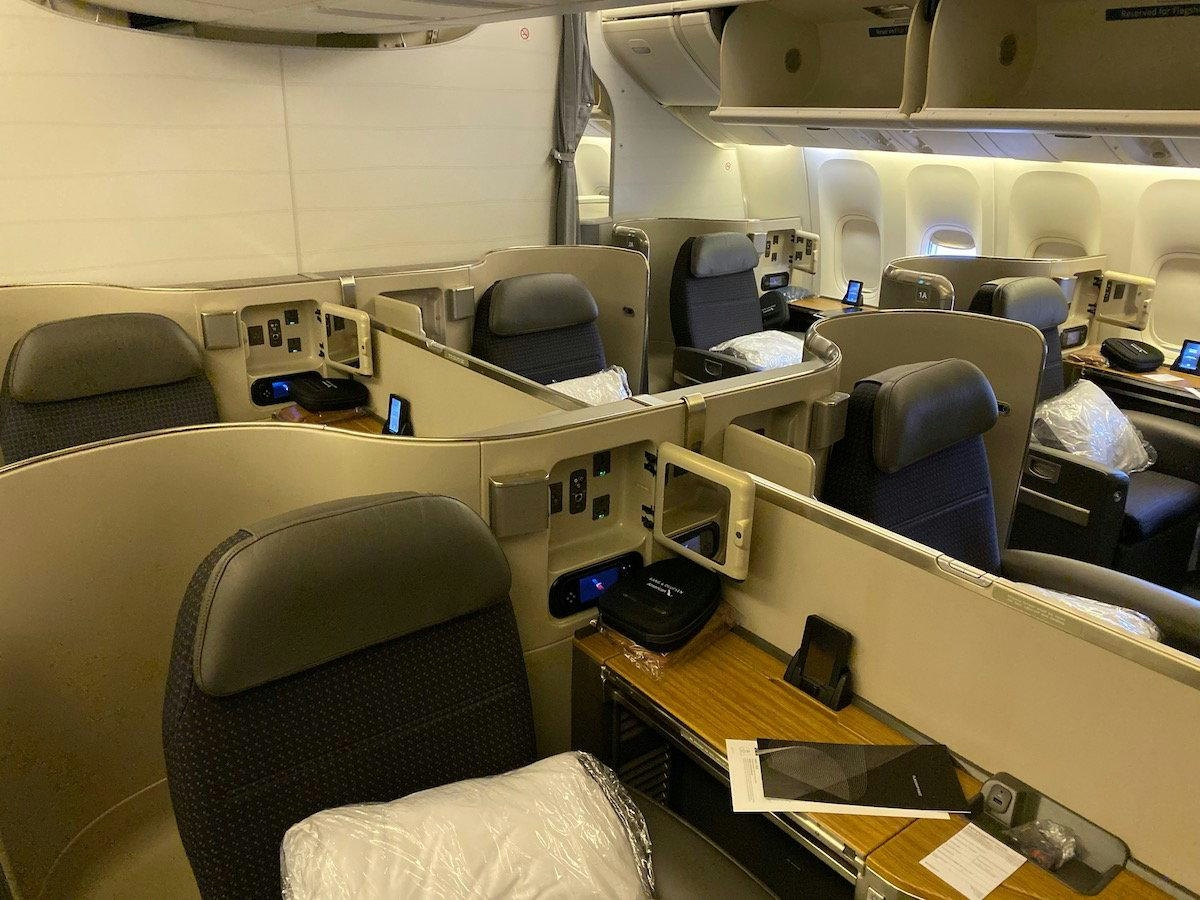
The Decline of First Class on Major Airlines
The airline industry is experiencing a profound transformation, most notably reflected in the steady disappearance of traditional first class cabins. Over recent years, global first class capacity has diminished by more than 40%, driven by evolving market dynamics, technological progress, and increasing financial pressures. What was once the epitome of luxury travel—characterized by lavish service and generous personal space—is now being systematically phased out by legacy carriers. Instead, airlines are reconfiguring their long-haul fleets with denser, revenue-optimized layouts that prioritize business travelers and corporate contracts, signaling a shift in focus from exclusivity to profitability.
The Evolution of Premium Travel
This change does not indicate a decline in demand for premium travel but rather its transformation. The distinction between business class and first class has become increasingly blurred as airlines enhance business class offerings to meet modern travelers’ expectations for privacy and comfort. A decade ago, business class typically featured lie-flat seats with limited privacy. Today, it boasts fully enclosed suites, wireless charging, advanced climate controls, and custom mattresses—amenities that rival or even surpass the standards of first class in the past. Consequently, the rationale for paying a premium of three to four times the business class fare for first class has largely eroded. Airlines have developed business class products so competitive that maintaining a separate, low-density luxury tier is often commercially unjustifiable on most routes.
Economic factors further reinforce this trend. Industry profits are projected to halve this year amid surging fuel costs and geopolitical disruptions, including the ongoing Middle East conflict, which has driven up prices and disrupted critical air corridors. In response, airlines are cutting unprofitable routes and concentrating on premium seating to safeguard margins. The emphasis is firmly on high-yield business travelers, often at the expense of both economy and first class cabins. Even budget carriers such as Frontier are grappling with these pressures, managing the fallout from Spirit Airlines’ collapse while striving to enhance customer service amid rising operational costs.
A Global Shift in Premium Offerings
A clear polarization is emerging worldwide. While many U.S. and European airlines lead the retreat from first class, some East Asian and Middle Eastern carriers continue to offer ultra-luxury suites as a brand differentiator, though these remain confined to select flagship routes. For the majority of flights, business class now delivers the privacy, comfort, and amenities that once defined first class, rendering a separate luxury cabin increasingly unnecessary.
Ultimately, the disappearance of first class reflects not a decline in premium travel but its ongoing evolution. As business class absorbs the finest elements of first class, airlines are adapting to a new landscape where luxury is being redefined and profitability remains paramount.

Etihad Airways Suspends Airbus A380 Flights on Key Route

Aditya Birla Group Seeks Approval for Aircraft Leasing in GIFT City

Qatar Airways Highlights Innovation and Connectivity at Arabian Travel Market 2026

Hong Kong's Five-Year Plan Includes Andrew Fan's Aircraft Parts Processing Hub Proposal

ACIA Aero Leasing Delivers ATR72-600 to Air Nostrum

RTX Appoints Jill Albertelli as Head of Pratt & Whitney

TAT Technologies Joins Beyond Aero Hydrogen Aircraft Program

AURAK Study Highlights Barriers to Air Taxi Adoption in Emerging Economies

Xiamen Air Selects Altitude for 787 Maintenance at Heathrow

Etihad and Swissport Extend Global Partnership
