
حوّل رؤى الذكاء الاصطناعي إلى أفعال منسّقة

الرائج الآن
Categories
Why Pilots Increase Engine Power Before Takeoff
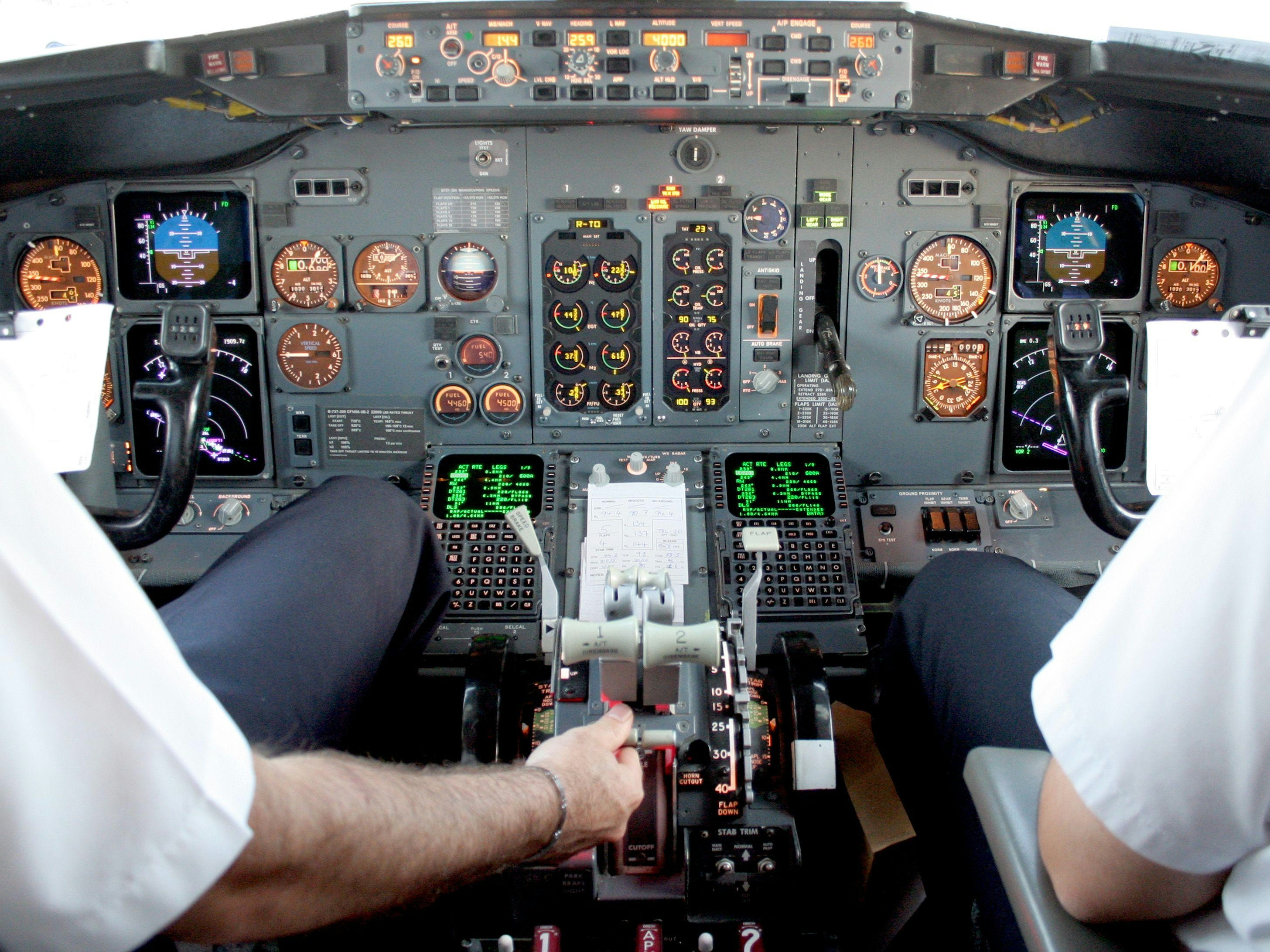
Why Pilots Increase Engine Power Before Takeoff
For many airline passengers, the most tense moment of a flight occurs at the runway threshold, when engines roar to life, brakes remain firmly applied, and the aircraft is poised for departure. Although this may appear as if pilots are simply revving engines in preparation for a race, the procedure is a deliberate and meticulously executed safety measure. It reflects the aviation industry’s unwavering commitment to reliability and risk mitigation.
Engine Stabilization: Ensuring Balanced Thrust
The primary purpose of advancing the throttles before takeoff is to stabilize the engines. Modern jet engines, particularly the high-bypass turbofans that power today’s long-haul aircraft, do not achieve full thrust instantaneously. The considerable mass of their fan blades and compressor components creates a brief delay between throttle input and engine response. Pilots typically set the engines to an intermediate power level—around 50 to 60 percent N1—to allow internal components to reach a stable operating state.
During this interval, advanced digital engine control systems, such as Full Authority Digital Engine Control (FADEC), continuously monitor parameters including fuel flow, air compression, and temperature. This ensures that both engines respond uniformly. Achieving synchronized thrust is critical; if one engine accelerates faster than the other, the resulting asymmetric thrust could cause the aircraft to veer off course before the rudder becomes effective, increasing the risk of a runway excursion. Stabilizing engine power before releasing the brakes guarantees a straight and controlled acceleration down the runway.
Ice Shedding in Cold Weather Conditions
In colder environments, passengers may observe engines being run at higher power settings for extended periods, sometimes up to 30 seconds. This prolonged spool-up serves not only to stabilize the engines but also to shed ice. When taxiing through slush or freezing conditions, ice can accumulate on the leading edges of fan blades. Even minimal ice buildup can disrupt airflow and degrade engine performance during takeoff. By operating the engines at elevated power levels, pilots ensure that any ice is dislodged prior to departure, thereby maintaining safety and operational efficiency.
Industry Challenges and Technological Advancements
This routine pre-takeoff procedure also highlights broader challenges within the aviation sector. As airlines incorporate new engine technologies and aircraft variants with higher maximum takeoff weights—such as the latest Boeing 787 models—maintaining engine reliability and safety remains a top priority. Recent developments, including Pratt & Whitney’s recovery from the PW1000G geared turbofan recall and the National Transportation Safety Board’s recommended modifications to the CFM Leap-1B safety system, emphasize the critical nature of thorough pre-takeoff engine checks.
Delivery delays and ongoing engine modifications have compelled airlines to adapt swiftly, balancing operational demands with evolving regulatory standards. In response, manufacturers and competitors are accelerating innovation and safety enhancements to meet both market expectations and the highest safety benchmarks.
The Sound of Safety
Ultimately, the powerful roar of engines before takeoff is not indicative of mechanical distress but rather the audible manifestation of safety protocols in action. It represents a final, vital interaction between pilots and their aircraft, ensuring that every departure begins with precision, confidence, and an uncompromising commitment to passenger safety.

Etihad Airways Suspends Airbus A380 Flights on Key Route

Aditya Birla Group Seeks Approval for Aircraft Leasing in GIFT City

Qatar Airways Highlights Innovation and Connectivity at Arabian Travel Market 2026

Hong Kong's Five-Year Plan Includes Andrew Fan's Aircraft Parts Processing Hub Proposal

ACIA Aero Leasing Delivers ATR72-600 to Air Nostrum

RTX Appoints Jill Albertelli as Head of Pratt & Whitney

TAT Technologies Joins Beyond Aero Hydrogen Aircraft Program

AURAK Study Highlights Barriers to Air Taxi Adoption in Emerging Economies

Xiamen Air Selects Altitude for 787 Maintenance at Heathrow

Etihad and Swissport Extend Global Partnership
