
حوّل رؤى الذكاء الاصطناعي إلى أفعال منسّقة

الرائج الآن
Categories
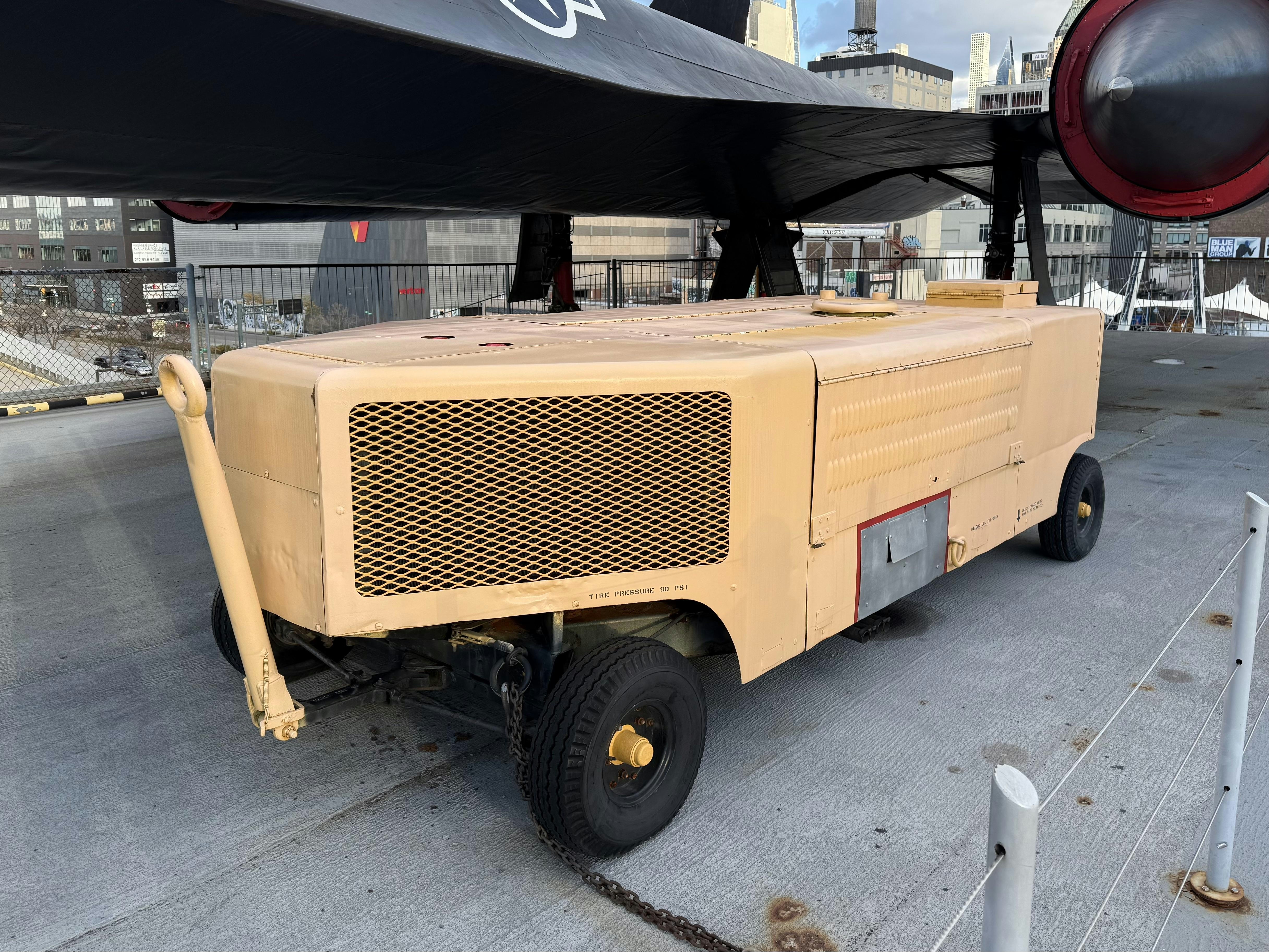
Why the SR-71 Blackbird Used Twin Buick V8 Engines for Starting
Why the SR-71 Blackbird Used Twin Buick V8 Engines for Starting
The Lockheed SR-71 Blackbird remains one of the most remarkable feats in aviation history, with only 32 units ever constructed. Its legendary status is attributed not only to its advanced titanium airframe and powerful Pratt & Whitney J58 turbojet engines but also to an unexpected ground-based starting system powered by twin Buick V8 engines. This article examines the engineering considerations behind this unconventional choice, the mechanics of the AG330 start cart, and the operational demands that necessitated such a solution.
Engineering Constraints and the Weight-Saving Imperative
Developed by Lockheed’s Skunk Works under the leadership of Clarence “Kelly” Johnson, the SR-71 was designed to sustain flight at speeds exceeding Mach 3.2 and altitudes above 85,000 feet. In this extreme performance envelope, every pound of weight was critical. Excess weight would reduce the aircraft’s range and increase fuel consumption, while also complicating the management of intense aerodynamic heating. To optimize performance, Johnson’s team made a deliberate decision to exclude any onboard engine starter system. The weight savings achieved by this omission were considered more valuable than the convenience of self-starting capability.
The Challenge of Starting the J58 Engines
This design choice introduced significant operational challenges. The J58 engines, among the few turbojets engineered for continuous afterburner operation at supersonic speeds, each weighed approximately 6,500 pounds. Their compressor stages demanded immense torque to accelerate to ignition speed—far beyond the capacity of conventional pneumatic or electric starters. Any starter system capable of delivering the required power would have been prohibitively heavy for onboard installation, necessitating a ground-based solution.
The Selection of Buick V8 Engines
The solution emerged from two Skunk Works engineers with backgrounds in automotive racing, who opted to utilize proven American automotive technology rather than develop a bespoke starter. They selected the Buick 401-cubic-inch (6.6-liter) “Nailhead” V8 engines for their robust construction, reliability, and ability to generate the high torque essential for the demanding startup sequence of the J58 engines. Each Buick V8 produced 325 horsepower and 445 lb-ft of torque. When paired in the AG330 start cart, these engines provided sufficient power to spin the J58 compressors to the necessary speed for fuel ignition.
This choice was both practical and strategic. Given the critical nature of the SR-71’s reconnaissance missions during the Cold War, mechanical reliability was paramount. The Buick V8 engines offered a dependable, field-tested solution that minimized the risk of startup failure and ensured the Blackbird could launch as scheduled.
Operation of the AG330 Start Cart
During engine startup, the AG330’s twin Buick V8s powered a shaft connected to the J58’s accessory gearbox, rapidly accelerating the engine’s compressors. Once the J58 reached the required rotational speed, fuel and ignition systems were engaged, bringing the engine to life. This process was complex and occasionally hazardous, demanding precise coordination from ground crews. Any malfunction, such as a misfire or mechanical fault, necessitated halting and resetting the entire sequence, highlighting the critical importance of the starter cart’s reliability.
Conclusion
The SR-71 Blackbird’s reliance on twin Buick V8 engines for starting exemplifies innovative engineering under stringent constraints. By harnessing the strength and dependability of these automotive powerplants, Lockheed’s engineers ensured that one of the world’s most advanced aircraft could meet its exacting operational requirements. This approach underscores how sophisticated technological solutions can sometimes arise from practical mechanical ingenuity.

Etihad Airways Suspends Airbus A380 Flights on Key Route

Aditya Birla Group Seeks Approval for Aircraft Leasing in GIFT City

Qatar Airways Highlights Innovation and Connectivity at Arabian Travel Market 2026

Hong Kong's Five-Year Plan Includes Andrew Fan's Aircraft Parts Processing Hub Proposal

ACIA Aero Leasing Delivers ATR72-600 to Air Nostrum

RTX Appoints Jill Albertelli as Head of Pratt & Whitney

TAT Technologies Joins Beyond Aero Hydrogen Aircraft Program

AURAK Study Highlights Barriers to Air Taxi Adoption in Emerging Economies

Xiamen Air Selects Altitude for 787 Maintenance at Heathrow

Etihad and Swissport Extend Global Partnership
