
حوّل رؤى الذكاء الاصطناعي إلى أفعال منسّقة

الرائج الآن
Categories
Widebody Aircraft Leading in ETOPS Route Operations Worldwide
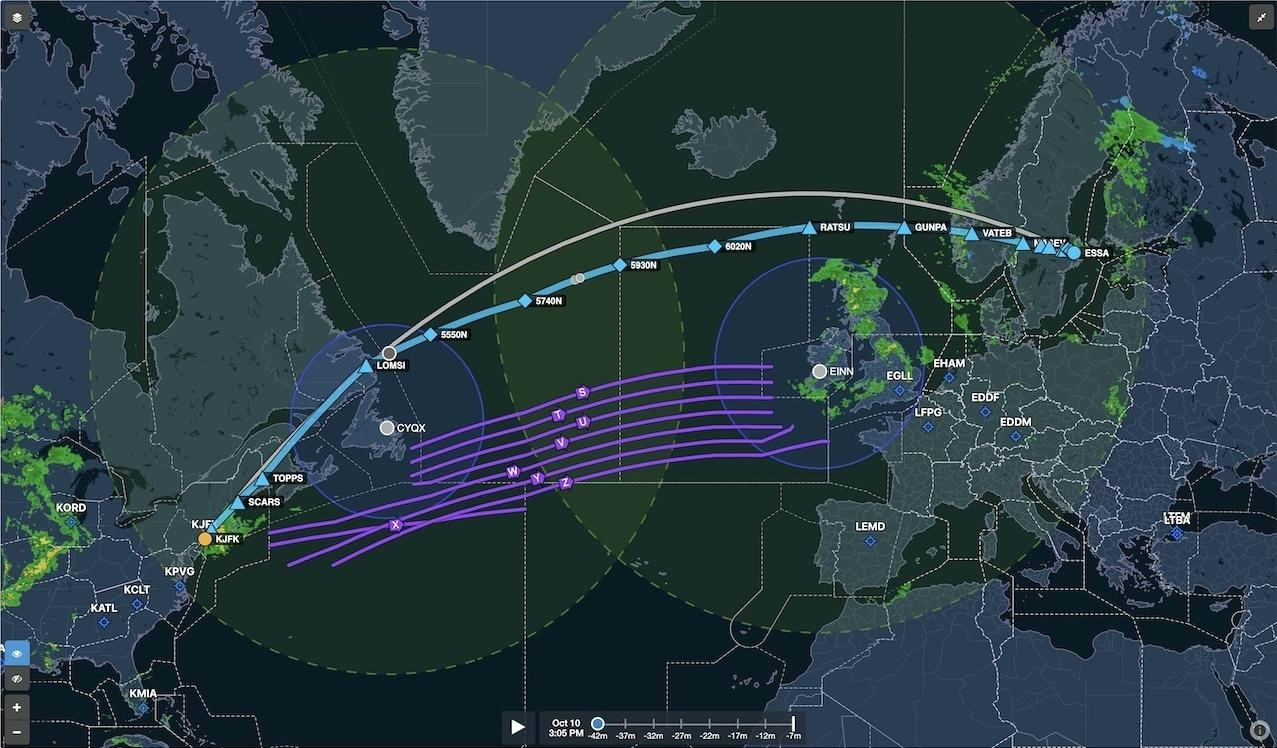
Widebody Aircraft Lead Global ETOPS Route Operations
Extended-range Twin-engine Operational Performance Standards (ETOPS) certification has fundamentally transformed long-haul aviation by permitting twin-engine aircraft to operate on routes far from the nearest diversion airport. This regulatory evolution has unlocked numerous direct, fuel-efficient long-haul and ultra-long-haul routes that were previously impractical for airlines due to operational and financial constraints.
The Boeing 777: A Pioneer in ETOPS
Central to this transformation is the Boeing 777, a widebody aircraft that has become emblematic of ETOPS operations. Since its initial delivery to United Airlines in May 1995, over 1,750 Boeing 777s have entered service globally. Boeing reports that the 777 now conducts more than 73,000 flights monthly and has completed upwards of three million ETOPS flights—more than twice the combined total of all competing aircraft.
Historically, twin-engine aircraft were restricted to routes within 60 minutes of an alternate airport due to safety concerns. The Boeing 777 was the first aircraft to receive ETOPS-180 certification upon entry into service, allowing flights up to 180 minutes from the nearest diversion airport. This breakthrough enabled airlines to operate more direct routes over oceans and remote regions, areas previously dominated by three- and four-engine jets such as the McDonnell Douglas DC-10 and Boeing 747.
Regulatory authorities have since extended these limits. The U.S. Federal Aviation Administration (FAA) increased the allowable ETOPS range for Boeing 777s equipped with GE engines to 207 minutes, and subsequently to 330 minutes in 2011. These extensions have reshaped the economics of long-haul flying, enabling airlines to replace less efficient four-engine aircraft with more fuel-efficient twinjets. Notably, the Boeing 777-200LR is technically capable of nonstop flights between London Heathrow and Sydney, a journey that was once unimaginable without multiple stops.
Industry Dynamics and Emerging Challenges
Despite the continued dominance of widebody aircraft like the Boeing 777 in ETOPS route operations, the sector faces persistent challenges. Recent groundings, such as those involving Kenya Airways’ three Boeing 787s, have disrupted airline operations and contributed to financial losses, underscoring the operational risks associated with reliance on advanced widebody fleets. Market responses to such setbacks have varied. Some carriers, including WestJet, have demonstrated confidence by placing record orders to double their widebody fleets, signaling strong faith in the long-term prospects of ETOPS-enabled operations.
At the same time, competitors are pursuing fleet diversification and strategic adjustments to maintain flexibility and market share amid evolving industry conditions. For example, RwandAir is planning to introduce new aircraft types as part of its strategy to adapt to these shifting dynamics.
The Future of ETOPS Operations
ETOPS certification remains a critical element of modern long-haul aviation, allowing airlines to optimize routes, reduce fuel consumption, and enhance profitability. The Boeing 777’s pioneering role and sustained dominance highlight the significance of widebody aircraft in this domain. As airlines confront operational challenges and changing market environments, continued innovation and strategic fleet management will be vital to supporting the growth and reliability of ETOPS route operations worldwide.

Etihad Airways Suspends Airbus A380 Flights on Key Route

Aditya Birla Group Seeks Approval for Aircraft Leasing in GIFT City

Qatar Airways Highlights Innovation and Connectivity at Arabian Travel Market 2026

Hong Kong's Five-Year Plan Includes Andrew Fan's Aircraft Parts Processing Hub Proposal

ACIA Aero Leasing Delivers ATR72-600 to Air Nostrum

RTX Appoints Jill Albertelli as Head of Pratt & Whitney

TAT Technologies Joins Beyond Aero Hydrogen Aircraft Program

AURAK Study Highlights Barriers to Air Taxi Adoption in Emerging Economies

Xiamen Air Selects Altitude for 787 Maintenance at Heathrow

Etihad and Swissport Extend Global Partnership
