صورة

أيروجيني — مساعدك الذكي للطيران.

اسأل عن أي شيء. قم بتحليل كل شيء. تصرف فورًا.

الرائج الآن

Categories

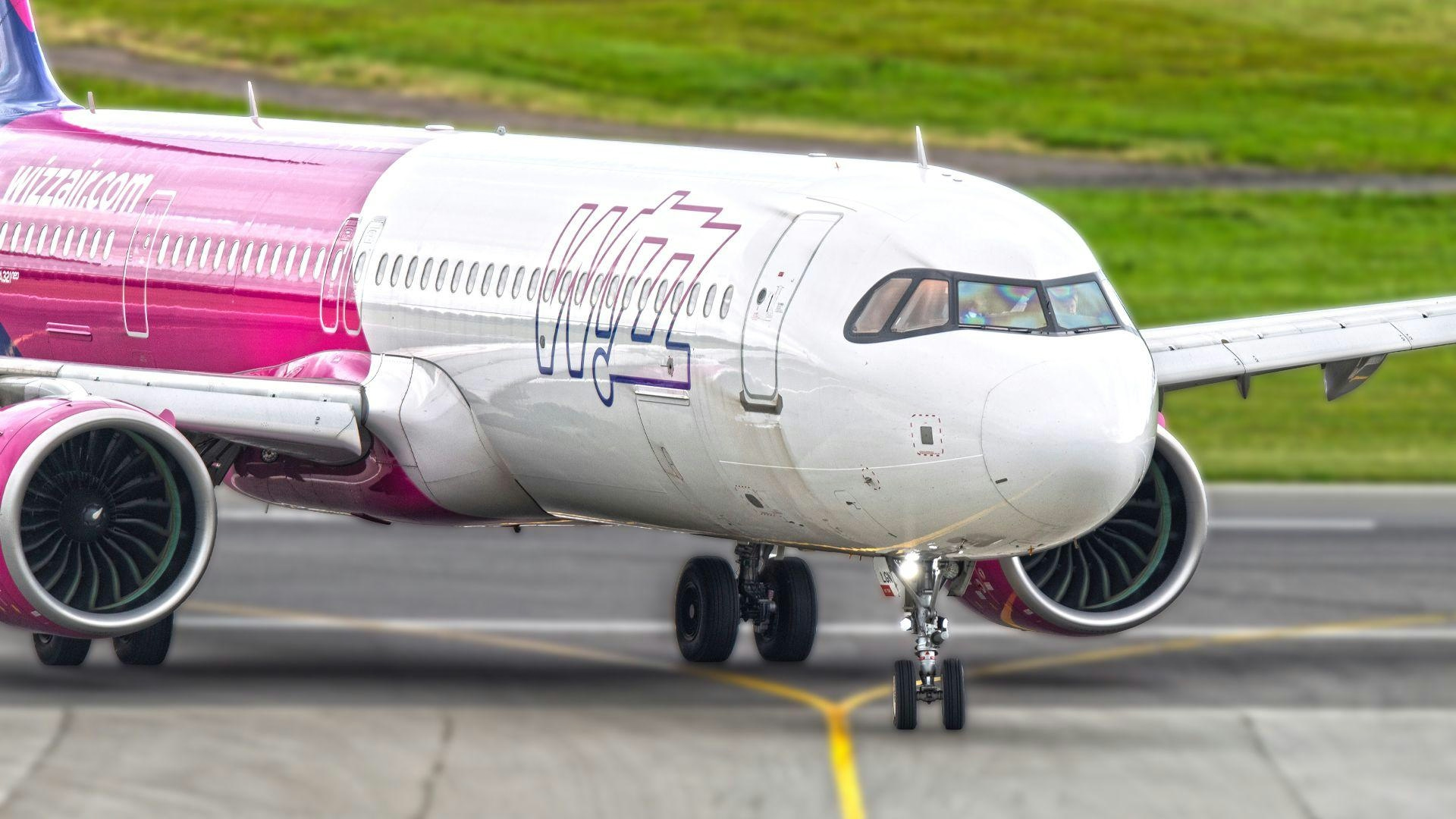
Wizz Air Grounds Two A321XLR Aircraft and Cuts Future Orders
November 8, 2025By ePlane AI
Wizz Air Grounds Two A321XLR Aircraft and Cuts Future Orders
0
0
Wizz Air
Airbus A321XLR
Fleet Management

Wizz Air Grounds Two A321XLR Aircraft and Revises Future Orders Amid Fleet Challenges

Wizz Air has announced a substantial reduction in its Airbus A321XLR commitments, grounding two recently delivered aircraft and converting the majority of its future orders to the standard A321neo model. This strategic adjustment comes amid persistent supply chain disruptions and a widespread shortage of aircraft engines affecting the aviation industry.

Order Revisions and Delivery Delays

In a statement released on Friday, Wizz Air confirmed it will reduce its A321XLR order from 47 to 11 units, including the five aircraft already delivered. The remaining 36 orders will be converted to the A321neo variant. Additionally, the airline is postponing the delivery schedule for 88 jets by three years, a move that could significantly impact its fleet expansion and capacity growth plans in the near term.

The grounding specifically involves two A321XLRs operated by Wizz Air Malta, registered as 9H-XLA and 9H-XLB. Both aircraft, delivered in July and October of this year, are currently parked at Bydgoszcz Airport in Poland. Wizz Air explained that the engines from these grounded jets are being repurposed to maintain the operational readiness of its standard A321neo fleet during the winter season. The airline described this as a temporary measure designed to address global supply chain challenges while adhering to its Customer First Compass initiative, which focuses on enhancing the passenger experience.

Industry-Wide Engine Shortages and Operational Impact

The aviation sector continues to face extensive groundings of aircraft from the A320neo family, A220, and Embraer E2 series due to mandatory maintenance and inspections on Pratt & Whitney engines. Other carriers, including SWISS, have similarly grounded aircraft to cannibalize engines and parts to support their active fleets.

Within the Wizz Air group, three additional A321XLRs are operated by its UK subsidiary. One of these, registered as G-XLRA, has been grounded in Prague since September following a hard landing incident. Only two A321XLRs remain in active service, primarily operating routes between London Gatwick and destinations such as Jeddah, Medina, and Prague. Notably, one of these aircraft was recently used to transport Hungarian Prime Minister Viktor Orbán to Washington, D.C.

Strategic and Market Implications

Wizz Air’s decision to ground aircraft and reduce its A321XLR orderbook may result in operational disruptions and financial consequences. The reduction in capacity could create opportunities for competitors to increase their market share. Budget carriers such as Vietjet, which recently confirmed orders for 100 Airbus A321neos, may seek to capitalize on Wizz Air’s scaled-back expansion plans.

Industry analysts are closely monitoring Wizz Air’s financial stability and strategic adjustments, as these developments could influence broader market dynamics and prompt other airlines to reevaluate their fleet strategies. As Wizz Air contends with these challenges, its ability to sustain service levels and control costs will be under scrutiny, with the wider low-cost carrier sector observing potential shifts in the competitive landscape.

More news
Incheon Airport Opens 600 Billion-Won Aviation AI Innovation Hub with LG CNS

Incheon Airport Opens 600 Billion-Won Aviation AI Innovation Hub with LG CNS

Incheon Airport Opens 600 Billion-Won Aviation AI Innovation Hub with LG CNS Incheon International Airport has unveiled a landmark initiative with the launch of a 600 billion-won (approximately $440 million) Aviation AI Innovation Hub. The airport selected the CT Development consortium, comprising LG CNS and Korea Investment & Securities, as the preferred bidder for this ambitious project. The hub is designed to establish South Korea as a global leader in aviation technology by fostering a comprehensive ecosystem centered on cutting-edge artificial intelligence. Advanced Infrastructure and Collaborative Innovation At the heart of the hub will be a 5MW GPU farm equipped with NVIDIA’s next-generation Blackwell B200 GPUs, enabling large-scale AI model inference critical for advanced aviation applications. Complementing this is a 40MW underground data center built to meet the highest national security standards, ensuring robust and secure operations. More than 50 AI technology firms, including notable players such as NC AI and Upstage, will collaborate to develop next-generation solutions. These innovations will span large language model-based airport services, logistics automation, autonomous robotics, and intelligent airport operations, collectively aiming to transform the aviation sector. LG CNS will take charge of the data center’s design and operational management, while Korea Investment & Securities will provide the necessary financial support, establishing a stable framework for the project’s execution. This initiative aligns with Incheon Airport’s broader strategy to enhance operational efficiency through AI and to bolster South Korea’s position in the global AI industry. Economic and Competitive Challenges The launch of the Aviation AI Innovation Hub occurs amid a challenging economic environment. LG Electronics, a key affiliate of LG CNS, recently reported its first quarterly net loss in a year, attributing the downturn to costly restructuring efforts and a slow recovery in demand. This financial strain underscores the risks inherent in large-scale technology investments, even as the consortium advances with the project. The competitive landscape for AI infrastructure is intensifying globally. Leading technology giants such as Alphabet, Amazon, Meta, and Microsoft are collectively investing between $650 billion and $700 billion in AI development, signaling a fierce international race to dominate AI-driven industries. This surge in investment is likely to prompt regional competitors to pursue similar initiatives, raising the stakes for Incheon’s AI hub. Korean Air has also issued warnings about increasing competition and geopolitical volatility within the aviation sector, particularly as the industry looks toward 2026. These factors may impact the hub’s success as market dynamics evolve and new entrants seek leadership in aviation technology. Global Context and Future Outlook Internationally, countries like Turkey are making significant investments in digital infrastructure to close technological gaps, reflecting a broader global momentum toward AI-driven transformation in aviation and related fields. Incheon International Airport plans to highlight its AI ambitions at the upcoming AAA Leadership Forum in June, aiming to establish new global standards for aviation AI. Lee Hak-jae, CEO of Incheon International Airport Corporation, emphasized the strategic importance of the hub, stating, “The Aviation AI Innovation Hub will be a core engine for Korea to become one of the world’s top three AI powers. Through collaboration with stakeholders, we will ensure safety and provide a strong bridge for Korean companies to lead the global aviation AI market.” As the project progresses, its development will be closely monitored against the backdrop of economic headwinds, escalating competition, and the rapidly evolving global AI landscape.
Saudi Arabia and Spain Forge Partnership to Advance Sustainable Aviation

Saudi Arabia and Spain Forge Partnership to Advance Sustainable Aviation

Saudi Arabia and Spain Forge Partnership to Advance Sustainable Aviation In a landmark development aimed at reshaping the future of air travel, Saudi Arabia and Spain have formalized a strategic partnership to promote sustainable aviation. The agreement was finalized through the signing of two memoranda of understanding (MoUs) in Riyadh on February 5, 2026. Senior officials from both countries convened to establish a framework focused on enhancing connectivity, regulatory harmonization, and technological innovation within the aviation sector. This collaboration arrives at a critical juncture as both nations seek to bolster their aviation industries, expand international networks, and champion environmentally responsible travel. Saudi Arabia’s Minister of Transport and Logistics Services, Eng. Saleh bin Nasser Al-Jasser, alongside Spain’s Minister of Transport, Óscar Puente, emphasized their shared commitment to improving operational efficiency, elevating passenger experience, and ensuring reliable air traffic between the two countries. Core Areas of Cooperation The partnership centers on seven key domains designed to raise civil aviation standards and advance sustainability. A primary focus is strengthening air connectivity by increasing flight frequencies and broadening route options between Saudi Arabia and Spain. This enhanced connectivity is anticipated to stimulate tourism, facilitate business travel, and deepen diplomatic ties. Regulatory alignment and safety standards constitute another critical area of cooperation. Both nations will collaborate to harmonize aviation regulations and enhance safety protocols. By exchanging best practices in air traffic control and aircraft maintenance, the partnership aims to uphold compliance with international standards, thereby fostering a safer and more efficient environment for global air travel. Innovation in aviation technology also features prominently in the agreement. Saudi Arabia and Spain plan to jointly invest in advancements such as sustainable aviation fuels, smart airport infrastructure, and biometric systems. This commitment to innovation positions both countries at the forefront of the global transition toward greener and more efficient air transportation. Additionally, the partnership includes initiatives for training and workforce development. Joint programs will facilitate skills exchange and professional development for aviation personnel, enhancing expertise in safety, air traffic management, and logistics. These efforts are intended to cultivate a highly skilled workforce capable of supporting the evolving demands of the aviation sector. Challenges and Market Implications Despite the promising outlook, the partnership faces challenges related to securing wider international support for sustainable aviation initiatives and adapting to evolving global environmental regulations. Geopolitical tensions may also impact the stability and effectiveness of such collaborations. Market responses to the agreement have been predominantly positive, with expectations of increased investor interest in sustainable aviation projects. Competitors in the sector may respond by forming their own alliances or accelerating sustainability efforts to maintain competitive parity. Saudi Arabia’s broader engagement in global aviation and defense sectors adds complexity to the evolving landscape. The kingdom’s participation in the Turkish Kaan fighter program and its potential role as a titanium supplier for Boeing highlight its ambition to become a pivotal player in both commercial and defense aviation supply chains. As Saudi Arabia and Spain advance their partnership, it is poised to establish new standards for sustainable aviation, serving as a model for international cooperation in an industry undergoing rapid transformation.
An Overview of FSC 29 Engine Accessories in Aerospace

An Overview of FSC 29 Engine Accessories in Aerospace

An Overview of FSC 29 Engine Accessories in Aerospace Aircraft engines represent some of the most complex feats of engineering, yet their reliability hinges on a network of essential accessory components. These engine accessories, which include fuel pumps, electrical generators, and cooling system parts, are vital to ensuring safe and efficient engine operation. Within the aerospace industry, these components are systematically categorized under Federal Supply Group (FSG) 29, a classification that facilitates streamlined identification, procurement, and maintenance across global supply chains. Defining Aircraft Engine Accessories Engine accessories are auxiliary components attached to an aircraft engine that enable its optimal performance. They encompass a range of critical parts such as fuel pumps and control systems, oil pumps and lubrication equipment, electrical generators and starters, cooling system components, as well as air and oil filtration systems. The absence or malfunction of these accessories would compromise fuel delivery, temperature regulation, and electrical power supply, thereby jeopardizing both safety and engine performance. Historical Development of Engine Accessories The evolution of aircraft engine accessories mirrors the broader advancements in aviation technology. Early engines from the early 20th century featured relatively simple fuel pumps and mechanical controls, with basic cooling mechanisms and rudimentary fasteners like steel rivets. The demands of World War II accelerated the development of more sophisticated fuel injection systems, electrical components, and turbocharging accessories. The subsequent Jet Age introduced digital controls, advanced cooling technologies, and precision fasteners, reflecting a continuous refinement of accessory technology alongside engine innovation. FSC 29 Classification and Its Components Federal Supply Group 29 is subdivided into several Federal Supply Classes (FSCs), each dedicated to specific types of engine accessories. Fuel system components, classified under FSC 2910 and 2915, include fuel pumps, injectors, carburetors, tanks, and filters. Electrical system components fall under FSC 2920 and 2925, covering alternators, starters, and ignition systems. Cooling system parts are categorized within FSC 2930 and 2935, designed to prevent overheating and maintain operational stability. Filters and cleaners, essential for maintaining air and oil purity, are grouped under FSC 2940 and 2945. Finally, turbocharger components, which enhance engine efficiency and power output, are classified as FSC 2950. This standardized classification framework enables engineers, procurement specialists, and maintenance personnel to efficiently identify and source the appropriate parts, thereby supporting operational effectiveness and safety. Contemporary Challenges and Industry Implications The aerospace sector currently faces notable challenges concerning FSC 29 engine accessories, particularly in relation to new engine models from leading manufacturers such as Pratt & Whitney and Safran. Fundamental issues with these engines have resulted in production delays, exacerbating existing supply chain constraints. These difficulties are compounded by the Federal Aviation Administration’s ongoing review of Boeing’s quality control practices, which has intensified regulatory scrutiny across the industry. Consequently, market dynamics are undergoing significant shifts. Suppliers and manufacturers are under mounting pressure to resolve quality and reliability issues. At the same time, competitors may capitalize on these challenges by leveraging their strengths, innovating, or expanding market share through the provision of more dependable accessory solutions. This evolving landscape highlights the critical importance of engine accessories not only in terms of technical performance but also in their influence on the broader aerospace market.
Singapore Begins Air Taxi Trial for Medical Emergencies

Singapore Begins Air Taxi Trial for Medical Emergencies

Singapore Launches Air Taxi Trial for Emergency Medical Services Singapore has embarked on a pioneering trial of air taxis designed specifically for emergency medical services, marking a notable advancement in the city-state’s commitment to urban air mobility. The initiative, announced in conjunction with the upcoming Singapore Airshow 2026, represents a collaboration between the UK-based aerospace manufacturer Vertical Aerospace and Singapore’s Agency for Science, Technology and Research (A*STAR). Partnership and Technological Development Under this partnership, Vertical Aerospace and A*STAR will jointly explore the deployment of electric and hybrid-electric aircraft to enhance rapid medical response capabilities, particularly in Singapore’s more remote areas. The project is supported by funding from A*STAR and its innovation arm, Hatch, which will facilitate the development, testing, and validation of Vertical Aerospace’s Valo aircraft platform. This electric vertical take-off and landing (eVTOL) vehicle is being adapted specifically for emergency medical scenarios, aiming to provide swift and efficient patient transport. The collaboration seeks to establish a comprehensive operational framework for integrating eVTOL aircraft into Singapore’s existing emergency response infrastructure. This includes ensuring adherence to regulatory and operational standards, with planned flight demonstrations designed to assess the feasibility, safety, and response times of air taxis in critical medical situations. Vertical Aerospace will also coordinate closely with the Singapore Home Team to evaluate how these aircraft might complement current emergency services and potentially improve patient outcomes. Challenges and Regional Context Despite the promise of this initiative, several challenges remain. Regulatory approval poses a significant hurdle, as the integration of new aviation technologies into Singapore’s tightly regulated airspace demands meticulous coordination with authorities. Furthermore, technological integration with existing emergency services requires seamless communication and operational compatibility, which will be critical to the success of the trial. Singapore’s entry into the eVTOL market occurs amid increasing competition in the Asia-Pacific region, with countries such as Japan and South Korea rapidly advancing their own urban air mobility networks. This competitive landscape may complicate market entry as technological innovation accelerates and customer adoption grows. Implications for the Urban Air Mobility Sector The trial, scheduled to run until April, is expected to yield valuable insights into the practical deployment of air taxis for emergency medical use. Industry observers anticipate that the initiative will attract heightened investor interest in urban air mobility, potentially prompting competitors to expedite their own eVTOL development and customer acquisition efforts. The results of this trial could not only influence the future of emergency medical services in Singapore but also shape broader adoption of air taxi technologies across the region.
Guide to the Singapore Airshow 2026 and Regional Highlights

Guide to the Singapore Airshow 2026 and Regional Highlights

Guide to the Singapore Airshow 2026 and Regional Highlights Singapore is preparing to host the Singapore Airshow 2026, a premier aviation event in Asia that is expected to attract global attention in early 2026. More than a conventional industry gathering, the airshow is evolving into a comprehensive travel experience that combines cutting-edge aerospace innovation with the rich cultural heritage of Southeast Asia. The Significance of the Singapore Airshow Recognized as one of the world’s largest aviation showcases, the Singapore Airshow draws participation from over 1,000 organizations representing more than 50 countries. Airlines, manufacturers, and technology companies converge to present the latest advancements in aircraft design, sustainable aviation, and travel technology. These developments have a direct impact on global travel, influencing future flight routes, ticket pricing, and passenger comfort, thereby shaping how and where people will travel in the coming years. Singapore’s strategic location at the heart of Southeast Asia positions it as an ideal hub for such a global event. The city-state’s world-class connectivity, efficient public transportation system, and proximity to beaches, shopping districts, and cultural landmarks transform the airshow into a multifaceted travel experience. The event typically triggers a surge in international arrivals, providing a significant boost to local hotels, restaurants, and tourist attractions. Regional Dynamics and Market Trends The 2026 edition of the airshow will highlight a notable increase in participation from Asian aerospace companies, particularly those from China. Chinese firms are showcasing aircraft and aviation technologies designed for international markets, reflecting Asia’s expanding influence in the global aviation sector. This trend is further emphasized by the growing presence of China’s People’s Liberation Army Air Force (PLA Air Force) in Southeast Asia, which challenges the traditional dominance of Western manufacturers such as Airbus and Boeing. These developments occur against a backdrop of ongoing global economic uncertainties and shifting market demands. While sectors like business jets are experiencing strong growth, the commercial aviation market remains uneven. In response, the event’s organizers are adapting the airshow’s focus to address these evolving dynamics, ensuring that it remains relevant and forward-looking. Highlights and Visitor Experience The Singapore Airshow is renowned for its spectacular aircraft demonstrations, static displays, and technology exhibitions. Public days provide visitors with the opportunity to view large passenger jets, military aircraft, and futuristic designs up close, making the event appealing to families, aviation enthusiasts, and industry professionals alike. New programs focusing on sustainability and space technology add an educational dimension, underscoring the industry’s commitment to innovation. Exploring Beyond the Airshow For attendees, the airshow offers a chance to explore Singapore’s vibrant urban landscape and the cultural treasures of Southeast Asia. The event is held in the Changi area, conveniently located near major attractions, allowing visitors to seamlessly combine business with leisure. Outlook for the Future With strong participation and an emphasis on regional growth, the Singapore Airshow 2026 is poised to be a significant event for both the aviation industry and global travelers. Despite economic challenges and shifting market conditions, the airshow reaffirms Singapore’s role as a vital bridge between East and West and as a gateway to the future of travel in Asia and beyond.
The World’s Largest eVTOL Air Taxi Transforms Sightseeing and Regional Travel

The World’s Largest eVTOL Air Taxi Transforms Sightseeing and Regional Travel

The World’s Largest eVTOL Air Taxi Transforms Sightseeing and Regional Travel China has introduced the world’s largest electric vertical takeoff and landing (eVTOL) air taxi, representing a major advancement in the evolution of travel. This fully electric aircraft, capable of carrying up to ten passengers, is set to revolutionize sightseeing and regional tourism by combining speed, convenience, and sustainability in a novel form of transportation. Redefining the Travel Experience The eVTOL air taxi distinguishes itself from conventional aircraft through its ability to take off and land vertically like a helicopter, while transitioning to forward flight akin to a fixed-wing plane. This dual capability makes it particularly suited for short-haul trips, scenic excursions, and regional routes. Passengers benefit not only from reduced travel times but also from expansive panoramic views, transforming the journey into an integral and memorable part of the travel experience. Its spacious and quiet cabin accommodates more passengers than most existing electric air taxis, enhancing comfort and capacity. Furthermore, the aircraft’s ability to operate from compact vertiports located near urban centers and tourist destinations eliminates the need for lengthy airport procedures. This innovation significantly reduces transit times, allowing travelers to spend more time at their destinations—whether in bustling city centers, coastal resorts, or remote mountain retreats. Transforming Regional Tourism and Sightseeing The introduction of this eVTOL air taxi offers a compelling alternative to traditional modes of transport such as road, rail, and conventional aviation. Journeys that previously required hours can now be completed in a matter of minutes, facilitating day trips and multi-destination itineraries that were once impractical. For tourism operators, this development opens new possibilities for route planning and package offerings, while travelers gain easier access to locations that were previously difficult to reach. Sightseeing itself is elevated through the aircraft’s unique vantage point. Passengers are afforded sweeping aerial views of cities, rivers, coastlines, and heritage sites—perspectives unattainable by buses or trains. The eVTOL is ideally suited for guided aerial tours, romantic sky journeys, and adventure flights, effectively transforming transportation into an immersive entertainment experience. This capability also enables destinations to develop premium tourism products that can attract international visitors and attention. Sustainability and Industry Challenges Sustainability lies at the heart of the eVTOL air taxi’s appeal. Powered entirely by electricity, the aircraft produces zero emissions during flight and operates with significantly reduced noise levels compared to traditional aircraft, thereby minimizing noise pollution in both urban and natural environments. As governments and travelers increasingly prioritize environmentally responsible solutions, this innovation aligns closely with the future trajectory of sustainable tourism, enabling growth without compromising ecological integrity. Nonetheless, the path to widespread adoption is not without challenges. Regulatory approval processes, stringent safety standards, and ensuring technological reliability remain critical hurdles. Market reactions have been mixed; while urban mobility advocates express strong enthusiasm, some traditional aviation stakeholders remain cautious. Additionally, competition in the eVTOL sector is intensifying regionally. Japan and South Korea have emerged as prominent players, investing heavily in research and strategic partnerships, while Singapore, entering the market later, may encounter increasing barriers as the race accelerates. Economic Implications and Future Prospects Beyond its transformative potential for travel, the world’s largest eVTOL air taxi is poised to stimulate tourism economies by generating new employment opportunities, expanding route networks, and fostering business innovation. As the technology matures and regulatory frameworks adapt, this advancement could become a foundational element of modern tourism, offering travelers a faster, greener, and more engaging way to explore the world.
Jets MRO’s Suresh Narayanan Addresses Aviation Bottlenecks

Jets MRO’s Suresh Narayanan Addresses Aviation Bottlenecks

Jets MRO’s Suresh Narayanan Addresses Aviation Bottlenecks Amid Industry Transformation Inside a sprawling 40,000-square-foot hangar at Dallas Executive Airport, Jets MRO is reshaping the landscape of private jet maintenance. Under the leadership of CEO Suresh Narayanan, the company services aircraft from across the United States, including Austin, California, New York, and Florida. Narayanan, whose aviation roots run deep as the son of a British Airways Concorde mechanic, brings extensive industry experience from previous leadership roles at JSX and AQRD, where he confronted persistent challenges facing the sector. Tackling Mechanic Shortages and Industry Challenges One of the most critical issues Narayanan highlights is the high turnover rate among aircraft mechanics, which remains alarmingly between 40 and 50 percent. This challenge is compounded by a shortage of new technicians entering the field and a wave of retirements, both of which threaten to stifle industry growth. Traditional maintenance, repair, and overhaul (MRO) models, often characterized by mandatory overtime and opaque compensation structures, have struggled to attract and retain skilled workers. Jets MRO has responded with a people-centric approach that prioritizes technician satisfaction and expertise. Specializing in Challenger, Citation, and Learjet aircraft, the company fosters an environment where technicians can develop deep specialization, leading to faster turnaround times and higher-quality service. Narayanan emphasizes that satisfied technicians are essential to meeting on-time project completion, a crucial advantage as demand for private jet maintenance is expected to exceed capacity in the coming decade. Transparency is a cornerstone of Jets MRO’s operational model. The company publicly posts wages, with starting technicians earning between $28 and $30 per hour, and lead mechanics receiving $50 to $56 per hour. Employees benefit from free family health coverage and are not subjected to forced overtime or on-call duties. “We take the money we would be spending trying to chase turnover, and we put it back in the team,” Narayanan explains. Currently the largest employer at Dallas Executive Airport, Jets MRO has grown to 21 mechanics and plans to expand to 50 and eventually 100. Its primary clientele consists of fleet operators managing 20 or more aircraft, all seeking reliable maintenance in a highly competitive market. Navigating Industry Headwinds and Future Prospects Jets MRO’s expansion occurs amid significant industry challenges. Since the onset of the COVID-19 pandemic, supply chain disruptions have affected major manufacturers such as Airbus and Boeing, creating cascading effects for MRO providers. Geopolitical tensions and industrial complexities have intensified scrutiny on maintenance operations, while competitors adjust production rates and aircraft strategies to maintain market share. Boeing’s efforts to regain ground in the narrowbody segment against Airbus exemplify these dynamics. Moreover, the aviation sector’s increasing focus on reducing emissions and integrating emerging technologies—including unmanned aerial systems (UAS) and electric vertical takeoff and landing (eVTOL) aircraft—may influence Jets MRO’s future trajectory. Narayanan acknowledges these shifts and underscores the importance of agility and innovation as the company scales. Founded in 2023, Jets MRO has attracted six investors, with additional interest forthcoming. Narayanan approaches investment partnerships with selectivity, viewing them as integral to cultivating a sustainable, culture-driven enterprise. “It’s an important relationship,” he notes. As the aviation industry evolves, Narayanan is confident that a focus on people and adaptability will position Jets MRO at the forefront of private aviation maintenance.
MRO Industry Update — February 10, 2026

MRO Industry Update — February 10, 2026

MRO Industry Update — February 10, 2026 Strategic Partnerships and Fleet Support Agreements AJW Group has entered into a Power-by-the-Hour (PBH) and Main Base Kit (MBK) support agreement with Sun PhuQuoc Airways, a newly established Vietnamese airline backed by Sun Group, a leading luxury hospitality conglomerate. Headquartered in Vietnam, Sun PhuQuoc Airways currently operates a fleet of six aircraft, comprising two Airbus A321ceo and four A321neo models. The airline connects PhuQuoc Island with major domestic destinations including Ho Chi Minh City, Hanoi Noi Bai International, and Da Nang, with plans to expand its route network to South Korea and Taiwan starting in 2026. Under the terms of the agreement, AJW Group will provide comprehensive PBH and MBK support for the entire fleet, enabling Sun PhuQuoc to scale operations efficiently as it pursues ambitious growth objectives. This partnership, secured through a competitive request-for-proposal process initiated in July 2025, is expected to accelerate the airline’s regional development by leveraging Sun Group’s robust financial and strategic resources. In a separate development, Air Premia has formalized a decade-long contract with Lufthansa Technik Shenzhen to deliver maintenance, repair, and overhaul (MRO) services for airframe-related components across its fleet of nine Boeing 787-9 aircraft, all powered by Trent 1000 engines. Effective from January 1, 2026, the agreement encompasses maintenance, modification, and spare parts support, including lease and exchange solutions, facilitated through Lufthansa Technik’s extensive global network. The services will be conducted at the Shenzhen facility and cover critical components such as engine inlet cowls, fan cowls, thrust reversers, exhaust nozzles, radomes, and flight controls. Paul Kim, Vice President of Purchasing at Air Premia, highlighted the airline’s dedication to operational excellence and customer satisfaction, citing Lufthansa Technik’s technical expertise as a decisive factor in the partnership. Expansion of MRO Capabilities and Industry Trends GE Aerospace has expanded its footprint at Singapore’s Seletar Aerospace Park with the inauguration of a new module repair facility, developed in collaboration with JTC Corporation and the Singapore Economic Development Board. This facility forms part of GE Aerospace’s broader US$300 million investment aimed at enhancing its MRO capabilities in Singapore, particularly to meet the increasing demand for repairs of CFM LEAP-1A and LEAP-1B high-pressure modules. The expansion underscores GE’s commitment to supporting the growing regional aerospace market and advancing its service offerings. These developments occur amid ongoing challenges confronting the MRO industry in 2026, including persistent supply chain disruptions and workforce shortages. Despite these obstacles, market sentiment remains optimistic, buoyed by strong demand for aftermarket support, especially for older aircraft models, in the context of robust global air traffic growth. Industry competitors are responding by diversifying their service portfolios. For instance, GATES SPAH has introduced third-party return and recertification services for CFM International LEAP-1A and LEAP-1B engines, while TimeTooth Technologies has secured new aircraft seating supply agreements with Hindustan Aeronautics Limited and Fly91. Industry leaders anticipate further capacity expansions and the introduction of new engine MRO capabilities, trends that are expected to intensify competition and drive innovation across the sector.
The Growing Demand for Sustainable Aviation Fuel

The Growing Demand for Sustainable Aviation Fuel

The Growing Demand for Sustainable Aviation Fuel Sustainable aviation fuel (SAF) is rapidly transitioning from a niche innovation to a pivotal element in the aviation industry’s strategy to reduce carbon emissions. Airlines are increasingly demanding SAF, governments are implementing supportive policies, and researchers are striving to lower production costs. As SAF gains traction, its influence extends beyond aviation, impacting agriculture, seed companies, and the broader supply chains responsible for supplying the necessary raw materials. Agriculture’s Emerging Role in Aviation Although SAF is often framed within the broader energy transition, it is becoming fundamentally linked to agriculture. The aviation sector requires alternatives to petroleum-based jet fuel that are compatible with existing aircraft and infrastructure. This necessity places agriculture at the forefront, as SAF production depends on hydrocarbons derived from biological sources, including crop residues, forestry byproducts, waste streams, and purpose-grown biomass. Steve Csonka, executive director of the Commercial Aviation Alternative Fuels Initiative (CAAFI), characterizes this development as the birth of a new industrial sector. He explains, “We’re talking about really a new industrial sector that we’re trying to bring online to produce more sustainable fuels for aviation.” The industry has made tangible progress, with SAF now being commercially supplied at multiple airports worldwide. However, economic challenges remain a significant barrier to widespread adoption. Economic Challenges and Scaling Production While the technology to produce SAF is established, affordability continues to hinder its broader deployment. Conventional jet fuel maintains a substantial price advantage, complicating efforts to scale SAF production. Csonka highlights this issue, stating, “The key issue is that they are still not very affordable.” Although production capacity is expanding, many facilities are not operating at full capacity. Market dynamics, policy incentives, and competition from other renewable fuels such as renewable diesel influence producers’ decisions to prioritize SAF. Feedstock availability is only one aspect of the economic equation. The overall cost structure, conversion efficiency, supply chain logistics, and regulatory support collectively determine whether SAF can establish a sustainable market within agriculture and aviation. Feedstock Realities: From Theory to Practice A critical focus in SAF development is identifying raw materials that can be efficiently produced, aggregated, and converted into fuel. Elvis Ebikade, director of aviation at Bioleum Corporation, notes that fuel production technologies are closely linked to the characteristics of feedstocks. Presently, commercial SAF production relies heavily on oil-based inputs such as used cooking oils and vegetable oils. Emerging technologies aim to utilize lignocellulosic materials—like crop residues and woody biomass—to broaden supply sources and reduce costs. Despite the theoretical abundance of certain feedstocks, practical challenges persist. Ebikade points out, “On paper, corn stover is abundant. In practice, it is very hard to work with, because it has a lot of ash.” Variability in biological feedstocks can disrupt conversion processes and increase production costs, complicating efforts to scale SAF manufacturing. Market Growth and Future Constraints The global SAF market is projected to reach $50 billion by 2036, yet industry experts anticipate a feedstock “tipping point” beyond 2030, which could lead to supply constraints. To address these challenges, airlines are exploring alternative technologies such as hydrothermal liquefaction (HTL), which converts sewage and organic waste into jet fuel, offering a potential solution to the scarcity and high cost of traditional feedstocks. Ambitious initiatives like the Cascadia Coalition aim to produce 1 billion gallons of SAF annually by 2035. New market entrants, including Syzygy Plasmonics, are securing demand through offtake agreements, while North America remains a leader in the bio-based SAF market due to strong policy frameworks and established production facilities. Despite these advances, the industry continues to face significant hurdles in scaling production and ensuring a reliable, affordable supply of feedstocks to meet growing demand. The future success of SAF will depend on the coordinated efforts of agriculture, technology, and policy to overcome these challenges.
ETHZilla Fractionalizes Monthly Cash Flows of Leased Aircraft Engines with Eurus Aero Token I

ETHZilla Fractionalizes Monthly Cash Flows of Leased Aircraft Engines with Eurus Aero Token I

ETHZilla Fractionalizes Monthly Cash Flows of Leased Aircraft Engines with Eurus Aero Token I Pioneering Tokenization of Aviation Assets ETHZilla (NASDAQ: ETHZ), an Ethereum-focused treasury firm that has recently shifted its strategic focus toward real-world asset (RWA) tokenization, is preparing to launch the Eurus Aero Token I later this week. This initiative represents a groundbreaking effort to fractionalize ownership of leased commercial aircraft engines, enabling investors to access the cash flows generated by ETHZilla Aerospace, a newly established subsidiary. ETHZilla Aerospace has leased two commercial jet engines to a major U.S. airline, and token holders will receive a proportional share of the base rent and utilization-based payments. These distributions will be made onchain through an ERC-20 token. The company has stated that token holders will receive “cash or immediately available funds, to the extent that funds are available for distribution.” The Eurus Aero Token I is secured by a comprehensive collateral package, which includes the aircraft engines themselves, associated lease receivables, reserves, and insurance proceeds. The leases extend through 2027 and 2028 and incorporate a $3 million put/call option, allowing ETHZilla to sell the engines to a jet engine services provider. At the conclusion of the lease term, any residual proceeds are expected to be distributed pro rata to token holders, offering the potential for both ongoing income and capital recovery. ETHZilla’s CEO, McAndrew Rudisill, emphasized the significance of this transaction, stating, “This transaction marks an important milestone in our effort to bring real-world, income-producing assets on-chain at institutional scale. Offering a token backed by engines leased to one of the largest and most profitable U.S. airlines serves as a strong use case in applying blockchain infrastructure to aviation assets with contracted cash flows and global investment demand.” Context and Challenges in the Tokenization Landscape ETHZilla’s latest venture arrives amid a surge of interest in tokenizing real-world assets, a sector that has expanded to encompass private credit, sovereign debt, commodities, and equities. Industry projections, such as those from Ark Invest, estimate that tokenized assets could grow from approximately $22 billion today to $11 trillion by 2030. ETHZilla, previously recognized for a $425 million private investment in public equity (PIPE) agreement to establish a digital asset treasury, has pivoted from primarily holding Ethereum to focusing on RWA tokenization. Recently, the firm—supported by Peter Thiel’s Founders Fund—tokenized a portfolio of 95 home loans, signaling its commitment to this evolving market. Despite the promising outlook, ETHZilla faces several challenges. Regulatory scrutiny remains intense, with ongoing debates over crypto market structure and delays in Senate hearings on crypto regulation contributing to uncertainty. The broader downturn in the crypto market, including recent losses exceeding $7 billion among Ethereum “whales,” may also affect investor confidence in Ethereum-based projects. Furthermore, competition is intensifying as other tokenization platforms, such as Securitize, continue to forge partnerships with major firms to bring private assets onchain, potentially diverting capital and attention from ETHZilla’s offerings. Nonetheless, industry reports indicate that interest in tokenized securities remains robust. Looking forward, ETHZilla intends to broaden its tokenization initiatives by launching additional Ethereum Layer 2 tokens representing other asset classes, including manufactured home loans and car loans, through existing agreements with companies such as Zippy and Karus. *The Eurus Aero Token I is scheduled for launch later this week.*
line










