
حوّل رؤى الذكاء الاصطناعي إلى أفعال منسّقة

الرائج الآن
Categories
WWII Spitfire Makes Emergency Landing After Engine Failure
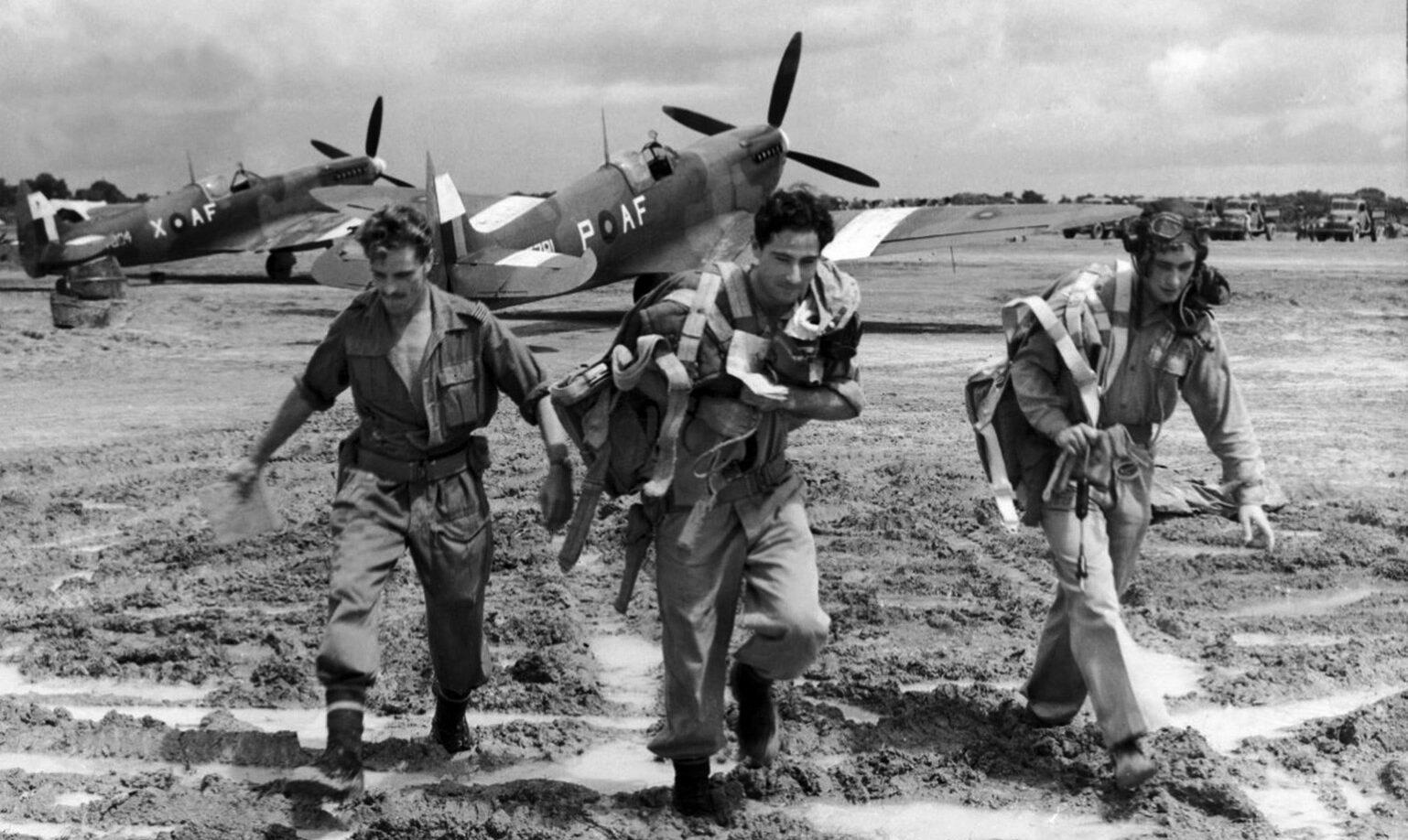
WWII Spitfire Makes Emergency Landing After Engine Failure
A World War Two-era Spitfire was compelled to execute an emergency landing in a Kent field following an engine failure mid-flight, according to a report by the Air Accidents Investigation Branch (AAIB). The incident occurred on 3 May near West Hythe and was attributed to the probable age-related failure of a gasket within the aircraft’s fuel system.
Details of the Incident
The AAIB investigation revealed that approximately 35 minutes into the flight, the engine of Spitfire MJ627 began to vibrate, subsequently cutting out and emitting dark smoke. The cause was traced to a degraded gasket that led to a fuel leak and a consequent loss of power. The fuel system was found to be at least 70 years old, with no recorded date for its last overhaul.
During the emergency, the pilot, an experienced flying instructor, opted not to lower the landing gear or jettison the canopy, a decision aimed at reducing drag and maximizing glide distance. The aircraft sustained damage to its underside and propeller upon landing, but the pilot emerged uninjured. The passenger, an experienced commercial pilot, suffered only minor bruising and remained calm throughout the ordeal, as noted by the AAIB.
The pilot, flying in formation with another Spitfire, requested that the accompanying pilot issue a mayday call to air traffic control. Fly a Spitfire, the company that owns the aircraft, confirmed that the pilot “identified a suitable landing area and completed the manoeuvre safely and in full accordance with training and established procedures.” Following minor repairs, the aircraft has since returned to service.
Industry Response and Historical Context
In response to the incident, the UK Civil Aviation Authority issued a safety notice underscoring the critical importance of monitoring and maintaining the airworthiness of aging fuel and hydraulic systems in vintage aircraft. Fly a Spitfire expressed full support for the AAIB’s findings and acknowledged the safety notice.
The emergency landing has reignited discussion within the aviation community regarding the maintenance of historical aircraft. Industry experts emphasize that such events often prompt heightened scrutiny of vintage aircraft safety protocols and may lead to broader conversations about the upkeep of heritage planes. Aviation organizations and enthusiasts alike stress the necessity of regular inspections and rigorous maintenance to ensure the continued safe operation of these historic machines.
Spitfire MJ627 itself carries a notable history, having entered service on 25 September 1944 and credited with downing a Messerschmitt Me 109 over Arnhem just two days later. The aircraft has previously been involved in an emergency landing in 1998 and experienced a cockpit canopy detachment during take-off earlier in 2024, though both incidents concluded without serious injury.
As the aviation sector reflects on this latest event, experts advocate for ongoing vigilance and strict adherence to maintenance standards for all vintage aircraft to safeguard both their legacy and operational safety.

Etihad Airways Suspends Airbus A380 Flights on Key Route

Aditya Birla Group Seeks Approval for Aircraft Leasing in GIFT City

Qatar Airways Highlights Innovation and Connectivity at Arabian Travel Market 2026

Hong Kong's Five-Year Plan Includes Andrew Fan's Aircraft Parts Processing Hub Proposal

ACIA Aero Leasing Delivers ATR72-600 to Air Nostrum

RTX Appoints Jill Albertelli as Head of Pratt & Whitney

TAT Technologies Joins Beyond Aero Hydrogen Aircraft Program

AURAK Study Highlights Barriers to Air Taxi Adoption in Emerging Economies

Xiamen Air Selects Altitude for 787 Maintenance at Heathrow

Etihad and Swissport Extend Global Partnership
