
画像

エアロジニー — あなたのインテリジェントな副操縦士。

何でも尋ねてください。全てを分析してください。即座に行動してください。

現在のトレンド

Categories

Airbus Shares Rise Amid Record Order Backlog
July 28, 2025By ePlane AI
Airbus Shares Rise Amid Record Order Backlog
0
0
Airbus
Order Backlog
A320neo Family

Airbus Shares Rise Amid Record Order Backlog

Strong Market Position and Recent Performance

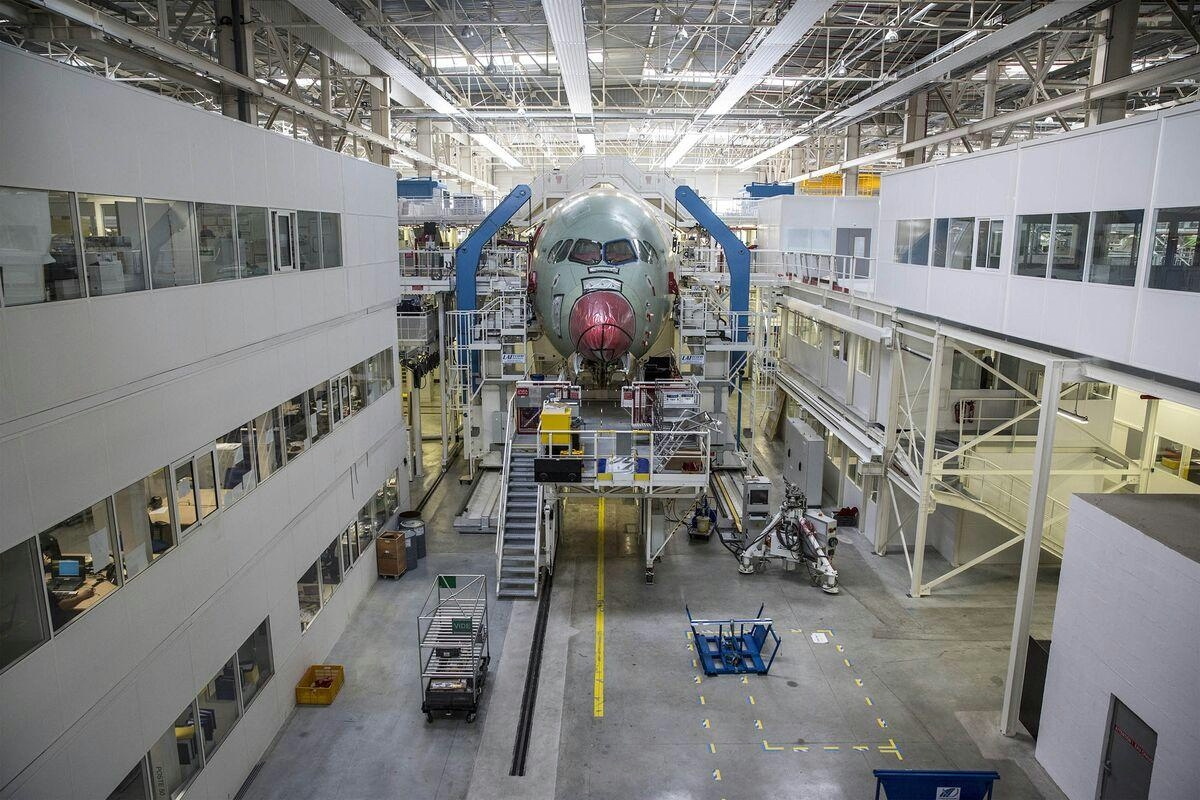
Airbus SE, headquartered in Leiden, the Netherlands, continues to assert its dominance in the global aerospace and defense industry. With significant operations across France, Germany, Spain, and the United Kingdom, the company designs, manufactures, and sells commercial jetliners, civil and military helicopters, as well as a wide array of defense and space technologies. While commercial aircraft sales remain the primary source of revenue, Airbus also benefits from long-term service contracts, maintenance agreements, defense projects, and satellite ventures.

As the world’s second-largest commercial aircraft manufacturer after Boeing, Airbus’s competitive advantage is underscored by its substantial order backlog, which stood at 8,726 commercial jets as of the first quarter of 2025. This backlog is largely driven by the popular A320neo family, providing a steady pipeline of future deliveries. The company’s extensive after-sales network further supports cash flow stability, even during periods of slower new orders. Airbus competes vigorously with Boeing for airline contracts and faces competition in defense and aerospace sectors from firms such as Lockheed Martin, Northrop Grumman, Safran, and Rolls-Royce.

On July 28, 2025, Airbus shares closed at $216.15, representing a 43% increase from $151.00 a year earlier. This performance significantly outpaced the S&P 500’s 17.5% gain over the same period. The share price surge reflects renewed demand for air travel and airlines’ readiness to invest in fleet modernization. In the first quarter of 2025, net commercial aircraft orders rose 20% year-over-year to 204 units, further expanding Airbus’s already substantial backlog. Notable institutional deals, including Avolon’s order for 90 jets and contracts worth $8.1 billion secured at the Paris Airshow, have bolstered investor confidence.

Financial Outlook and Growth Drivers

Airbus reported revenues of €68.7 billion for 2024, marking a 5.8% increase compared to the previous year. Analysts project revenues to reach €74.5 billion in 2025, an 8.4% rise, and €76.6 billion in 2026, a further 2.8% increase. Net income is expected to grow from €3.97 billion in 2024 to €4.3 billion in 2025, with forecasts suggesting a rise to approximately €5.5 billion by 2026. These improvements are underpinned by plans to increase A320neo production to 75 aircraft per month by 2026, a 10% growth in helicopter services revenue in the first quarter, a 30% surge in Defence & Space order value, and the integration of Spirit AeroSystems beginning in the third quarter of 2025.

The company’s financial position remains robust, with a trailing twelve-month profit margin of 4.6%, a return on equity of 18.2%, €11 billion in net cash at the end of Q1 2025, and €6.3 billion in operating cash flow for 2024. Airbus’s competitive moat is reinforced by long-term contracts, high certification barriers, global scale, a diversified aftermarket, and a well-established brand reputation.

Challenges and Risks

Despite its strong fundamentals and record backlog, Airbus faces notable challenges. Ongoing supply chain disruptions pose a significant risk to the company’s ability to scale up production, particularly for the high-demand A320neo models. These bottlenecks have already compelled Airbus to revise its aircraft delivery growth forecasts, which may temper market expectations and exert pressure on the stock price. Additionally, competitors such as Boeing may attempt to exploit Airbus’s supply chain vulnerabilities to reclaim market share.

While Airbus’s record order backlog and solid financial health have driven its recent share price rally, supply chain constraints and competitive pressures remain critical risks for investors and industry observers alike.

More news
Airlines Dismantle New Planes to Salvage Engines

Airlines Dismantle New Planes to Salvage Engines

Airlines Dismantle New Planes to Salvage Engines Amid Supply Chain Crisis The ongoing turmoil in global supply chains took center stage at this week’s Singapore Airshow, where industry leaders confronted the persistent challenges facing aviation. Despite a robust rebound in passenger demand following the pandemic, airlines and suppliers continue to struggle with severe parts shortages and geopolitical tensions. These pressures have revealed deeper structural vulnerabilities within the sector, giving rise to what has been termed the “cannibalization economy”—a phenomenon in which airlines are dismantling even relatively new aircraft to recover valuable engines and components. Supply Chain Disruptions: The New Industry Norm Executives at the airshow characterized prolonged delays and bottlenecks as the prevailing condition in aviation supply chains. ST Engineering, the world’s largest airframe maintenance provider, reported that lead times for essential components and materials have extended beyond a year, a stark contrast to the pre-pandemic norm of a few months. Jeffrey Lam, ST Engineering’s Chief Operating Officer, emphasized the global nature of the shortage, noting that early ordering no longer guarantees timely delivery: “The shortage is worldwide, so you actually can’t even buy anything early if you wanted to.” Gael Meheust, CEO of engine manufacturer CFM International, highlighted the paradox confronting the industry. Although production has increased since the pandemic, it remains insufficient to meet the unprecedented demand from airlines and lessors. “It’s not just that the supply chain cannot deliver on the ramp-up, it’s that the demand is at a level that we had never imagined,” Meheust explained. Engine Shortages Drive Aircraft Cannibalization The crisis is especially severe for operators of Airbus A320neo and A321neo aircraft powered by Pratt & Whitney’s PW1000G Geared Turbofan engines. Manufacturing defects linked to contaminated powdered metal in turbine and compressor disks have triggered extensive recalls and groundings. By late 2025, over 800 aircraft equipped with these engines were grounded or stored worldwide, accounting for roughly one-third of the fleet. This shortage has compelled airlines to dismantle nearly new jets to harvest spare parts. A notable case involved two IndiGo A321neos, each only six years old, which were taken apart because their components held greater value than the aircraft themselves. While such measures address immediate operational demands, they also introduce significant challenges, including increased costs, potential regulatory scrutiny, and intensified competitive pressures. Industry Implications and Strategic Responses The repercussions of these supply chain disruptions are reverberating throughout the aviation sector. Airlines with more efficient maintenance operations or superior access to spare parts are gaining a competitive advantage, whereas others grapple with escalating operational expenses and uncertainty. In response, some carriers are investing in in-house maintenance capabilities or forging strategic partnerships to manage engine overhauls more cost-effectively. Compounding these difficulties are regional uncertainties, particularly in Latin America and the Caribbean, which complicate demand forecasting and fleet renewal planning. The persistent backlog in new aircraft deliveries further exacerbates the situation, forcing airlines to make difficult decisions as they navigate an increasingly complex environment. As the aviation industry adapts to these challenges, the dismantling of young aircraft for parts starkly illustrates the severity of the supply chain crisis and the extraordinary measures airlines must undertake to maintain operational continuity.
AI Enhances Passenger Experience in Aviation

AI Enhances Passenger Experience in Aviation

AI Enhances Passenger Experience in Aviation Artificial intelligence (AI) is increasingly reshaping the aviation industry, transforming both operational processes and the passenger experience. Airlines worldwide are integrating AI-driven systems into their daily workflows to enhance efficiency and provide smoother, more personalized journeys for travelers. This technological evolution is becoming a fundamental element of modern airline infrastructure, enabling carriers to manage complexity and deliver service at scale. Real-Time Decision-Making and Operational Efficiency One of the most significant applications of AI in aviation lies in real-time decision-making aimed at reducing uncertainty and improving precision throughout the travel process. At APEX TECH 2026, Aeroméxico’s Chief Digital and Customer Experience Officer, Andrés Castañeda Ochoa, outlined a vision for 2030 where AI-driven systems maintain a continuous, real-time understanding of each passenger’s journey. This approach emphasizes supporting human service rather than replacing it, with hyper-personalization becoming the new standard in hospitality. American Airlines exemplifies this philosophy through its in-house AI flight-hold system, designed to protect tight connections. The system identifies departing flights with connecting passengers delayed by disruptions and assesses whether a brief gate hold is feasible without disrupting the broader network. When conditions permit, the system authorizes a short delay and automatically updates affected travelers. Early feedback indicates that passengers appreciate the reassurance provided by AI alerts confirming their connections are secure. Globally, other carriers are adopting similar innovations. Flydubai’s Turnaround Management Program and Podeba’s humanoid robot Volodya illustrate how AI is being deployed across both operational and customer-facing environments, underscoring its growing role in streamlining airline operations. AI-Powered Customer Support and Industry Perspectives Delta Air Lines has introduced AI-powered customer support through its Delta Concierge, an assistant embedded within the Fly Delta app for SkyMiles members. Launched in October 2025, this AI tool addresses routine inquiries related to baggage, gates, and flight updates, aiming to seamlessly blend physical and digital customer experiences. Eric Phillips, Delta’s Chief Digital Officer, described the assistant as more than a digital tool, highlighting its role in integrating AI technology to enhance service delivery. Despite these advancements, industry leaders remain cautious about AI’s limitations. United Airlines CEO Scott Kirby has expressed skepticism regarding AI’s accuracy in decision-making, warning that AI may sometimes offer reassuring but not entirely reliable responses. This caution reflects broader market uncertainties, with some sectors experiencing selloffs amid concerns that AI could displace traditional software services. Airlines are responding with varied strategies: while some invest heavily in AI to optimize operations, others approach its adoption more conservatively, particularly in areas requiring nuanced judgment. The aviation sector also contends with external challenges such as geopolitical tensions and economic pressures, which may affect the pace and extent of AI integration. Nonetheless, AI’s expanding role in enhancing passenger experience continues to set new benchmarks for service quality and operational excellence across the industry.
FedEx A300 Nose Gear Collapses During Maintenance at BWI Airport

FedEx A300 Nose Gear Collapses During Maintenance at BWI Airport

FedEx A300 Nose Gear Collapses During Maintenance at BWI Airport A FedEx Airbus A300-600F freighter suffered a nose landing gear collapse while undergoing routine maintenance outside a hangar at Baltimore/Washington International Thurgood Marshall Airport (BWI) on February 4, 2026. The incident prompted an immediate response from airport fire and rescue teams, though no injuries were reported. Both FedEx and airport officials confirmed that all personnel remained unharmed during the event. Details of the Incident The aircraft, registered as N682FE, was stationary on the cargo apron adjacent to maintenance facilities when the nose gear gave way, causing the forward fuselage to rest on the ground. Visual evidence from the scene revealed damage to the nose landing gear assembly, the gear door, and the lower forward fuselage skin. Maryland Aviation Administration representatives noted that the incident occurred within a restricted cargo area and did not affect commercial flight operations at BWI. FedEx acknowledged the event, expressing appreciation for the swift actions of first responders. The company has not reported any operational changes in the aftermath but remains focused on ensuring safety and minimizing disruption. Investigation and Operational Context The Federal Aviation Administration (FAA) is expected to initiate a standard investigation to determine the cause of the nose gear failure. At this stage, no preliminary findings have been disclosed, and there is no indication of a systemic safety issue affecting the Airbus A300 fleet. Experts note that nose gear collapses during maintenance are uncommon but can occur if safety pins are not properly installed or if hydraulic systems are inadvertently pressurized while the aircraft is grounded. This incident arrives amid FedEx’s ongoing Network 2.0 initiative, a strategic program aimed at reducing costs and improving operational efficiency in response to declining demand. The nose gear collapse may invite increased scrutiny from aviation regulators, potentially leading to delays in flight schedules and elevated maintenance expenses. Market observers suggest that the event could temporarily affect investor confidence, while competitors such as UPS might leverage the situation to emphasize their own operational reliability. Fleet Considerations FedEx continues to operate a fleet of Airbus A300-600 freighters, many of which have been in service since the late 1990s and early 2000s. Although the aircraft type has a reputation as a dependable cargo workhorse, the aging fleet demands more rigorous inspections and maintenance protocols. The recent incident highlights the challenges faced by operators in maintaining older aircraft amid broader industry efforts to streamline operations and control costs.
Archer Aviation Forms Partnership with Serbia to Develop Air Taxi Services

Archer Aviation Forms Partnership with Serbia to Develop Air Taxi Services

Archer Aviation Partners with Serbia to Advance Air Taxi Services Archer Aviation Inc. [NYSE: ACHR] experienced a notable 11.02% increase in its stock price on Friday, February 6, 2026, driven by growing momentum in urban air mobility and a landmark partnership with Serbia. This collaboration aims to introduce Archer’s Midnight aircraft to Serbian airspace, positioning the country as a pioneer in next-generation air taxi services. Strategic Partnership and Market Implications The alliance between Archer and Serbia represents a significant milestone in the evolution of urban transportation. Beyond plans to showcase the Midnight aircraft and explore an initial fleet acquisition, the partnership encompasses industrial cooperation focused on sourcing rare earth magnets and battery minerals critical to electric vertical takeoff and landing (eVTOL) technology. Serbia’s appointment of Archer as its air taxi cultural ambassador highlights the nation’s commitment to innovation and economic development, leveraging Archer’s expertise to enhance commuter convenience and foster national pride. Financial Performance and Investor Confidence Archer’s recent financial indicators reflect increasing investor confidence. The stock opened at $6.795 and closed at $7.205, demonstrating resilience and positive momentum. The company’s strong current ratios and minimal public debt, recorded at 0.05, underscore its solid financial foundation. Concurrent capital investments indicate a strategic focus on long-term growth, while revenue prospects are expected to improve with the deployment of the Midnight aircraft and the expansion of technology partnerships. Technological Innovation and Global Expansion A pivotal factor in Archer’s recent progress is its collaboration with NVIDIA, aimed at integrating advanced artificial intelligence to enhance aviation safety and autonomous flight capabilities. This partnership is anticipated to accelerate the development of reliable and efficient air taxi operations, reinforcing Archer’s position as an industry innovator. In addition to its activities in Serbia, Archer is broadening its global presence. The company’s involvement in the Los Angeles 2028 Olympic Games and the establishment of a UK aerospace engineering hub demonstrate its commitment to scaling operations and advancing technological expertise on an international scale. Challenges and Competitive Environment Despite these advancements, Archer faces considerable challenges. Regulatory barriers remain a significant obstacle in the establishment of air taxi services, with authorities closely examining issues related to safety, noise, and urban integration. Public concerns regarding noise pollution and operational safety may also affect adoption rates. Furthermore, competition within the eVTOL sector is intensifying, with rivals such as Joby Aviation actively pursuing regulatory approvals and market share. Outlook Archer’s partnership with Serbia, supported by technological collaborations and global expansion initiatives, positions the company as a frontrunner in the emerging air taxi market. While regulatory and competitive challenges persist, investor enthusiasm and strategic efforts suggest a promising trajectory for Archer Aviation as it endeavors to redefine urban mobility.
Early Aircraft Collection to Appear at AirVenture Oshkosh 2026

Early Aircraft Collection to Appear at AirVenture Oshkosh 2026

Early Aircraft Collection to Appear at AirVenture Oshkosh 2026 Celebrating Aviation’s Formative Years A distinguished collection of early aircraft, emblematic of the pioneering era of powered flight, will be prominently featured at the Experimental Aircraft Association’s (EAA) AirVenture Oshkosh 2026. Scheduled to take place from July 20 to 26 at Wittman Regional Airport in Oshkosh, Wisconsin, the event will showcase the “Pioneers of Flight” exhibit. This display will present a combination of original aircraft and meticulously crafted reproductions that chronicle the rapid advancements in aviation following the Wright brothers’ groundbreaking achievements. Situated within the vintage aircraft section of the event, the exhibit will highlight key milestones from aviation’s earliest decades. Among the notable aircraft on display are a replica of the 1907 Santos-Dumont Demoiselle, a 1909 Blériot XI, a Morane-Saulnier Type L reproduction, a restored 1916 J-1 Standard, a 1927 Swallow biplane, and a reproduction of the Spirit of St. Louis constructed by the EAA. These aircraft, which may appear delicate by contemporary standards, serve as a testament to the ingenuity and boldness of early aviators. Rick Larsen, EAA’s vice president of communities and member programs, emphasized the significance of these early designs, stating, “The earliest designs were conceived by individuals and appear fragile by today’s standards, but they accomplished many of the first milestones in flight. The pace of innovations during aviation’s first quarter century is astonishing as one looks at where it started to where it was by the late 1920s.” The exhibit will be enhanced by a series of complementary activities, including forums organized by the Vintage Aircraft Association, evening presentations, engine run-ups, and selected demonstrations during the afternoon air shows. A detailed schedule of these events will be released closer to the date. Aviation Industry Context and Broader Trends This homage to aviation’s origins arrives amid a period of significant challenges and transformation within the industry. Leading manufacturers such as Airbus and Boeing are navigating increased production demands alongside complex strategic decisions concerning future aircraft development. The sustained global demand for air travel, coupled with a growing aftermarket for older aircraft models, continues to influence market dynamics. Events like AirVenture Oshkosh underscore the enduring fascination with classic aircraft and their historical importance. In parallel, industry competitors are adapting their strategies to evolving market conditions. China’s Aviation Industry Corporation (AVIC) is actively promoting the J-35 fighter jet as a cost-effective alternative to the F-35, seeking to expand its presence in the defense sector. Meanwhile, the long-haul business jet market is focusing on growth opportunities in the Asia Pacific region, with manufacturers such as Gulfstream, Dassault, and Bombardier offering aircraft with extended range capabilities to meet increasing demand. As AirVenture Oshkosh 2026 prepares to honor the legacy of early flight, the event simultaneously reflects the broader trajectory of the aviation industry, where a deep respect for historical achievements intersects with the complexities and opportunities of a rapidly evolving global landscape.
2026 TPG Awards: Best Innovation in Airline Loyalty

2026 TPG Awards: Best Innovation in Airline Loyalty

2026 TPG Awards: Best Innovation in Airline Loyalty Atmos Rewards: A New Chapter in Airline Loyalty When Alaska Airlines acquired Hawaiian Airlines in 2024, the announcement of a unified loyalty program was met with skepticism by many frequent flyers. Alaska’s Mileage Plan had long been regarded as a favorite among discerning travelers, and recent changes to major loyalty programs had often left customers dissatisfied. However, those concerns were largely alleviated with the launch of Atmos Rewards last summer. This new joint loyalty program connects Alaska and Hawaiian Airlines, which continue to operate independently in the air, while offering a cohesive rewards experience. Atmos Rewards retains the core strengths of Alaska’s Mileage Plan, particularly its transparent award chart that allows members to secure competitively priced redemptions on partner airlines such as American Airlines. Beyond preserving these valued features, the program introduces a range of innovations that distinguish it in an increasingly competitive and evolving loyalty market. Navigating a Complex Loyalty Landscape The introduction of Atmos Rewards coincides with a period of heightened consumer expectations for loyalty programs. According to Brand Keys’ Customer Loyalty Engagement Index, travelers now demand more personalized and valuable rewards, compelling even established loyalty programs to innovate or risk losing relevance. This challenge is compounded by the growing appeal of credit card rewards programs, which in many cases rival or surpass the value offered by traditional airline and hotel loyalty schemes. Skift Research highlights this trend, particularly in the United States, where lucrative credit card partnerships have become integral to airline loyalty strategies. These partnerships, however, face uncertainty amid regulatory proposals such as the proposed credit card fee cap under the Trump administration, which could significantly alter the funding and structure of travel rewards. In this complex environment, Atmos Rewards distinguishes itself through its flexibility and sustained value proposition. It is the first U.S. airline loyalty program to allow members to choose how they earn points and status, reflecting a customer-centric approach that has led many travelers—and even industry insiders—to reevaluate their airline loyalty preferences. Elevating Elite Benefits A standout feature of Atmos Rewards is the global upgrade benefit available to its top-tier Titanium elite members. Unlike many competitors that limit upgrade certificates, Atmos Rewards offers unlimited, space-available complimentary upgrades to lie-flat business-class seats on both Alaska and Hawaiian flights. This benefit ensures that if a Titanium member is booked on a flight with an available lie-flat seat, the upgrade is automatically granted. This is a particularly compelling incentive as Alaska Airlines continues to expand its intercontinental network. This innovative approach not only rewards the most loyal customers but also raises the standard for elite perks in the airline industry. By combining Alaska’s established strengths with new, high-value benefits and enhanced flexibility, Atmos Rewards has set a new benchmark for airline loyalty programs in the United States. Industry Recognition In recognition of its innovative approach and customer-focused design, Atmos Rewards was awarded Best Innovation in Airline Loyalty at the 2026 TPG Awards. Amid soaring consumer expectations and intensifying competition—not only from other airlines but also from credit card issuers and regulatory challenges—Atmos Rewards’ successful integration of tradition and innovation has proven to be a compelling and effective model.
Kazakhstan Launches First Air Taxi Service Between Alatau and Almaty

Kazakhstan Launches First Air Taxi Service Between Alatau and Almaty

Kazakhstan Launches First Electric Air Taxi Service Between Alatau and Almaty Kazakhstan is poised to introduce its inaugural electric air taxi service, a landmark development in the country’s urban transportation landscape. The Almaty region will serve as the initial hub for this pioneering initiative, with planned routes connecting the emerging city of Alatau, Almaty, and surrounding regional settlements. Development and Operational Plans The project centers on the Joby Aviation S4, an electric vertical take-off and landing (eVTOL) aircraft developed by the U.S.-based company Joby Aviation. Designed to accommodate four passengers and a pilot, the S4 is nearing the final stages of certification by the U.S. Federal Aviation Administration (FAA) and has already undergone extensive real-world testing. Demonstration flights in Kazakhstan are scheduled for 2026, with commercial operations expected to commence following regulatory approvals from both U.S. and Kazakh aviation authorities. Alatau Advance Air Group, a private operator established in March 2025, has been appointed to manage air mobility services in the Alatau region. The company is collaborating with international partners from the United States, South Korea, China, and Italy to advance aircraft research, infrastructure development, and the establishment of a comprehensive testing ecosystem. Joby Aviation remains a strategic partner in this endeavor. To facilitate the new service, a network of vertiports—specialized airfields designed for vertical take-off and landing aircraft—is planned across Alatau, Almaty, and other strategic locations. This infrastructure will support both short urban flights within the Almaty metropolitan area and longer intercity routes throughout the region. Challenges and Strategic Context Despite the promising outlook, the rollout of Kazakhstan’s first air taxi service faces several challenges. Regulatory frameworks must be adapted to integrate this novel technology with existing transportation systems while ensuring rigorous safety standards. Public acceptance also remains a critical factor, with anticipated concerns regarding noise pollution and safety as the service approaches launch. Market responses are expected to be varied, though growing interest in urban air mobility may encourage competitors to accelerate similar projects in the region. The air taxi concept was initially unveiled in October 2024 during a development forum in South Korea focused on the Alatau project. In November, a strategic agreement was signed in the United States involving Kazakhstan’s Ministry of Digital Development and AI, Joby Aero, Alatau Advance Air Group, and entrepreneur Vyacheslav Kim. This agreement outlined the purchase of eVTOL aircraft valued at approximately $300 million. The initiative is also associated with entrepreneur and former senator Yuri Tskhai, a significant investor in Alatau City. The introduction of air taxis coincides with Almaty’s plans to launch self-driving taxis by May 2026, in partnership with Yandex Kazakhstan. These efforts form part of a broader strategy to enhance urban mobility and alleviate congestion. While these advancements signal a transformative era for Kazakhstan’s transport sector, they also underscore the importance of addressing public concerns and navigating regulatory complexities as the country adopts next-generation mobility solutions. Flight pricing for the air taxi service will be announced following the completion of testing and preparations for commercial launch. The Almaty mayor’s office has described air taxis as an innovative transport solution that will provide rapid connections between Alatau, Almaty, and other cities in the region.
Boeing and Oman Air Extend Predictive Maintenance Agreement for 787s

Boeing and Oman Air Extend Predictive Maintenance Agreement for 787s

Boeing and Oman Air Renew Predictive Maintenance Partnership for 787 Fleet Boeing and Oman Air have announced the extension of their collaboration to deploy Boeing’s Airplane Health Management (AHM) system across Oman Air’s 787 Dreamliner fleet. The renewed agreement, unveiled at the Aviation Week MRO Middle East event in Dubai, reaffirms both companies’ dedication to utilizing advanced predictive maintenance technologies to improve operational efficiency and fleet reliability. Enhancing Operational Efficiency Through Predictive Maintenance Capt. Nasser Al Salmi, Chief Operating Officer of Oman Air, highlighted the strategic value of the partnership, stating that Boeing’s expertise enables the airline to make informed maintenance decisions with greater confidence. He noted that the continued use of the AHM platform enhances Oman Air’s ability to anticipate maintenance needs, optimize parts inventory, and streamline resource planning, thereby supporting smoother operations amid the airline’s ongoing growth. Boeing’s AHM system delivers real-time predictive maintenance alerts, allowing airlines to swiftly diagnose technical issues, reduce aircraft downtime, and improve overall fleet readiness. By leveraging analytics-driven insights, maintenance teams can be deployed more efficiently with the appropriate parts and equipment, facilitating quicker aircraft turnaround times. Crystal Remfert, Senior Director at Boeing Digital Services, emphasized the role of AHM in supporting Oman Air’s expanding flight operations and passenger capacity. She expressed confidence that the continued partnership would help the airline maintain on-time performance and streamline maintenance processes as it pursues further growth. Competitive Landscape and Industry Implications The extension of this agreement comes amid Boeing’s efforts to strengthen its position in the competitive predictive maintenance market, where rivals such as Airbus are making significant investments. While Boeing’s digital solutions have gained traction with carriers like Oman Air, the broader market remains highly contested. Airbus’s dominance in single-aisle aircraft sales positions it as a key competitor closely monitoring Boeing’s advancements in digital services and predictive maintenance. Industry response to Boeing’s renewed deal with Oman Air has been largely positive, reflecting confidence in the company’s digital capabilities. Nevertheless, Boeing continues to face operational challenges, including the delivery of higher maximum weight 787 models and the ongoing impact of Pratt & Whitney’s engine recall, which has affected multiple stakeholders across the aviation sector. As airlines worldwide increasingly prioritize fleet optimization and disruption minimization, predictive maintenance technologies such as Boeing’s AHM are becoming integral to operational strategies. The sustained partnership between Boeing and Oman Air underscores the growing importance of data-driven maintenance solutions in supporting airline reliability and growth within a rapidly evolving aviation environment.
Singapore Airshow Highlights Airlines’ Struggle Amid Aircraft Supply Shortage

Singapore Airshow Highlights Airlines’ Struggle Amid Aircraft Supply Shortage

Singapore Airshow Highlights Airlines’ Struggle Amid Aircraft Supply Shortage Asia-Pacific Aviation Growth Meets Supply Chain Challenges As the biennial Singapore Airshow convenes this week, the commercial aviation sector is grappling with a critical supply shortage amid rapid growth in the Asia-Pacific region. Industry leaders and analysts attending the event have underscored the persistent bottlenecks affecting major manufacturers Boeing and Airbus, which are struggling to meet the surging demand from regional airlines eager to expand their fleets. The Asia-Pacific market, propelled by robust growth in China and India, remains the fastest-growing region globally for air travel. Passenger traffic is expected to increase by 7.3 percent in 2026, according to Reuters. Data from the Association of Asia Pacific Airlines (AAPA) reveals that regional carriers transported 390.5 million international passengers last year, representing a 9.4 percent rise compared to 2024. Despite this strong demand, aircraft manufacturers and engine suppliers are finding it difficult to keep pace with airlines’ expansion plans due to ongoing supply chain disruptions. Industry Response and Market Dynamics Subhas Menon, Director General of the AAPA, highlighted the urgent need for additional suppliers in a market long dominated by Boeing and Airbus. He described the current situation as a “supply chain crisis,” noting that while occasional disruptions are common, the severity of the present challenges is unprecedented. Although China’s state-owned Commercial Aircraft Corporation (Comac) has started to provide some relief, it has yet to significantly alleviate the pressure on the supply chain. Both Airbus and Boeing are under considerable strain as they attempt to increase production rates and make strategic decisions regarding future aircraft models. Boeing faces particular challenges in the narrowbody segment, where Airbus currently holds a dominant position in single-aisle jet sales. This intensifying competition is closely monitored by airlines, which are eager to see how manufacturers will address the supply constraints. Other manufacturers are adapting their strategies in response to the market conditions. Brazilian company Embraer is prioritizing sales of its E2 regional jets rather than launching new aircraft programs, aiming to meet current demand efficiently. Meanwhile, Textron Aviation has reported strong demand for business aircraft in Asia, reflecting a growing interest among airlines and private operators seeking alternatives amid the shortage of commercial aircraft. As the Singapore Airshow progresses, the industry’s focus remains on how manufacturers and airlines will navigate these unprecedented supply chain challenges. The decisions made in the coming months are expected to influence not only the aviation landscape in Asia but also the global competitive dynamics among aircraft producers.
Korea Aerospace Industries and Hanwha Aerospace to Collaborate on Drone and Aircraft Engine Development

Korea Aerospace Industries and Hanwha Aerospace to Collaborate on Drone and Aircraft Engine Development

Korea Aerospace Industries and Hanwha Aerospace Forge Strategic Partnership on Drone and Aircraft Engine Development Korea Aerospace Industries (KAI) and Hanwha Aerospace have formalized a memorandum of understanding (MOU) to collaborate on the development and export of drones and aircraft engines, alongside broader initiatives within the defense, aerospace, and space sectors. This agreement sets the framework for joint efforts in domestic aircraft engine development, drone technology innovation, entry into the global commercial space market, and the expansion of defense and aerospace supply chains. Strategic Collaboration and Governance The partnership is structured as a mid- to long-term alliance, encompassing future core business areas critical to both companies. Central to this collaboration is the establishment of a Future Aerospace Strategy Committee, composed of senior executives from KAI and Hanwha Aerospace. This committee will oversee the coordination of cooperation plans and ensure alignment of long-term strategic objectives. A significant aspect of the initiative involves supporting small and medium-sized enterprises, startups, and venture firms, particularly those located in South Korea’s Gyeongnam region, in accordance with government policies aimed at regional development. KAI and Hanwha Aerospace intend to jointly develop and export drones and aircraft engines, with a particular focus on tailoring engine designs to domestic aircraft platforms. KAI is concurrently advancing its Next-Generation Air Combat System concept, which integrates manned aircraft, unmanned platforms, and satellite technologies. In the space sector, the partnership will extend to satellites, launch vehicles, and related services. Both companies have agreed to delineate specific focus areas to minimize internal competition while pursuing shared commercial opportunities. Challenges and Market Implications Despite the promising scope of the collaboration, several challenges remain. Securing adequate funding for extensive research and development activities poses a significant obstacle. Additionally, navigating the complex regulatory frameworks governing drones and aircraft engines will require careful management. The integration of advanced technologies across multiple platforms introduces further technical and operational complexities that the partners must address. Market responses to the announcement have been positive, with increased investor interest in South Korea’s defense and aerospace sectors reflecting confidence in the country’s expanding technological capabilities. However, the competitive landscape is expected to intensify, as firms such as LIG Nex1 have recently secured substantial contracts for electronic warfare systems and aircraft upgrades. This dynamic underscores the ongoing race among South Korean companies to establish leadership in advanced aerospace technologies. Through this strategic alliance, KAI and Hanwha Aerospace aim to bolster South Korea’s standing in the global aerospace industry by leveraging joint innovation and supporting a broader ecosystem of suppliers and startups. The partnership is positioned to drive technological advancement and commercial growth amid the challenges inherent in a rapidly evolving sector.
line









