
AIによるインサイトを行動へとつなげる

現在のトレンド
Categories
New AI Collaboration Advances Autonomous Airport Vehicles
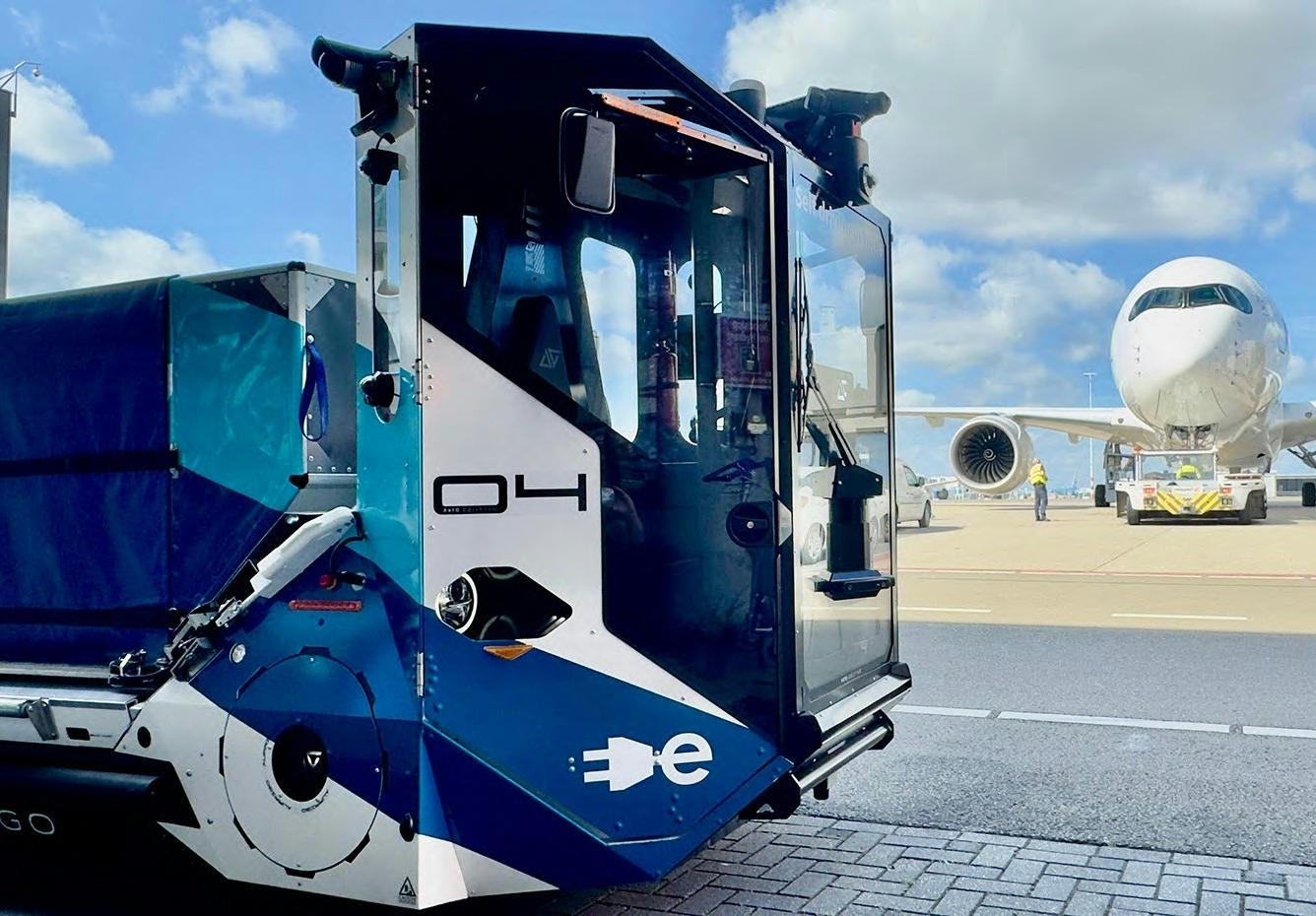
New AI Collaboration Advances Autonomous Airport Vehicles
Aston University has partnered with autonomous vehicle specialist Aurrigo to develop cutting-edge artificial intelligence (AI) systems aimed at enhancing the efficiency, scalability, and sustainability of airport baggage and cargo vehicles. This collaboration, supported by a Knowledge Transfer Partnership funded by Innovate UK, addresses the increasing complexity of managing expanding fleets of self-driving vehicles within airport environments.
Tackling the Challenges of Centralised Control
As airports continue to adopt autonomous vehicles for ground operations, traditional centralised control systems—where human operators manage vehicle scheduling and task allocation—are proving inadequate. These systems must process extensive real-time data, including vehicle locations, workloads, and battery levels, while adapting to dynamic operational changes such as flight delays or gate reassignments. The growth of autonomous fleets exacerbates these challenges, as centralised decision-making can create bottlenecks and slow response times, ultimately limiting operational efficiency.
To overcome these limitations, researchers at Aston University are developing AI algorithms that enable decentralised decision-making. Each vehicle will be equipped to independently assess its status and surroundings, allowing it to make safe and efficient decisions locally without relying on central instructions. This approach leverages advances in artificial intelligence and machine learning to address critical issues such as dynamic task assignment based on vehicle location and battery status, real-time route planning to accommodate unexpected changes, and communication between vehicles operated by different ground handlers.
Towards Smarter, More Sustainable Airport Operations
The decentralised system is designed to scale alongside the expansion of autonomous fleets, potentially improving coordination, reducing unnecessary vehicle movements, and lowering emissions and fuel consumption. Aurrigo, headquartered in Coventry and specialising in autonomous vehicles and software for aviation environments, brings practical operational expertise to the partnership. Simon Brewerton, Aurrigo’s Chief Technology Officer, highlighted that this collaboration builds on previous successful projects, combining academic research with real-world application.
Dr. Farzaneh Farhadi, lead academic from the Aston Centre for Artificial Intelligence Research and Application, emphasised the ambition to enable vehicles to cooperate intelligently as part of a fleet while operating with greater autonomy. Despite the promising potential, the widespread adoption of these technologies faces significant challenges, including regulatory hurdles, safety concerns, and the integration of new AI systems with existing airport infrastructure.
The market is responding with increased investment in AI and autonomous technologies, with competitors accelerating their research and development efforts to remain competitive. The rapid expansion of the self-driving vehicle market, particularly in China, underscores the potential for significant advancements and intensifying competition in autonomous airport vehicle technology.
Aston University, recognised as a national leader in Knowledge Transfer Partnerships, holds the top ranking in the UK for active projects and overall project quality. The outcomes of this partnership may establish new benchmarks for intelligent and sustainable airport operations on a global scale.

Etihad Airways Suspends Airbus A380 Flights on Key Route

Aditya Birla Group Seeks Approval for Aircraft Leasing in GIFT City

Qatar Airways Highlights Innovation and Connectivity at Arabian Travel Market 2026

Hong Kong's Five-Year Plan Includes Andrew Fan's Aircraft Parts Processing Hub Proposal

ACIA Aero Leasing Delivers ATR72-600 to Air Nostrum

RTX Appoints Jill Albertelli as Head of Pratt & Whitney

TAT Technologies Joins Beyond Aero Hydrogen Aircraft Program

AURAK Study Highlights Barriers to Air Taxi Adoption in Emerging Economies

Xiamen Air Selects Altitude for 787 Maintenance at Heathrow

Etihad and Swissport Extend Global Partnership
