image

AeroGenie — Your Intelligent Copilot.

Ask anything. Analyze everything. Act instantly.

Trending

Categories

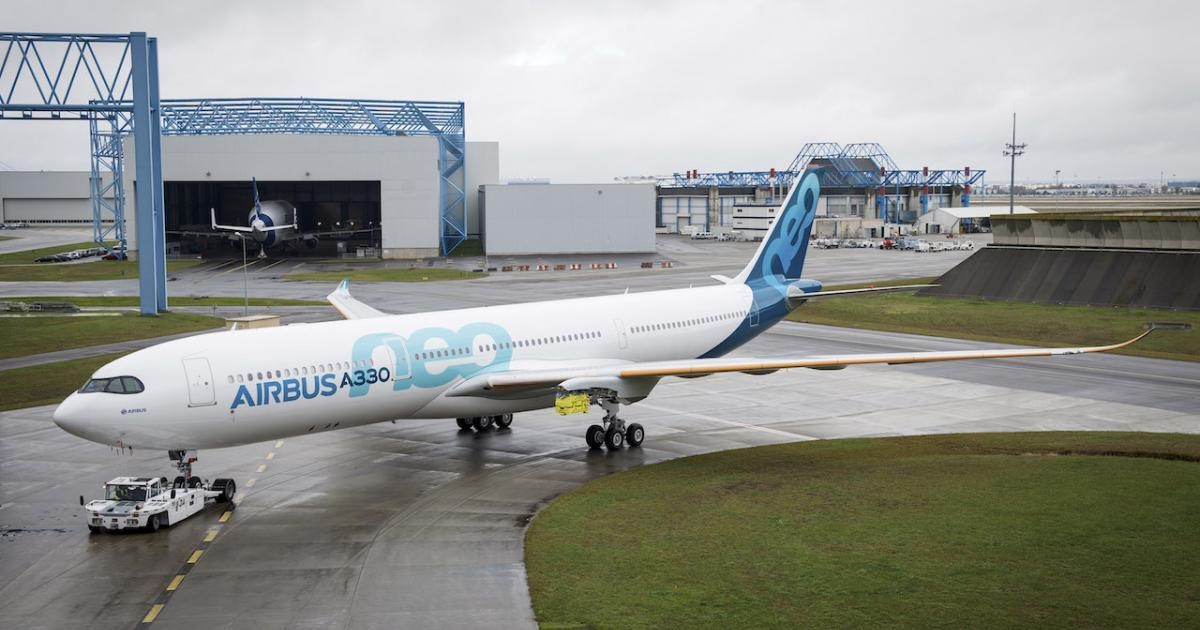
21 Airlines Operating Airbus A330neos in June
May 26, 2025By ePlane AI
21 Airlines Operating Airbus A330neos in June
0
0
Airbus A330neo
A330-900
Widebody Aircraft

Airlines Operating Airbus A330neos in June

Since its introduction in 2014, the Airbus A330neo family, which includes the smaller A330-800 and the larger, more widely adopted A330-900, has steadily increased its footprint among global carriers. Developed as a next-generation widebody aircraft, the A330neo competes directly with Boeing’s 787 Dreamliner and the forthcoming A321XLR, both targeting long-haul market segments. Despite ongoing challenges in the post-pandemic aviation industry, Airbus maintains an optimistic outlook, anticipating substantial growth in global air traffic and continuing to secure new orders for the A330neo series.

The A330-900: Specifications and Market Presence

The A330-900, the more popular model within the A330neo family, was first delivered to launch customer TAP Air Portugal. It measures 208 feet 8 inches in length, with a wingspan of 210 feet and a height of 55 feet 1 inch. Its advanced aerodynamic design and improved fuel efficiency have made it the preferred choice for many airlines seeking to modernize their long-haul fleets.

Recent developments include Vietjet doubling its A330-900 backlog with an additional 20 aircraft, joining over 20 airlines currently operating the type. As of April 30, Airbus had recorded 372 orders for the A330-900, delivering 150 aircraft to date. The model’s widespread adoption is reflected in its diverse operator base, which includes major carriers such as Delta Air Lines with 34 aircraft, TAP Air Portugal with 19, and Condor with 18. Other notable operators include Cebu Pacific Air and ITA Airways, each with 11 aircraft, as well as Virgin Atlantic, Lion Air, and Garuda Indonesia.

One A330-900 (registration VP-CBJ) is presently undergoing cabin outfitting at EuroAirport Basel-Mulhouse-Freiburg ahead of delivery to Desert Wings Aviation, based in Saudi Arabia.

The A330-800: Limited Uptake and Operator Profile

In contrast, the A330-800 has experienced limited market penetration, with only three airlines currently operating the type. Air Greenland operates a single aircraft, Uganda Airlines has two, and Kuwait Airways maintains a fleet of four. Deliveries to these carriers occurred between 2018 and 2022. The remaining backlog includes five undelivered A330-800s, with one allocated to Ireland-based lessor Accipter Holdings and four to Garuda Indonesia. However, Garuda Indonesia’s 2024 annual report confirmed the airline’s decision to cancel its four A330-800 orders as of May 28, 2024, a cancellation that Airbus and Garuda are in the process of formalizing.

Kuwait Airways is unique in operating both A330neo variants. In June, the airline is scheduled to operate its four A330-800s on 31 weekly departures from Kuwait International Airport, according to Cirium Diio data.

Market Outlook

Despite facing stiff competition and an evolving post-COVID-19 environment, the A330neo family continues to expand its operator base and secure new orders. Airbus’s positive forecast for global air traffic growth suggests that the A330neo will remain a significant player in the long-haul aircraft market for the foreseeable future.

More news
ASKY and TAAG Angola Airlines Establish In-House MRO Facilities to Support Fleet Expansion

ASKY and TAAG Angola Airlines Establish In-House MRO Facilities to Support Fleet Expansion

ASKY and TAAG Angola Airlines Establish In-House MRO Facilities to Support Fleet Expansion ASKY Airlines and TAAG Angola Airlines are undertaking substantial investments to develop in-house Maintenance, Repair, and Overhaul (MRO) facilities aimed at supporting their expanding fleets and fostering growth within African aviation. These initiatives are intended to enhance operational efficiency, reduce dependence on external maintenance providers, and position both carriers to meet the increasing demand for air travel across the continent. ASKY Airlines’ $100 Million Investment in Lomé MRO Center Headquartered in Lomé, Togo, ASKY Airlines is committing $100 million to establish a cutting-edge MRO facility through a joint venture with Ethiopian Airlines, which holds a minority stake. This new center will primarily serve the West and Central African regions, supporting ASKY’s growing fleet, including anticipated long-haul aircraft such as the Boeing 787. The initial phase of the project will include two hangars dedicated to narrowbody aircraft and component repairs, with plans for future expansion to accommodate widebody aircraft. This facility is expected to transform Lomé into a regional hub for aviation maintenance, providing services not only to ASKY but also to other carriers operating in West and Central Africa. As tourism and business travel increase in the region, the MRO center will be instrumental in ensuring airlines maintain efficient and reliable operations. TAAG Angola Airlines’ Partnership with AVIC for Luanda MRO Facility TAAG Angola Airlines is developing its own MRO facility in Luanda in collaboration with the Aviation Industry Corporation of China (AVIC). The first of three prefabricated hangars is scheduled to become operational by June 2026. This facility will support TAAG’s expanding fleet and address the growing demand for air travel in Southern Africa. By internalizing maintenance operations, TAAG aims to improve turnaround times, enhance operational self-sufficiency, and reduce reliance on external providers. This strategic development aligns with the airline’s preparations for increased international and long-haul operations, while simultaneously strengthening Angola’s aviation infrastructure and contributing to broader regional growth. Challenges and Market Dynamics Despite the promising outlook, both airlines face significant challenges. The substantial initial capital investment required to build and equip MRO facilities, the necessity of recruiting and training skilled personnel, and potential increases in operational costs—compounded by a constrained powerplant market and limited availability of used serviceable materials—pose ongoing risks. Furthermore, some industry stakeholders have expressed skepticism regarding the financial viability of such large-scale projects. Competitors may respond by accelerating their own MRO investments to enhance operational resilience. Nevertheless, ASKY and TAAG remain steadfast in their commitment to these developments, viewing them as critical to securing long-term growth and maintaining competitiveness. Implications for Africa’s Aviation Sector As demand for air travel continues to rise in West and Southern Africa, the establishment of in-house MRO centers by ASKY and TAAG is poised to play a vital role in maintaining fleet health, improving operational efficiency, and reducing costs. These strategic investments not only support the ambitions of the individual airlines but also contribute significantly to the broader advancement of Africa’s aviation industry.
Airbus to Release Audited 2025 Orders and Delivery Data on January 12

Airbus to Release Audited 2025 Orders and Delivery Data on January 12

Airbus to Publish Audited 2025 Orders and Delivery Figures on January 12 Airbus has confirmed it will release its audited full-year commercial aircraft orders and delivery data for 2025 on January 12. This announcement reinforces confidence in the company’s recently updated target of delivering approximately 790 aircraft during the year. The European aerospace manufacturer communicated the release date via email, following industry reports indicating that Airbus had already delivered at least 782 jets in 2025. Delivery Targets and Market Expectations The scheduled publication underscores Airbus’s commitment to its previously stated guidance, with no further revisions announced to date. Delivery figures are closely monitored by investors and analysts, given their substantial influence on market sentiment and the company’s financial outlook. Airbus continues to face challenges in maintaining production efficiency and meeting delivery goals, particularly in light of recent production issues. Market analysts have projected deliveries of around 785 aircraft for 2025, making the forthcoming audited data critical in determining whether Airbus meets or surpasses these expectations. Competitive Context and Industry Implications Industry observers are also closely watching how Airbus’s performance compares with that of its primary competitor, Boeing, which led in new aircraft orders as of November 2025. This competitive dynamic is expected to shape strategic decisions for both companies, especially as Airbus remains heavily reliant on its narrowbody aircraft production while striving to regain momentum in the widebody segment. The upcoming data release will offer a comprehensive overview of Airbus’s commercial performance throughout 2025, providing valuable insights into order trends, delivery execution, and the company’s standing within the global aviation market. Market reactions will likely depend on whether the audited figures meet or exceed analyst forecasts and how effectively Airbus addresses ongoing production and supply chain challenges.
Lufthansa Celebrates 100 Years of Aviation Innovation

Lufthansa Celebrates 100 Years of Aviation Innovation

Lufthansa Celebrates a Century of Aviation Excellence Lufthansa, a prominent global airline, marks its 100th anniversary, celebrating a century defined by innovation and leadership in the aviation industry. Established in 1926 as Deutsche Luft Hansa AG through the consolidation of several regional carriers, the airline quickly emerged as a pioneer in international air travel. Over the decades, Lufthansa has played a significant role in shaping the trajectory of commercial aviation both within Germany and on the global stage. A Legacy of Innovation and Resilience From its inception, Lufthansa set new standards by expanding international routes and adopting cutting-edge technologies. The airline faced considerable challenges following World War II, including the destruction of much of its fleet. Nevertheless, Lufthansa’s resurgence was marked by a determined focus on modernization, exemplified by the introduction of the Airbus A300. This aircraft brought enhanced efficiency and passenger comfort, reinforcing the airline’s commitment to innovation. Throughout its history, Lufthansa has maintained this forward-looking approach, continuously evolving to meet the demands of a dynamic industry. Advancing Technology and Sustainability Initiatives Looking to the future, Lufthansa remains at the forefront of technological progress and environmental responsibility. The airline has invested in advanced aircraft such as the Airbus A350 and is actively pursuing ambitious sustainability goals, including achieving carbon-neutral operations by 2050. Efforts to reduce environmental impact encompass the development of biofuels and comprehensive fleet upgrades aimed at improving fuel efficiency. A significant component of this strategy involves the planned retrofit of 134 Airbus A320 aircraft to optimize flight paths, with work scheduled to commence in 2026. While this initiative is viewed by some investors as a positive step toward greater sustainability and operational efficiency, it also presents substantial technical and financial challenges. The high costs associated with retrofitting and the aggressive timeline have elicited mixed reactions from the market, with concerns raised about the potential financial strain. This move may prompt competitors to accelerate their own sustainability programs or emphasize their technological advancements, potentially intensifying competition within the sector. Navigating a Complex Industry Landscape Lufthansa’s centennial arrives amid a period of heightened competition and economic uncertainty in the airline industry. Analysts anticipate increased class segmentation and evolving consumer preferences by 2026, factors that will require Lufthansa to carefully manage its strategic positioning. Recent leadership changes at subsidiaries Eurowings and SunExpress have attracted attention, with industry observers closely monitoring these developments for indications of stability and future direction within the Lufthansa Group. Sustained Commitment to Passenger Experience Throughout its evolution, Lufthansa has consistently prioritized customer service excellence. The airline’s investments in premium cabins—including First Class, Business Class, and Premium Economy—alongside exclusive lounges at major hubs such as Frankfurt and Munich, underscore its dedication to passenger comfort. Digital innovations further enhance the travel experience, featuring a comprehensive mobile application that facilitates seamless check-in, personalized services, and advanced in-flight entertainment options. As Lufthansa commemorates its centenary, it reflects on a distinguished legacy of adaptability and excellence, while embracing a future shaped by sustainability, technological innovation, and an unwavering commitment to world-class air travel.
Comply365 Acquires MINT Software Systems

Comply365 Acquires MINT Software Systems

Comply365 Expands Aviation Training Capabilities with MINT Software Systems Acquisition Comply365 has announced the acquisition of MINT Software Systems, a prominent provider of aviation training management solutions. This strategic move is designed to enhance Comply365’s expertise in aviation training and accelerate the development of its AI-driven platform, which integrates operations, safety, and training for more than 500 clients worldwide. Industry Context and Market Dynamics The acquisition occurs amid a period of significant consolidation and volatility within the technology and cybersecurity sectors. In 2025, leading companies such as Palo Alto Networks and CrowdStrike spearheaded a series of mergers and acquisitions that have reshaped competitive dynamics across the industry. Notable transactions, including Veeam’s purchase of Securiti AI and Palo Alto’s acquisition of Israeli cybersecurity firms, have intensified the race for technological leadership. This wave of consolidation is unfolding against a backdrop of market sensitivity to policy changes and internal divisions within the Federal Reserve. Analysts have described this environment as a “silent warning” for 2026, with potential implications for deal-making and valuations across multiple industries. Strategic Synergies and Future Prospects Backed by Insight Partners and Liberty Hall Capital Partners, Comply365 plans to leverage MINT’s digital ecosystem, which facilitates real-time connections among training administrators, instructors, and trainees, to enhance its next-generation solution, TrainingManager365. By integrating MINT’s capabilities in managing qualification programs and scheduling with Comply365’s existing platform, the company aims to achieve significant improvements in efficiency, cost reduction, and operational integrity. Ilia Kostov, CEO of Comply365, emphasized the complementary strengths of the two companies, stating, “Combining Comply365 and MINT’s deep domain expertise and innovation, we will unify our market-leading training management capabilities into the next generation, AI-powered solution, TrainingManager365, as well as further strengthen our unified platform, connecting the mission-critical domains of operations, safety, and training.” He added that the combined entity will deliver intelligent and streamlined training operations, positioning Comply365 as a preferred provider for organizations seeking to modernize and optimize their training and compliance processes. Jörg Latteier, CEO of MINT, highlighted the alignment of both companies’ philosophies, noting, “MINT’s success has been built on a foundation of continued innovation, close customer collaboration, and deep aviation industry training expertise. Our philosophy aligns with Comply365’s customer-centric vision and commitment to harnessing cutting-edge AI for greater efficiencies and exceptional training experiences. We are excited to become part of the Comply365 family and help drive forward their next-generation solution, TrainingManager365.” As the aviation and technology sectors continue to face economic uncertainty and competitive pressures, Comply365’s acquisition of MINT positions the company to set new standards in training management. The long-term success of this integration will depend on the combined entity’s ability to navigate ongoing market volatility, regulatory changes, and the broader trend of industry consolidation.
Boeing Names Fahad Al Mheiri Vice President for Middle East and North Africa

Boeing Names Fahad Al Mheiri Vice President for Middle East and North Africa

Boeing Appoints Fahad Al Mheiri as Vice President for Middle East and North Africa Boeing has announced the appointment of Fahad Al Mheiri as Vice President for the Middle East and North Africa, effective January 2026. Based in Dubai, Al Mheiri will be responsible for overseeing the company’s strategic initiatives and partnerships throughout the region, aligning with national ambitions to expand the aerospace sector. Leadership and Regional Expertise Al Mheiri joins Boeing from Raytheon Emirates, where he held the position of Managing Director. His extensive experience spans the energy, space, and defense industries, bringing a wealth of executive leadership and regional knowledge to his new role. He succeeds Kuljit Ghata-Aura, who has moved to another executive position within Boeing. The company also confirmed that its Saudi Arabian operations will remain under the management of country vice president Asaad Aljomoai. Boeing’s presence in the Middle East and North Africa is well established, with a workforce exceeding 700 employees and support extended to more than 30 commercial airline customers and 12 armed forces across the region. The company actively engages with regional partners such as Strata and EPI in the United Arab Emirates, highlighting its commitment to local industrial participation and the development of supply chains. Strategic Outlook and Market Context An Emirati national, Al Mheiri holds a Bachelor of Science degree in Mechanical Engineering from Boston University. His appointment is expected to enhance Boeing’s collaboration with governments, industry partners, and customers in the region, reflecting the company’s ongoing investment in local leadership and sustainable relationships. Al Mheiri assumes his role amid a complex geopolitical environment. Boeing faces challenges related to regional dynamics, including recent Chinese sanctions targeting its defense operations. Despite these obstacles, market response has been largely positive. Boeing’s stock experienced a notable increase following the completion of its $4.7 billion acquisition of Spirit AeroSystems, a strategic move intended to improve production quality and supply chain resilience. The competitive landscape remains intense. Airbus, Boeing’s principal competitor, has recently reduced its delivery targets due to technical difficulties, while Boeing has reiterated its goal of achieving positive cash flow by 2026. Nevertheless, Boeing’s share price continues to be affected by regulatory developments, production rates, and certification processes for its aircraft models. Under Al Mheiri’s leadership, Boeing aims to deepen its regional engagement by supporting investment in local infrastructure, research, and innovation, navigating both the opportunities and challenges presented by the evolving aerospace market.
McNally Capital Acquires PT6A MRO Specialist ATS

McNally Capital Acquires PT6A MRO Specialist ATS

McNally Capital Expands Aerospace Portfolio with Acquisition of ATS McNally Capital, a private equity firm specializing in mid-market aerospace, defense, and industrial technology investments, has announced the acquisition of Airforce Turbine Service, Ltd. (ATS), a prominent independent provider of maintenance, repair, and overhaul (MRO) services for the PT6A turboprop engine family. This strategic transaction also incorporates Turbine Engine Maintenance Repair and Overhaul (TEMRO) as a wholly owned subsidiary under ATS, thereby extending the company’s certified engine maintenance and aftermarket service capabilities into Johannesburg, South Africa. ATS’s Established Global Presence and Service Offering Founded in 1989 and headquartered in Mathis, Texas, ATS has earned a strong reputation for delivering high-quality engine MRO services, including on-wing aircraft-on-ground (AOG) field support. The company offers a comprehensive range of aftermarket solutions such as engine and parts sales, exchange programs, and rental services designed to minimize operator downtime. With the integration of TEMRO, ATS now operates a global maintenance network anchored in Texas, complemented by additional facilities in Malaysia and South Africa, as well as a remote sales and technical support office in Guatemala. Ravi P. Shah, Partner at McNally Capital, emphasized that ATS represents a scalable platform with considerable growth potential. He highlighted the company’s pivotal position to expand its capabilities and global reach while upholding its commitment to operational excellence and customer trust. The acquisition was executed in partnership with Rob Wilson, former President of Business Aviation and General Aviation at Honeywell, who will assume the role of Executive Chairman of ATS, providing strategic leadership as the company embarks on its next phase of development. Navigating a Competitive and Volatile Market Environment McNally Capital’s acquisition of ATS occurs amid intensifying competition within the MRO sector. Industry players such as Bombardier, PAG, DAS Aviation, and Elevate MRO have recently pursued expansions and acquisitions to strengthen their market positions. Notably, Bombardier’s establishment of a new service center in the United Arab Emirates and Elevate MRO’s broadened engine maintenance offerings illustrate the strategic initiatives undertaken by competitors to enhance their capabilities. This increasingly competitive landscape may subject ATS to heightened scrutiny regarding its financial health and operational performance, particularly against the backdrop of volatility in the U.S. stock market driven by Federal Reserve policy uncertainty and elevated market valuations. As ATS integrates TEMRO and expands its international footprint, the company will be challenged to navigate these industry dynamics effectively. Leveraging McNally Capital’s resources and expertise, ATS is positioned to compete more robustly on a global scale. However, sustained success will depend on the company’s ability to adapt to evolving market pressures while maintaining the high standards that have long defined its reputation.
Advances in Defense Aviation and Their Impact on Global Air Travel by 2026

Advances in Defense Aviation and Their Impact on Global Air Travel by 2026

Advances in Defense Aviation and Their Impact on Global Air Travel by 2026 Air travel is poised for a profound transformation driven by rapid advancements in defense aviation technologies. Although many of these developments occur behind the scenes, their effects on global travelers are expected to become increasingly apparent by 2026. Innovations ranging from autonomous aircraft to enhanced safety protocols are ushering in a new era of safer, more efficient, and resilient air travel. This article explores key trends in defense aviation and their implications for the commercial aviation sector and passengers worldwide. Autonomous Aircraft and Integration Challenges One of the most notable advancements is the development of autonomous aircraft, often termed “loyal wingmen.” These uncrewed platforms, currently under testing in the United States, Europe, and Australia, are designed to support manned aircraft by undertaking routine or high-risk tasks. Initiatives such as the U.S. Air Force’s Collaborative Combat Aircraft program are accelerating the integration of autonomous systems alongside crewed flights, enhancing operational efficiency and safety. However, the introduction of these technologies is likely to prompt tighter airspace regulations as authorities address emerging safety concerns. Consequently, travelers may experience alterations in flight paths or schedules as airspace management adapts to accommodate these new systems. The Role of Artificial Intelligence in Aviation Artificial intelligence (AI) is revolutionizing aviation operations, particularly within the defense sector, with significant spillover effects for commercial air travel. AI facilitates predictive maintenance, enabling airlines to identify and resolve technical issues before they escalate, thereby reducing delays and enhancing flight safety. Additionally, AI-driven route optimization contributes to faster journeys and lower fuel consumption. As AI becomes increasingly embedded in air traffic management, passengers can anticipate a more seamless and reliable flying experience, marked by improved punctuality and operational efficiency. Enhancing Pilot Training Through Virtual Reality Virtual reality (VR) and advanced simulation technologies are transforming pilot training in defense aviation. These immersive environments allow pilots to rehearse emergency scenarios and complex missions, significantly improving their preparedness for rare or challenging situations. This elevated training standard is gradually influencing commercial aviation, raising the overall competency of pilots and contributing to enhanced passenger safety. Electronic Warfare and Navigation Resilience Modern defense aircraft are equipped with sophisticated systems designed to withstand electronic interference, including GPS jamming. These advanced navigation and communication technologies ensure that aircraft maintain their course even in contested or remote environments. For commercial aviation, this translates into greater flight reliability and safety, particularly on routes traversing geopolitically sensitive regions. Such resilience helps minimize disruptions and supports stable global flight operations. Fleet Readiness and Maintenance Standards Defense forces are currently managing the challenge of aging fleets while introducing next-generation aircraft, with a strong emphasis on maintenance and operational readiness. This focus on reliability is mirrored in the commercial aviation sector, where heightened maintenance standards contribute to fewer technical issues and improved on-time performance. Passengers benefit from reduced risks and increased confidence in the safety and dependability of air travel. Broader Implications for Global Air Travel While these trends originate in military innovation, their influence on civilian aviation is both direct and expanding. The integration of advanced defense technologies, including autonomous combat aircraft and tiltrotors, may introduce new complexities such as increased airspace restrictions and evolving safety protocols, potentially affecting flight availability and scheduling. The aviation insurance industry is already responding to these changes, with experts forecasting higher premiums in 2026 following a year marked by significant losses. Furthermore, shifts in global defense dynamics—exemplified by South Korea’s expanded defense budget and munitions procurement—are likely to impact international air travel policies and safety measures. Competition in adjacent sectors, notably space travel, is intensifying as companies like Blue Origin and SpaceX respond to defense-driven technological advancements. As defense aviation continues to shape the future of flight, travelers can expect a landscape characterized by enhanced safety alongside new operational challenges in the skies by 2026.
Airbus and Air China Confirm Order for 60 A320neo Aircraft Valued at £9.53 Billion

Airbus and Air China Confirm Order for 60 A320neo Aircraft Valued at £9.53 Billion

Airbus and Air China Confirm £9.53 Billion Order for 60 A320neo Aircraft Airbus and Air China have officially finalized a landmark agreement for the purchase of 60 A320neo aircraft, valued at approximately £9.53 billion based on list prices. The deliveries are scheduled to occur between 2028 and 2032, as Air China aims to modernize its fleet, improve operational efficiency, and reduce carbon emissions. The A320neo model is renowned for its fuel efficiency, consuming around 20% less fuel compared to its predecessors, aligning with the airline’s sustainability goals. Strategic Implications and Industry Context This substantial order highlights Air China’s commitment to enhancing its operational capabilities amid rising demand for air travel across the Asia-Pacific region. The deal also reinforces Airbus’s position in the competitive narrow-body aircraft market, particularly against its main rival, Boeing. However, both companies face significant challenges, including ongoing global supply chain disruptions and potential manufacturing delays. Airbus must maintain production efficiency to meet the high volume of orders it currently manages from airlines worldwide. The announcement has been met with a positive market response, with expectations that the deal could strengthen Airbus’s stock performance. The agreement also intensifies competition within the Chinese aviation sector, where other carriers such as Spring Airlines and Juneyao Air have also placed orders for the A320neo, increasing pressure on Airbus to sustain competitive pricing and service quality. Market and Analyst Reactions Industry analysts have responded favorably to the deal, recommending an increase in Airbus shares and setting a target price of €227 per share. This reflects confidence in Airbus’s long-term growth prospects despite the operational challenges ahead. The agreement represents a significant milestone for both Airbus and Air China, underscoring their strategic priorities in fleet modernization and sustainable aviation.
Dubai’s 2026 Plans: Key Developments from Flying Taxis to the Year of the Family

Dubai’s 2026 Plans: Key Developments from Flying Taxis to the Year of the Family

Dubai’s 2026 Plans: Key Developments from Flying Taxis to the Year of the Family Dubai is preparing for a transformative year in 2026, with a series of ambitious projects and policy initiatives poised to reshape the daily lives of residents and visitors alike. The emirate’s forward-looking vision continues to attract global attention, as it advances pioneering transport solutions and social programs designed to enhance quality of life. Several key developments stand out as emblematic of Dubai’s evolving landscape. Advancements in Transportation Infrastructure One of the most anticipated projects is the launch of the Etihad Rail passenger service, which will connect all seven emirates through a modern rail network. While the freight segment of the network is already operational, the introduction of passenger services in 2026 is expected to significantly reduce travel times between major cities. This development offers a sustainable and efficient alternative to road travel, marking a major milestone in the UAE’s transportation sector. In parallel, Dubai is set to introduce flying taxis, utilizing electric vertical takeoff and landing (eVTOL) vehicles from companies such as Joby Aviation. These air taxis will provide rapid transit between key locations including Dubai International Airport, Atlantis The Royal, and Dubai Mall, operating from dedicated vertiports. The first vertiport is scheduled to become operational by March 2026, with plans to expand the network throughout the year. Despite the excitement surrounding this innovation, the rollout faces significant challenges, including regulatory approvals and the establishment of necessary infrastructure. The market is becoming increasingly competitive, with global players like Archer Aviation and China’s XPeng AeroHT entering the sector. This competition is likely to spur collaborations and technological advancements as companies vie for market share. If successfully implemented, flying taxis could revolutionize urban mobility and alleviate traffic congestion, though substantial investment in vertiport networks and regulatory frameworks will be essential. Cultural and Social Initiatives In addition to transportation advancements, Dubai is investing in cultural and social projects that reinforce its status as a global city. The iconic Dubai Fountain is undergoing a major upgrade, set to reopen in 2026 with enhanced technology, improved choreography, and a new sound and lighting system. Having been closed for maintenance in 2025, the revamped fountain aims to deliver even more captivating performances, solidifying its position as a premier attraction for both tourists and residents. On the public health front, Dubai will implement a new sugar tax system starting January 1, 2026. Building on the 2019 excise tax on sugary drinks, the updated policy introduces a tiered tax structure based on sugar content. This measure is designed to encourage healthier consumption habits among the population, reflecting the emirate’s commitment to promoting public well-being. Furthermore, 2026 has been designated as the “Year of the Family,” emphasizing the importance of family values and community cohesion. This initiative will feature a variety of programs and events aimed at supporting families and fostering social unity across the emirate. Dubai’s agenda for 2026 highlights its dedication to innovation and enhancing quality of life, even as it navigates the complexities associated with new technologies and regulatory environments. These developments underscore the city’s ongoing evolution and its ambition to maintain a leading role in global urban development.
Flow5 Enhances Aerodynamic Simulations for Aviation and Marine Design

Flow5 Enhances Aerodynamic Simulations for Aviation and Marine Design

Flow5 Enhances Aerodynamic Simulations for Aviation and Marine Design Technical Advancements and Open-Source Transition Flow5, an aerodynamic simulation software originating from the open-source xflr5 project, is advancing computational fluid dynamics tools for both aviation and marine design. The software initially combined xflr5’s aircraft analysis capabilities with sail7’s boat modeling features, and has since undergone continuous refinement to improve accuracy and compatibility for a diverse user base ranging from hobbyists to industry professionals. The latest version introduces several significant enhancements. A key update is the integration of XFoil for real-time viscous drag calculations during three-dimensional analyses. This functionality, available in open-source builds, enables the interpolation of two-dimensional viscous data into three-dimensional inviscid solutions, overcoming limitations present in earlier tools. Additionally, the update addresses bugs related to sail export and import processes, particularly for spline-type models in XML formats, and corrects errors involving inverted beta angles within the sail module. Improvements to scripted Vortex Lattice Method (VLM) analyses now allow for the proper exclusion of fuselage panels when unnecessary. Furthermore, users can export meshes to STL files for both aircraft and marine vessels, facilitating smoother workflows for designers. Flow5’s transition to a fully open-source model marks a strategic shift aimed at encouraging community-driven development and broadening accessibility. Previously available through subscription during its beta phase, the software is now hosted on GitHub, inviting direct contributions from users and accelerating innovation. This open development environment is particularly conducive to advancements such as the implementation of three-dimensional Galerkin formulations, which promise more precise simulation results. Compatibility, Documentation, and Industry Reception Maintaining broad platform support remains a priority for Flow5’s developers. While the underlying codebase has been updated to Qt6, the distributed binaries continue to rely on Qt5 to ensure compatibility with older systems and minimize user disruption. New documentation has been released to guide users through the improved viscous loop processes and two-dimensional data interpolation, enhancing the software’s utility, especially when benchmarking against wind tunnel experiments. The open-source release has been met with enthusiasm within aviation and marine communities, as reflected in online forums and social media discussions. Users have praised Flow5’s expanded capabilities to evaluate full-vehicle configurations within VLM environments, moving beyond traditional focus areas such as wings and tails. This development positions Flow5 as a valuable resource for designers of homebuilt aircraft and sailboats who face increasingly complex aerodynamic challenges. Industry Context and Future Considerations Flow5’s advancements emerge amid a backdrop of economic and industry uncertainties. Market volatility, influenced by internal divisions within the Federal Reserve and concerning economic indicators, has heightened scrutiny of technological innovations. In this environment, investors and industry stakeholders are closely monitoring how tools like Flow5 contribute to efficiency and competitiveness. Competitors are likely to accelerate the adoption of similar simulation technologies to maintain their market positions, particularly as the shipping sector confronts rapid digitalization, intensifying decarbonization demands, and evolving regulatory frameworks. Version 7.24 of Flow5 also introduced modifications to the .fl5 project file format, enhancing data integrity but rendering new files incompatible with earlier software versions. While this change may inconvenience some legacy users, it is a necessary step to ensure long-term reliability. As Flow5 continues to develop, its combination of technical rigor, open-source accessibility, and responsiveness to evolving industry needs positions it as a leading tool in aerodynamic simulation, even as it navigates the challenges posed by a shifting economic and regulatory landscape.
Ask AeroGenie










