
Orchestrate AI insights into action

Trending
Categories
Air Austral to Retire A220 Fleet Over Engine Problems
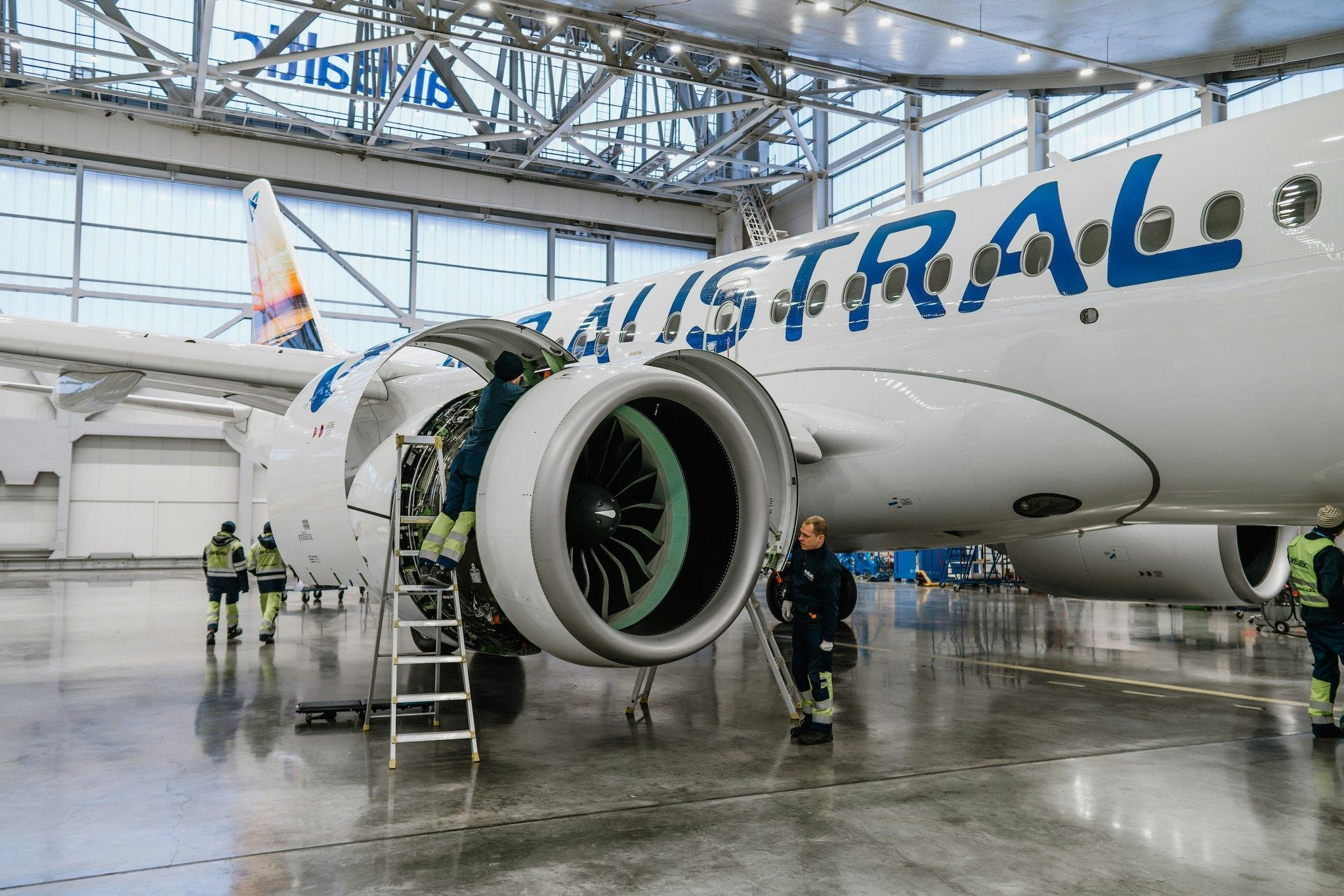
Air Austral to Retire A220 Fleet Amid Persistent Engine Troubles
Air Austral, the La Réunion-based carrier, has announced its intention to retire its Airbus A220 fleet following ongoing reliability issues with the Pratt & Whitney geared turbofan (GTF) engines. According to French financial newspaper La Tribune, at least two of the airline’s three A220 aircraft have been plagued by technical difficulties, leading to operational disruptions and prompting a strategic reassessment of the fleet.
Operational Challenges and Fleet Composition
Air Austral was the first airline in the Indian Ocean region to introduce the A220, taking delivery of its first aircraft in July 2021. These jets have primarily operated short- and medium-haul routes from Roland Garros International Airport in La Réunion to destinations such as Madagascar, Mauritius, and South Africa. In addition to the A220s, the airline maintains a fleet of five widebody aircraft—three Boeing 777-300ERs and two Boeing 787-8s—serving long-haul routes to mainland France and Asia.
As of late September 2025, data from ch-aviation indicates that two of Air Austral’s three A220s are currently out of service: one aircraft (registration F-OMER) is in storage, while another (F-OTER) is undergoing maintenance. The decision to phase out the A220s reflects wider industry concerns regarding the Pratt & Whitney GTF engines, which have caused significant operational challenges for multiple carriers worldwide.
Broader Industry Impact of GTF Engine Issues
The problems with Pratt & Whitney’s GTF engines have had a substantial global impact. airBaltic, the largest A220 operator, was compelled to cancel 4,670 flights during the 2025 summer season due to engine-related groundings, a crisis that contributed to the departure of its former CEO, Martin Gauss. Similarly, Egyptair exited the A220 program entirely, selling its 12-aircraft fleet to leasing company Azorra in early 2024. SWISS is also reportedly exploring alternatives after enduring prolonged A220 groundings.
Air Austral’s move is likely to attract attention from competitors and lessors, potentially influencing market dynamics. Other airlines may reconsider their A220 investments, especially as some carriers, including JetBlue, have recently transitioned to all-Airbus fleets. The decision may also stimulate interest in alternative aircraft models such as the Airbus A320neo family or the Boeing 737 MAX, both of which Air Austral is reportedly evaluating as potential replacements. These shifts could lead to adjustments in aircraft leasing prices and broader strategic realignments within the industry.
The repercussions extend beyond Air Austral’s immediate network. Airlines like Air New Zealand, which have faced similar engine-related groundings, may encounter increased pressure as they manage the financial and operational consequences of these persistent technical issues.
Air Austral has yet to provide detailed information regarding the timeline or process for retiring its A220 fleet. The airline is actively exploring replacement options but has not issued a public statement outlining its future plans.

Etihad Airways Suspends Airbus A380 Flights on Key Route

Aditya Birla Group Seeks Approval for Aircraft Leasing in GIFT City

Qatar Airways Highlights Innovation and Connectivity at Arabian Travel Market 2026

Hong Kong's Five-Year Plan Includes Andrew Fan's Aircraft Parts Processing Hub Proposal

ACIA Aero Leasing Delivers ATR72-600 to Air Nostrum

RTX Appoints Jill Albertelli as Head of Pratt & Whitney

TAT Technologies Joins Beyond Aero Hydrogen Aircraft Program

AURAK Study Highlights Barriers to Air Taxi Adoption in Emerging Economies

Xiamen Air Selects Altitude for 787 Maintenance at Heathrow

Etihad and Swissport Extend Global Partnership
